The battle of action cameras is becoming increasingly interesting. On one side, we have the Insta360 Ace Pro 2 , a premium action camera designed for creators who want to film easily, with very beautiful image quality, good stabilization and a simple workflow.
On the other hand, the GoPro Mission 1 arrives with a very ambitious technical specification: 1-inch sensor, 8K video, advanced audio, GP-Log2, integrated GPS, Wi-Fi 6 and a real production orientation.
On paper, both cameras can shoot 8K at 30 frames per second. But in reality, they aren’t exactly suited to the same type of creator. The real question, therefore, isn’t simply: which one is more powerful? But rather: which one best suits your filming style?
Quick comparison table
| Criterion | Insta360 Ace Pro 2 | GoPro Mission 1 |
|---|---|---|
| Camera type | Premium action camera | High-end single-lens camera |
| Sensor | 1/1.3” | 1” |
| Video max | 8K at 30 fps | 8K at 30 fps |
| Slow motion | 4K 120 fps / 1080p 240 fps | 4K 120 fps / 1080p 240 fps |
| Photo | 50 MP | 50 MP |
| Stabilization | FlowState + 360° horizon lock | HyperSmooth + 360° horizon lock |
| Screen | 2.5″ foldable touchscreen | 1.4” front screen + 2.59” OLED rear screen |
| Audio | 3 microphones | 4 microphones + RAW audio + multitrack |
| Airtightness | 12 m without casing / 60 m with casing | 20 m without a box |
| Battery | 1800 mAh | Enduro 2150 mAh |
| Ideal profile | Vlog, travel, sports, solo creator | Advanced creator, video production, professional image |
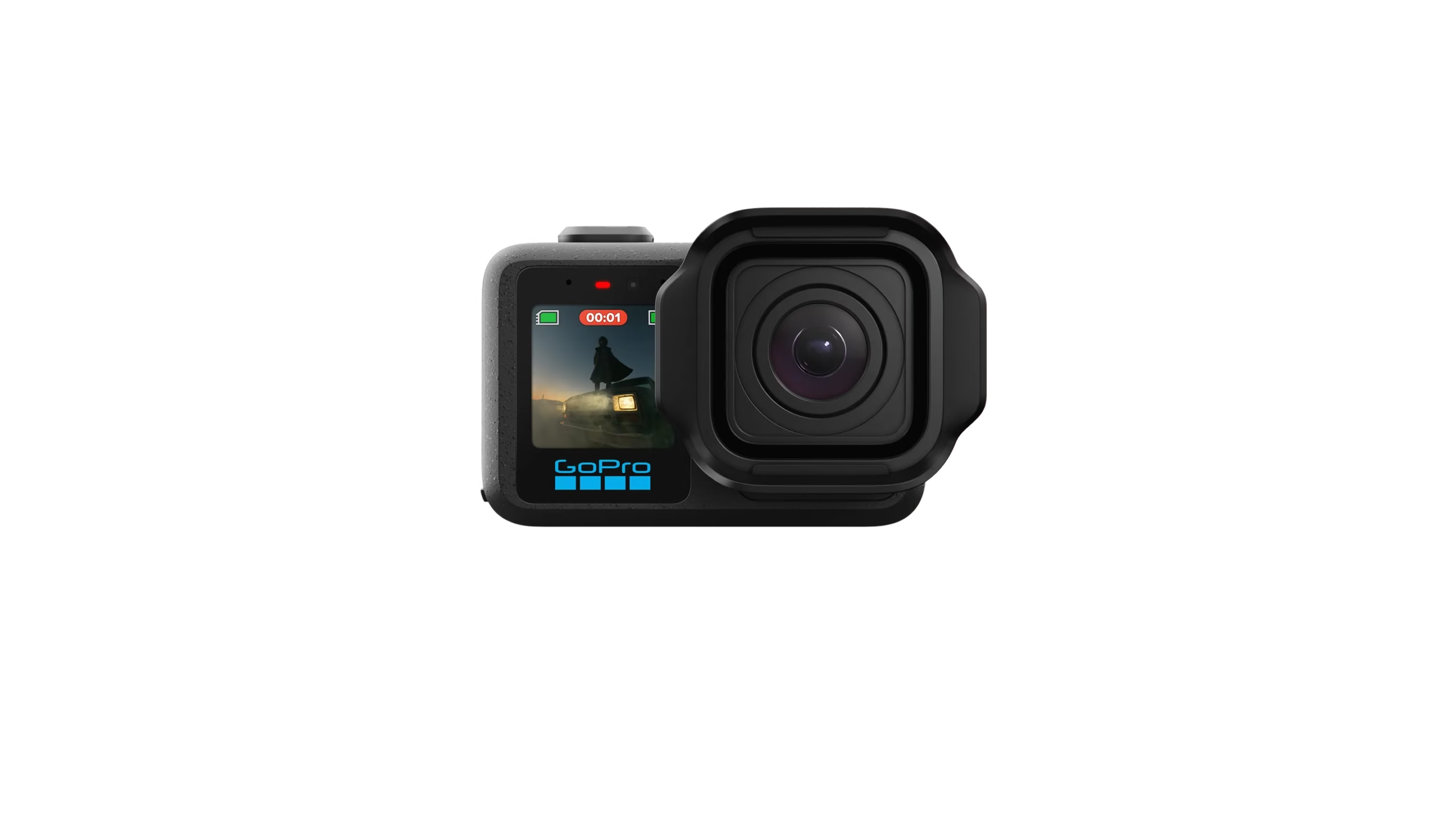
GoPro Mission 1
Compact cinema camera for demanding creators.
- 1-inch image sensor
- Video up to 8K at 30 fps
- 4K up to 120 fps
- 50 MP photo
- Waterproof up to 20 meters
Affiliate link — I may receive a commission at no extra cost to you.
Design and handling
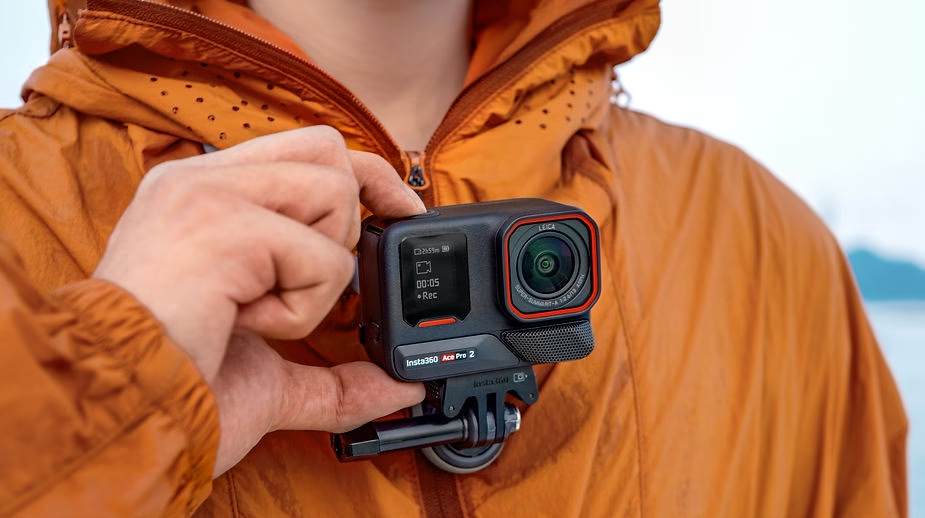
The first major difference lies in the approach. The Insta360 Ace Pro 2 remains a fairly compact action camera, designed for quick and easy use. Its biggest advantage is its 2.5-inch flip-out touchscreen. For vlogging, facing-the-camera videos, travel footage, or shooting at arm’s length, it’s incredibly practical.
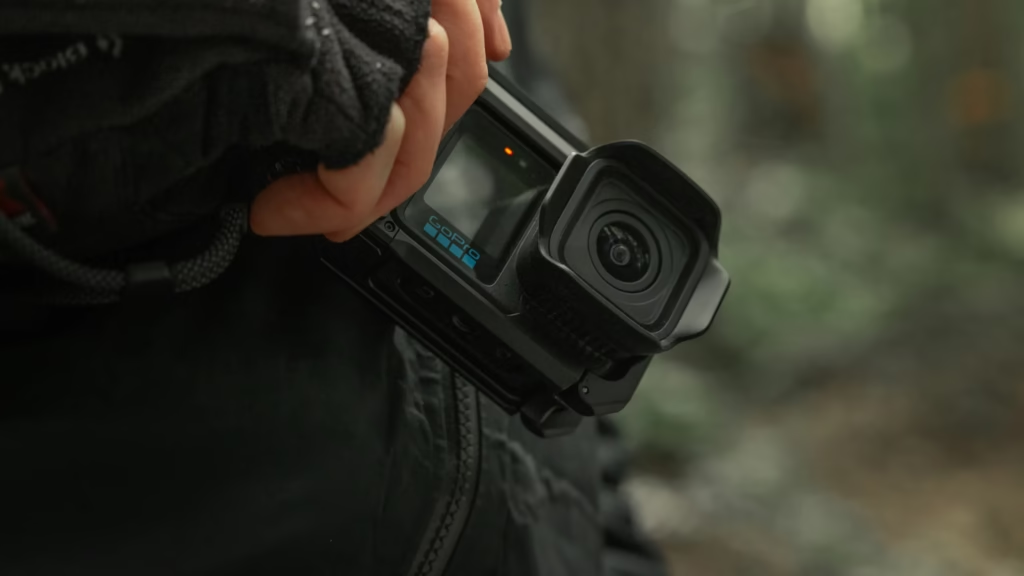
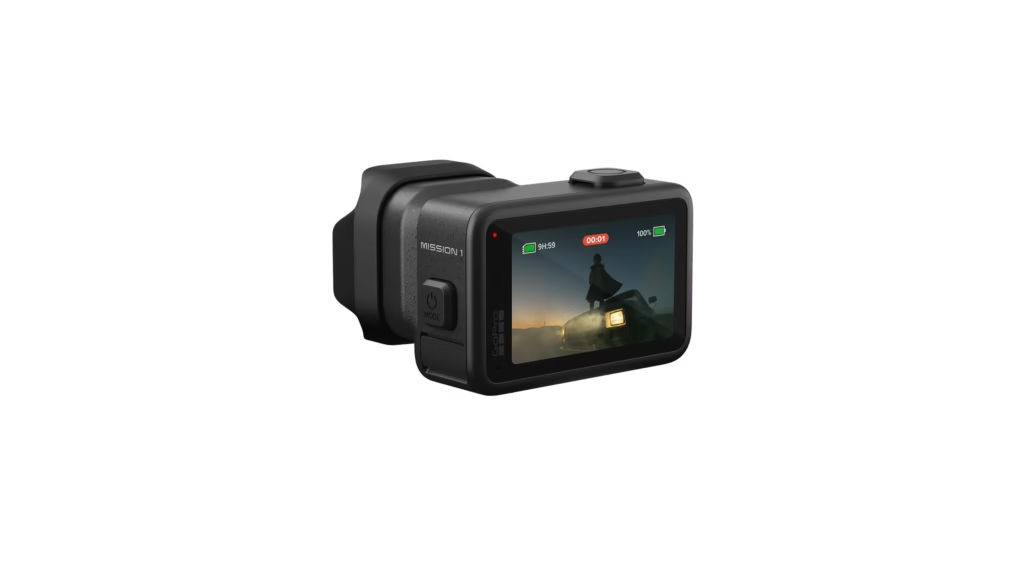
The GoPro Mission 1 , on the other hand, seems more substantial at 207g. It features a 1.4-inch front LCD screen and a 2.59-inch rear OLED screen. This is very convenient for framing in various situations, but the overall approach is slightly different. It feels more like a camera designed for more technical, robust, and production-oriented use.
| Criterion | Advantage |
|---|---|
| Lightness | Insta360 Ace Pro 2 |
| Vlog facing the camera | Insta360 Ace Pro 2 |
| Dual screen | GoPro Mission 1 |
| More massive construction | GoPro Mission 1 |
In terms of pure ergonomics, I would therefore give the advantage to the Insta360 Ace Pro 2 , especially for a solo creator who wants to film themselves easily.
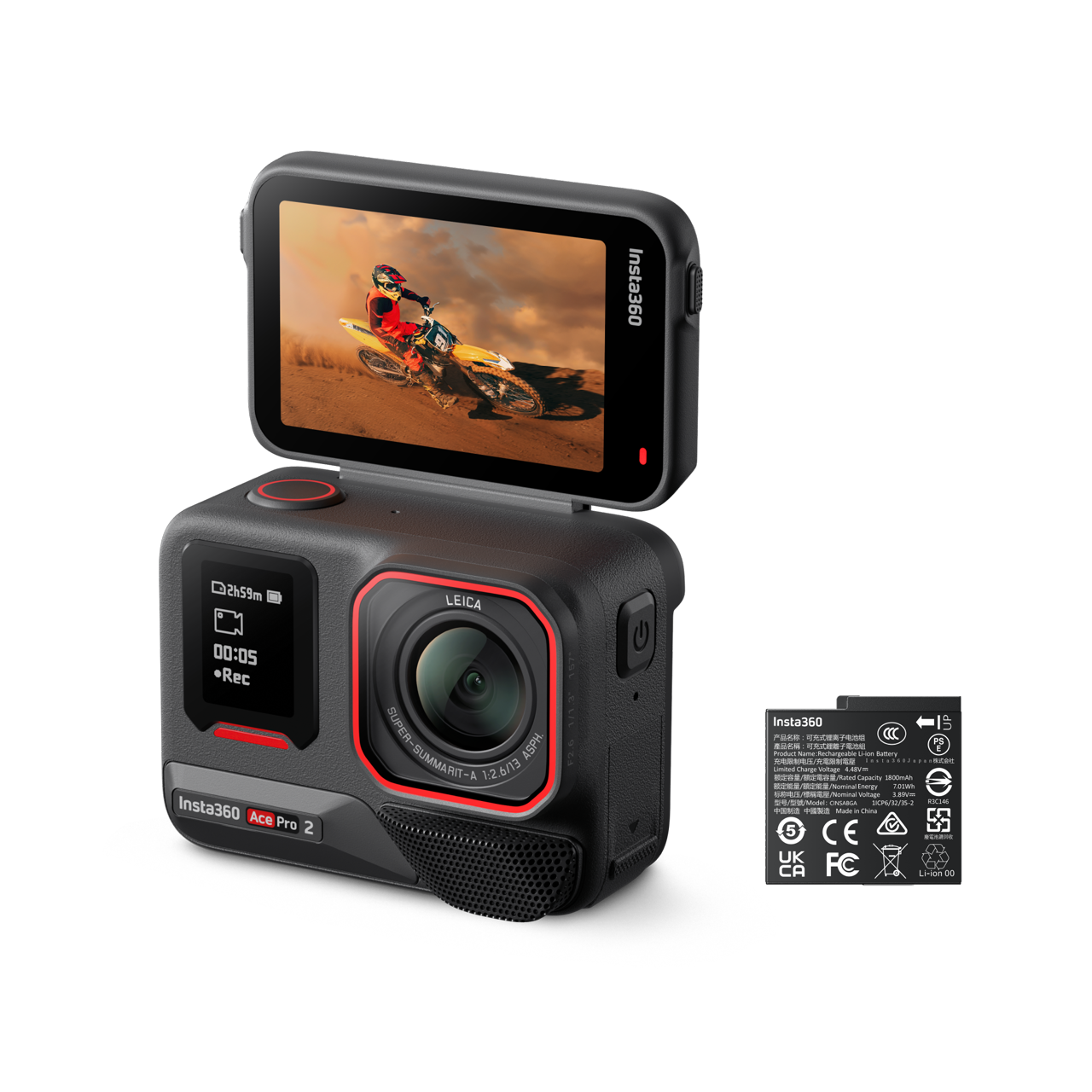
Insta360 Ace Pro 2
An action camera built for demanding creators: 8K video, FlowState stabilization, a Leica lens, and excellent image quality day or night.
Discover the Insta360 Ace Pro 2Affiliate link — you support the blog at no extra cost.
Sensor: 1 inch versus 1/1.3 inch
This is one of the most important points in this comparison. The GoPro Mission 1 has a 1-inch sensor, while the Insta360 Ace Pro 2 uses a 1/1.3” sensor.
Note that a 1-inch sensor isn’t actually 1 inch in size. In reality, it measures approximately 13.2 x 8.8 mm. A 1/1.3″ sensor, on the other hand, is closer to 9.6 x 7.2 mm. Therefore, the 1-inch sensor is about 68% larger in surface area.
In practical terms, a larger sensor can offer better light management, less noise in low light, greater dynamic range, and a potentially cleaner image. On this point, the GoPro Mission 1 therefore has a real technical advantage.
But sensor size isn’t everything. The Insta360 Ace Pro 2 compensates with its AI processing, PureVideo mode, and Leica profiles. In many everyday situations, especially for quickly posting to YouTube or social media, the image quality is more than adequate.
| Criterion | Advantage |
|---|---|
| Sensor size | GoPro Mission 1 |
| Low light potential | GoPro Mission 1 |
| Image ready for publication | Insta360 Ace Pro 2 |
| AI processing | Insta360 Ace Pro 2 |
8K, 4K and slow-motion video
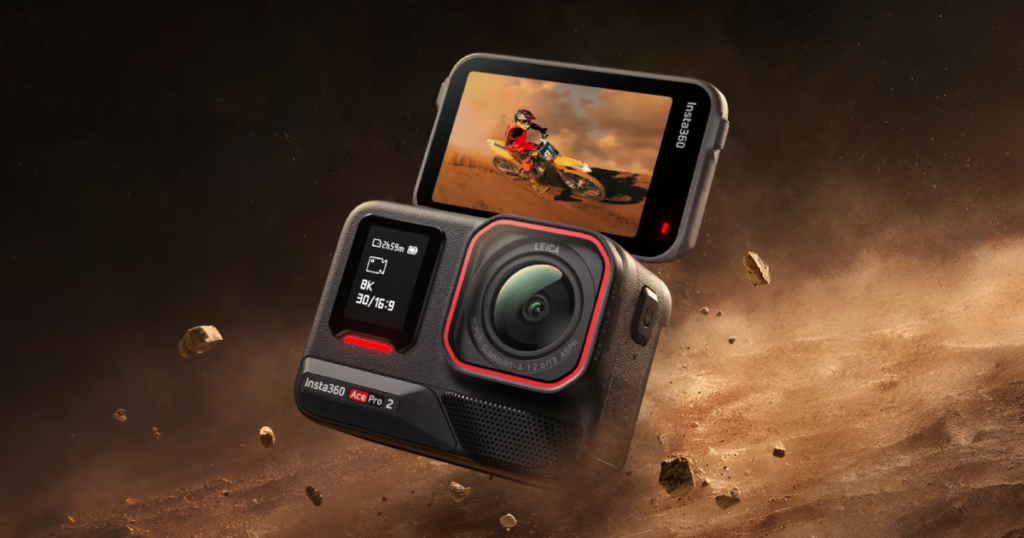
The two cameras are very similar in terms of primary resolutions. The Insta360 Ace Pro 2 shoots in 8K at 30 fps, in 4K up to 120 fps, and in 1080p up to 240 fps. The GoPro Mission 1 also offers 8K at 30 fps, 4K at 120 fps, and 1080p at 240 fps.
For sports slow-motion footage, motorcycle shots, cycling, travel, or hiking, both cameras are very robust. The real difference will lie more in the video bitrate, color profiles, and image processing.
The GoPro Mission 1 boasts up to 240 Mbps with H.265 HEVC compression. This is clearly a selling point for those who want to retain more information in their files, especially for advanced editing.
| Criterion | Advantage |
|---|---|
| 8K 30fps | Equality |
| 4K 120 fps | Equality |
| 1080p 240 fps | Equality |
| Video bitrate | GoPro Mission 1 |
| Ease of operation | Insta360 Ace Pro 2 |
Colors, HDR and Log profiles
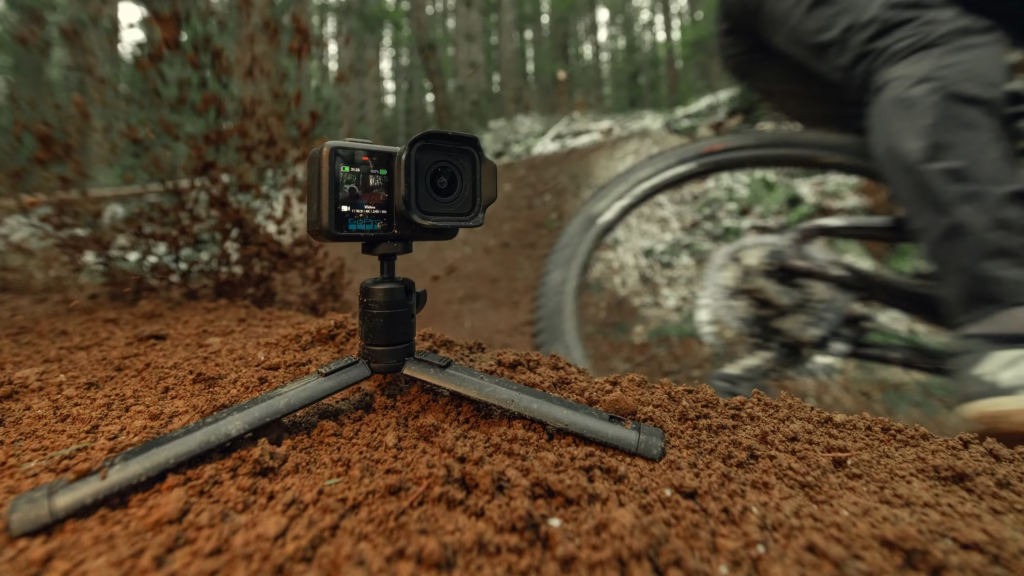
This is where the two cameras truly reveal their differing philosophies. The Insta360 Ace Pro 2 offers some very interesting color profiles, including Leica-style rendering, as well as i-Log for those who want more freedom in post-production. It’s especially adept at quickly producing beautiful images without necessarily requiring extensive color grading.
The GoPro Mission 1 takes production to the next level with GP-Log2, HLG HDR, 10-bit depth, and LUT support. For a videographer who likes to work with color, capture maximum dynamic range, and integrate their footage into a more professional workflow, this is a real advantage.
| Use | Best choice |
|---|---|
| Publish quickly | Insta360 Ace Pro 2 |
| Flattering rendering directly | Insta360 Ace Pro 2 |
| Advanced calibration | GoPro Mission 1 |
| Workflow Log / HDR | GoPro Mission 1 |
GoPro Mission 1
Compact cinema camera for demanding creators.
- 1-inch image sensor
- Video up to 8K at 30 fps
- 4K up to 120 fps
- 50 MP photo
- Waterproof up to 20 meters
Affiliate link — I may receive a commission at no extra cost to you.
Stabilization: FlowState vs. HyperSmooth
Regarding stabilization, there are two market leaders. The Insta360 Ace Pro 2 uses FlowState stabilization with 360° horizon lock. The GoPro Mission 1 uses HyperSmooth, also with 360° horizon lock.
In both cases, you can expect excellent stabilization for walking, running, filming while cycling, motorcycling, skiing, or hiking. At this level, the main difference will come down to individual preference and editing workflow.
| Criterion | Advantage |
|---|---|
| Sports stabilization | Equality |
| Horizon lock | Equality |
| Walking vlog | Equality |
| Simplicity with application | Insta360 Ace Pro 2 |
Audio: clear advantage to the GoPro Mission 1
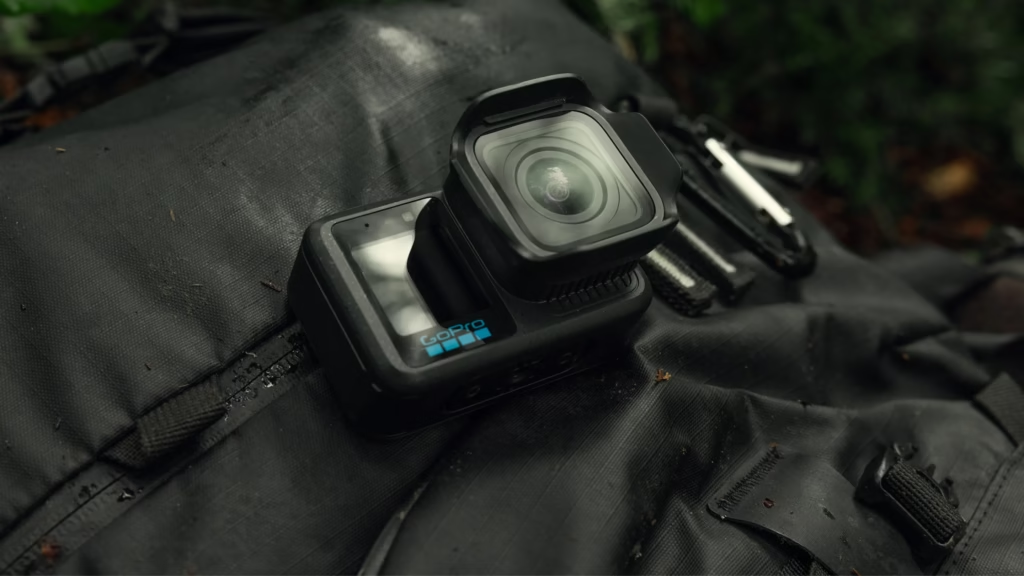
Audio is one area where the GoPro Mission 1 clearly has the advantage on paper. It features 4 microphones, RAW audio, USB audio, wireless audio, manual audio controls, and up to 3 audio tracks.
The Insta360 Ace Pro 2 remains a very good option for typical vlogging, with three microphones, wind noise reduction, and voice enhancement. For speaking directly to the camera, creating travel content, or filming a sporting activity, it will be sufficient in most cases.
But for more advanced production, with multiple audio sources or more controlled sound, the GoPro Mission 1 is better equipped.
| Criterion | Advantage |
|---|---|
| Number of microphones | GoPro Mission 1 |
| RAW Audio | GoPro Mission 1 |
| Multitrack audio | GoPro Mission 1 |
| Simple vlog | Equality |
Battery life and charging
The Insta360 Ace Pro 2 features an 1800 mAh battery with very efficient fast charging: approximately 18 minutes to reach 80% and 47 minutes for a full charge.
The GoPro Mission 1 offers a 2150 mAh Enduro battery, so it’s larger, but with a slightly slower charging time: about 27 minutes to reach 80% and 60 minutes for a full charge with a PPS compatible charger.
| Criterion | Advantage |
|---|---|
| Battery capacity | GoPro Mission 1 |
| Fast charging | Insta360 Ace Pro 2 |
| Rapid nomadic filming | Insta360 Ace Pro 2 |
| Potential endurance | GoPro Mission 1 |
Waterproofing and resistance
For water resistance, the GoPro Mission 1 scores a major point with a claimed waterproof rating of 20 meters without a housing. This is very convenient for filming at the beach, while snorkeling, in the rain, or in challenging conditions.
The Insta360 Ace Pro 2 is waterproof to 12 meters without a housing, which is already very good for an action camera. With the dive housing, it can go up to 60 meters, making it very appealing to divers.
| Criterion | Advantage |
|---|---|
| Sealing without casing | GoPro Mission 1 |
| Diving with a housing | Insta360 Ace Pro 2 |
| Replaceable lens | Equality |
| Field use | Equality |
Application, editing and workflow
This is probably one of the biggest selling points of the Insta360 Ace Pro 2. Its app is designed for speed: automatic editing, creative effects, AI assistant, and easy export for social media. For a creator who wants to film, edit, and publish quickly, it’s a real boon.
The GoPro Mission 1 seems more geared towards advanced workflows: GP-Log2, HLG HDR, multitrack audio, high bitrate, built-in GPS, GoPro cloud. It’s excellent if you enjoy editing your files. But for someone who simply wants to quickly produce a video, it might seem less straightforward.
| Use | Best choice |
|---|---|
| Quick assembly | Insta360 Ace Pro 2 |
| Social networks | Insta360 Ace Pro 2 |
| Workflow pro | GoPro Mission 1 |
| Advanced Control | GoPro Mission 1 |
For what type of creator?
| Profile | Recommended camera |
|---|---|
| Beginner | Insta360 Ace Pro 2 |
| Travel vlogger | Insta360 Ace Pro 2 |
| Solo YouTube Creator | Insta360 Ace Pro 2 |
| Sporty | Equality |
| Capless diver | GoPro Mission 1 |
| Advanced Videographer | GoPro Mission 1 |
| Color grading | GoPro Mission 1 |
| Advanced Audio | GoPro Mission 1 |
| Quick publication | Insta360 Ace Pro 2 |
Winners’ table by category
| Category | Winner |
|---|---|
| Simplicity | Insta360 Ace Pro 2 |
| Ergonomics vlog | Insta360 Ace Pro 2 |
| Sensor | GoPro Mission 1 |
| Pure video | GoPro Mission 1 |
| Slow motion | Equality |
| Stabilization | Equality |
| Audio | GoPro Mission 1 |
| Sealing without casing | GoPro Mission 1 |
| Diving with a housing | Insta360 Ace Pro 2 |
| Mobile application | Insta360 Ace Pro 2 |
| Professional Workflow | GoPro Mission 1 |
| Simplicity/Power Ratio | Insta360 Ace Pro 2 |
| Pure technical performance | GoPro Mission 1 |
So, should you choose the Insta360 Ace Pro 2 or the GoPro Mission 1 ?
If you’re looking for a simple, efficient, user-friendly camera perfect for vlogging, travel, sports, or YouTube, the Insta360 Ace Pro 2 is probably the best choice. It offers excellent image quality, superb stabilization, a very practical flip screen, and above all, a very smooth creative experience.
If you want a more technically advanced camera, with a 1-inch sensor, high video bitrate, GP-Log2, HLG HDR, multi-track audio, and a more professional workflow, the GoPro Mission 1 takes the lead. It’s geared more towards advanced creators who want to leverage their footage in post-production.
In summary, the Insta360 Ace Pro 2 is the most logical choice for most creators. The GoPro Mission 1 , on the other hand, is the more interesting choice for those who want to delve deeper into technical aspects and are willing to spend more time editing.