This page focuses on ease, not on pure filming performance
Unlike our main buying guide for beginner drones for filming, this article is built for a different question: which drone feels the easiest and least stressful to fly when you are starting from zero? If your priority is confidence, simplicity and crash prevention, this is the right angle.
- Best for: absolute beginners, gift buyers, nervous first pilots and people who want more assistance than manual control.
- What matters most here: hover stability, obstacle sensing, automatic return, intuitive app and low-stress takeoff.
- Not the same intent as our filming guide: a drone can be easy to fly without being the best option for cinematic video.
If you hesitate between the two articles, use a simple rule: choose this page if you want the easiest learning curve; choose the filming guide if image quality is your first criterion.
Do you dream of capturing incredible aerial images without getting bogged down in endless technical settings? We’ve selected the easiest-to-fly drones for beginners so you can take off safely right out of the box. Discover how these lightweight models, weighing less than 250 grams, simplify your first flights thanks to automatic return and intelligent stabilization.
- Why choose a drone weighing less than 250 grams?
- The 5 best drones for stress-free beginners in 2026
- The assistance features that save your first flights
- Mastering one’s environment and basic regulations
- Equipping yourself properly and maintaining your equipment over time
Why choose a drone weighing less than 250 grams?
After understanding the enthusiasm for aerial video, we need to look at the technical criterion that changes everything for a beginner: weight.
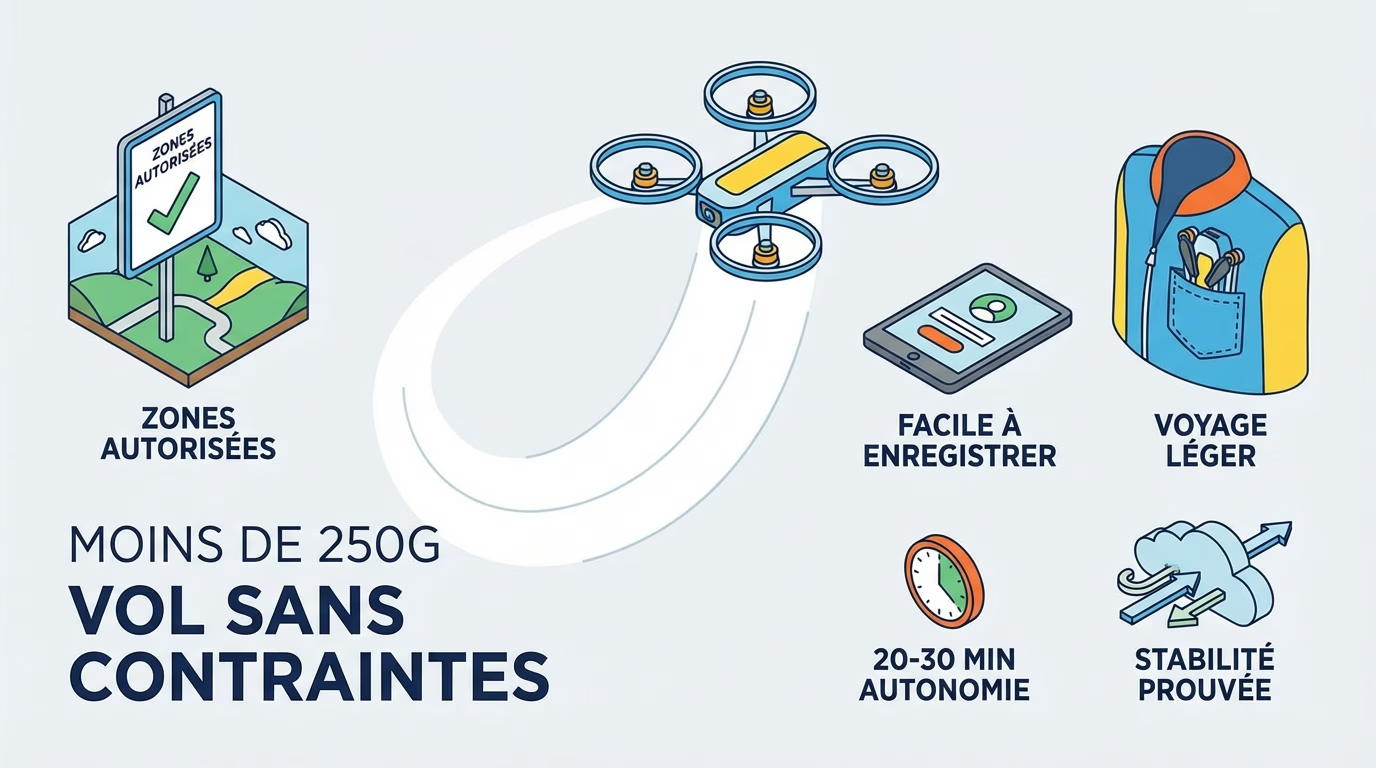
The 250g mark for unrestricted flying
European regulations favor category C0. These aircraft can fly over various areas without a theoretical exam, giving you complete freedom. It’s the ideal choice for a smooth start.
Forget long and expensive training courses. A simple online registration is often all it takes. You save precious time. Your first real takeoff comes much sooner.
Portability is a major draw for travelers. These devices fit easily into a pocket. They weigh next to nothing while hiking. This is a significant advantage for adventure.
Need advice on packing your drone? Discover how to choose the right DJI drone for your first trip . This guide will help you decide.
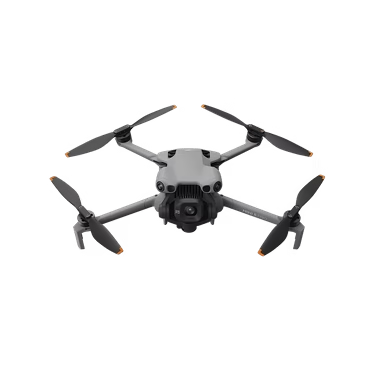
DJI Mini 5 Pro
DJI’s premium compact drone: exceptional video quality 3-axis stabilization, intelligent tracking and advanced sensors for Create content easily, anywhere.
✅ Smooth video and professional quality
✅ Perfect for travel & vlogging
👉 Ideal for creators and travelers
Autonomy and stability for the first flights
Let’s analyze the actual flight time. It’s often 20 to 30 minutes. That’s enough for beautiful scenery. You won’t have to worry about your battery anymore. Easy-to-fly drone for beginners here means fun.
Wind behavior is paramount. Modern engines compensate very well for breezes. Stability remains impressive despite the light weight. You quickly feel confident at the helm.
The compact size-to-performance ratio is incredible. High-quality sensors are housed in these chassis. Technology has taken a giant leap forward. Professional images are achieved effortlessly.
To delve deeper into the legal aspects, consult “Antigravity A1 and regulations: is the 249g drone really without…” . Everything is clearly explained there.
The 5 best drones for stress-free beginners in 2026
Now that the legal framework is in place, let’s look specifically at which machines dominate the market this year to help you get started.
DJI Mini 4K: the benchmark for high definition
Need crisp, clear video without the hassle? This model shoots in 4K at 30 frames per second. OcuSync transmission ensures smooth, reliable video feedback up to 10 km. It’s the perfect tool for getting clean footage right from the start.
Good news: flying is child’s play with the DJI Fly app. The interface is intuitive and guides you step by step during your first flights. You’ll feel safe immediately thanks to the stable hovering.
Why is it a favorite for those on a budget? The value for money remains unbeatable in 2026 for under €300. It’s a sound investment for learning the basics without breaking the bank. You can truly enjoy it without any worries.
Antigravity A1: the 360° drone that changes everything
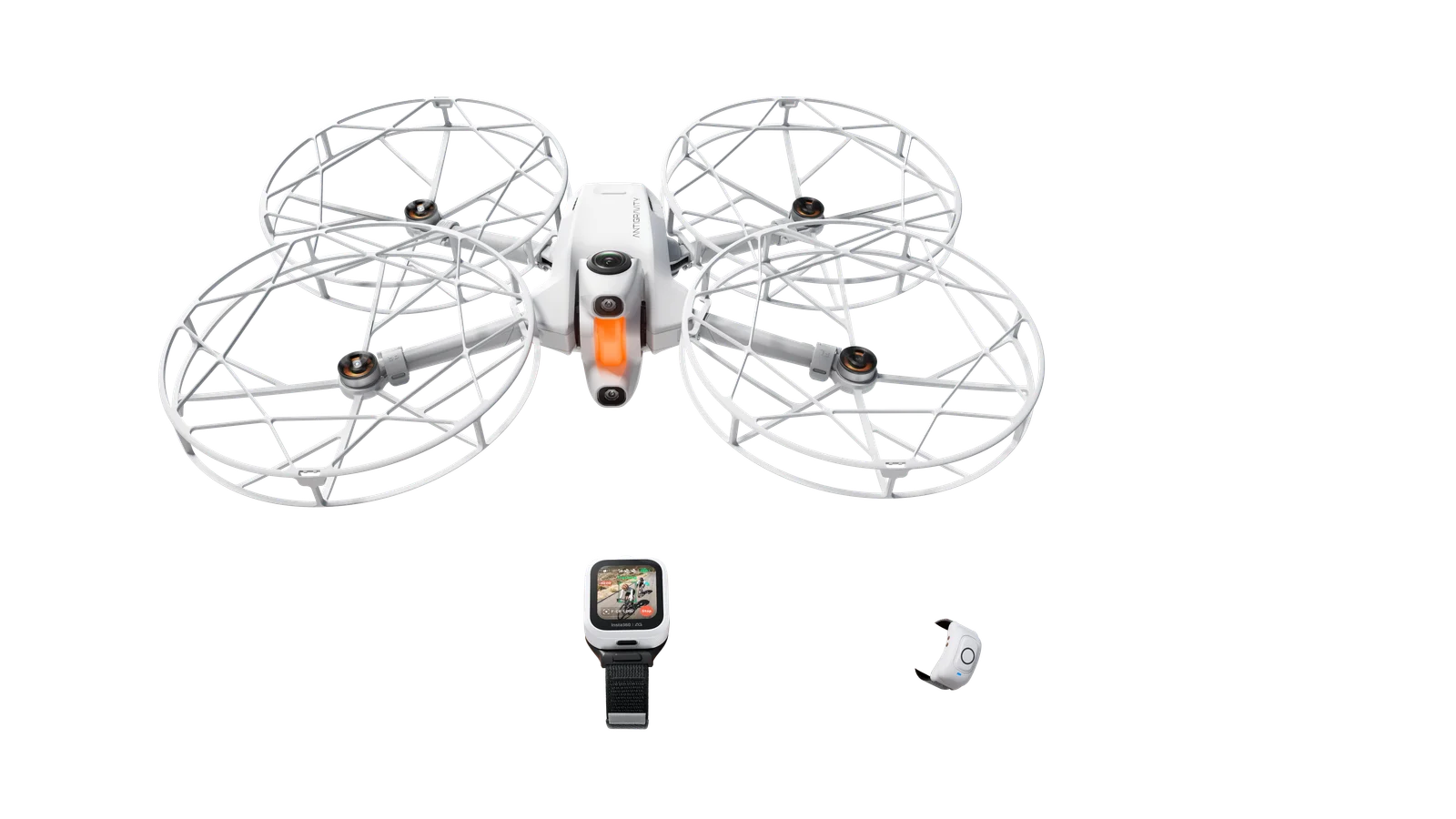
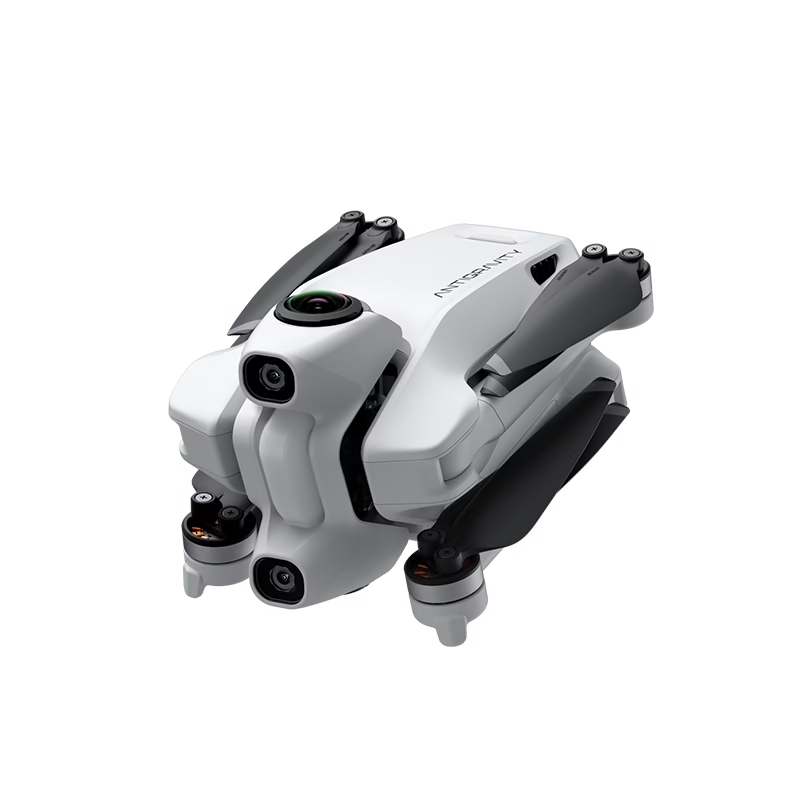
The Antigravity A1 doesn’t just offer standard features; it completely revolutionizes the flying experience. Unlike traditional drones, it films in 360° in 8K, allowing you to capture every angle in a single shot and then reframe it afterward. The result: less stress during flight and much more creative freedom.
Its biggest strength is its immersive and ultra-intuitive nature. No need to be an expert: simply point to fly, and the drone naturally follows your movements. Between intelligent tracking, automatic trajectories, and AI-assisted editing, you can create impressive cinematic shots without advanced technical skills.
The build quality is excellent, with a solid design and replaceable lenses – a real plus in this segment. And despite its compact size of less than 250g, it offers very decent battery life, especially considering that a single flight is enough to capture an entire scene.
💡 Tip: Opt for a pack with multiple batteries to fully enjoy the experience. And by using the offer with the code AGRRLOV, you’ll receive a free lens replacement kit and a free launch pad — a real bonus for worry-free flying and maximizing your investment.
DJI Neo 2: Absolute simplicity for social media
Takeoff is done directly from the palm of your hand. No need to search for a complex or flat landing strip. The drone takes off and returns to land in your hand in the blink of an eye.
Safety is at the heart of the system, with omnidirectional obstacle detection. The software scans the entire environment in real time to prevent collisions. Crashes become virtually impossible, even for a complete novice.
Direct sharing makes life easier for connected creators. Videos are instantly transferred to your phone for quick editing. DJI Neo review: pocket drone for beginners . You can post your exploits on Instagram in just seconds.
Fimi Mini 3: the champion of night shooting
The AI Super Night Video mode is a true software marvel. It processes the image to reduce digital noise as the light fades. Sunsets become magnificent and perfectly usable for your edits.
Despite its compact size of less than 250g, it is remarkably wind-resistant. It withstands moderate gusts without deviating from its trajectory. The gimbal stabilizes the image with exceptional efficiency, even during rapid movement.
Creative intelligent modes simplify complex shots. Pre-programmed trajectories allow for perfect circular shots. You get professional results without needing to be an expert pilot.
Autel EVO Nano+: Safety first
The three-axis detection system is impressive for such a small drone. It’s an active safety system that analyzes the front, rear, and underside. The drone automatically brakes in front of a wall or tree to avoid a collision.
The RYYB sensor captures significantly more light than the average conventional sensor. This technology delivers incredible color richness in your photos. Photographers will appreciate the quality of the 50 megapixels available.
This constant assistance is incredibly reassuring during the first flying sessions. You can confidently explore tighter spaces without fear of damage. It’s a safety reflex that allows you to progress calmly and quickly.
The assistance features that save your first flights
Beyond the choice of model, it is the onboard electronic aids that will make you a confident pilot from day one.
Hovering and Return to Home (RTH)
The GPS tracking is amazing. If you let go of the controls, the drone stops instantly. It stays perfectly still in the air, as if suspended by a wire. This ensures you’ll never drift off course accidentally.
Need to reassure the pilot? The RTH handles everything. In case of signal loss, the aircraft returns on its own. It uses its memory to find its starting point without assistance.
The automatic landing is incredibly precise. The margin of error is often limited to a few centimeters. It’s magical and reassuring for a first flight.
Check out this guide to get started: Getting Started with the DJI Mini 5 Pro: From Box to Flight . It’s an excellent starting point.
Mechanical gimbal or electronic stabilization?
A 3-axis gimbal offers cinematic fluidity. EIS, being purely software-based, can create artifacts or crop the image. This results in a slight loss of overall field of view.
Stabilization eliminates jolts caused by sudden movements. Your viewers will never get motion sickness while watching your videos. This is essential for a drone that’s easy for beginners to fly.
For filmmaking, aim for the camera pod. For sports, the EIS is sufficient. It all depends on your creative priorities and your budget.
| Technology | Benefits | Disadvantages | Ideal for |
|---|---|---|---|
| Mechanical gondola | Smooth, no cropping. | Fragile, expensive. | Movie theater. |
| Stabilization (EIS) | Robust, lightweight. | Image cropping. | Sport. |
| Hybrid | A good compromise. | More complex. | Versatility. |
Mastering one’s environment and basic regulations
Having a good drone is one thing, but knowing where and how to use it legally is essential to avoid trouble.
Flight zones and basic safety rules
It is strictly forbidden to fly over people or gatherings. This is the golden rule to guarantee everyone’s safety. Never fly over crowds or urban areas.
Always consult the Géoportail or AlphaTango maps before taking off. Carefully check the color of your flight zone. Red indicates a total prohibition. Strictly respect these zone boundaries.
In France, the maximum permitted altitude is 120 meters. Always stay below this ceiling to avoid interfering with other aircraft. This helps prevent any risk of collision with other aircraft.
The 30% rule and energy management
Always keep 30% battery charge to trigger your return trip. This safety margin is vital against unforeseen circumstances. Wind can drain a lot of energy on the return journey.
Cold weather reduces your battery life very quickly. A pro tip is to warm up the batteries in your pockets before your flight. Low temperatures drain the energy faster than expected.
Avoid using sport mode unless necessary. Smooth, quiet flight consumes significantly less energy. Be economical to prolong your enjoyment in the air.
Equipping yourself properly and maintaining your equipment over time
Finally, the longevity of your drone will depend as much on your accessories as on the rigor of your maintenance.
Essential accessories to get started
Need to protect your investment? Here are some essentials to secure your sessions:
- Propeller guards for indoor use.
- microSD cards, class 10 minimum.
- ND filters for sunlight.
These small additions save your sessions.
Choose a remote control with a screen rather than a smartphone. The integrated screen offers better brightness outdoors. It also prevents draining your personal phone’s battery.
Invest in a hard case. Transport is the riskiest time for fragile bassinets. A good case protects your investment from impacts.
Never neglect the quality of accessories. Your drone will thank you in the long run.
Pre-flight checklist and propeller maintenance
Before taking off, perform your basic checks. Calibrate the compass if the app prompts you to do so. Verify that the firmware is up to date to avoid software bugs. Safety begins on the ground.
Inspect the propellers thoroughly. Even a small crack can cause a sudden crash. Replace them at the slightest doubt; the cost is negligible compared to the drone itself.
Clean the lens regularly. A fingerprint can ruin a beautiful video. Use a clean microfiber cloth for the sensors and optics.
A clean machine flies better. Take care of your engines after every dusty flight.
In short, for those who want the very best right now, you can buy Antigravity A1 .
Choose a model weighing less than 250g with RTH (Return to Home) for stress-free flying. Register your device and practice in an open space to master this easy-to-fly drone for beginners. Take off now to capture your first aerial memories with amazing stability.
FAQ
What is the best drone for beginners without any hassle?
To get started smoothly, we recommend choosing a mini drone weighing less than 250 grams, such as the DJI Mini 4K or the DJI Neo 2. These models are perfect because they are very light, which greatly simplifies regulations and allows you to fly without taking a complex theoretical exam.
These devices incorporate essential assistance features such as automatic hovering and return-to-home (RTH). They are the ideal solution for learning the basics of piloting while capturing high-quality images from your very first flights.
Do you need a permit or registration to fly a small drone?
If your drone belongs to class C0, meaning it weighs less than 250 grams, you can generally fly it without registering it with the civil aviation authorities. This is a huge advantage for beginners who want to enjoy recreational flying without cumbersome administrative formalities.
However, be sure to follow the basic rules: never fly over people or densely populated urban areas. Always keep your aircraft in sight and do not exceed the maximum authorized altitude of 120 meters in the European Union.
How can I avoid crashing my drone on my first flight?
The golden rule is to practice in a very open space, far from trees and crowds. Always use propeller guards when you’re starting out; this will prevent damage to the equipment in case of a minor impact. Also, check that your batteries are fully charged and that your firmware is up to date before taking off.
We recommend you master takeoff, landing, and hovering before attempting complicated maneuvers. Finally, avoid flying if the wind is blowing faster than 20 km/h, as lightweight drones are more susceptible to gusts.
How long can you fly a drone for beginners?
Generally, a 250g drone’s flight time is between 15 and 30 minutes per battery. This duration depends heavily on weather conditions: if it’s cold or windy, the battery will drain faster. That’s why it’s often recommended to buy extra batteries to extend your flying sessions.
Always maintain a safety margin. It is recommended to keep approximately 30% of the battery charge for a smooth return and landing. Never over-charge the battery to avoid a shutdown mid-flight.
What accessories are truly essential to get started?
In addition to the drone, you’ll need a fast microSD card (U3 class minimum) to record smooth 4K video. A rigid carrying case is also essential to protect the gimbal and fragile sensors during transport.
Also remember to bring spare propellers and, if possible, a radio transmitter with a built-in screen. This will save you from draining your phone’s battery and will give you much better visibility for flying in bright sunlight.