The key takeaway: the HOVERAir X1 doesn’t replace a stabilizer, it complements it . This 125-gram pocket drone unlocks autonomous aerial shots impossible to achieve on the ground. It’s the perfect tool for effortlessly varying angles , while your smartphone ensures the primary image quality. Buy it here
Are you still hesitant to invest and wondering if a flying camera offers real added value compared to the quality of your current phone? Is comparing the HOVERAir X1 to a smartphone with a stabilizer really useful to determine if the magic of autonomous aerial shots compensates for the loss of manual control over your ground-based footage? We’ll dissect these two opposing philosophies to see if you need altitude or precision, and discover which of these tools truly deserves a place in your adventurer’s bag.
- The match: pocket drone versus smartphone stabilizer
- HOVERAir X1: your personal cameraman in your pocket
- The smartphone and stabilizer duo: total ground control
- Head-to-head: the comparative table to understand everything
- Which tool for which use? Concrete scenarios
- The compromises you have to accept: what no one tells you
- Verdict: So, is the HOVERAir X1 really useful?
The match: pocket drone versus smartphone stabilizer
What exactly is the HOVERAir X1?
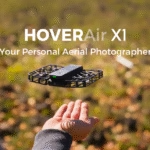
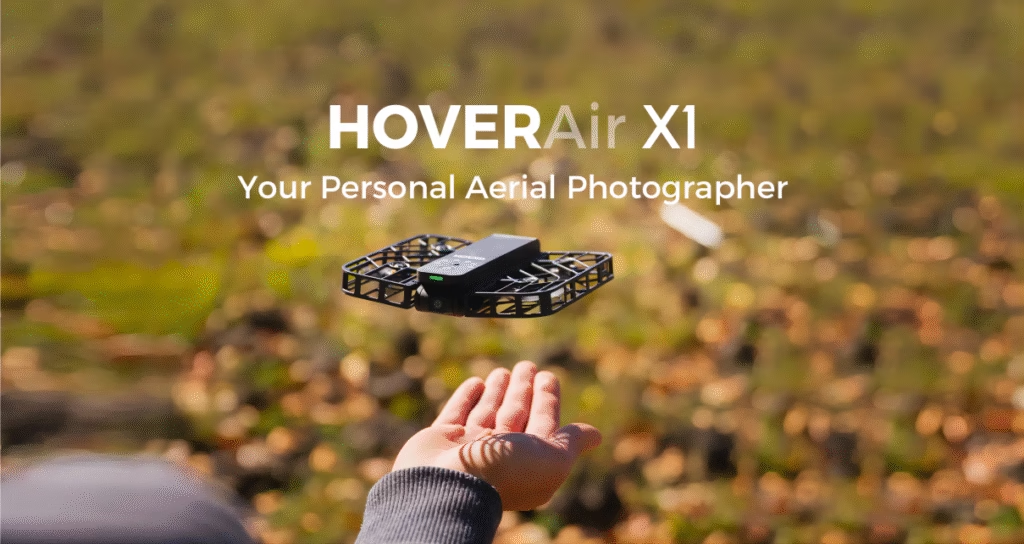
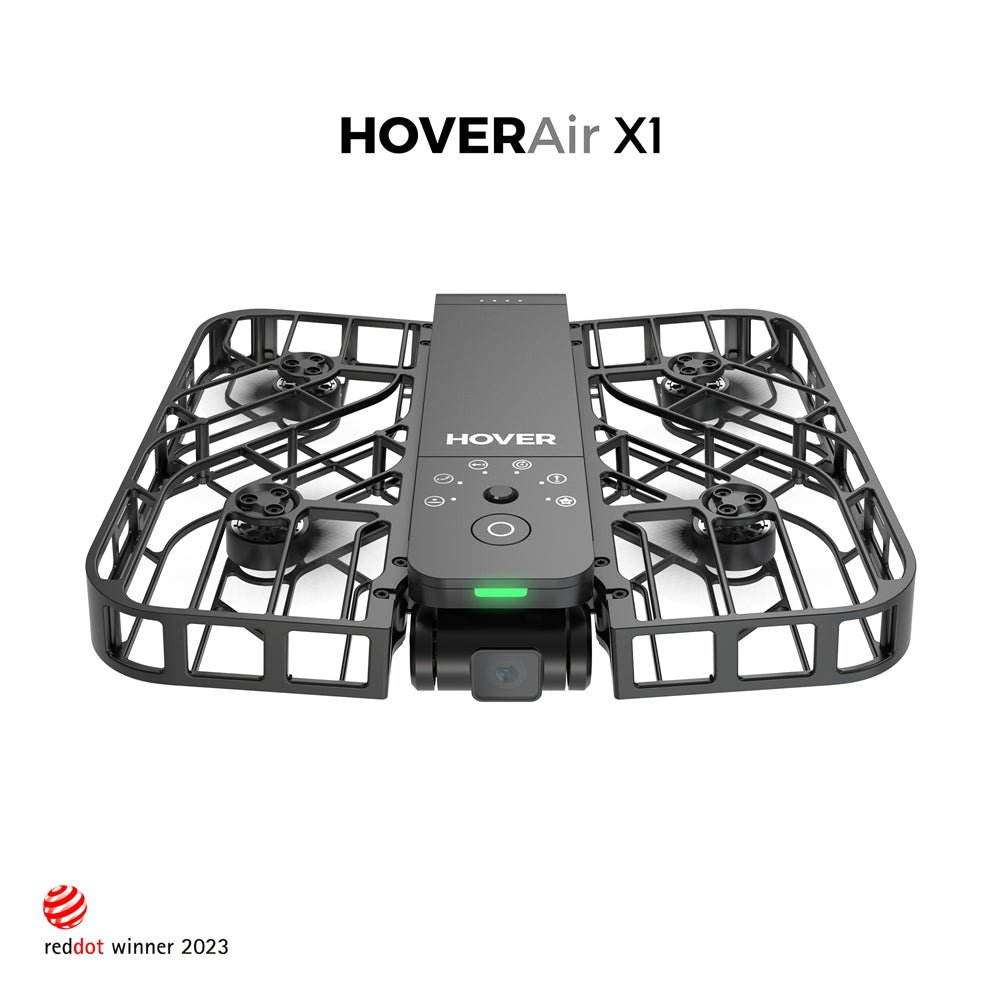
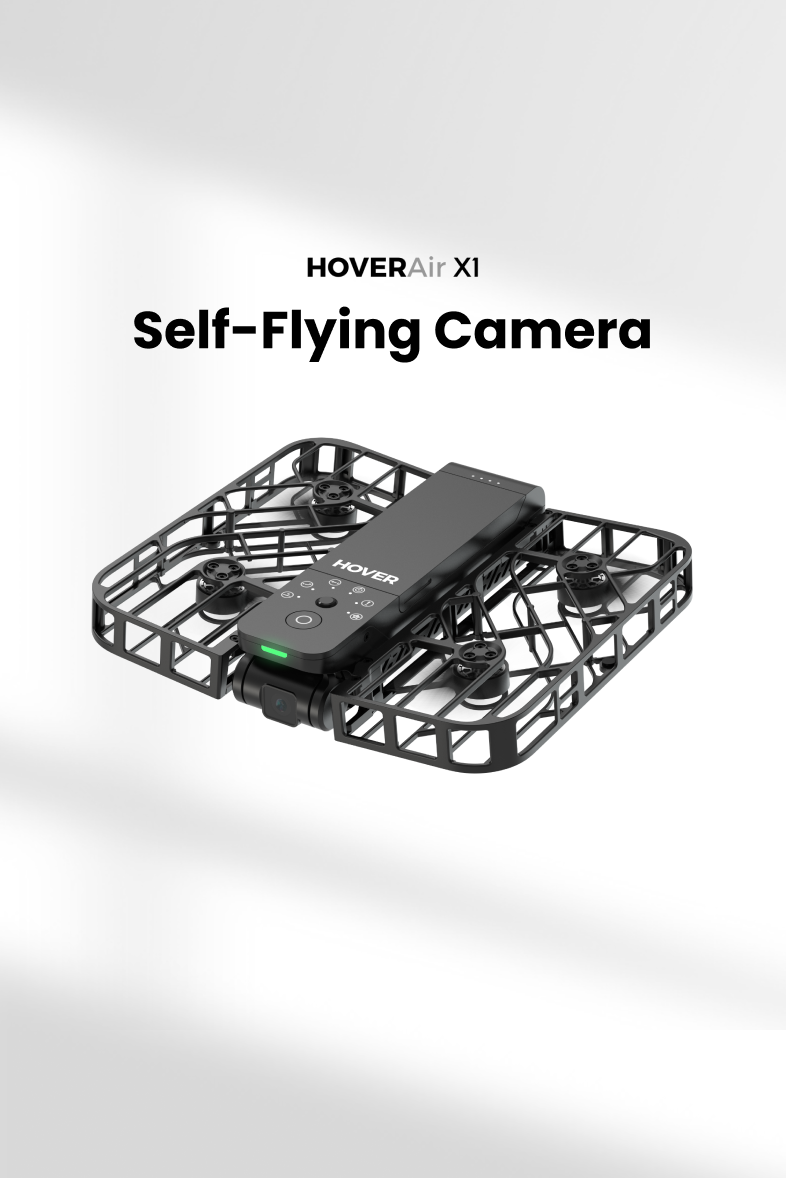
Forget the image of a complicated drone to fly. The HOVERAir X1 is more like a “flying selfie stick” that fits in your pocket. Its greatest strength lies in its astonishing ease of use : no remote control, it takes off and lands directly from the palm of your hand in three seconds.
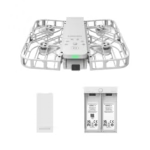
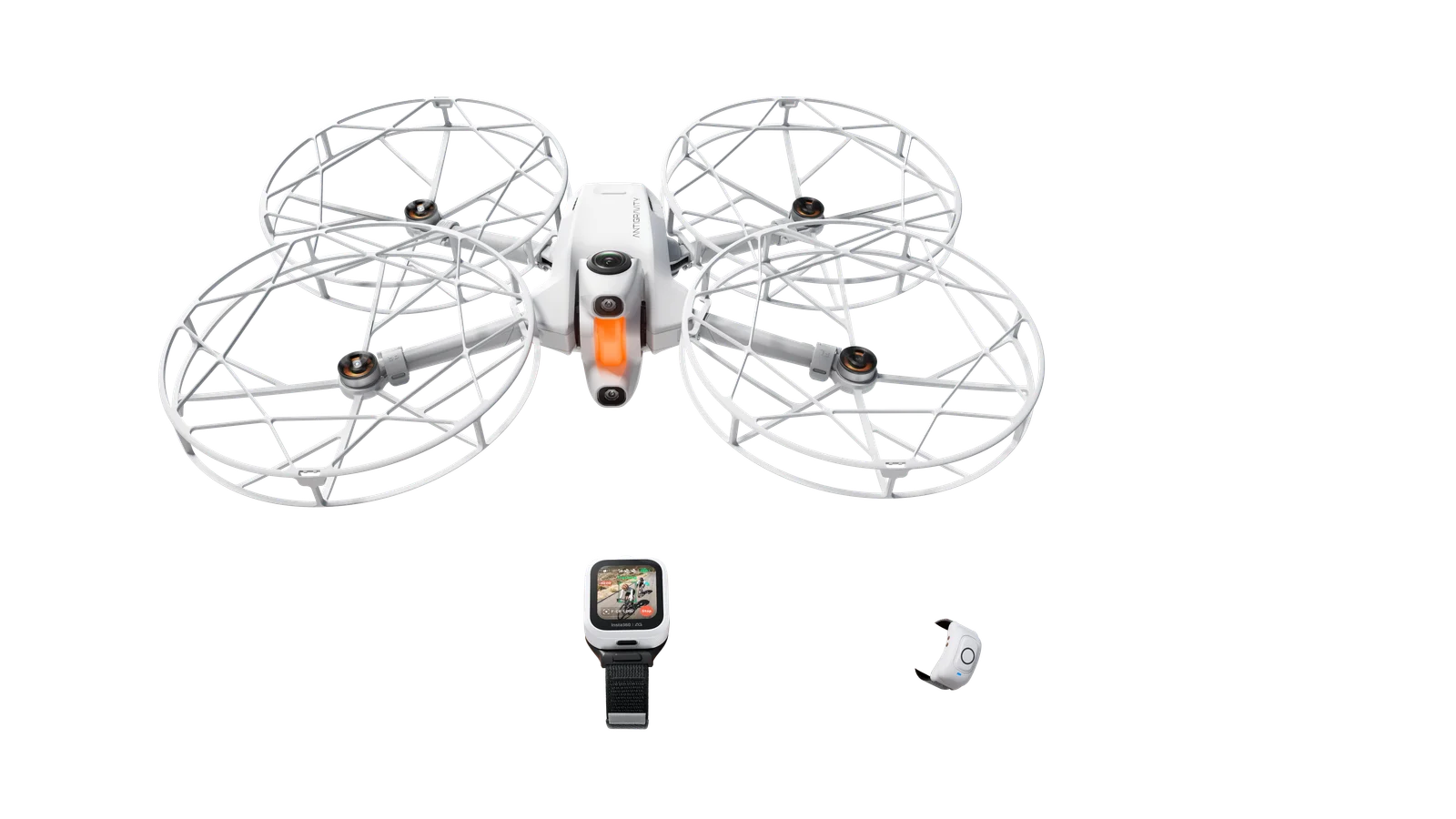
Its purpose isn’t to fly high, but to frame you. It’s designed specifically for autonomous tracking , using algorithms to film you in motion. Weighing just 125 grams and with fully protected propellers, it’s ultra-light and safe for your fingers.
It’s the perfect tool for solo creators and travelers. If you want dynamic shots without the technical hassle of piloting a traditional drone, this is exactly what you need.
The classic alternative: a smartphone with image stabilization
On the other hand, there’s the smartphone and gimbal duo. This is the go-to equipment for producing smooth, stable videos while walking. The motor compensates for hand tremors, resulting in a near-cinematic, ground-level image.
The major advantage here is total manual control . You remain the director: you choose the exact framing, the speed of movement, and the exposure settings. Nothing is left to chance by an algorithm.
Let’s not forget image quality. This solution takes advantage of your phone’s sensor, which is often much better in 4K than small onboard cameras.
The real question: aerial perspective versus ground control
Here’s the dilemma. The HOVERAir X1 offers unique aerial perspectives. It can circle around you or follow you high above, creating shots impossible to achieve by hand. That’s its value proposition: a camera that flies on its own .
However, the smartphone/stabilizer combo remains unbeatable for precision. It excels in eye-level shots, controlled tracking shots indoors, or when the framing needs to be precise to the millimeter.
So, in the HOVERAir X1 vs. smartphone with stabilizer comparison, is it really useful to own both? Can one replace the other for your vlogs ?
Why this comparison is different
We’re not just going to list boring technical specifications. The goal is to determine ” is this really useful for me? ” in real-world situations. We’re going to see if this device will change the way you create or if it will end up gathering dust in a drawer.
Expect a frank analysis of each solution’s weaknesses . We’ll discuss the limitations of one in wind resistance and the other’s bulkiness. No beating around the bush here.
As a content creator, I’ve tested both in the field. My opinion is clear-cut , and it might surprise you.




HOVERAir X1: your personal cameraman in your pocket
Deceptively simple: “zero hassle”
Forget thick manuals and endless procedures. This little gem takes off and lands right in the palm of your hand in seconds. No obscure calibration or remote control to manage: just press a button and it flies .
The hands-free concept quickly settles the debate: HOVERAir X1 vs. smartphone with stabilization – is it really useful? It’s the clincher for athletes, active vloggers, or parents who finally want to appear in family videos.
It’s a device designed to be an everyday companion , always ready to shoot. Spontaneity takes precedence over pure technique , allowing you to capture the moment without thinking.
Intelligent flight modes: creativity in automatic mode
The real magic of the X1 lies in its pre-programmed flight modes that do all the work. It’s not a drone you nervously pilot, but an autonomous camera that follows precise patterns to perfectly frame you.
Here are the game-changing options for your videos:
- Follow : it automatically tracks your movements.
- Orbit : a smooth rotation all around the subject.
- Reveal/Zoom Out : it starts close up and moves back to reveal the landscape.
- Overhead : a bird’s-eye, vertical view.
- Dolly Track : a lateral or frontal tracking shot worthy of the cinema.
Let’s be clear: these shots are virtually impossible to reproduce cleanly with a handheld stabilizer. Even an experienced videographer would struggle to achieve this aerial fluidity while walking on the ground.
Image stabilization and quality: the accepted compromise
To ensure smooth footage, the X1 relies on effective triple hybrid stabilization. It combines a mechanical gimbal on a single axis with high-performance electronic image stabilization (EIS). The result remains very clean as long as you avoid sudden movements.
On the image side, you get 2.7K 30fps video and 12MP photos. That’s more than enough to shine on social media , even if it doesn’t match the surgical sharpness of a current high-end smartphone.
The HOVERAir X1 doesn’t try to compete with a cinema camera. Its goal is to capture unique moments from new angles , with surprising ease.
Portability and legislation: the drone that goes unnoticed
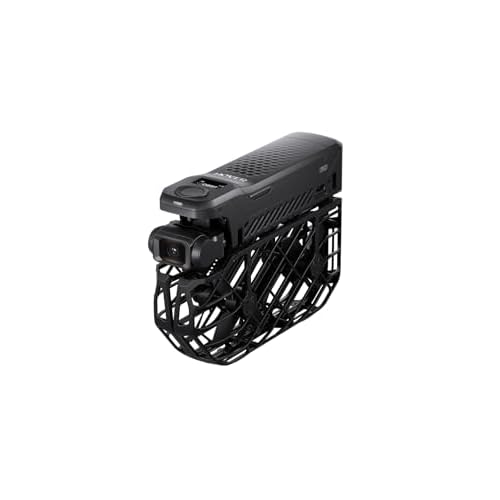
Weighing in at just 125 grams, this device is incredibly lightweight . Once folded, it disappears into a jacket pocket or small bag. This is a huge advantage in the field compared to bulky equipment.
Good news for paperwork lovers: this lightweight aircraft is often exempt from registration (like with the FAA in the US for recreational use). You can fly with peace of mind, without having to deal with cumbersome administrative procedures before each outing.
Take a look at our full review of the HoverAir X1 for more technical details . You’ll understand why it’s a must-have .
The smartphone and stabilizer duo: total ground control
The image quality of your smartphone, but better
The starting point is simple: modern smartphones have incredible video sensors capable of filming in 4K. The stabilizer simply harnesses this raw power by eliminating unwanted camera shake .
If you are hesitating about whether the HOVERAir X1 vs smartphone with stabilizer is really useful, know that the final image quality of the phone will almost always be superior to that of the HOVERAir X1, especially when the light is low.
The advantage? You use equipment you already know inside and out: your own phone .
Absolute control over every aspect
This is the decisive advantage over an autonomous drone. With a gimbal, every movement is intentional and controlled. The integrated joystick allows for pans, tilts, and tracking shots with surgical precision impossible handheld .
Also consider dedicated apps like DJI Mimo or ZY Cami, which greatly expand creative possibilities . They offer active object tracking or moving timelapses to add dynamism to your videos.
- The framing was precise down to the millimeter .
- Adjustable movement speed depending on the action.
- The ability to make complex plans .
- Immediate responsiveness to follow up on unforeseen events.
Unparalleled versatility
A stabilizer is not limited to a single type of aerial shot. It is used daily for face-cam vlogs, detailed product shots, posed interviews, or simple illustrative shots while walking.
Note that many stabilizers have a small tripod integrated into the handle. This allows you to place it anywhere for static shots or time-lapses without additional equipment.
This is also what makes it similar to other compact stabilization solutions that are very popular with nomadic creators.
The ecosystem and the cost
Let’s talk about price, because it’s a major factor. A good smartphone stabilizer costs significantly less than the HOVERAir X1, often three to four times less depending on the model.
The financial investment is therefore much lower , since you already own the main component of the camera: the smartphone. There’s no need to buy a complete device.
Finally, the ecosystem of accessories such as microphones or LED lights is often easier to integrate into a smartphone setup.
Head-to-head: the comparative table to understand everything
Enough talk. To get to the bottom of this, nothing beats a direct confrontation. Let’s put the two solutions in the ring and compare them point by point .
The clash of characteristics
To help you decide whether the HOVERAir X1 vs. smartphone with a stabilizer is truly useful, take a look at this comparison. It summarizes the strengths of each option to help you choose .
| Criteria | HOVERAir X1 | Smartphone + Stabilizer |
|---|---|---|
| Type of plans | Aerial, autonomous tracking, wide shots (drone shots). | On the ground, controlled tracking shots, shots at eye level, interviews. |
| Ease of use | Extremely simple. Automated. Almost no learning curve. | Requires learning (balancing, wrist movements, using the app). |
| Portability | Ultra-compact and lightweight (125g). Fits in a pocket. | More cumbersome. The stabilizer is an additional item to carry. |
| Image quality | Decent (2.7K). Sufficient for social media. Limited in low light. | Excellent. Depends on the smartphone but often 4K 60fps, better sensors. |
| Creative Control | Very limited. You choose a mode, the drone does the rest. No manual flight control. | Total. Precise control of frame, speed and trajectory via joystick. |
| Autonomy | Low battery life. Approximately 10-11 minutes per battery. Requires multiple batteries. | High. Depends on the smartphone’s battery, but the stabilizer lasts for several hours. |
| Sensitivity to the elements | Very sensitive to wind. Unusable in moderate to strong winds. No GPS. | Usable in almost all weather conditions (except heavy rain for the smartphone). |
| Cost | Expensive (several hundred euros). | Affordable (often between €100 and €150 for a good model). |
Which tool for which use? Concrete scenarios
For the solo traveler and vlogger
Are you wondering if comparing the HOVERAir X1 to a smartphone with stabilization is really useful for an adventurer? Imagine yourself walking through a breathtaking landscape. Here, the HOVERAir X1 reigns supreme. The “Follow” or “Reveal” mode creates epic shots impossible to achieve alone .
With a traditional stabilizer, you’d have to walk backwards or ask a stranger to film you. It’s much less practical for capturing the vastness of a place without cropping your head.
The verdict in this specific case is clear. A clear advantage for the X1, which handles wide shots and autonomous tracking perfectly.
For the sports content creator (running, mountain biking, skateboarding)
Let’s consider another scenario: filming an intense mountain biking session in the forest. The HOVERAir X1 can follow the action completely autonomously, offering dynamic angles like side tracking . It’s amazingly easy.
However, its tracking speed remains limited (up to 42 km/h for the Pro versions) and it can lose track of the subject behind obstacles . It’s not foolproof.
The stabilizer, held by a friend, will offer much more reliable and responsive tracking, but without the aerial perspective. It’s a draw , depending on the desired shot.
For family videos and memories
Want to film the kids running around in the garden? The X1 in “Orbit” or “Hover” mode can create a fun and original memory in seconds. The “flying toy” aspect is a real bonus.
The stabilizer, on the other hand, will be more versatile for capturing indoor moments , birthdays, and close-ups with better sound quality. It’s not afraid of walls.
Verdict: advantage to the stabilizer for everyday versatility , but the X1 offers that famous “wow factor”.
For the semi-professional videographer (music videos, real estate, interviews)
Here, the debate is quickly settled for the experts. For use requiring control and maximum image quality, the smartphone and stabilizer combination is essential . It’s indispensable.
The X1’s lack of manual control and inferior image quality disqualify it for professional or semi-professional use . You can’t risk an amateurish result.
For creators looking to monetize their content, mastery and quality are paramount. A stabilizer isn’t optional; it’s the foundation of their equipment.
The compromises you have to accept: what no one tells you
On paper, the promise is enticing. We can already imagine effortless cinematic shots. But every tool has its hidden drawbacks. To determine if comparing the HOVERAir X1 to a smartphone with a stabilizer is truly useful for your needs, let’s be honest and discuss the real problems you’ll encounter in practice.
The hidden weaknesses of the HOVERAir X1
The real Achilles’ heel of this aircraft? The wind. A mere breeze exceeding 5.4 m/s is enough to make it drift dangerously and ruin your plan . This is its major limitation: it hates air currents.
Here are some other technical limitations that can quickly become annoying :
- The absence of GPS: without it, there is no automatic return to the starting point (RTH) if things go wrong.
- Very short battery life: with a theoretical flight time of 11 minutes, the battery drains very quickly.
- Manual control is almost non-existent : you can only control it via the app for 30 seconds.
Even worse, image quality degrades rapidly. As soon as the light drops below 15 lux, the sensor struggles and digital noise explodes .
The limitations of the stabilizer that are often forgotten
It’s never truly “plug-and-play.” You have to carefully balance the smartphone every time you turn it on, especially if you change the case or add a filter. This repetitive step quickly becomes frustrating when you want to film spontaneously.
Don’t think that equipment is everything. The learning curve to master the famous “ninja walk” and achieve fluid movements is real. Your first attempts will often be disappointing and shaky.
Finally, don’t forget that it ties up your phone. You won’t be able to answer an urgent call or send a message while filming.
Noise and discretion: a significant point.
The HOVERAir X1 is still a drone, and it shows. In flight, it produces the sound of a swarm of angry mosquitoes . It’s impossible to record a clean sound nearby, and it immediately attracts attention.
It’s a hindrance in public or quiet places. You won’t be able to use it discreetly everywhere without disturbing others .
Conversely, the stabilizer is completely silent . It allows you to film incognito without anyone turning around to look at you.
The question of sustainability
Weighing in at just 125 grams, the X1 is ultra-light, but this lightness suggests a certain fragility. A bad fall against a wall or a collision with a tree could be fatal , especially without obstacle avoidance sensors.
Batteries are also consumables. They need to be replaced after 300 charge cycles. This is a maintenance expense to consider .
A mechanical stabilizer, on the other hand, is generally more robust . It withstands the rigors of daily use better and offers a potentially longer lifespan.
Verdict: So, is the HOVERAir X1 really useful?
We’ve laid everything on the table: the strengths, the weaknesses, the scenarios. It’s time to answer the crucial question. Should you buy this selfie drone?
It’s not a replacement, it’s a complement.
The answer is clear: is the HOVERAir X1 really useful compared to a smartphone with a stabilizer? Yes, but it doesn’t replace a smartphone with a stabilizer. It does something completely different, capturing aerial angles impossible with a selfie stick.
Seeing it as a “versus” is a mistake. It should be considered as an additional creative tool in your bag, alongside the stabilizer, to effortlessly vary your shots.
One is for controlled and manual ground plans, the other for automated aerial plans .
Yes, the HOVERAir X1 is useful if…
…you’re a solo creator and you’re tired of static tripod shots. It will unlock new perspectives for your vlogs and travel videos, offering that “third-person” view impossible to film alone .
…simplicity and speed are more important to you than absolute image quality or total control. You want to press a button, release the camera, and get the shot .
…you have the budget for a “fun” tool that will bring an immediate touch of originality without any hassle.
No, move along if…
…your priority is the best possible video quality . Your flagship smartphone with good stabilization will always perform better in terms of sharpness and light management, especially when the sun sets.
…you need precise control for semi-pro projects or if you’re filming in windy conditions, where the X1 quickly reaches its physical limits .
…your budget is limited. Invest first in a good microphone and a good stabilizer. That’s the essential foundation before thinking about flying gadgets .
My personal opinion and the future
For me, the HOVERAir X1 is a brilliant gadget, a kind of ” flying action camera “. I use it for specific shots, like bike tracking, that I simply couldn’t do otherwise.
But it never leaves my bag without being accompanied by my stabilizer, which remains my main working tool for 80% of my narrative shots on the ground.
Before deciding, compare it to other models on our drone comparison tool to see if it really meets your needs.
Ultimately, don’t try to replace one with the other . Use the HOVERAir X1 to effortlessly capture fun and fast aerial shots . Keep your stabilizer for image quality and control . If you can, combine the two for total versatility and to boost your creativity .