The use of drones in Europe is governed by a set of European regulations that define possible operations based on the risk involved. These regulations, which have been put in place to ensure air safety and the protection of people and property, divide drone operations into three main categories: Open , Specific , and Certified .
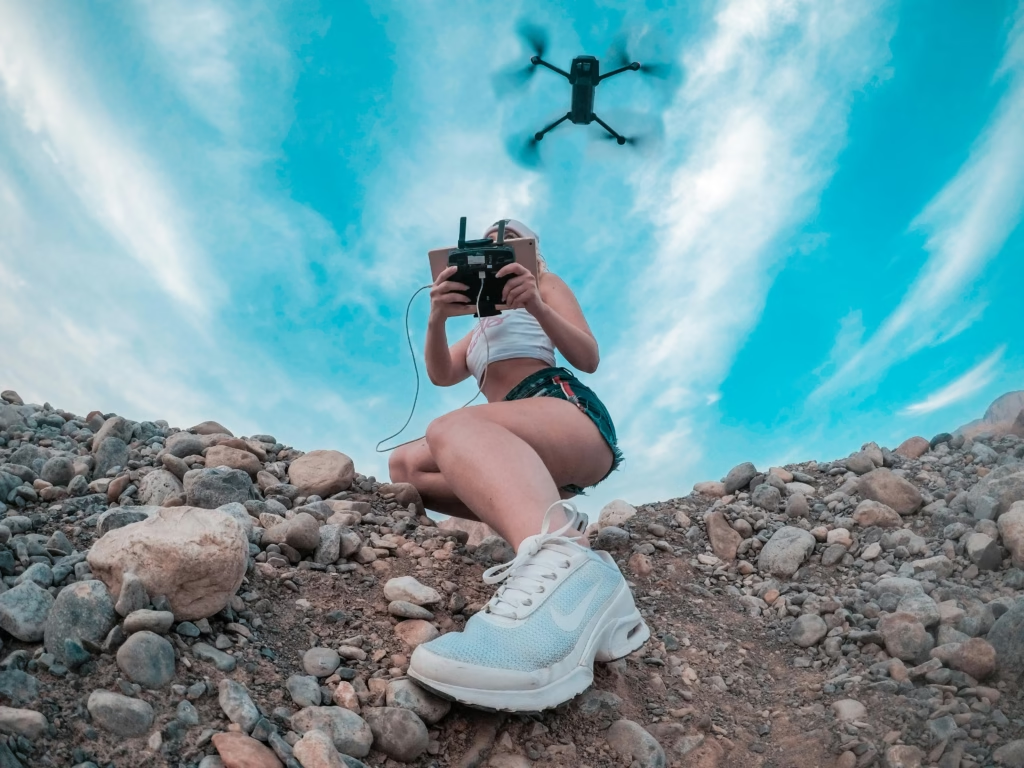
Open Category
The Open category is the most accessible and applies to low-risk drone operations. These operations are subject to pre-established operational rules, which simplifies administrative procedures. The following rules, defined by European regulations, apply here. They depend on the drone’s weight and the intended use scenario.
- Operations must be conducted within visual line of sight (VLOS), meaning that the remote pilot must have direct visibility of the drone.
- The flight altitude is generally limited to 120 meters above the ground.
- Use is limited to authorized areas.
- Drones used in this category must be registered (if the drone weighs more than 250g or is equipped with a camera) and the remote pilot must be trained and certified.
Specific Category
The Specific category covers drone operations that present a higher risk and cannot be carried out in the Open category. This includes, for example, flights beyond visual line of sight (BVLOS) or flights over populated areas. In this category, risk assessment is paramount.
- Remote pilots must obtain specific flight authorization, based on a risk analysis and a declaration of operations.
- The operator must have an operations manual.
- Using a European standard scenario (STS – Standard Scenario) can simplify the procedure.
- Alternatively, authorization based on a specific risk assessment (PDRA – Pre-defined Risk Assessment) is possible.
Authorizations are issued by the competent civil aviation authorities of each country. Requirements vary depending on the type of operation and the level of risk.
Certified Category
The Certified category is reserved for operations presenting the highest level of risk, similar to manned aviation. It requires drone certification, a remote pilot license, and operator approval. This applies, for example, to drone flights transporting people or hazardous materials. Safety requirements are at their highest level.
- Drones must be certified in accordance with airworthiness standards.
- Remote pilots and operators must possess specific qualifications and licenses.
- The operations are subject to rigorous control and monitoring processes.
The choice of flight category depends on the intended use of the drone and the associated level of risk. It is important to comply with current regulations to ensure safety and legal compliance. Non-compliance may result in penalties.