
The real question isn’t just which camera is “the best,” but which one best suits your needs. In this DJI Osmo Pocket 4P vs. Insta360 Luna Ultra comparison, the Pocket 4P emerges as the simplest and most consistent option for vlogging, lightweight travel, and budget. On the other hand, the Luna Ultra holds its own very well if you’re aiming for 8K, solo shooting with a detachable screen, and a more ambitious setup from the outset.
Important: Droneandcam.com did not conduct any in-house practical testing. The analysis below is based on official technical specifications consulted on August 1, 2026, cross-referenced with several media reviews published after the launch.
Quick verdict
These two cameras do not target exactly the same user. Here is which one to choose based on your priorities.
The DJI Osmo Pocket 4P makes more sense if…
- you want a truly pocketable camera that is easy to carry;
- you prioritize vlogging, travel, and simple audio handling;
- you want the most accessible entry price;
- you want to film quickly without spending time in the settings.
The Insta360 Luna Ultra makes more sense if…
- you want more comfort when filming yourself alone;
- you care about 8K video and cropping flexibility;
- you like creator bundles that are already well equipped;
- you want the most ambitious package on paper.
In short, the DJI Osmo Pocket 4P focuses more on simplicity and mobility, while the Insta360 Luna Ultra leans more toward versatility and creative possibilities.
DJI Osmo Pocket 4P vs Insta360 Luna Ultra : comparison table
Compare the main differences between these two gimbal cameras: price, sensors, image quality, zoom, stabilization, battery life, storage, and features.
← Scroll horizontally →
| Criteria | DJI Osmo Pocket 4P | Insta360 Luna Ultra |
|---|---|---|
| Price | 599 € in the Standard Combo 689 € in the Vlog Combo | 729 € in the standard bundle 929 € in the Creator bundle |
| Release date | Official reveal in May 2026 On sale in 2026 | June 10, 2026 |
| Dimensions | 159,5 × 63,3 × 33,5 mm | 52,4 × 169,9 × 38,5 mm |
| Weight | 230 g | 233 g in black 235 g in white |
| Sensors | 1-inch CMOS sensor on the wide lens 1/1.28-inch CMOS sensor for the telephoto lens | 1-inch sensor on the wide lens 1/1.3-inch sensor for the telephoto lens |
| Aperture | f/2.0 on the wide lens f/1.8 on the telephoto lens | f/1.8 on the wide lens f/2.0 on the telephoto lens |
| Physical focal lengths | 20 mm wide-angle 60 mm telephoto | 20 mm wide-angle 60 mm telephoto |
| Minimum focus distance | 9 cm wide-angle 20 cm telephoto | 9 cm wide-angle 15 cm telephoto |
| Zoom | Up to 12x in video 3x optical telephoto at 60 mm | Up to 12x, equivalent to a 240 mm framing Advertised lossless zoom up to 6x, equivalent to 120 mm |
| Maximum video resolution | 4K | 8K at 30 fps |
| Maximum slow motion | 4K up to 240 fps on the wide lens 4K up to 200 fps on the telephoto lens | 4K up to 120 fps 1080p up to 240 fps |
| Claimed dynamic range | Up to 17 stops on the main sensor Maximum figure obtained with the D-Log 2 profile. | Up to 14 stops on the main sensor |
| Image profiles | 10-bit D-Log 2 on the main sensor D-Log on the telephoto lens | 10-bit I-Log Dolby Vision |
| Stabilization | 3-axis mechanical gimbal | 3-axis mechanical gimbal Additional electronic compensation depending on the mode |
| Subject tracking | ActiveTrack Multiple-person tracking, with up to eight subjects announced | AI-assisted Deep Track tracking Group tracking and zoom-linked tracking |
| Screen | 2-inch rotating touchscreen 556 × 314 pixel resolution 1,000-nit brightness | 2-inch detachable OLED touchscreen 318 × 564 pixel resolution Maximum brightness of 1,000 nits |
| Detachable screen | No | Yes
Can act as both a monitor and a remote control. |
| Audio | 3 built-in microphones AAC audio at 48 kHz / 16-bit Compatible with DJI microphones | 4 built-in microphones 3 on the camera and 1 on the detachable screen Compatible with Insta360 microphones |
| Internal storage | 103 GB usable | 47 GB usable |
| Memory card | microSD up to 1 TB | Compatible with microSD cards Maximum capacity not clearly specified in the official hardware sheet consulted. |
| Battery | 1,545 mAh | 1,550 mAh for the camera 210 mAh for the detachable screen |
| Claimed maximum battery life | Up to 210 minutes Measured in 1080p at 24 fps with the screen and Wi-Fi turned off. | Up to 240 minutes Measured in 1080p at 24 fps with the screen and Wi-Fi turned off. |
| Charging | 80% in 18 minutes 100% in 32 minutes Test carried out with a 65 W DJI charger. | 80% in about 23 minutes 100% in about 38 minutes Test carried out with a USB-C 30 W charger compatible with PD 3.0 PPS. |
| Connectivity | Wi-Fi 6 Bluetooth 5.4 BR/EDR and BLE USB-C | Wi-Fi 6 on the camera Wi-Fi 4 on the detachable screen Bluetooth BR/EDR and BLE USB-C 3.0 |
| Water resistance | Not waterproof | Not waterproof
Insta360 states that it is neither waterproof nor resistant to splashes or dust. |
| Mobile app | DJI Mimo | Insta360 app |
| Desktop software | No DJI editing software dedicated exclusively to this camera Files compatible with standard editing software | Compatible with the main editing software The exact functions available on desktop depend on the software and file format used. |
The specifications shown here are based mainly on the official DJI and Insta360 technical sheets consulted in August 2026. Maximum battery life figures are obtained under lab conditions, in 1080p at 24 fps, with the screen and Wi-Fi turned off. Real-world battery life will therefore be lower in 4K or 8K, with the screen on, active tracking, Wi-Fi, or intensive zoom use.
The 4 gaps that really matter
- For vlogging and travel: the DJI Osmo Pocket 4P seems more rational thanks to its more compact size, fast charging and lower entry price.
- For filming alone: the Insta360 Luna Ultra scores a real point with its detachable screen, which is much more practical for framing yourself from a distance.
- For image and calibration: the Pocket 4P inspires more confidence regarding the latitude of the main sensor; the Luna Ultra responds with 8K and a promise of greater flexibility in terms of cropping.
- In terms of value for money: DJI seems more aggressive at the point of purchase, while Insta360 sells the idea of a ready-to-shoot creator pack better.
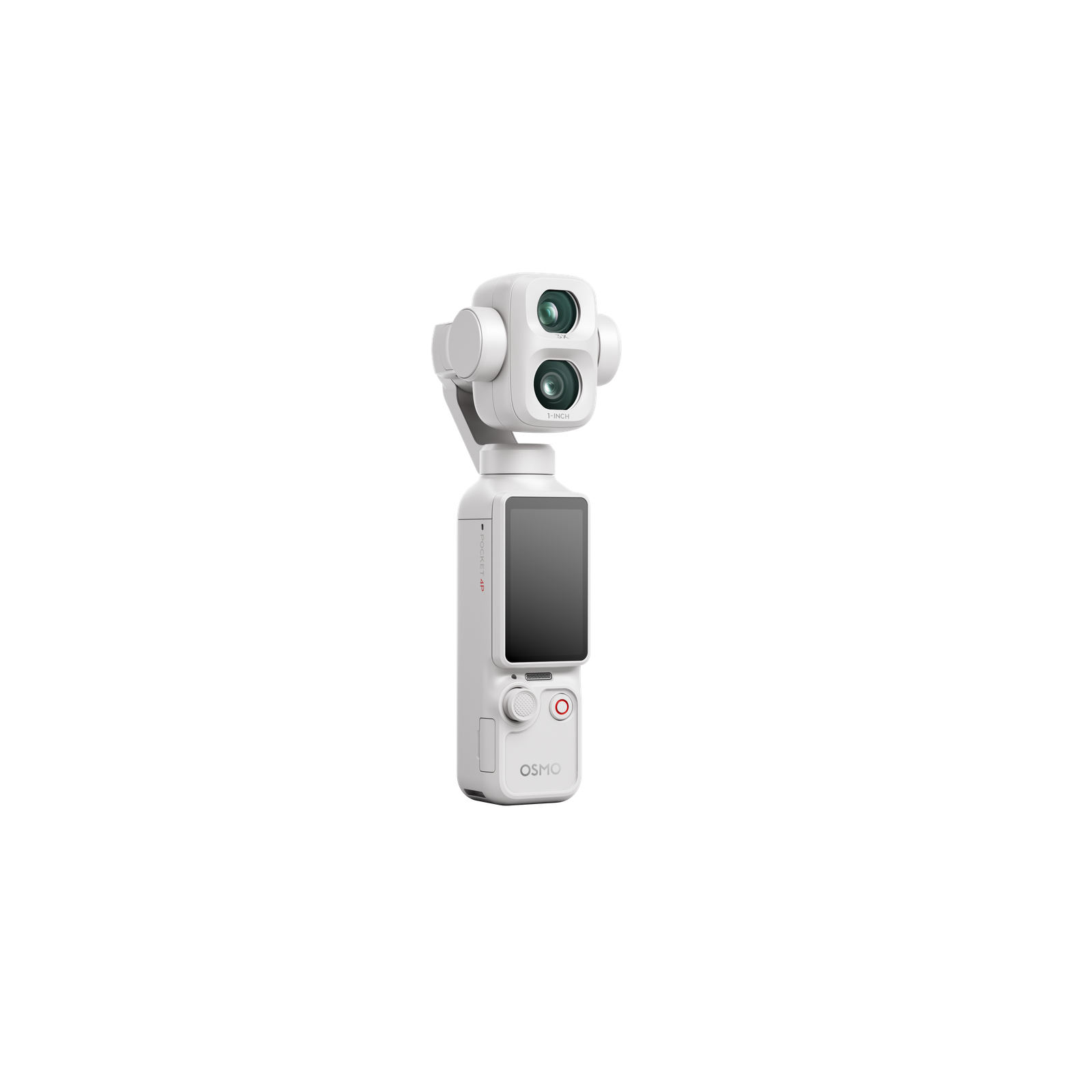
DJI Osmo Pocket 4P
The most accessible choice if you prioritize compactness, vlogging, ease of use, and a tighter budget.
- Dual 20 mm and 60 mm focal lengths
- 1-inch main sensor
- Especially fast charging
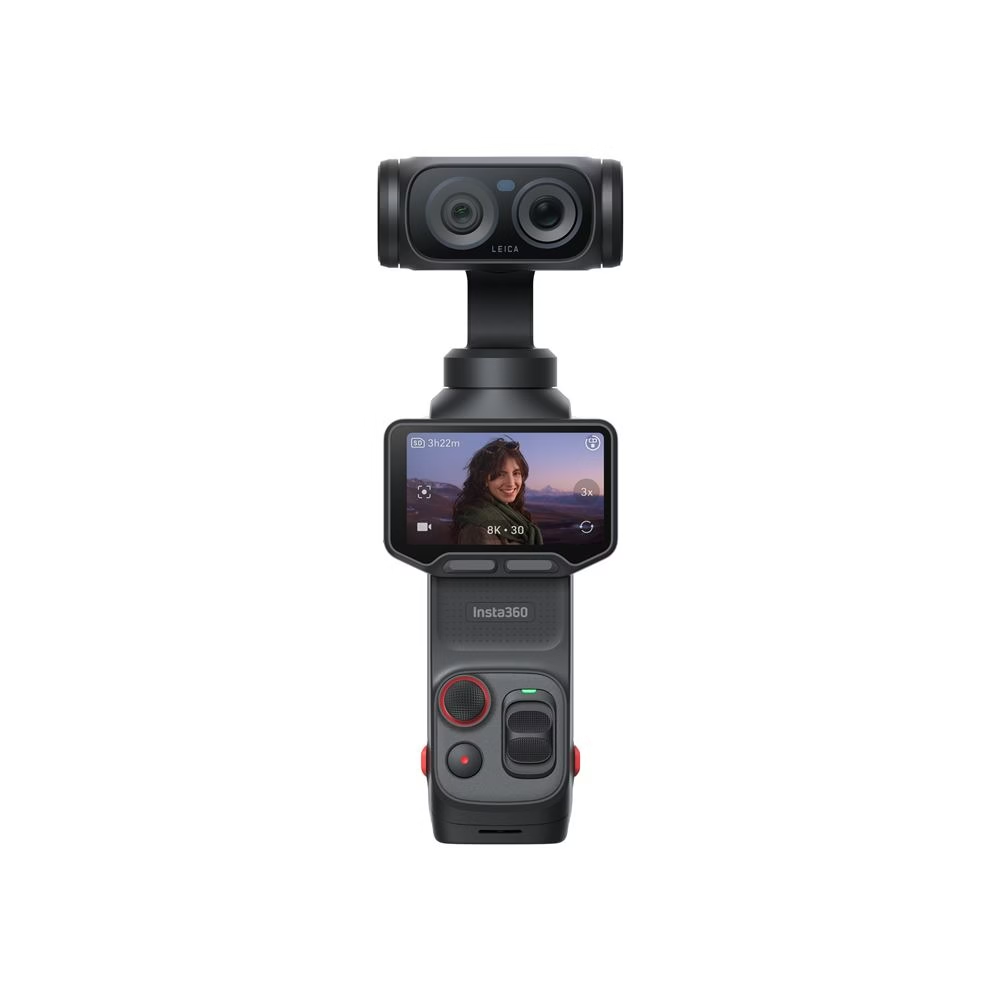
Insta360 Luna Ultra
The most ambitious option if you want 8K video, a detachable screen, and a particularly complete creator bundle.
- Video recording up to 8K
- Detachable OLED screen
- Advertised lossless zoom up to 6x
The two cameras in brief
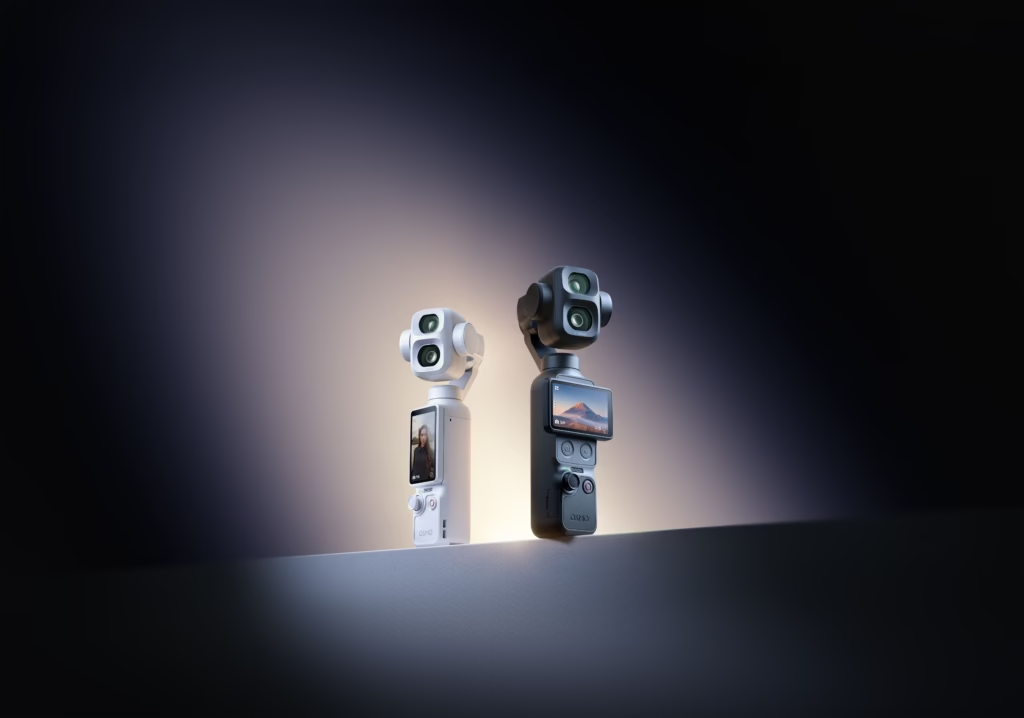
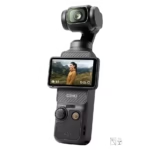
The DJI Osmo Pocket 4P stays true to the Osmo Pocket concept: a gimbal camera designed for fast, clean, and compact filming. Its most interesting addition isn’t a marketing gimmick, but the true 60mm focal length, which expands its uses without making it a heavier or more intimidating device. If you’d like some background, Droneandcam has already published a dedicated article on the DJI Osmo Pocket 4 .
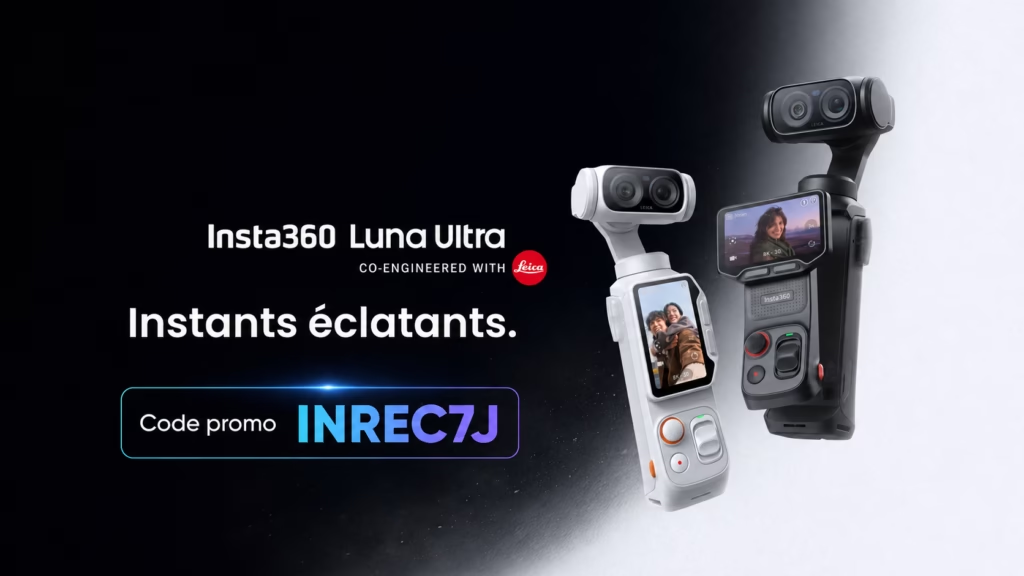
The Insta360 Luna Ultra goes further in terms of technical specifications and ease of solo use. It boasts 8K video, zoom, AI tools, and especially its detachable screen, which clearly changes how you frame your shots. The site also offers a review focused more specifically on the Insta360 Luna if you want to explore that model separately.
Design, weight and handling
In this respect, the Pocket 4P maintains a clear advantage for those who want a camera they can take without a second thought. It slips more easily into a pocket or small bag, and its user experience remains more immediate. The Luna Ultra, on the other hand, seems more ambitious, but also a little less “I take it everywhere without a second thought” type of camera.
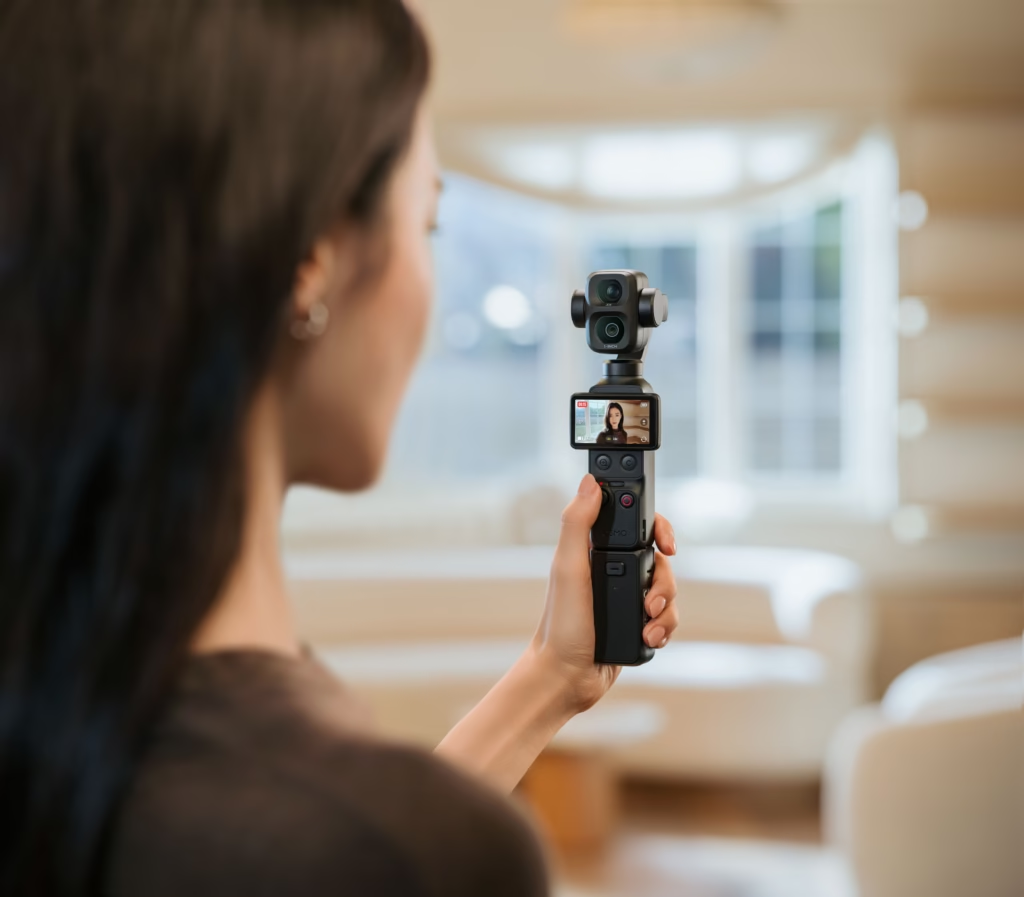
However, the Luna Ultra’s detachable screen is a game-changer for solo filming. For face cam shots, static shots, or remote control, it’s a real practical advantage. In everyday use, this translates into two very different approaches: DJI gains in discretion and simplicity; Insta360 gains in framing comfort for the solo creator.
DJI Osmo Pocket 4P
If compactness is your number-one criterion, this is currently the most logical option of the two.
- A true pocket format
- Generous internal storage
- Especially fast charging
Sensors, lenses and image quality
On paper, the duel is interesting because the two brands aren’t playing quite the same card. DJI is trying to reassure users about the quality of its main sensor, image latitude, and overall consistency of the rendering. Insta360, on the other hand, is emphasizing versatility, 8K, zoom, and the accompanying software suite.
If your goal is to get a clean, usable, and credible image for premium vlogs or small client content, the Pocket 4P currently seems to have a slight edge over its main camera. If you want more flexibility for cropping and to push the “tech camera” aspect a bit further, the Luna Ultra has strong arguments in its favor. In other words: DJI seems more reassuring; Insta360 seems more spectacular.
Low light
In low light, one should be wary of marketing claims. Insta360 highlights its PureVideo mode, but early reviews clearly indicate that this type of processing primarily helps salvage a difficult image, without performing miracles. Meanwhile, the Pocket 4P seems to perform better with its main camera as soon as the light drops, notably preserving a cleaner image and less easily crushed highlights.
For someone who frequently films at night, indoors, or while traveling in the evening, the current advantage lies with DJI. It’s not a decisive victory, but enough to influence a purchase if low-light performance is a key factor.
Stabilization and movement
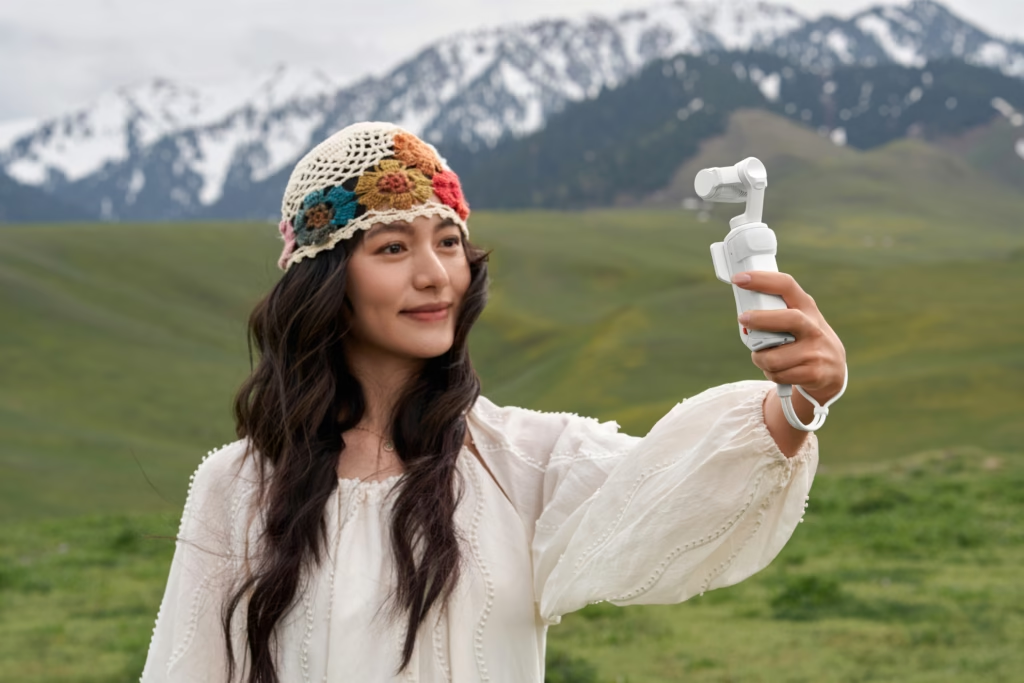
Good news: these are two true 3-axis gimbal cameras, not just simple action cams that try to correct everything electronically. In both cases, the image looks more natural than on a purely software-stabilized camera, especially for pans or small tracking movements.
The DJI seems a bit more reassuring when the focal length increases, with several initial tests highlighting good performance with telephoto shots. When filming while walking, both are limited by physics: the gimbal smooths the movement well, but doesn’t completely eliminate the up-and-down motion of each step. The result: a close match for general use, with a slight edge for the DJI if you really push the limits of long focal lengths.
Autofocus and subject tracking
DJI has a fairly reassuring track record with its tracking, and ActiveTrack 8.0 reinforces this impression. If you want to film yourself quickly without monitoring every shot, the Pocket 4P seems a bit more reliable these days. Insta360 responds with DeepTrack 5.0 and a more solo-oriented approach, particularly because the detachable screen makes framing much easier.
In short, if you’re only judging autofocus and tracking reliability, DJI has a slight advantage. However, if you consider the overall experience of framing yourself, the Luna Ultra gains ground thanks to its more user-friendly interface in this specific scenario.
Sound and microphones
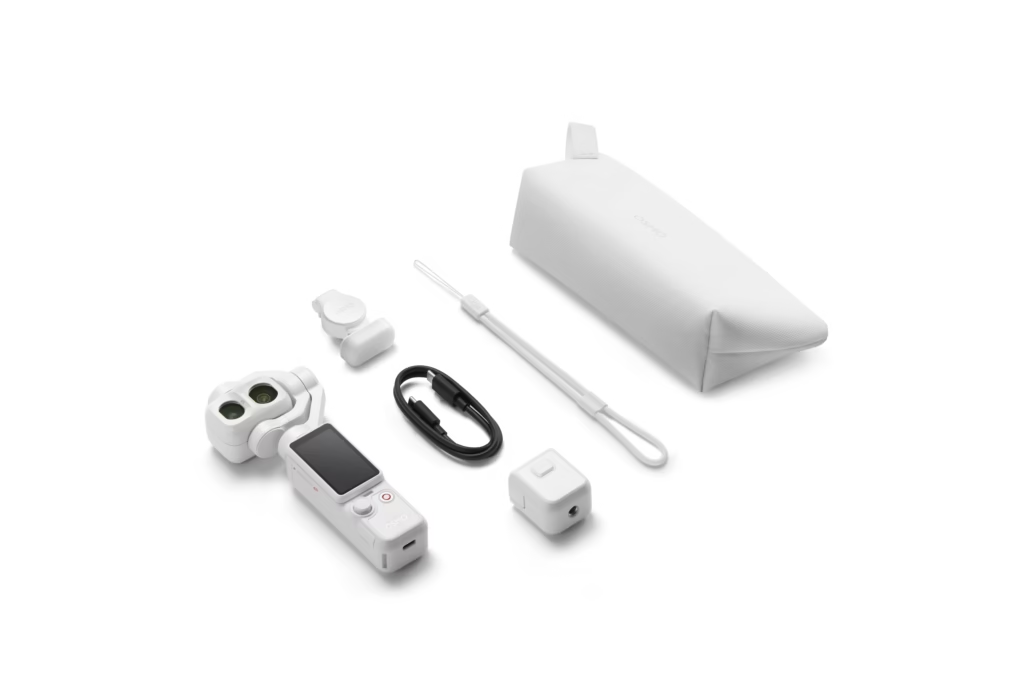
Audio is often underestimated in camera comparisons, even though it’s one of the primary factors that determines the perceived quality of a video. Here, the DJI Osmo Pocket 4P inspires more confidence with its three microphones, its already well-established audio ecosystem, and an integration that seems simpler for many creators.
The Luna Ultra is far from out of the running. Its detachable screen with integrated microphone can be useful, and the integration with the Insta360 Mic Pro makes sense if you’re sticking with the brand. But if you want the most reliable solution for clean vlogging, the Pocket 4P maintains a slight edge. You can also check out our Insta360 Mic Pro vs. DJI Mic 3 comparison.
Screen, controls and ease of use
If you’re a beginner, the Pocket 4P seems easier to understand. Its positioning is clear, its use is more straightforward, and its behavior seems more predictable. It’s exactly the kind of camera we readily recommend to someone who wants to film frequently without spending time tweaking settings or navigating the app.
The Luna Ultra requires a bit more getting used to, but it also offers more freedom. Its detachable screen significantly changes the user experience for solo filming. DJI thus gains in raw simplicity; Insta360 gains in flexibility of use.
Battery life, charging and storage
On paper, the Luna Ultra has the edge in battery life, boasting up to 4 hours compared to 210 minutes for the Pocket 4P in 1080p/24. This can be a significant advantage if you’re filming for extended periods without the option to recharge. DJI counters with much faster charging and, more importantly, considerably more internal storage: 103GB versus 47GB of usable space on the Insta360.
For many creators, this difference is more useful than it seems. The more generous internal capacity simplifies everyday use, especially when traveling or shooting several short clips throughout the day. If you’re filming for a long time in one go, Luna has the advantage. If overall practicality is your priority, the DJI takes the lead again. For memory cards, you can consult our guide to the best microSD cards for the DJI Osmo Pocket 4 .
Applications and software
Both brands are heavily invested in mobile, but not in quite the same way. Insta360 pushes the concept of quick editing, AI tools, and ready-to-publish effects more aggressively. DJI seems less demonstrative, but more focused on providing a clean image base that can then be used according to your workflow.
If you mainly use your smartphone and want something fun, the Luna Ultra has a slight edge. However, if you’re primarily looking for a credible main image for color grading or integration into a more serious workflow, DJI has a more compelling argument in its favor.
Accessories and ecosystem
Both ecosystems are already well-served, with mini-tripods, handles, audio equipment, filters, and bundles. DJI provides reassurance with a clear and coherent Osmo ecosystem. Insta360, on the other hand, scores points with its Luna Ultra bundles, making the offering very easy to understand for anyone looking to buy the right bundle right away. If you’re planning to equip yourself around the Luna, you can take a look at our selection of the best accessories for the Insta360 Luna .
Insta360 Luna Ultra
If your priority is to get an ambitious bundle from day one, this is the most attractive option of the two.
- Un écran OLED détachable
- Up to 8K video recording
- A particularly complete creator bundle
Prices, packages and value for money
The crux of the matter is often right there. At €729 for the standard bundle on the Insta360 France store, the Luna Ultra immediately enters the premium market. Meanwhile, the Pocket 4P appears at €599 for the standard bundle and €689 for the Vlog Combo, according to the European information gathered at the time of the search. The difference is significant.
If you’re looking for the best value for money for frequent filming without breaking the bank, the DJI Osmo Pocket 4P is currently the better option. If you’re willing to pay more for 8K, a detachable screen, and a more comprehensive package, the Luna Ultra is a strong contender. But in terms of pure price-performance ratio, DJI seems to have the edge.
Which camera best suits your profile?
Choose the DJI Osmo Pocket 4P if you mainly…
- simple and quick vlog;
- light travel;
- video while walking with minimal setup;
- beginner to intermediate level content;
- simple audio with an already clear ecosystem;
- a purchase where budget really matters.
Choose the Insta360 Luna Ultra if you mainly…
- solo filming with a need for remote control;
- cropping and 8K video;
- more demonstrative content;
- mobile editing with a strong reliance on AI tools;
- a pre-made creator bundle purchase.
DJI Osmo Pocket 4P vs Insta360 Luna Ultra: Advantages and disadvantages
DJI Osmo Pocket 4P
Strengths
- more compact and easier-to-carry format;
- a strong balance between price, compactness, and performance;
- a very good base for vlogging and travel;
- generous internal storage;
- recharge particulièrement rapide ;
- practical dual focal lengths for varying your framing;
- an easy-to-use DJI audio ecosystem.
Limitations
- no 8K video recording;
- a fixed screen that is less flexible for some framing needs;
- less suitable for remote solo shooting;
- creative and AI features that are less advanced;
- a less complete basic bundle for demanding creators.
Insta360 Luna Ultra
Strengths
- video recording up to 8K;
- more latitude for cropping in post-production;
- advertised lossless zoom up to 6x;
- a versatile dual-optics system;
- a very practical detachable OLED screen;
- more comfortable for solo filming;
- easier framing when the camera is farther away;
- Deep Track 5.0 for automatic tracking;
- active tracking while using zoom;
- group tracking for multi-person videos;
- 10-bit I-Log profile for color grading;
- 4K video up to 120 frames per second;
- more flexible slow motion and creative shots;
- coherent, well-equipped creator bundles;
- a more ambitious software and AI approach;
- a microphone built into the detachable screen;
- compatibility with the Insta360 audio ecosystem;
- claimed battery life of up to four hours;
- a more complete solution for creators who work alone.
Limitations
- higher purchase price;
- a format less compact than a true pocket camera;
- a clearly more expensive creator bundle;
- 8K video produces heavier files;
- some functions may be unnecessary for basic use.
DJI Osmo Pocket 4P vs Insta360 Luna Ultra FAQ
Does the DJI Osmo Pocket 4P film in 8K?
No. According to the official technical specifications consulted, the Pocket 4P goes up to 4K, including at high frame rates.
Is the Insta360 Luna Ultra better for filming alone?
Yes, on this specific point, its detachable screen gives it a real practical advantage for framing and controlling its shooting remotely.
Which camera seems the most suitable for vlogging?
The DJI Osmo Pocket 4P now seems more suitable for vlogging, thanks to its more compact size, lower price and simple audio ecosystem.
Which camera should I choose for my trip?
The Pocket 4P retains an advantage for light travel, as it appears easier to carry, recharge quickly and use without additional accessories.
Is the Luna Ultra’s 8K resolution enough to make it better?
Not automatically. 8K can be a real plus for cropping, but it doesn’t replace the compactness, simplicity, or value for money of the DJI.
Which camera seems most effective in low light?
At this stage, the Pocket 4P looks slightly more convincing on its main camera when the light drops.
DJI Osmo Pocket 4P
The best choice if you want to film quickly, take your camera out often, and keep a more reasonable budget.
Check the current price Affiliate link: a commission may be paid at no extra cost to you.Insta360 Luna Ultra
The best choice if you want 8K video, more comfort for solo filming, and a more ambitious creator bundle.
See the Insta360 Luna Ultra offer Affiliate link: a commission may be paid at no extra cost to you.DJI Osmo Pocket 4P vs Insta360 Luna Ultra: which one should you really choose?
For most readers looking for an efficient, simple, and budget-friendly pocket camera, the DJI Osmo Pocket 4P currently seems to be the most sensible choice. It appears better suited for vlogging, travel, easy audio recording, and its truly compact size.
The Insta360 Luna Ultra becomes more appealing if your needs are more ambitious or specific: more frequent solo shooting, a desire for 8K, a need for a detachable screen, and a preference for a more comprehensive creative bundle. It doesn’t outshine the DJI. It simply caters to a different user profile.
If you’re looking to buy a camera today for frequent, hassle-free filming, the Pocket 4P still has a slight edge. If you want more framing freedom and a more demonstrative approach, the Luna Ultra is definitely worth considering. And if your needs are more broadly related to vlogging, you can also compare it with our selection of the best vlogging cameras .



Leave a Reply