
Updated on August 6, 2026. This guide summarizes the EASA framework: always check the geo-zone and national rules before a shoot.
Getting paid for a drone job doesn’t automatically move the flight into the Specific category. In Europe, the category depends on the risk of the scenario: area, distance from people, altitude, drone, visibility, and flight path. A simple professional shoot can therefore fall under the Open category if all its limits are respected.
Open, Specific or Certified: the quick answer
- Open: low-risk flights, leisure and many simple commercial jobs, with no prior authorization if the limits are respected.
- Specific: an operation that exceeds the Open limits: beyond visual line of sight, riskier environment, close to people, or a particular scenario.
- Certified: high-risk operations, comparable to manned aviation; this is not the case for a typical shoot.
Choosing a drone suited to the scenario
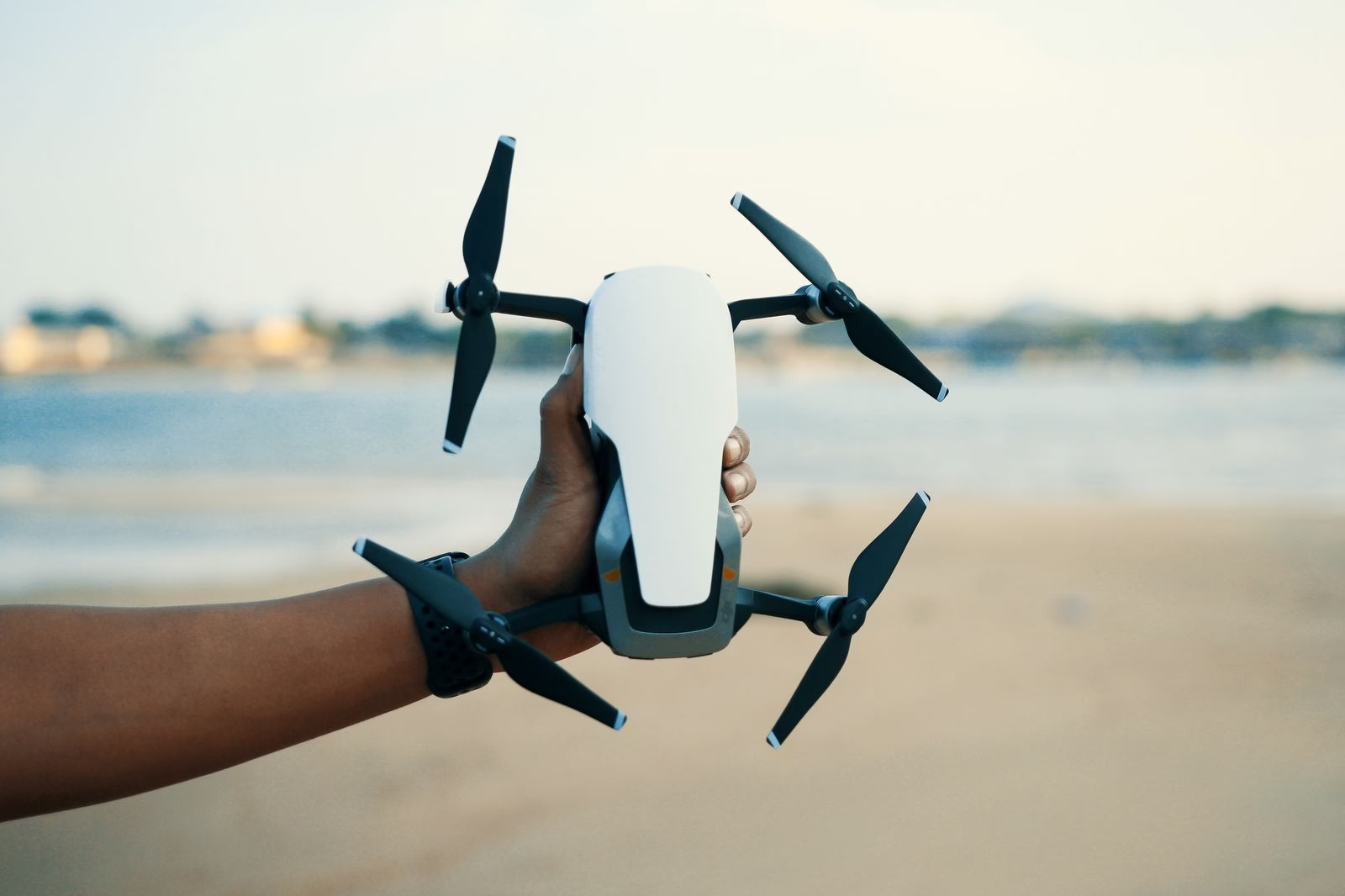
A light drone can simplify some Open uses, but neither its weight nor its price replaces a mission analysis.
See the current priceCompare drones
Some links are affiliate links; that doesn’t change the price for you.
What the Open category really allows
The Open category covers low-risk activities, including a paid job, as long as the remote pilot complies in particular with VLOS (visual line of sight), the maximum altitude of 120 m, geo-zones, and the limits of subcategory A1, A2 or A3. “Professional” status therefore doesn’t create a separate obligation. First, see our guide to C0 to C6 classes.
When do you need to move to Specific?
Specific applies when the project falls outside the Open framework. The operator must then check the route provided by their authority: standard scenario, declaration, or authorization after a risk analysis. A client allowing you to film their location does not give you airspace authorization. Areas near airports, for example, require extra vigilance: see our feature on sensitive areas and airports.
Checklist before a paid job
- Registration: check the operator’s registration when the rules require it.
- Competency: hold the training corresponding to the subcategory or scenario.
- Geo-zones: check the official map on the day.
- Privacy: plan for image rights and the necessary agreements.
- Insurance: check the country- and activity-specific requirements; also read our guide to drone insurance.
Frequently Asked Questions
Do you need a professional license?
There isn’t a single professional license: the category and scenario determine training, registration, and authorization.
Is a drone under 250 g enough?
No. Weight can help sometimes, but the CE class, the area, people, and the scenario are still decisive.
Key takeaways
The useful question isn’t “am I getting paid?” but “does my scenario remain low-risk and compliant?”. Sources: EASA Open category, EASA Specific and Regulation (EU) 2019/947.



Leave a Reply