
What a 1-inch sensor really changes in practice
A 1-inch sensor matters because it gives creators more margin in the scenes that are usually frustrating: mixed light, dark interiors, sunsets, travel vlogs and quick edits where the image starts falling apart too fast on smaller sensors.
- Most visible gains: cleaner low light, smoother highlight roll-off and more flexibility in post.
- What it does not do: magically fix bad optics, weak stabilization or poor color processing.
- Best use case: creators who want a more forgiving image without carrying a much bigger camera system.
When a brand emphasizes a 1-inch sensor , it’s not just to pad out a spec sheet. In video, sensor size has a very real impact: light management, image clarity, dynamic range, overall rendering, and the leeway you have during editing. That’s precisely why products like the Insta360 Luna highlight this feature so heavily.
The simplest thing to remember is this: a larger sensor gives you more leeway to better process the image . This doesn’t mean everything will automatically be magical, but it provides a more solid foundation for filming in both good conditions and more challenging situations.
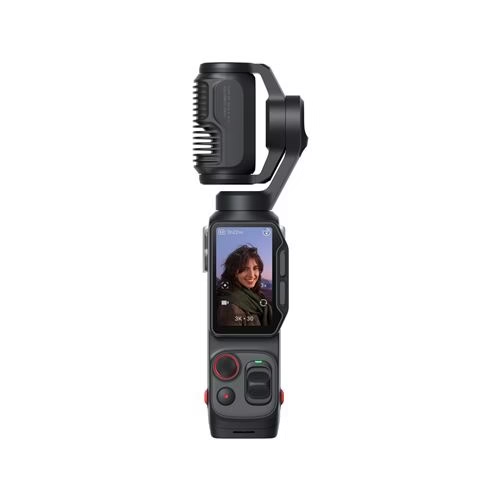
Why does sensor size matter so much?
The sensor is the surface that receives the light. The larger it is, the better it can generally handle the scene, especially when the light is low, the contrasts are high, or you want to recover detail in the shadows and highlights.
- Better low-light handling : the image stays cleaner for longer.
- More dynamic range : you better preserve highlights and shadows.
- More useful details : particularly on textures and light transitions.
- A more flexible rendering during editing : especially if the camera also offers a Log profile or 10-bit.
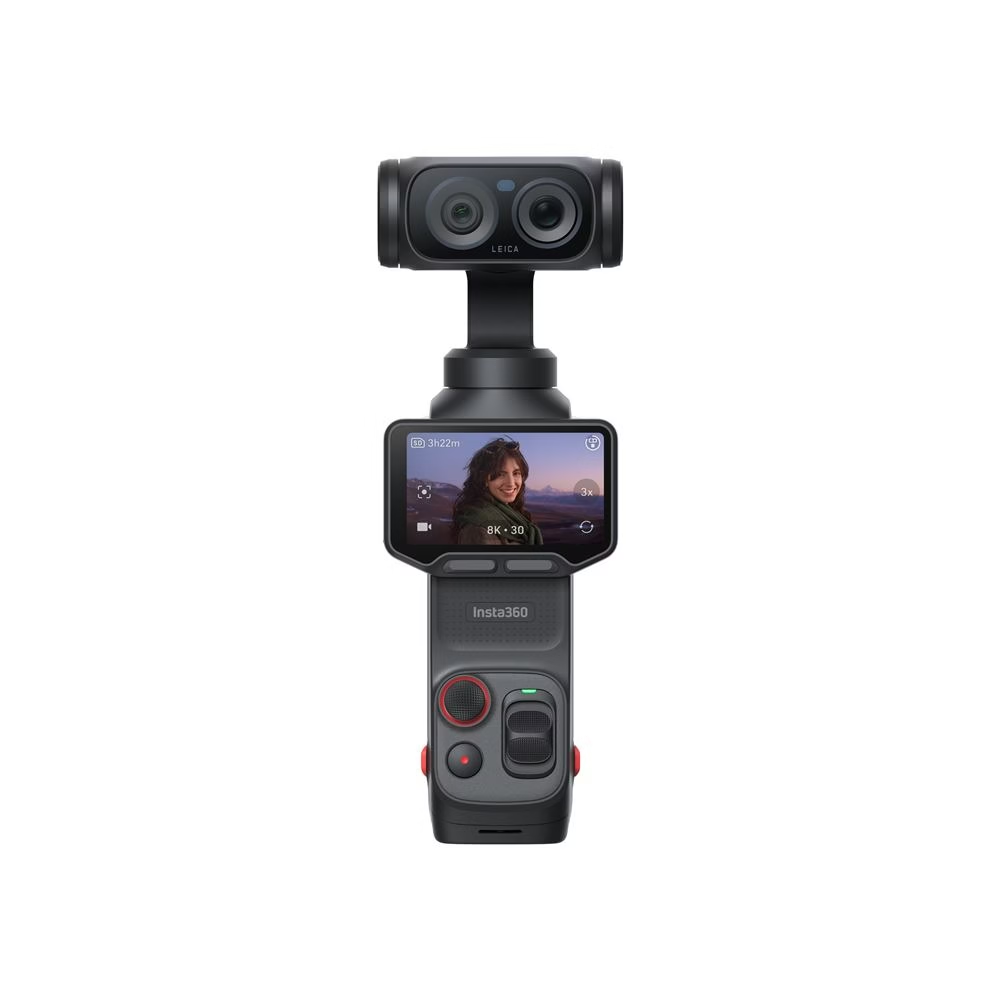
Specifically, where do we see the difference?
The difference is most noticeable in everyday scenes that pose a challenge for small cameras:
- a shady street with a very bright sky;
- a somewhat dark interior;
- a sunset;
- a vlog filmed early in the morning or in the evening;
- a scene where you want to do some basic color grading in the background.
In those moments, the 1-inch sensor can really improve comfort. The image holds up better, breathes more, and often gives a richer or more natural impression.
The 1-inch sensor isn’t everything, but it helps a lot.
Of course, the final quality doesn’t depend solely on the sensor. Optics, image processing, stabilization, color profile, and compression also play a role. But starting with a more advanced sensor remains a huge advantage. This explains why a camera like the Luna ranks higher than simple, very compact models.
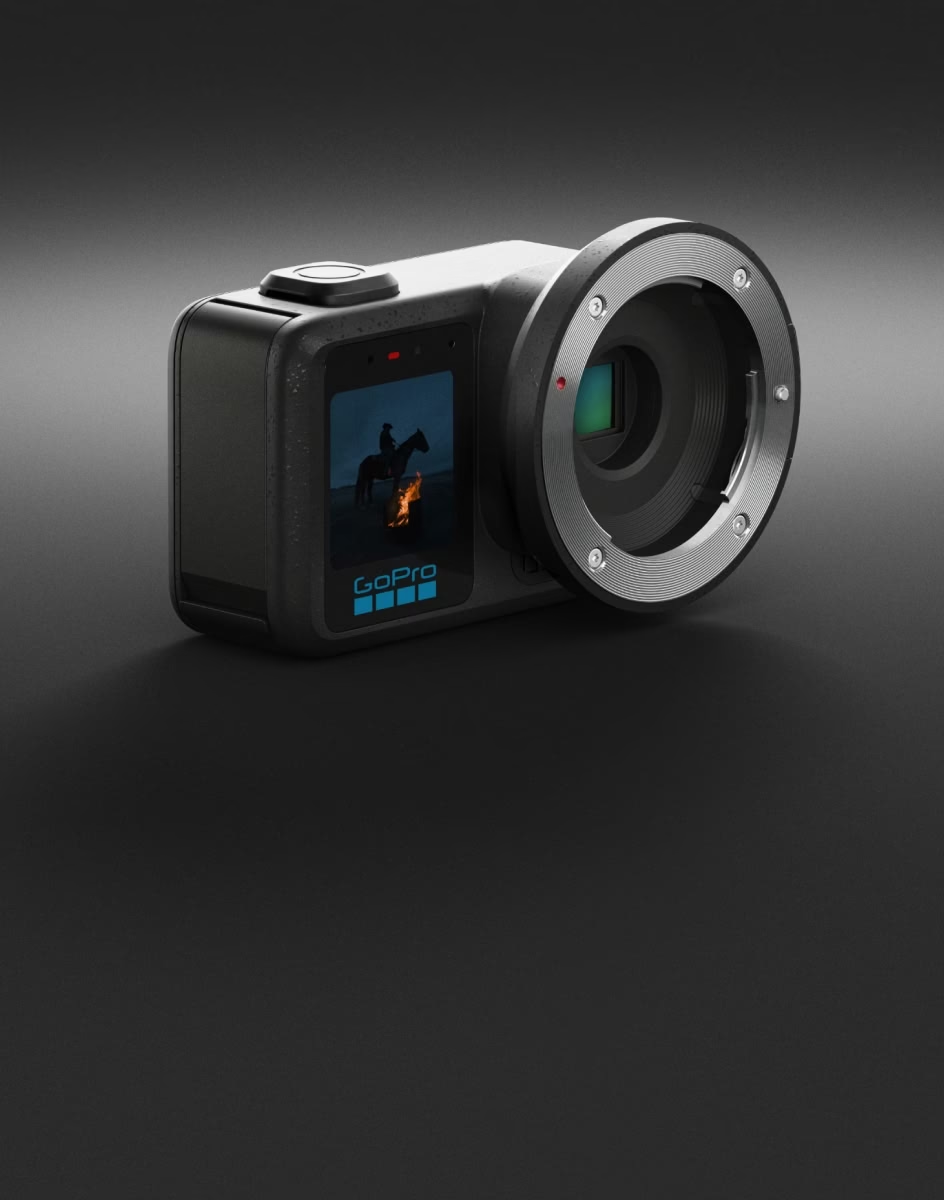
On this point, the GoPro Mission 1 is also an interesting benchmark, as it too features a 1-inch sensor, but with a more action-oriented approach. The Luna, on the other hand, combines this sensor with an approach more dedicated to premium stabilized vlogging .
Why this is particularly interesting for vlogging and travel
When traveling, you can’t always control the light. You might go from a brightly lit street to a dimly lit café, from a poorly lit temple to a sunny square, without having time to set up a complex camera system. A 1-inch sensor makes these transitions less of a hassle and gives you a more consistent image in real-life situations.
- You film more calmly when the conditions are not ideal.
- You recover your images better in post-production.
- You maintain a more flattering result without having to push the settings too far.
And what about the background blur in all of this?
Large sensors are often associated with background blur. Yes, a 1-inch sensor can help achieve a slightly more defined image than a very small one, but that’s not its only advantage—nor necessarily its main one for a camera of this type. The real benefit often lies more in the overall image quality , the lighting, and the editing flexibility.
If you want to delve deeper into the logic of rendering, you can also read our educational article on aperture and background blur .
Why does the Insta360 Luna place so much emphasis on this argument?
Because the Luna doesn’t want to be seen as just a handy little camera. It aims to be a premium vlogging camera with a more ambitious, flexible, and serious image than a typical action cam. The 1-inch sensor is central to this promise, especially when combined with 10-bit i-Log , 3-axis stabilization , and a user experience designed for creators.
In summary
A 1-inch sensor in video isn’t just a marketing gimmick. It’s a fundamental feature that can genuinely improve image quality, lighting, dynamic range, and shooting comfort, especially for vlogging, travel, and everyday scenes. That’s precisely why cameras equipped with it, like the Luna, generate so much interest among discerning creators.

-1-150x150.avif)



Leave a Reply