
Are you tired of the crappy sound from your smartphone or your camera ruining your videos? This dji mic comparison will change everything: we analyze the strengths and weaknesses of the DJI Mic 3, Mic 2 and Mic Mini so you can find your ideal microphone . Get ready to discover 32-bit audio quality, intelligent noise reduction, record range – the essentials for professional sound, even outdoors. We compare battery life (up to 21 hours), connectivity (Bluetooth, dual band 5GHz) and sound backup: everything you need to choose according to your style, your budget and your needs.
- Need perfect sound for your videos? The guide to choosing your DJI microphone
- Design vs. Portability: Which Is More Discreet?
- Audio quality and recording features: sound first
- The DJI Mic 3: A Leap Forward for Pros
- Connectivity and compatibility: what hardware should you use them with?
- Verdict: Which DJI microphone is right for you?
- In brief and where to find them
Need perfect sound for your videos? The guide to choosing your DJI microphone
Tired of the mediocre sound from your camera or smartphone? You’re right: audio is 50% of video quality. Poor sound recording can ruin hours of editing. Fortunately, DJI offers a range of wireless microphones tailored for creators . Among them, the DJI Mic 3 is the new professional standard, the DJI Mic 2 remains a benchmark in terms of value for money, and the DJI Mic Mini shines with its compactness.
Pourquoi ces trois modèles méritent ton attention ? Le Mic 3 offre une sortie 4 canaux et un contrôle adaptatif du gain, idéal pour les projets avancés. Le Mic 2, lui, allie autonomie renforcée et enregistrement 32 bits float, parfait pour les vloggers. Le Mic Mini, enfin, pèse à peine quelques grammes tout en assurant une transmission stable jusqu’à 400 mètres. Si tu débutes, notre comparatif des meilleurs micros sans fil pour smartphone te donnera les bases pour choisir.
| Characteristic | DJI Mic 3 | DJI Mic 2 | DJI Mic Mini |
|---|---|---|---|
| Model | DJI Mic 3 | DJI Mic 2 | DJI Mic Mini |
| Indicative launch price | 309 € (top) | €349 (average) | 169 € (low) |
| Autonomy (TX Transmitter) | 8 a.m. | 6 a.m. | 11.5h |
| Autonomy (with case) | 28h | 6 p.m. | 48 hours |
| Transmission range | 400 m (2.4 + 5 GHz) | 160 m (CE) / 250 m (FCC) | 400 m |
| Internal recording | Yes (32 GB / 57 hours approx.) | Yes (8 GB / approx. 14 hours) | No |
| Maximum quality | 32-bit float | 32-bit float | 24-bit |
| Noise reduction | Yes (advanced, 2 levels) | Yes | Yes |
| Bluetooth connection | Yes | Yes | Yes |
| Max number of TX per RX | 4 | 2 | 1 |
| Timecode | Yes | No | No |
| TX Weight | 16 g | 28 g | 10 g |
Need a DJI Mic comparison ? This table summarizes the specs. The Mic 3 offers 32-bit float and advanced noise reduction, while the Mic Mini offers compactness.
Design vs. Portability: Which Is More Discreet?
The charging case: more than just a box
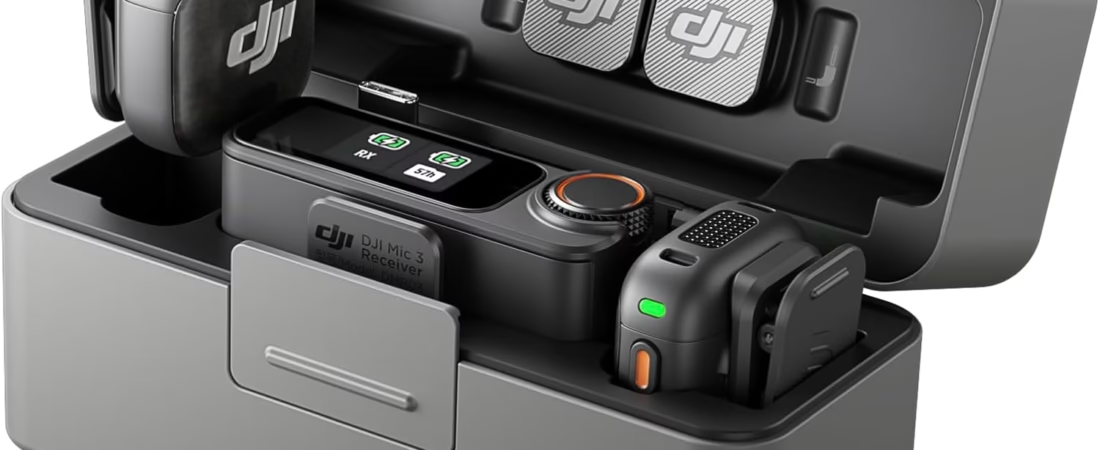
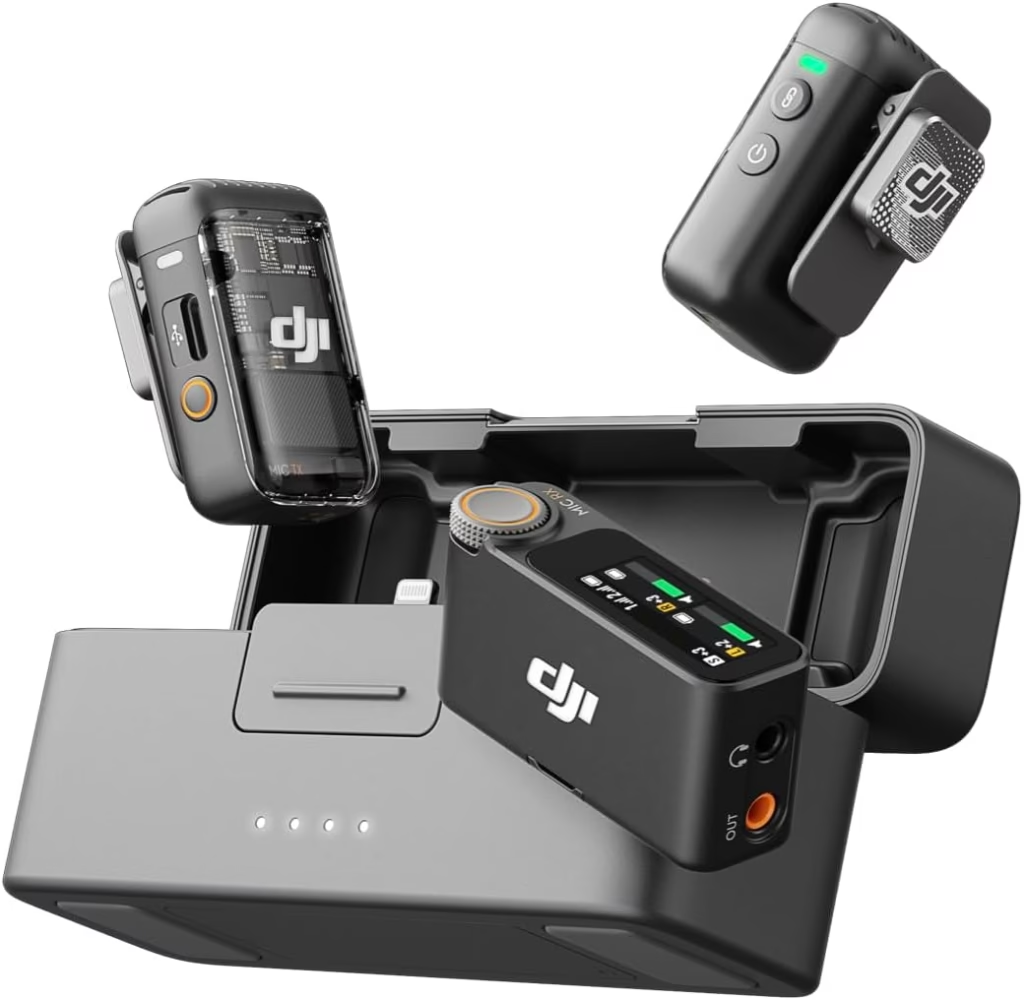
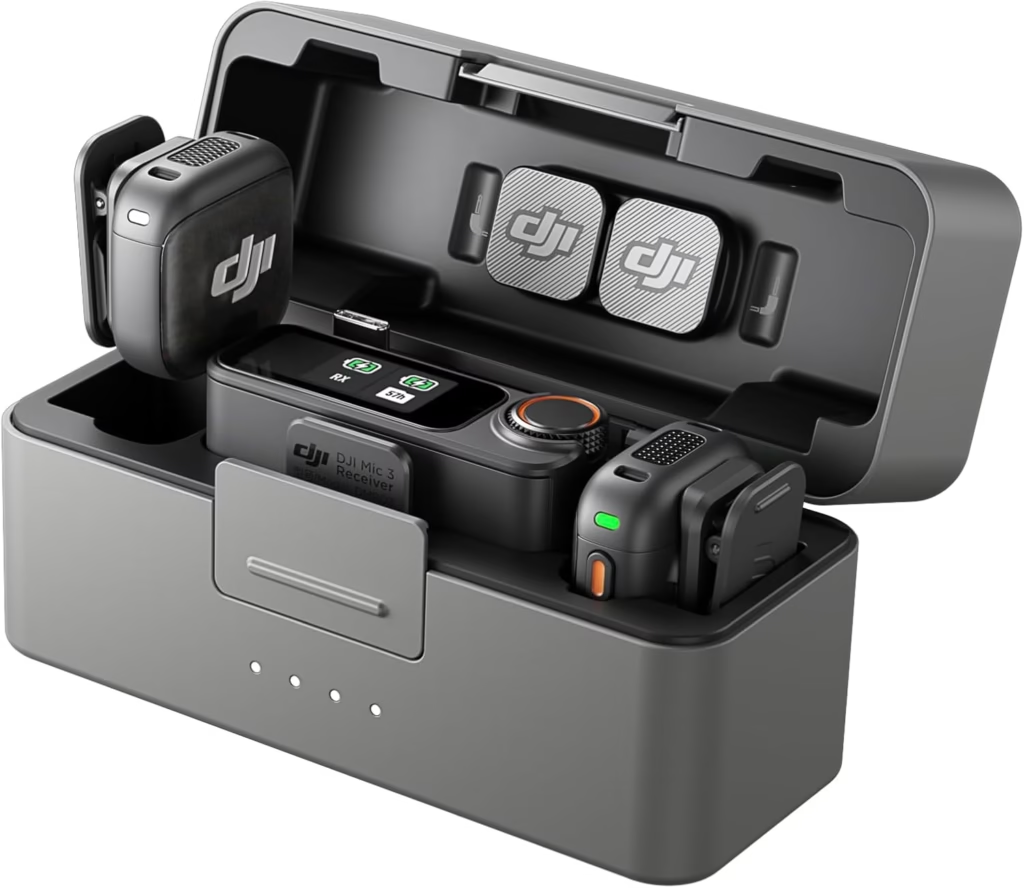
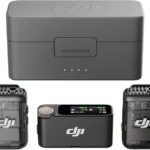
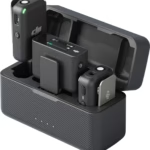
The DJI Mic 2 and DJI Mic 3’s charging case is a masterpiece of engineering. At 116 x 41.5 x 59.72 mm and weighing 200 g, it automatically charges and pairs the microphones. A valuable time saver for busy creators. The DJI Mic Mini also has a charging case, but it’s more compact and lighter (139 g compared to 200 g for the Mic 2). This is a significant gain in portability, even if it remains a compromise in terms of endurance and functionality.
Transmitters (TX): compactness and fixing
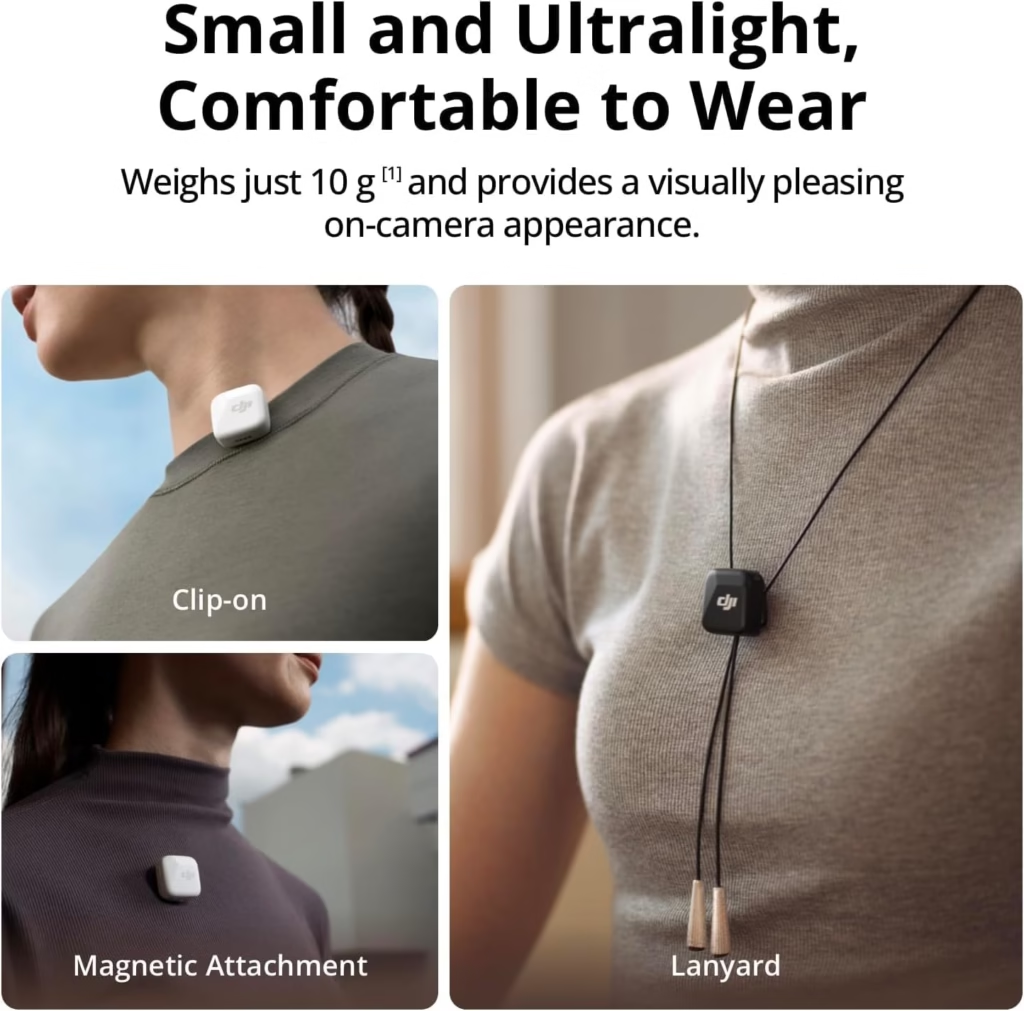
Tight spaces? The DJI Mic series transmitters are the size of a coin. The DJI Mic 2 weighs 28g, the DJI Mic 3 30g. A pinch of difference. Both feature a sturdy clip and a powerful magnet to discreetly attach to a collar or jacket . A fast and reliable system, ideal for interviews on the move. The DJI Mic Mini, although not measured here, seems in the same vein: discreet by default.
Receivers (RX): ergonomics at your fingertips
Le DJI Mic 2 et le DJI Mic 3 ont un récepteur avec écran tactile OLED et molette. Réglages précis à portée de doigt, sans sortir son smartphone. Un atout pour les pros. Le DJI Mic Mini tranche : pas d’écran, mais un branchement direct sur smartphone via USB-C ou Lightning. Les ajustements se font via l’appli DJI Mimo. Pratique pour les vloggeurs nomades. Un choix entre contrôle manuel ou simplicité mobile ? À vous de voir.

Audio quality and recording features: sound first
32-bit float recording: the anti-clipping revolution
Want to avoid sound distortion even in noisy environments? The DJI Mic 3 and Mic 2 use 32-bit float recording, a technology that acts as a safety net. Imagine infinite volume: even if the sound exceeds normal limits, there is no clipping . It’s like capturing a thunderstorm without ever saturating!
The Mic Mini remains 24-bit. This is already powerful, but beware of sound spikes! You’ll need to manually adjust the levels to avoid distortion. This is a compromise to keep in mind if you work in quiet or predictable environments.
Internal recording: peace of mind
Need a reliable backup so you never lose a recording? The DJI Mic 3 and 2 store audio directly in their transmitters. Imagine: if the connection to your smartphone drops, your files are intact!
The Mic 3 offers 32GB of storage, which is enough for hours of 32-bit recording. The Mic 2 is limited to 8GB, which is sufficient for short sessions but less practical for long takes. The Mic Mini has no internal storage: if the connection is broken , it’s a disaster. This is crucial if you’re filming on the move or in unstable locations.
Intelligent noise reduction
Let’s take a look at the fight against background noise. The Mic 3 and 2 have a one-click noise reduction function. In “Basic” mode (Mic Mini), it eliminates background noise like air conditioning. In “Loud” mode, ideal for noisy environments, you get crystal-clear voices .
The Mic 3 goes further with an improved algorithm, while the Mic 2 offers a standard version. The Mic Mini sticks to raw, unprocessed audio. Here’s a summary of the key differences :
- DJI Mic 3: 32-bit float, 32 GB, advanced noise reduction, quadraphonic mode.
- DJI Mic 2 : 32-bit float, 8GB, intelligent noise reduction.
- DJI Mic Mini : 24-bit, no internal storage, no noise reduction.
With these options, the choice depends on your needs : Field pro? The Mic 3 is a must. Tight budget and occasional use? The Mic Mini may suffice, provided you understand your recording conditions.
The DJI Mic 3: A Leap Forward for Pros
Want to wow your audience with professional sound on set? The DJI Mic 3 is designed for demanding creators. Its advanced features clearly set it apart from the Mic 2 and Mic Mini. Need more details? Let’s break it down.
Reliability and range: dual-band transmission
The DJI Mic 3 uses two frequencies (2.4 GHz and 5 GHz) simultaneously. The result? An ultra-stable connection even in the city or a crowded living room . The range reaches 400 meters in an open environment. Automatic switching between bands prevents signal loss, even with walls or interference. In “Lossless Audio” mode, the sound quality remains optimal, but the range is limited to approximately 200 meters.
Group and Multi-Cam Interviews: Multi-TX and Multi-RX Modes
The Mic 3 manages up to 4 transmitters on a single receiver. For example, for a round table discussion, each guest has their own microphone. Each track is isolated, simplifying editing. Need more? Up to 8 synchronized receivers for multi-camera shooting . In practice, you film a scene from multiple angles while maintaining clean audio for each camera. Practical for documentaries or sporting events.
Perfect synchronization: the integrated timecode
The Mic 3’s timecode is an ultra-precise timekeeper. It synchronizes sound and image in post-production, even in multi-camera. No more manual adjustments: editing becomes child’s play. A considerable time saver for professionals. Here are its key assets:
- Dual-band transmission : Maximum stability in crowded places thanks to automatic switching between 2.4 GHz and 5 GHz.
- 4 Transmitter Support : Perfect for group interviews or dual recordings.
- Built-in Timecode : Precise audio/video synchronization via Master Run and Auto Jam modes.
- Lossless Audio : Optimal 32-bit sound quality for demanding projects.
🎤 DJI Mic 3 – The Ultimate Wireless Microphone
- Professional 32-bit float audio quality
- Range up to 400 m in dual band
- Total autonomy of 28 hours with case
Connectivity and compatibility: what hardware should you use them with?
Universal compatibility
All three models work with a variety of devices . The DJI Mic 2 and Mic 3 receivers include USB-C and Lightning adapters, as well as a 3.5mm TRS cable for cameras. The Mic Mini connects directly to USB-C or Lightning. This allows it to be used with smartphones, cameras, and even computers without additional accessories.
Bluetooth connection
All models support Bluetooth. You can connect the transmitters directly to your smartphone or to DJI cameras like the Osmo Pocket 3 or Osmo Action 4. This eliminates the need for a receiver for these devices, simplifying setup . Perfect for vloggers or athletes looking for a lightweight setup.
The Mic 3 Compromise
The DJI Mic 3 eliminates all connectors on its transmitters to achieve a more compact design. However, its receiver remains versatile with two 3.5mm TRRS outputs and a USB-C port, ensuring compatibility with most cameras, smartphones, and computers.
Example of compatibility
The DJI Mic 2’s versatility allows it to be used with non-DJI cameras . Need a concrete example? You can pair it with the Insta360 Ace Pro, an action camera, using a suitable cable. This opens up possibilities for action videos or outdoor interviews, where flexibility is essential.
Verdict: Which DJI microphone is right for you?
Need to choose between the DJI Mic 3, Mic 2, and Mic Mini? Here’s the key to no more hassle. Each model meets specific needs. It’s up to you to find your perfect fit !
The DJI Mic Mini : for the nomadic and spontaneous vlogger
Ultra-compact and affordable, the DJI Mic Mini is your plug-and-play solution . Ideal for on-the-go vlogging, Reels, or stories. No hassle: just plug it into your smartphone and you’re ready to go!
But be careful: there’s no backup recording or noise reduction. Your phone is your only support. Perfect for beginners, but limited for professionals .
The DJI Mic 2: the smart choice for demanding creators
The DJI Mic 2 is THE Swiss Army knife . With its internal 32-bit float recording, you can save your footage even if something goes wrong live. With an 18-hour battery life, a 250m range, and an intuitive screen, it’s solid.
No timecode or multi-source management, but it’s the best value for money . Perfect for YouTube, interviews, or solo training. Want pro without breaking the bank? This is it.
The DJI Mic 3: the investment for professional productions
The DJI Mic 3 is built for the pros . With timecode, you can effortlessly sync multiple cameras. Manage up to 4 audio sources simultaneously (ideal for group interviews) and enjoy lossless transmission.
The downside? Its higher price and the lack of a lavalier microphone port on the transmitter. But for complex workflows, it’s a major plus .
- Are you a beginner or a smartphone vlogger? → The DJI Mic Mini is your ally.
- Are you a versatile creator and want the best value for money? → The DJI Mic 2 is the obvious choice.
- Are you a pro and every second in post-production counts? → The DJI Mic 3 is the tool you need .
In brief and where to find them
To sum up, the DJI Mic Mini is portable simplicity with up to 48 hours of battery life and an ultra-compact size. The DJI Mic 2 is guaranteed versatility thanks to its internal recording and 250m range. The DJI Mic 3 is professional power with an extended range of 400m, 32-bit float recording, and improved noise reduction. Need to choose quickly? Here are their key strengths .
Ready to make your choice and take your sound to the next level? You can find these mics here :
And there you have it! All you have to do is save .
There you have it! You now have all the keys to choosing your DJI Mic . Mic Mini for portable simplicity, Mic 2 for versatility with backup, Mic 3 for pros with timecode . Perfect sound is within reach . It’s your turn!



Leave a Reply