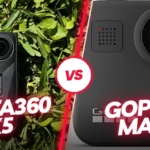
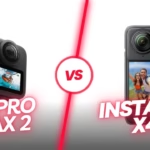
The Insta360 X6 and GoPro MAX 2 both shoot in 360° and promise to make filming easier: capture the whole scene, then choose the framing later. But they’re not aimed at exactly the same user. The X6 focuses on low light, the screen, and a very flexible workflow. The MAX 2 highlights true 8K, built-in GPS, six mics, and a format designed to handle demanding activities.
My choice is simple. I’d take the X6 for travel, cycling, vlogging, and shoots that run into dusk. I’d choose the MAX 2 for action sports, GPS, and the GoPro ecosystem. Here are the differences that really matter, without getting lost in the numbers.
The verdict in a few seconds
Insta360 X6
Choose the Insta360 X6 if you’re looking for the most versatile everyday camera: better low-light handling, a more comfortable OLED screen, internal storage, excellent battery life and a very complete ecosystem.
- ✓ Better at night
- ✓ 120 MP 360° photos
- ✓ Up to 140 min in 8K30
- ✓ 47 GB of usable storage
- ✓ Waterproof down to 20 m
GoPro MAX2
The GoPro MAX2 remains especially interesting if you prioritize built-in GPS, telemetry, and the GoPro ecosystem for sports activities.
- ✓ Built-in GPS
- ✓ 6 microphones
- ✓ Activity data
- ✓ Twist-and-Go lenses
- ✓ GoPro ecosystem
Insta360 X6 vs GoPro MAX 2: comparison table
| Criterion | Insta360 X6 | GoPro MAX2 |
|---|---|---|
| 360° video | Up to 8K at 50 fps | True 8K 360° |
| 360° photo | Up to 120 MP | Up to 29 MP |
| Sensors | Two square Sony 1/1.1-inch sensors | Two sensors |
| Low light | PureVideo up to 8K30, dedicated AI processing | Improved low-light settings, 10-bit and GP-Log |
| Color | 10-bit, native Dolby Vision, I-Log | 10-bit, GP-Log |
| Single-lens video | Up to 5K60, 170° in 5K30 and 4K120 | Up to 4K60, Max HyperView 180° |
| Stabilization | FlowState + Horizon Lock 360° | Max HyperSmooth + 360° Horizon Lock |
| Audio | 4 mics, smart wind reduction, dedicated engine mic, up to two compatible Mic Air/Mic Pro | 6 mics, Bluetooth and wind-noise reduction |
| Screen | 2.32-inch OLED, up to 1,200 nits | Touchscreen with preview and controls |
| Internal storage | 64 GB, including about 47 GB usable, + microSD | No internal storage, microSD card required |
| Battery | 2,600 mAh, up to 140 min in 8K30 | Enduro battery 1,960 mAh |
| Fast charging | Up to 80% in 24 minutes | USB-C charging |
| Sealing without casing | Up to 20 m | Up to 5 m |
| Waterproofing with a casing | Up to 60 m with Invisible Dive Case Pro | Depending on compatible housing |
| Objectives | Replaceable Lens 2.0, replaceable lenses | Twist-and-Go, tool-free replacement with no calibration |
| Storage without an SD card | Yes, thanks to internal memory | No |
| GPS | No built-in GPS announced | Built-in GPS |
| Wi-Fi | Wi‑Fi 6.0, up to 100 MB/s | Wi-Fi |
| USB | USB 3.0, up to 450 MB/s | USB-C |
| Bluetooth | Yes, quick connection to accessories | Yes |
| NFC | Yes | Not announced |
| Vlog / subject tracking | InstaFrame 2.0, auto tracking with direct 4K output | No direct equivalent announced |
| AI auto editing | AI Director, Auto Edit 2.0, Moments Pro | GoPro Quik editing tools |
| External mic compatibility | Direct connection to Mic Air and Mic Pro | Compatible Bluetooth mics |
| Accessories | More than 100 accessories compatible | GoPro accessory ecosystem |
| Motorcycle use | Dedicated engine mic, loop dashcam, speed overlays, license-plate blur | GPS and GoPro mounting ecosystem |
| Cycling use | Garmin, Apple Watch, and other sports-data overlays | Built-in GPS and telemetry data |
| Introductory price | Starting at €699 in Europe | Varies by market |
Battery-life figures always depend on the mode, temperature, and screen use. Read them as reference values, not as a promise that will be identical on every outing.
Video quality: two ways to benefit from 8K
On paper, both cameras offer 8K 360°. That matters, because 8K isn’t necessarily about exporting an 8K video. The main benefit is reframing. You can start from the same 360° clip and pull out a horizontal shot for YouTube, a vertical Reel, or a close-up. The more detailed the source file, the cleaner that reframe stays.
The X6 goes up to 8K at 50 frames per second. That’s a real advantage for fast movement and for keeping motion smoother. The MAX 2, meanwhile, puts the emphasis on its “True 8K” and its 29 million pixels in 360°. It also offers 10-bit color and GP-Log for creators who like to color-grade their footage.
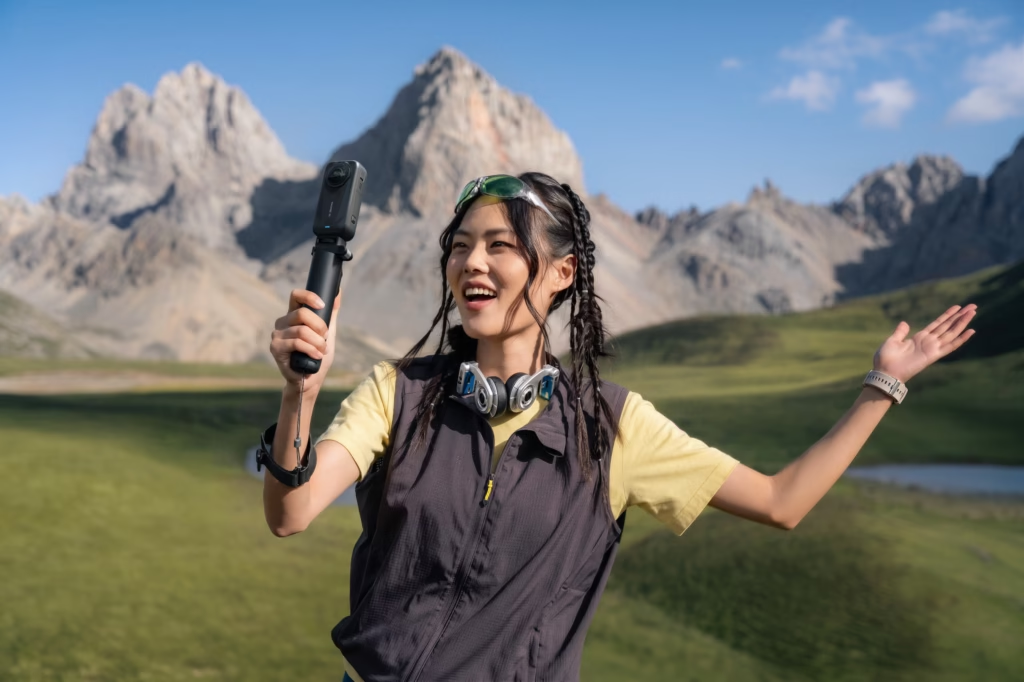
In my use, the X6 is especially pleasant when you want to shoot fast and decide later. Its InstaFrame 2.0 mode can output a flat 4K video with subject tracking. That’s handy for publishing a clip without spending too much time reframing. The MAX 2, on the other hand, leans more on the Quik app: AI object tracking, MotionFrame, and POV or selfie modes directly in the camera.
Low light: advantage Insta360 X6
This is the criterion that most clearly separates the two models. After three weeks with the X6, what stood out most was its progress in low light. Comparing night scenes with PureVideo enabled, the image was cleaner and digital noise less intrusive. It won’t turn a dark street into a lit set. But it does help you keep more usable shots at dusk, indoors, or at night.
The MAX 2 has serious tools for creators who work their images, with 10-bit color and GP-Log. Still, GoPro doesn’t highlight a noise-reduction mode comparable to PureVideo 2.0. If you shoot almost always in full sun, that gap matters less. If you regularly film after the end of the day, the X6 is the more reassuring choice.
Audio, GPS, and action sports: advantage GoPro MAX 2
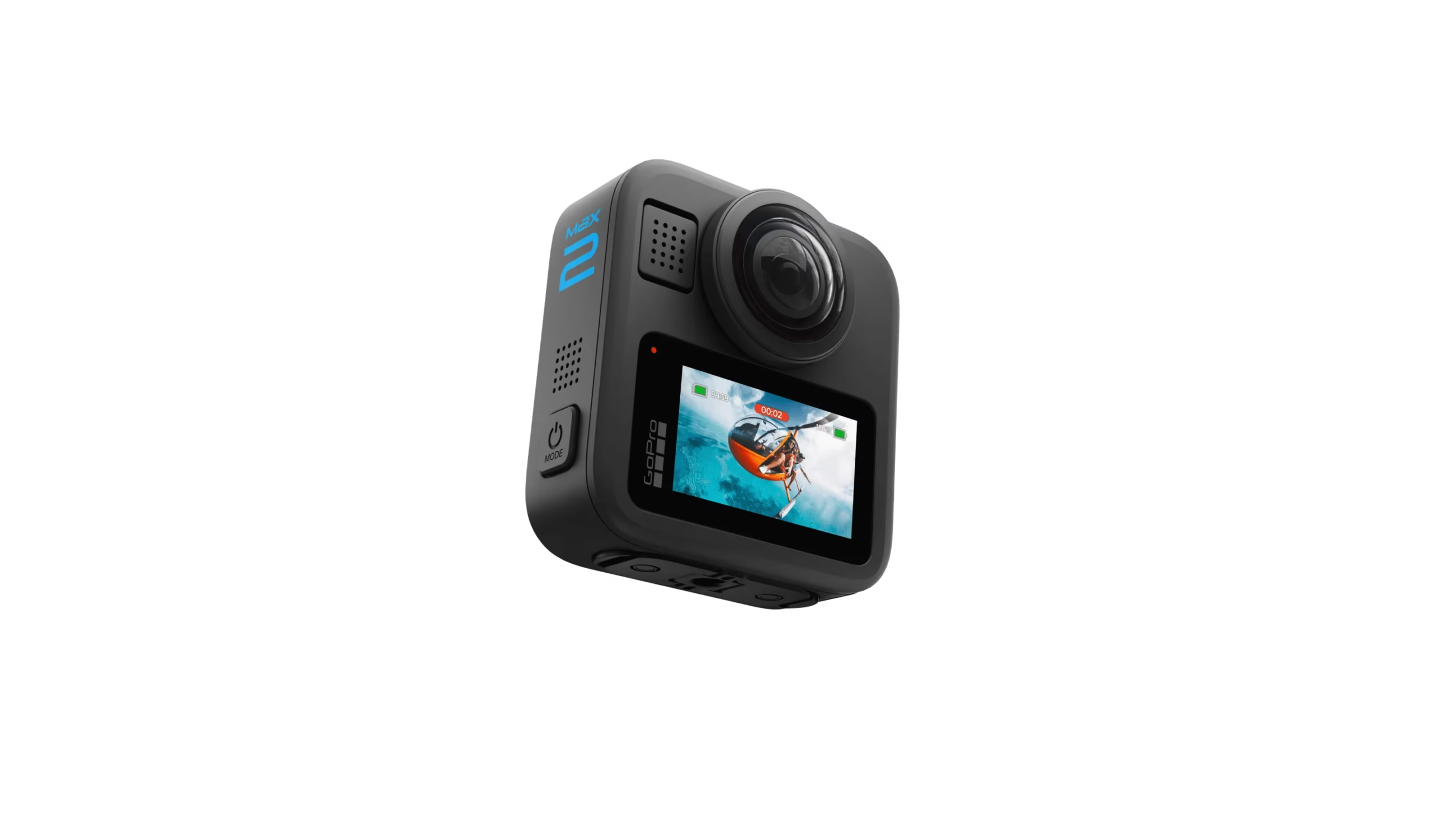
The MAX 2 has one very concrete argument: its six microphones. GoPro claims 360° audio, improved wind reduction, and the option to use Bluetooth. It also includes built-in GPS. For motorcycling, mountain biking, skiing, or any outing where you want to add speed, route, and data to the video, that makes a real difference.
The X6 still holds its own. Its automatic wind processing gave me a cleaner result than expected from a small camera. For an important vlog, an external mic is still preferable, though. Compatibility with two Insta360 Mic Air or Mic Pro transmitters is then very useful. Bottom line: for built-in audio and action data, I give the edge to the MAX 2. For prepared speaking-to-camera, both cameras benefit from being paired with a mic.
Battery life, waterproofing, and lenses: look at how you’ll use it
The X6 gets a 2,600 mAh battery. Insta360 claims up to 140 minutes in 8K30. It also has 64 GB of internal storage and is rated waterproof down to 20 meters without a housing. That’s very comfortable for travel, water activities, or any outing where you’d rather not pull out the microSD card every time.
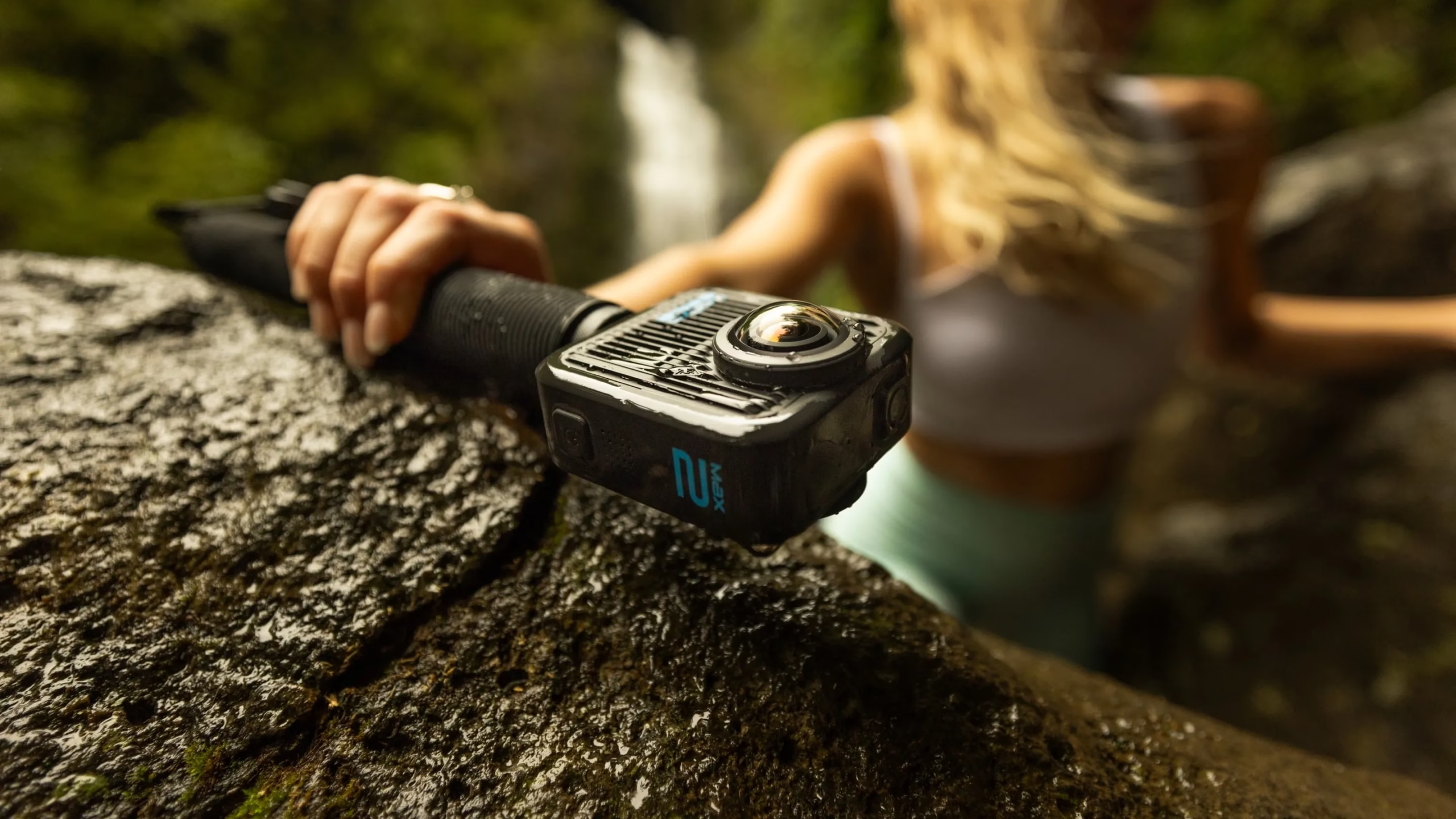
The MAX 2 uses a 1,960 mAh Enduro battery, designed in particular for cold weather. Its waterproof rating is 5 meters, so it’s more limited on that point. On the other hand, its low-profile body, mounts, and the huge GoPro accessory catalog appeal to people who film on a helmet, vehicle, or pole. Both brands understand the main risk with 360° cameras: exposed lenses. So both models offer replaceable lenses.
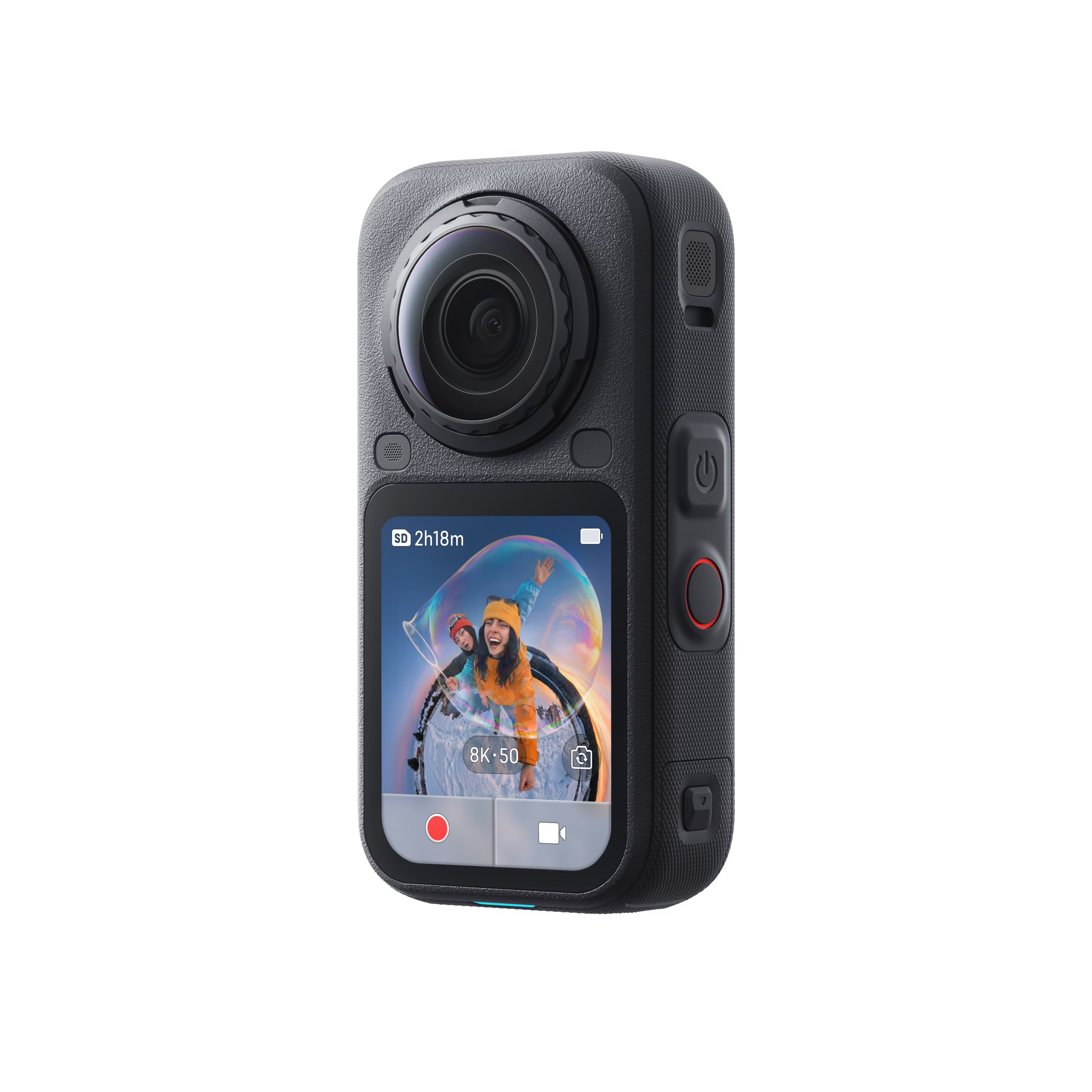 My pick for travel and evening shoots
Insta360 X6: more freedom when the light fades
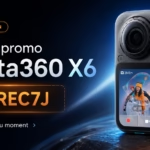
8K 360°, PureVideo 2.0, a larger OLED screen, and a claimed waterproof rating of up to 20 m: a very complete solution for capturing the good moments without worrying about framing.
View the official offer →Lens Kit included for the first 30 orders placed through this link.Which one should you choose for your profile?
- Travel, hiking, and holidays: Insta360 X6. Its 20 m waterproof rating, internal storage, and screen comfort are real strengths.
- Vlogging and content creation: Insta360 X6, especially if you film at dusk and reframe your shots a lot.
- Motorcycling, MTB, skiing, and GPS data: GoPro MAX 2. GPS, six mics, and the many GoPro mounts are hard to ignore.
- Advanced color grading: GoPro MAX 2 if you actually use GP-Log and a 10-bit workflow.
- Diving or water without a housing: Insta360 X6, thanks to its deeper stated waterproof rating.
- You already have lots of GoPro accessories: MAX 2, to keep a coherent system.
My final take
The GoPro MAX 2 is an excellent 360° action camera. It has strong arguments: 8K, GPS, six mics, GP-Log, replaceable lenses, and a very mature accessory universe. It’s the most coherent choice if your camera lives on a helmet, handlebar, or sports pole.
For my use, I prefer the Insta360 X6. It’s more convincing at night, easier to check on its large screen, and better prepared for varied shoots. It doesn’t replace the MAX 2 for GPS data, but it makes you want to film more day to day. Before choosing, also check our full review of the Insta360 X6 and our comparison Insta360 X6 vs X5.
Frequently Asked Questions
Does the GoPro MAX 2 really shoot in 8K?
Yes. GoPro claims True 8K 360° video and 29 million pixels for 360° photos. The brand puts that resolution at the heart of the MAX 2.
Which camera is best at night?
The Insta360 X6 is the most relevant choice thanks to PureVideo 2.0. In my test, that’s where the improvement was most visible.
Do both cameras have replaceable lenses?
Yes. Insta360 uses the Replaceable Lens 2.0 system. GoPro uses Twist-and-Go lenses, which the brand says are replaceable without tools or calibration.
More guides to choose your Insta360 X6
Depending on how you plan to use it, these guides and comparisons will help you further: