Insta360 is expanding its range of wireless microphones with two particularly interesting models for content creators: the Insta360 Mic Pro and the Insta360 Mic. These two microphones share many features, but they are not necessarily aimed at the same users.
On paper, the Mic Pro stands out with its three-microphone system, different pickup patterns, and 32 GB of built-in storage. However, the classic Mic has little to envy: it also offers 32-bit float recording, a customizable E-Ink screen, and even superior battery life!
So, do you necessarily have to choose the Pro version to record quality sound? What are the real differences between these two microphones? And most importantly, which offers the best value for money for filming YouTube videos, interviews, or vlogs?
In this comparison, I review their technical specifications and the features that can truly make a difference during a shoot.
Insta360 Mic Pro vs Mic: Comparative table of features
Before going into detail, here is a table summarizing the main differences between the two wireless microphones.
| Features | Insta360 Mic Pro | Insta360 Mic |
|---|---|---|
| Positioning | High-end | Advanced |
| Transmitter weight | 19.7 g | 19.4 g |
| Screen | 1.22-inch E-Ink, 6 colors | 1.22-inch E-Ink, 6 colors |
| Microphone capsules | 3 | 1 |
| Polar pattern | 4 modes | Omnidirectional |
| Noise reduction | 2 levels | 2 levels |
| Automatic gain control | Yes | Yes |
| 32-bit float recording | Yes | Yes |
| Built-in storage | 32 GB | MicroSD card required |
| Timecode | Yes* | Yes* |
| Up to 4 transmitters | Yes | Yes |
| Advertised maximum range | 400 m | 400 m |
| Transmitter battery life | 10 h | 13 h |
| Receiver battery life | 11 h | 11 h |
| Battery life with charging case | 30 h | 34 h |
| 5 min fast charge | 1 h 30 min of use | 2 h 20 min of use |
| Direct connection to compatible Insta360 cameras | Yes | Yes |
Timecode is not supported in the US according to manufacturer specifications. Battery life and range correspond to measurements taken under laboratory conditions.
This table already reveals one important thing: the Mic Pro is not systematically superior to the standard Mic.
Both models share a large part of their features, including range, advanced recording functions, and connectivity. The Pro mainly stands out for its audio versatility and internal storage, while the classic Mic has the advantage in terms of battery life.
Discover the Insta360 Mic and Mic Pro on the official store
Design and ergonomics: two very similar microphones
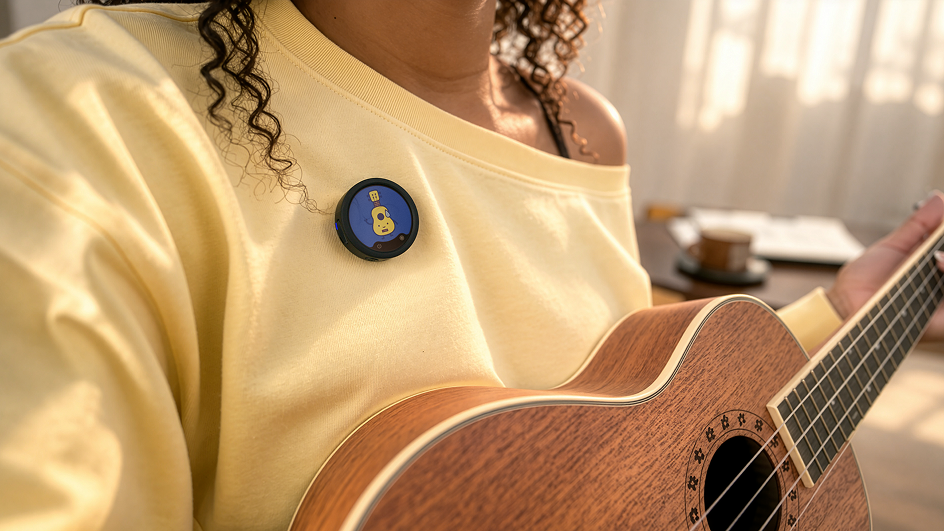
When comparing the two models, what first strikes you is their resemblance.
The Mic Pro weighs 19.7 grams, compared to 19.4 grams for the Mic. In other words, with only a 0.3-gram difference, the distinction is completely negligible when used on clothing.
Both microphones were designed to be compact and easy to attach to a t-shirt, shirt, or jacket.
This is particularly interesting for creators who want to keep their equipment discreet when filming outdoors or while traveling.
A customizable E-Ink screen on both models
One of the most original features of this new range is its 1.22-inch E-Ink screen capable of displaying six colors.
And good news: this technology is not exclusive to the Mic Pro!
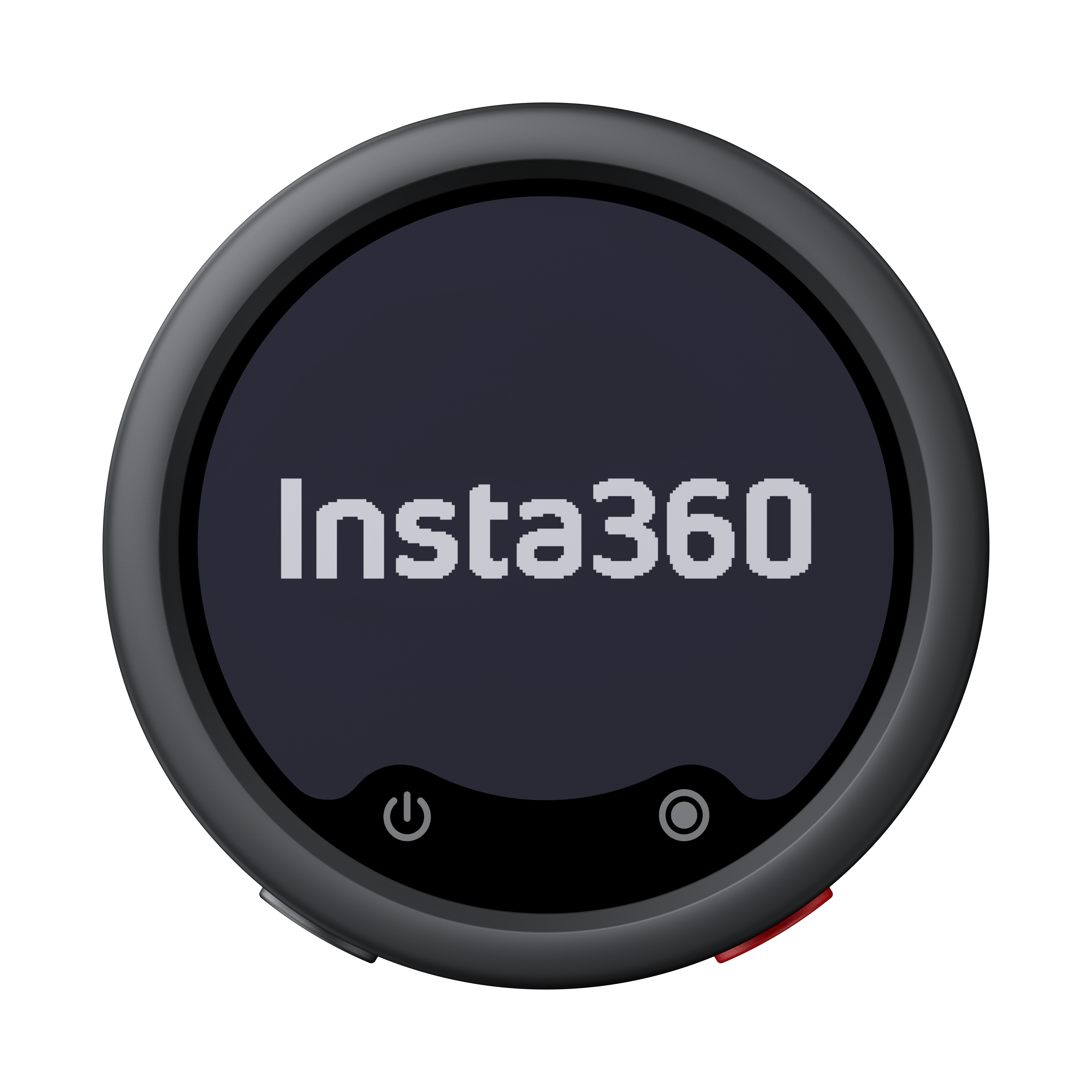
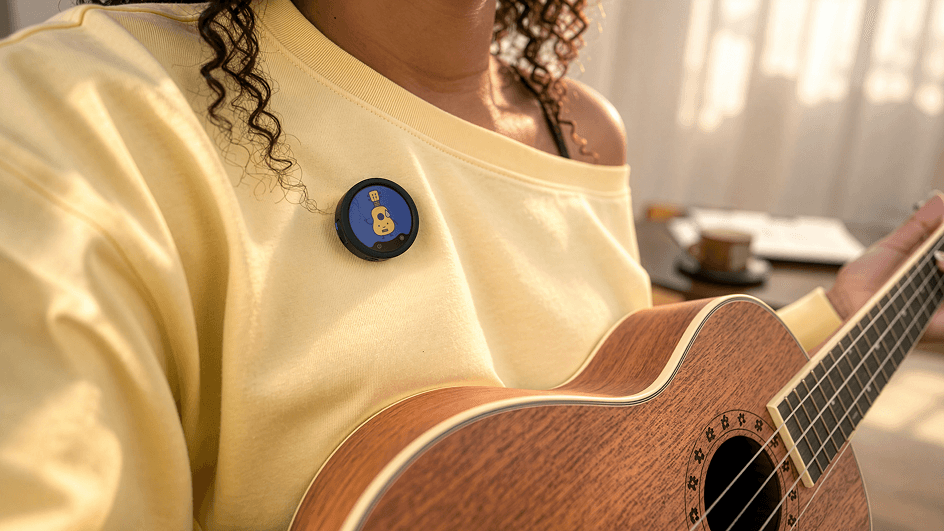
Both microphones feature a customizable screen that can display a logo, a YouTube channel name, or a personal visual.
For a content creator, I find this idea particularly interesting. The microphone also becomes an element of their visual identity.
For example, on my YouTube channel Drone & Cam, I can directly display my logo on the microphone when I shoot a video facing the camera.
Unlike a traditional OLED screen, E-Ink consumes very little power when displaying a static image. The visual can also remain displayed when the device is turned off.
It is therefore both an aesthetic and practical feature.
My opinion: on design and ergonomics, it’s hard to separate the two models. The standard Mic retains one of the Pro’s most interesting innovations.
Audio quality: Do the Mic Pro’s three microphones really make a difference?
This is probably the most significant technical difference between the two models.
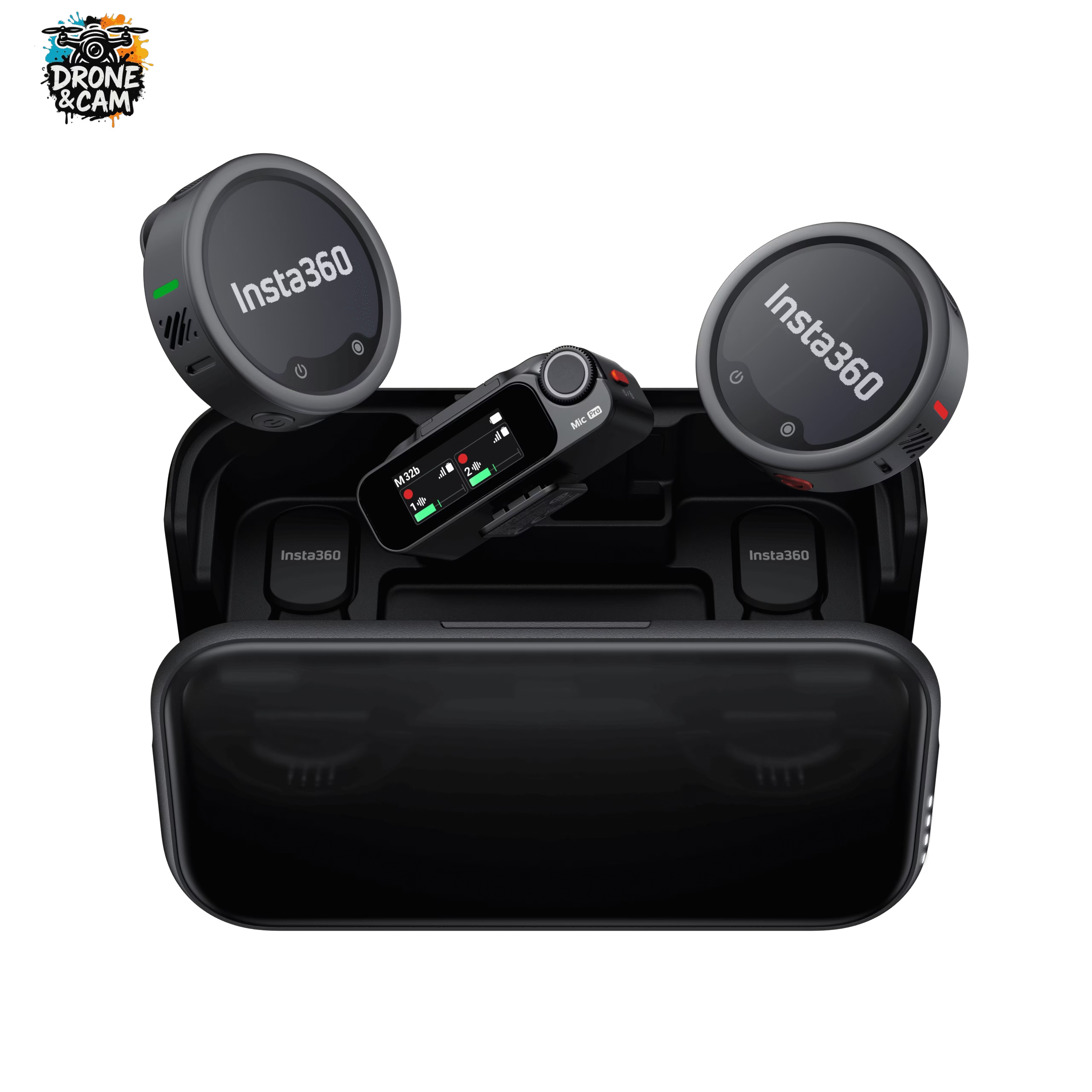
The Insta360 Mic uses a single omnidirectional capsule, while the Mic Pro integrates a system composed of three microphones.
But why is this important?
An omnidirectional capsule picks up sounds from all directions. This is a particularly suitable solution for lavalier microphones, as it allows the voice to be captured even when the person slightly turns their head.
The Mic Pro goes further by combining its three capsules with digital signal processing.
This allows it to offer four different pickup patterns.
The Mic Pro’s four audio modes
Omnidirectional mode: It picks up sounds from all directions. This is the most versatile mode for recording a voice or a natural ambient sound.
Super-directional mode: It focuses the pickup more on a specific area. This mode can be useful when trying to isolate a sound source.
Cardioid mode: It prioritizes sounds coming from the front of the microphone while attenuating those coming from the rear. This is particularly useful for vlogging, face-to-camera videos, and certain voice-overs.
Figure-8 mode: It primarily picks up sounds located in front of and behind the microphone, with attenuation on the sides. This mode is suitable for conversations between two people facing each other.
These modes give the Mic Pro additional versatility.
Let’s take a concrete example.
If you’re filming a vlog with the microphone attached to your clothing, an omnidirectional mode will generally be suitable. But if you’re using the microphone on a stand to record an interview, cardioid or figure-8 mode can become interesting.
With the classic Mic, you remain limited to omnidirectional pickup.
This doesn’t mean it records poor sound. Simply, it offers fewer possibilities to adapt the sound capture to a particular situation.
The Mic Pro therefore takes the lead in audio versatility, even if a comparison of recordings made under identical conditions is still necessary to measure the actual difference in sound quality.

32-bit float recording: a feature present on both models
Good news for those interested in the standard Mic: 32-bit float recording is not exclusive to the Pro.
Both microphones are capable of local recording in 24-bit or 32-bit float.
If you’re not familiar with this technology, here’s why it can be particularly interesting.
When you record a voice, the sound level can vary enormously. A person might speak softly, then a few seconds later, laugh very loudly or shout.
With a traditional recording, too high a level risks causing digital clipping that is difficult to correct.
32-bit float offers an extremely wide dynamic range. It allows you to recover signals in post-production whose level would have been problematic in a traditional recording.
Be careful, however: it cannot fix all audio flaws, especially a capsule that has itself clipped or excessive background noise.
For someone who makes YouTube videos, interviews, or events, this safety can nevertheless save a lot of editing time.
The real difference: recording storage
The Mic Pro has 32 GB of internal memory directly in each transmitter.
You can therefore record a backup audio track without adding a memory card.
The classic Mic works differently. To take advantage of its internal recording, you need to insert a compatible microSD card.
This operation has two advantages and disadvantages:
- On the Mic Pro, storage is already available and setup is simpler.
- On the Mic, you can choose the capacity of your memory card and replace it as needed.
Personally, I think both approaches have their merits.
For a professional shoot, not having to worry about an extra card is a significant convenience. However, for regular YouTube use, adding a microSD to the Mic doesn’t seem particularly restrictive to me.
Noise reduction and automatic gain control: what are the differences?
In this area, both microphones are very well equipped.
They each offer two levels of noise reduction as well as an automatic gain control system.
Noise reduction helps attenuate certain parasitic sounds, such as traffic noise, ventilation, or surrounding conversations.
This is particularly useful when filming outdoors.
The Mic Pro also benefits from its three-capsule architecture and AI-powered noise reduction processing based on a dedicated chip.
This combination can be advantageous in complex environments, especially thanks to the different polar patterns available.
However, two things must be distinguished: electronic noise reduction and microphone directivity.
A directional mode naturally attenuates certain sound sources depending on their position. Noise reduction, on the other hand, digitally analyzes and processes the signal.
The two technologies can be complementary.
For a typical vlog, the standard Mic already has the necessary features to improve voice clarity. The Mic Pro will be particularly interesting if you want more control over your sound capture.
Automatic gain control
Both models also offer automatic audio level management modes.
Their goal is to avoid excessive volume variations between different sequences.
For creators who don’t want to manually adjust the gain before each take, this is a real convenience.
And most importantly, it means that choosing the Mic Pro is not essential to benefit from advanced audio functions.
Battery life: the classic Mic outperforms the Mic Pro
This is a difference I didn’t necessarily expect: the higher-end microphone is not the one that offers the best battery life.
According to official specifications, the standard Mic has a clear advantage.
| Advertised battery life | Mic Pro | Mic |
|---|---|---|
| Transmitter | 10 hours | 13 hours |
| Receiver | 11 hours | 11 hours |
| With charging case | 30 hours | 34 hours |
| 5-minute charge | 1 h 30 min | 2 h 20 min |
The Mic therefore offers three additional hours of battery life on a transmitter, which is about 30% more than the Mic Pro.
This is far from negligible.
When filming all day, a microphone’s battery life quickly becomes important.
For example, during a day of shooting with several YouTube videos, outdoor sequences, and a few interviews, it’s always nice not to have to constantly monitor the battery.
The classic Mic can thus be particularly interesting for travelers, vloggers, and creators who spend a lot of time away from a power outlet.
Fast charging is also more advantageous: five minutes are enough, under the conditions announced by the manufacturer, to get up to 2 h 20 min of use.
However, it should be kept in mind that these figures correspond to specific test conditions. Activating internal recording and noise reduction can modify the actual battery life.
On this criterion, the Mic clearly wins the comparison.
Wireless connection: same 400-meter range
Regarding wireless transmission, both models advertise a maximum range of 400 meters.
Be careful, this is a distance measured in an open environment, without obstacles and without interference.
In reality, the range will obviously depend on the environment.
An indoor shoot, with several walls or many wireless connections nearby, will not yield the same results as an outdoor recording in an open space.
But for most typical uses, an advertised range of 400 meters provides a comfortable margin.
Whether you’re conducting interviews, face-to-camera videos, or on-the-go sequences, both models offer similar characteristics on this point.
Up to four microphones with a single receiver
Another interesting feature: both models support multi-transmitter configurations.
They can notably work with four transmitters connected to a single receiver, or with two transmitters sending their signal to four receivers.
This is particularly interesting for podcasts, group interviews, or productions using multiple cameras.
And contrary to what one might think, this possibility is not exclusive to the Mic Pro.
Compatibility: smartphones, mirrorless cameras, and Insta360 cameras
For me, this is one of the main advantages of these microphones: their integration with the brand’s cameras.
Both models can work with cameras, smartphones, and compatible Insta360 cameras.
Depending on your equipment, you can use a receiver or take advantage of a direct connection with certain cameras.
A direct connection without a receiver
With compatible models, it is possible to connect the microphone directly to the camera.
This is particularly practical with an action camera.
For example, when I film with my Insta360 X5, I generally try to keep the equipment as light and simple as possible.
Adding an external receiver means more gear, additional connections, and sometimes a less practical setup.
Direct connection avoids this.
The Insta360 Ace Pro 2 and several newer cameras in the range are also compatible with direct audio connection, depending on the models and firmware versions.
However, it will be necessary to check the exact connection possibilities, particularly the number of transmitters that can be used simultaneously.
Also note: the maximum range of 400 meters concerns transmission with a receiver. For direct connection to a camera like the X5, the manufacturer indicates an indicative range of approximately 100 meters in clear conditions.
For a creator who regularly uses multiple Insta360 cameras, both microphones are therefore particularly interesting solutions.
Insta360 Mic Pro vs Mic: what’s the price difference?
Price is obviously an important criterion when choosing a microphone.
The Mic Pro is positioned as the high-end model. It offers more audio possibilities, notably thanks to its three capsules and different pickup patterns.
The Mic Pro kit, including two transmitters, one receiver, and a charging case, is priced at €329 on the official store at the time of verification.
Other configurations are available, especially for creators who record alone or who wish to use multiple microphones.
The standard Mic is designed as a more accessible alternative, while retaining several important features of the Pro model.
It is therefore necessary to compare equivalent kits: same number of transmitters, presence of a receiver, charging case, and included accessories. The price of the standard Mic should be checked according to the selected configuration.
For me, the question is mainly whether the Pro’s additional features will actually be used.
If you primarily film YouTube videos with a microphone attached to your clothing, the standard Mic already has many arguments in its favor.
However, if you regularly conduct interviews, podcasts, or shoots requiring different pickup patterns, the extra cost for the Mic Pro may be justified.
See offers and different kits:
Discover the Insta360 Mic and Mic Pro on the official store
Affiliate link: if you place an order via this link, I may receive a commission at no additional cost to you.
Which microphone to choose depending on your use?
To help you choose, here are the models I would prioritize for different types of shooting.
| Usage | My choice |
|---|---|
| Face-to-camera YouTube videos | Mic |
| Vlogs and travel | Mic |
| Reels, Shorts, and TikTok | Mic |
| Professional interviews | Mic Pro |
| Podcasts with multiple people | Mic Pro |
| Videos with an action camera | Mic |
| Recording ambient sounds | Mic Pro |
| Long-duration shoots | Mic |
| Creator who wants multiple polar patterns | Mic Pro |
For YouTubers and content creators
If you primarily film face-to-camera videos, the standard Mic seems to me to be the most rational choice.
You already benefit from 32-bit float recording, efficient wireless connection, a customizable screen, and excellent advertised battery life.
The Mic Pro brings additional features, but they won’t be essential for all users.
For interviews and podcasts
The Mic Pro becomes more interesting as shooting situations diversify.
Its four pickup patterns allow the microphone’s behavior to be adapted to the environment.
Figure-8 mode, in particular, can be interesting for recording two people, while directional modes offer more control over the pickup area.
The 32 GB of internal storage also adds valuable security.
For travelers and vloggers
The standard Mic has an interesting advantage thanks to its 13-hour battery life.
It maintains a compact format, the main advanced audio functions, and direct connection with compatible cameras.
For someone who travels light and simply wants to improve the sound quality of their videos, this seems like an excellent compromise.
FAQ: Frequently Asked Questions about the Insta360 Mic and Mic Pro
Do both microphones record in 32-bit float?
Yes. Both the Mic Pro and the Mic allow internal 32-bit float recording. The Pro has 32 GB of built-in storage, while the Mic requires a microSD card.
Can the screen of both microphones be customized?
Yes. Both models feature a 1.22-inch E-Ink screen with six-color display. You can use it to display a logo or a personalized visual.
Does the Mic Pro offer better audio quality?
It has a more sophisticated architecture thanks to its three capsules and four pickup patterns. It therefore offers more possibilities, but this does not systematically guarantee better sound in all situations. An audio test performed under the same conditions would be needed to precisely measure the difference.
Which microphone offers the best battery life?
The classic Mic shows the best battery life in the official specifications, with up to 13 hours of use per transmitter, compared to 10 hours for the Mic Pro.
Can four microphones be connected simultaneously?
Yes. Both systems support configurations with four transmitters and one receiver, provided compatible hardware is available.
Do the microphones work without a receiver?
Yes, with certain Insta360 cameras compatible with direct connection. For other devices, a receiver or suitable adapter may be necessary.
Insta360 Mic Pro or Mic: which is really worth it?
After comparing the features of the two microphones, one thing stands out: Insta360 has chosen not to reserve all the interesting features for its most expensive model.
The standard Mic retains the essentials for many creators: 32-bit float recording, customizable E-Ink screen, noise reduction, direct connection to compatible cameras, and a maximum range of 400 meters with a receiver.
And it even goes further than the Pro on one important point: battery life.
For its part, the Mic Pro stands out with its three-capsule system, its four pickup patterns, and its 32 GB of internal storage. These are advantages that can make a difference for demanding creators and more complex shoots.
If I had to choose solely based on technical specifications, I would prioritize the standard Mic for YouTube, vlog, or travel use. It already offers many of the Pro’s capabilities and benefits from superior battery life.
However, for activities focused on interviews, podcasts, and more advanced video productions, the Mic Pro seems more versatile to me.
Ultimately, it’s not necessarily the most expensive microphone that will be the best for you. It’s the one whose features you will actually use.