
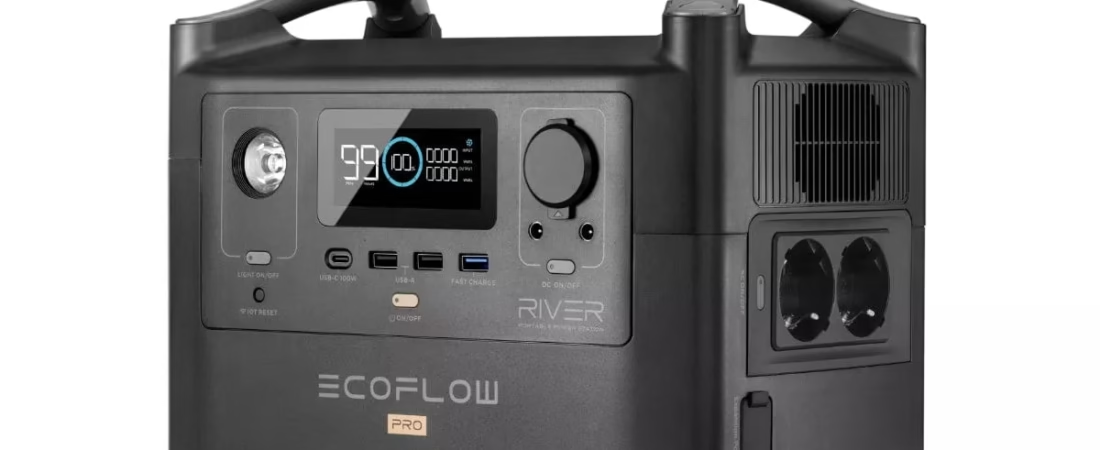
Unsure which DJI Power 1000 vs. EcoFlow River Pro battery wins for your mobile needs? We break down the technical specifications to help you choose the perfect battery. Find out if the DJI’s power justifies its weight compared to the EcoFlow’s agility.
- Power and capacity: the battle of the numbers
- The race to recharge: who is the fastest?
- Ergonomics and connectivity: the devil is in the details
- User profiles: who is each station intended for?
- Durability and guarantee: which is a better investment?
Power and capacity: the battle of the numbers
The reactor core: capacity and output power
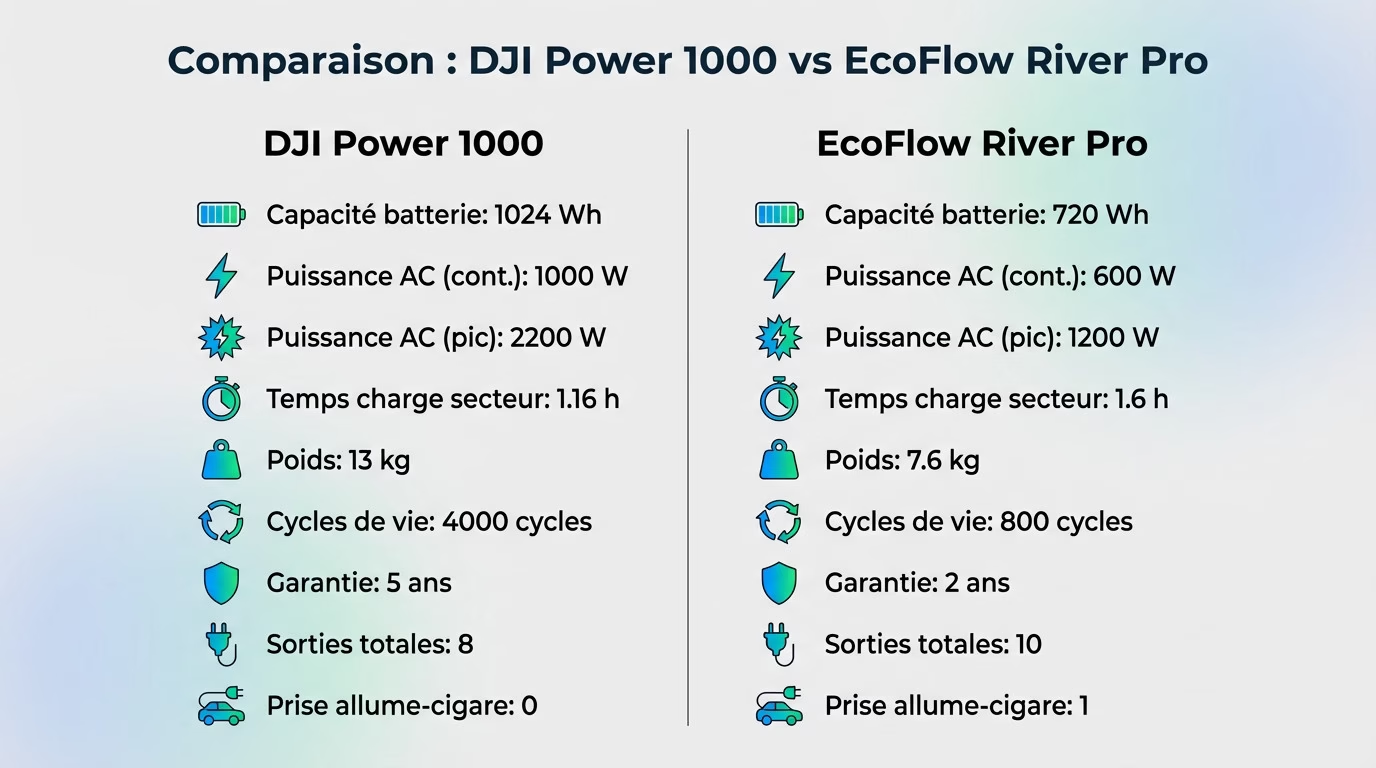
The battery capacity in watt-hours (Wh) directly determines the battery life of your devices. With its 1024 Wh, the DJI Power 1000 significantly outperforms the 720 Wh of the EcoFlow River Pro. This represents a massive difference of 42% more available energy.
In terms of power, the DJI delivers 1000W continuously (2200W peak), while the EcoFlow is limited to 600W (1200W max). This makes all the difference if you need to power a hairdryer or other power-hungry small tools. The DJI handles the load without a hitch.
In terms of pure power and endurance, the DJI takes a clear lead right from the start. The conclusion is undeniable.
Comparative table of technical specifications
This table summarizes the essential technical specifications for a quick comparison of the DJI Power 1000 vs. the Ecoflow River Pro. The numbers speak for themselves and reveal the true strengths of each.
| Characteristic | DJI Power 1000 | EcoFlow River Pro |
|---|---|---|
| Battery capacity | 1024 Wh | 720 Wh |
| AC output power (continuous) | 1000 W | 600 W |
| AC output power (peak) | 2200 W | 1200 W |
| Mains charging time | 1:16 AM | 1.6 h |
| Weight | 13 kg | 7.6 kg |
| Life cycles | 4000 cycles | 800 cycles |
| Guarantee | 5 years | 2 years |
| Total number of exits | 8 | 10 |
| Cigarette lighter socket | 0 | 1 |
However, raw figures don’t tell the whole story. Other practical factors come into play for everyday use.
The race to recharge: who is the fastest?
Mains charging: DJI’s sprint
When you live on the road, every minute counts to avoid getting stranded. The DJI Power 1000 really shines here, fully recharging in just 1.16 hours. That’s roughly 70 minutes to recharge. Clearly, this is its key selling point compared to the competition.
In contrast, the EcoFlow River Pro lags a bit, clocking in at 1.6 hours. That’s roughly 96 minutes of waiting before it can resume charging. It’s still fast, but the DJI wins this round hands down.
If you’re the type who’s always in a hurry, the choice becomes obvious for optimizing your time. The DJI ensures near-instant availability in the field.
Solar power and car power: different philosophies
On the solar power front, the DJI Power 1000 vs. Ecoflow River Pro comparison takes an interesting turn. The DJI accepts a massive 800W solar input. Theoretically, it recharges in 1.35 hours under perfect conditions. That’s an impressive performance for a battery of this size.
The EcoFlow River Pro is much less efficient in this regard. Its input is limited to 200W, which inevitably increases charging time. Expect approximately 4 hours for a full solar charge.
But the EcoFlow River Pro retains a vital advantage: 8-hour car charger charging. The DJI Power 1000 lacks this feature, which can be a real drawback. This is a major difference for those on the go.
In short, DJI prioritizes pure speed on mains power or solar power. EcoFlow focuses on versatility, essential for use in cars.
Ergonomics and connectivity: the devil is in the details
Lightweight versus heavyweight: the portability showdown
The EcoFlow River Pro weighs only 7.6 kg, a true featherweight. This makes it incredibly easy to move with one hand without straining. This is a real advantage if you frequently move around. You hardly feel the weight.
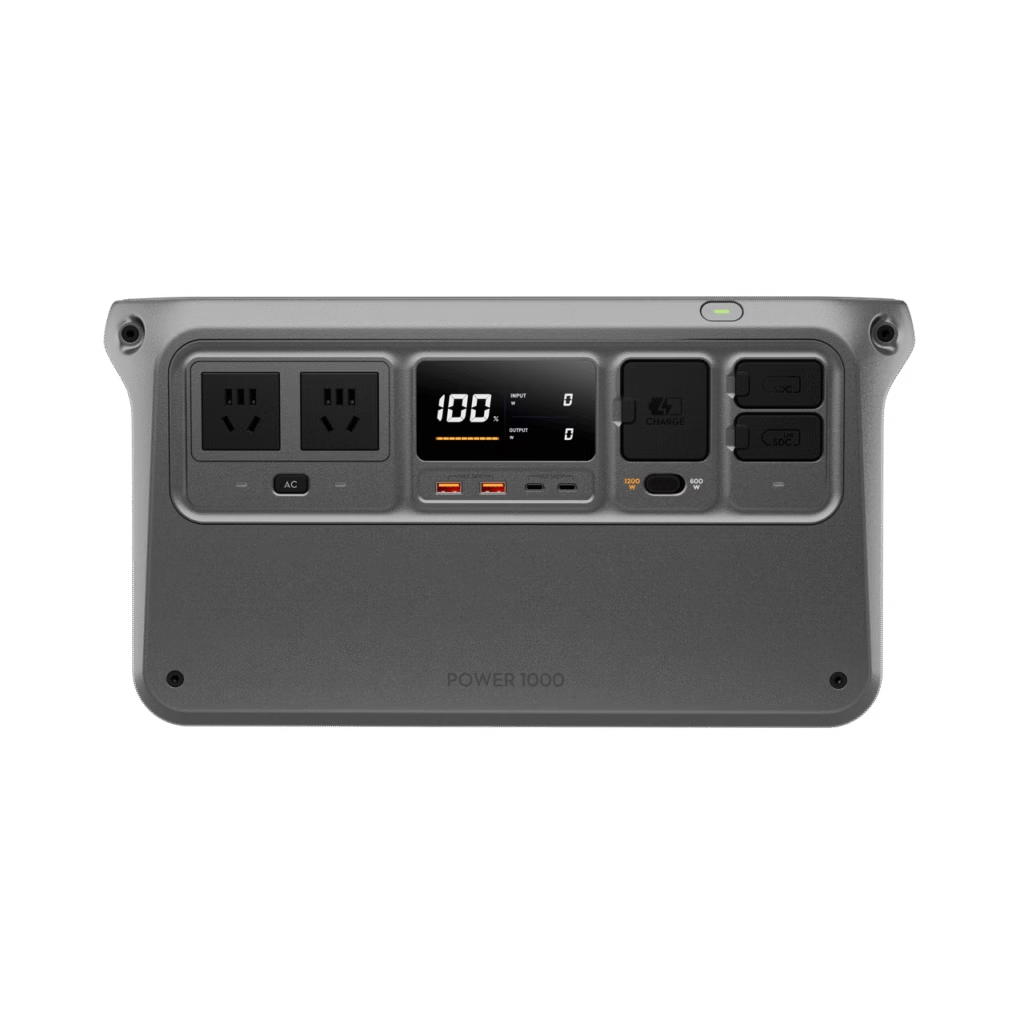
The DJI Power 1000, on the other hand, weighs in at 13 kg. That’s almost double the weight of its direct competitor. Transporting it requires more effort, making it less strictly portable.
In terms of volume, the EcoFlow is also almost twice as compact. It fits anywhere.
The number and type of catches: who is the most generous?
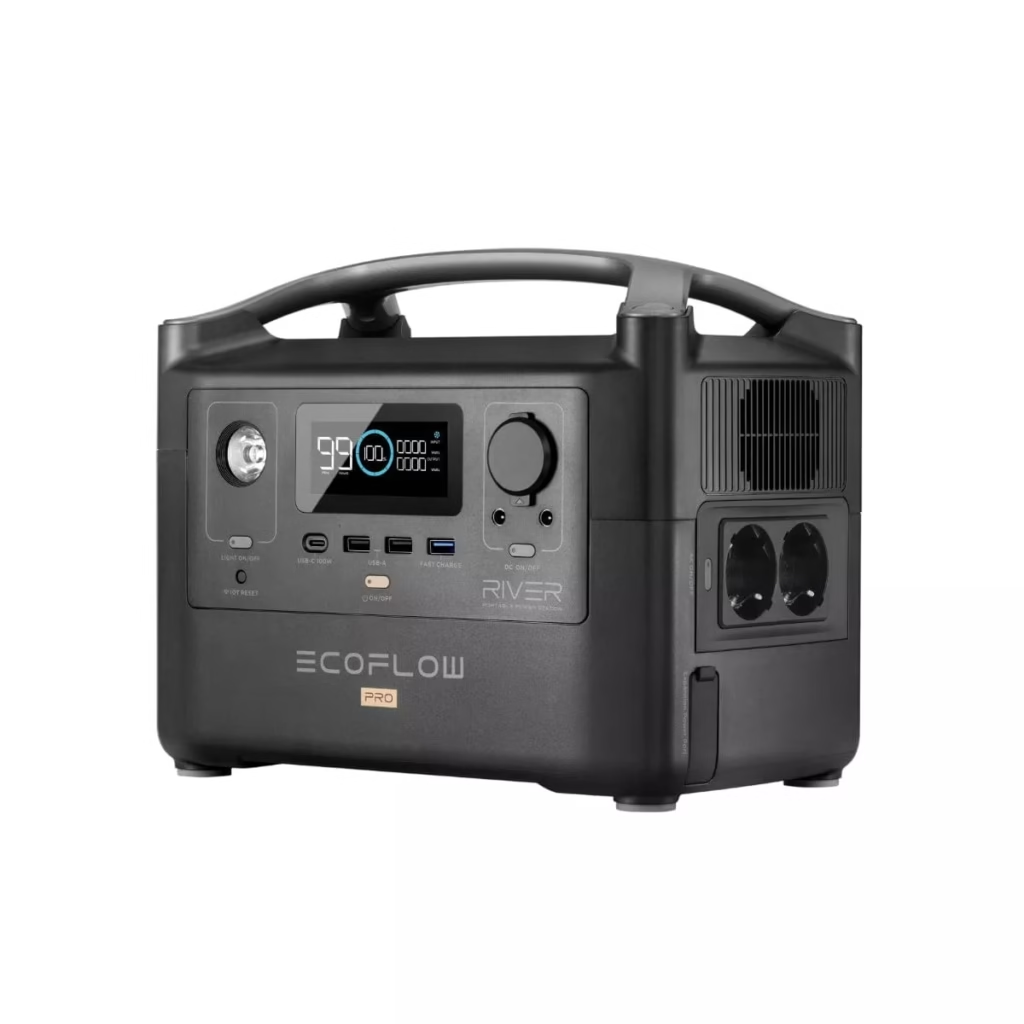
Connectivity is often a frustrating point of contention in the field. The EcoFlow River Pro offers 10 outputs in total, compared to only 8 for the DJI. This provides greater flexibility.
- 3 AC outlets available (compared to 2 on the DJI model).
- 1 integrated cigarette lighter socket (compared to 0 for the DJI).
- 1 additional USB-A port for your peripherals.
Let’s look at the DJI’s strengths now, because it holds its own. It has two USB-C ports compared to just one for the EcoFlow. This is much better suited to modern devices like laptops and smartphones.
- 2 very powerful USB-C ports (up to 140W).
- Dedicated SDC ports, a big plus for the DJI ecosystem.
Finally, note the EcoFlow’s extra features. It supports Wi-Fi for smartphone control and has an LED light.
User profiles: who is each station intended for?
The choice of content creator and drone pilot
If you’re a videographer or photographer, the DJI Power 1000 is definitely your workhorse. With its 2200W, it effortlessly powers your studio lights and your editing computer. It’s the raw power you need in the field. No more worrying about running out of power mid-shoot.
Its main advantage remains its seamless integration with the DJI ecosystem. Via the SDC ports, you can recharge your drone batteries at lightning speed, saving you a huge amount of time. For those already equipped with DJI gear, it’s the logical choice. See how it compares to the rest of the DJI Power range .
Plus, the 70-minute mains recharge is a lifesaver between sessions. Professionals who are always pressed for time will appreciate this responsiveness. You won’t waste another precious minute.
The solution for camping, van life and adventure
If camping is your thing, the EcoFlow River Pro scores valuable points. At 7.6 kg, it’s almost half the weight of the DJI drone. That makes all the difference when you have to hike to camp. It slips easily into any space without being cumbersome.
Its key selling point for van life is its integrated cigarette lighter socket. You can plug in your electric cooler directly, without needing an additional adapter. This is a glaring omission from DJI products for this specific use. A detail that weighs heavily in the DJI Power 1000 vs. Ecoflow River Pro comparison.
Its numerous ports and Wi-Fi app offer unparalleled convenience while traveling. It’s a bit like choosing a power bank suited to a specific use. You maintain complete control remotely.
Durability and guarantee: which is a better investment?
Life cycles: battery technology makes the difference
Do you know what a battery life cycle is? It’s the number of times you can charge your battery before it starts to wear out. It’s the true indicator of longevity. And there, the difference between the two models is just huge.
The DJI Power 1000 features an ultra-robust LFP battery. It can withstand 4000 cycles before losing any capacity. That’s simply enormous for this type of equipment.
In contrast, the EcoFlow River Pro uses older lithium-ion technology. It is rated for only 800 cycles. That’s five times less durable.
Guarantee and verdict: the rational choice
A manufacturer’s warranty is proof that the brand has confidence in its product. DJI is making a strong statement by offering 5 years of peace of mind on its Power 1000.
For its part, EcoFlow maintains a 2-year standard for the River Pro. The difference is clear.
To help you decide between the DJI Power 1000 and Ecoflow River Pro, here’s a quick recap. Check it out.
- Choose the DJI Power 1000 if: power, charging speed and long-term durability are your priorities.
- Choose the EcoFlow River Pro if: portability, versatility of outlets (especially the 12V) and connected features are more important to you.
Ultimately, the choice really depends on the balance between raw performance and everyday practicality. The choice is yours.
In short, the choice depends on your priorities. If you’re looking for raw power and lightning-fast charging, go for the DJI Power 1000. On the other hand, if you prioritize lightness and a car charger for camping, the EcoFlow River Pro is ideal. Carefully weigh the performance versus portability ratio before making your decision.


Leave a Reply