
In videography and photography, neutral density (ND) filters play a crucial role, allowing videographers and photographers to control exposure in bright light conditions. For Insta360 Ace Pro users, these accessories become essential for fully utilizing their camera’s potential, especially when shooting outdoors or in high-light environments. An ND filter acts like “sunglasses” for your camera, reducing the amount of light reaching the sensor without altering colors. This allows you to maintain a shallow depth of field or use a slow shutter speed to achieve the motion blur effect so prized in videography, while also preventing overexposure. For those looking to produce professional-quality videos and images with their Insta360 Ace Pro, understanding the purpose and choosing the right ND filter is an indispensable skill.
Why Use an ND Filter?
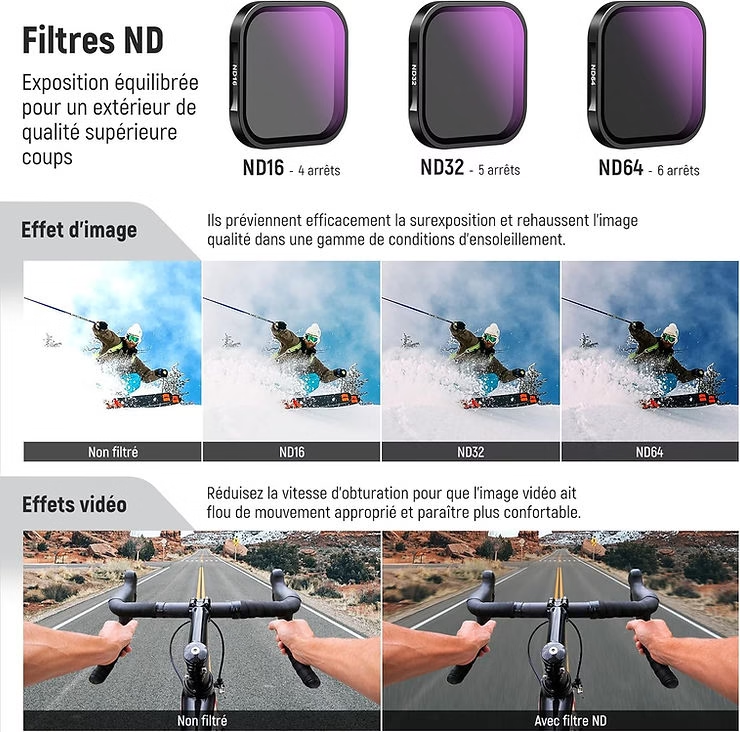
Neutral density (ND) filters are essential accessories for any videographer or photographer looking to fine-tune exposure and depth of field control in their work. These filters, by uniformly reducing the amount of light reaching the camera sensor without altering colors, become indispensable in bright lighting conditions.
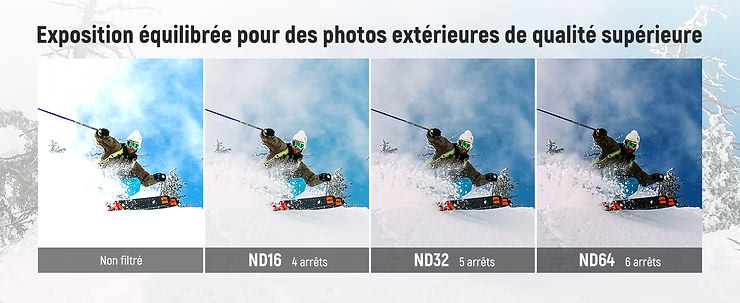
Using an ND filter allows you to achieve several essential things in videography and photography:
- Exposure Control : In very bright environments, it can be difficult to avoid overexposure without excessively closing the aperture, which increases the depth of field and alters the aesthetic appearance of the image. ND filters reduce the amount of light, allowing you to maintain the aperture at the desired level for correct exposure without compromising depth of field.
- Depth of Field Management : For those seeking a distinct background blur (bokeh effect) to separate the subject from the rest of the scene, an ND filter allows you to open the aperture wider in bright conditions without risking overexposure. This is particularly useful in portraiture or videography when you want to isolate the subject.
- Motion Blur Effects : ND filters are also valuable for capturing motion blur effects, such as freshwater waterfalls or moving clouds, allowing the use of slow shutter speeds even in broad daylight.
- Cinematic Video : For videographers, adhering to the “double the shutter speed rule” (twice the frame rate) is essential for achieving smooth, natural motion. An ND filter allows you to maintain this ideal shutter speed even in bright lighting conditions, ensuring cinematic quality in your video.
In short, using an ND filter on your Insta360 Ace Pro significantly enhances the quality and creativity of your projects. It offers precise control over exposure and depth of field, allowing you to capture images and videos that stand out for their polished and professional aesthetic.
The Different Types of ND Filters
Neutral density (ND) filters are essential accessories for videographers and photographers seeking precise control over image exposure. There are two main types of ND filters: fixed ND filters and variable ND filters, each with unique advantages and disadvantages suited to different shooting situations.
Fixed ND Filters
Fixed ND filters have a constant neutral density, reducing the amount of light passing through the filter by a fixed factor. They are often designated by numbers such as ND2, ND4, ND8, etc., indicating the level of light reduction.
- Advantages:
- Precision : Offers precise light reduction, ideal for specific lighting conditions.
- Image quality : Less likely to cause optical aberrations or image quality degradation.
- Cost : Generally cheaper than variable ND filters.
- Disadvantages:
- Less flexibility : To change the level of light reduction, the filter must be replaced with another one with a different density.
- Practical drawback : May be impractical in dynamic shooting situations where the light changes rapidly.
Variable ND Filters
Variable ND filters allow you to adjust the neutral density by simply rotating one of the two circular blades that make up the filter. This allows you to vary the amount of light that passes through the filter, from almost no reduction to a significant reduction.
- Advantages:
- Flexibility : Allows for quick adjustment of light reduction without having to change filters, which is ideal in changing light conditions.
- Convenience : Only one piece of equipment to carry and manage, which is advantageous for mobile videographers and photographers.
- Disadvantages:
- Image quality : May introduce optical aberrations, especially at very high densities, due to the complexity of their design.
- Price : They are generally more expensive than fixed ND filters.
The choice between a fixed and a variable ND filter will depend on your specific needs, budget, and the conditions in which you plan to film. Fixed ND filters are excellent for predictable and controlled situations, while variable ND filters offer unparalleled adaptability outdoors or in evolving shooting conditions.
Choosing the Right ND Filter for the Insta360 Ace Pro
Choosing the right ND filter for your Insta360 Ace Pro is essential to ensure the best image quality and maximum flexibility during your filming sessions. ND filters, or neutral density filters, allow you to control the amount of light entering the lens, which is crucial for filming in bright conditions without compromising your camera’s aperture, shutter speed, or ISO sensitivity.
Tips for choosing the right ND filter
- Assess your needs : First and foremost, determine the conditions under which you will most often be filming. Do you need to significantly reduce the light for outdoor shots in bright daylight, or are you simply looking to slightly soften the exposure for scenes with mixed lighting?
- Understanding filter densities : ND filters are rated by number, indicating the level of light reduction they provide. An ND2 reduces light by one stop, while an ND1000 can reduce it by ten stops or more. Choose based on the desired effect and the flexibility required for your shoots.
- Consider a variable ND filter : For maximum versatility, a variable ND filter allows you to adjust the density on the fly, which is ideal for quickly adapting to changing lighting conditions without having to change filters.
Compatible with the Insta360 Ace Pro
ND filters for the Insta360 Ace Pro need to be specifically designed to fit its unique lens. Fortunately, there’s a range of ND filters designed to fit the Ace Pro perfectly, ensuring easy installation and seamless integration with the camera’s capabilities.
Installation of ND filters
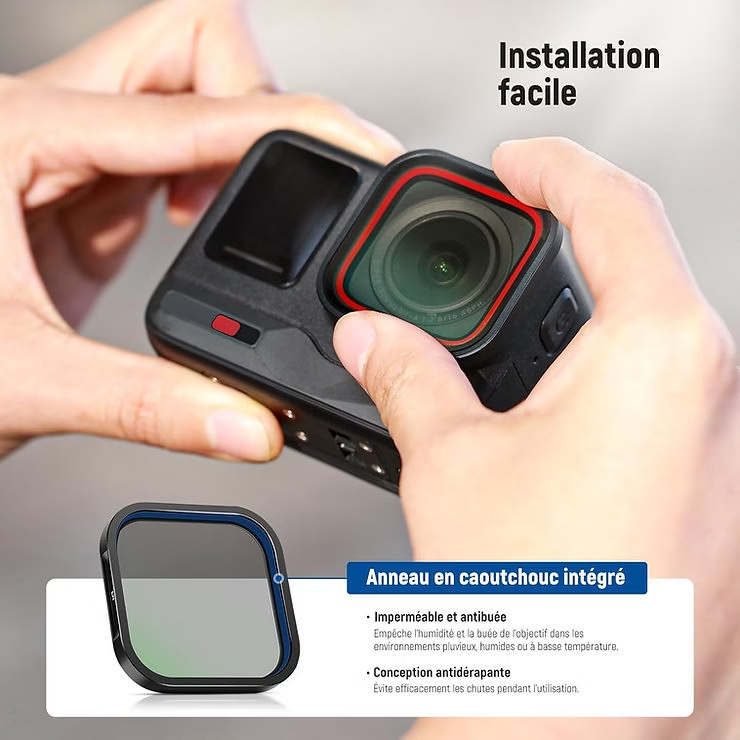
Installing an ND filter on your Ace Pro is usually straightforward. Most ND filters designed for the Ace Pro attach directly to the camera lens. Always follow the instructions that came with the filter to ensure it is properly attached and secure, to avoid any risk of damage to the camera or the filter itself.
By following these tips, you’ll be well-equipped to choose the ideal ND filter for your Insta360 Ace Pro , allowing you to capture stunning images with the precise exposure control you need for your creative projects.
The Best ND Filters for the Insta360 Ace Pro
For Insta360 Ace Pro users looking to improve the quality of their shots, choosing the right ND filter can make all the difference. Here’s a selection and review of the best ND filters currently available on the market for your Insta360 Ace Pro, along with the essential features to consider when making your purchase.
ZXCVWWE Filter Set for Insta360 Ace Pro
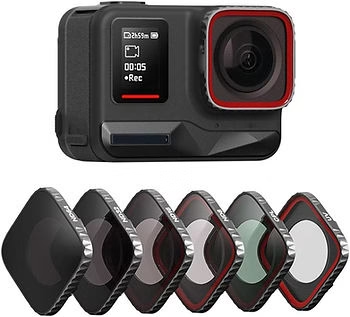
This pack offers a complete range of ND filters (ND4, ND8, ND16, ND32) as well as NDPL filters (ND4-PL, ND8-PL, ND16-PL, ND32-PL), combining the advantages of ND and polarizing filters. The waterproof magnetic design makes filter installation and changes quick and easy, ensuring a perfect fit for the Insta360 Ace Pro. The included CPL filter is ideal for eliminating reflections and improving color saturation, while the different ND filter strengths offer great flexibility in controlling exposure and depth of field. At €13.05 , this set represents an affordable and versatile option for videographers and photographers.
NEEWER ND & CPL Filter Set
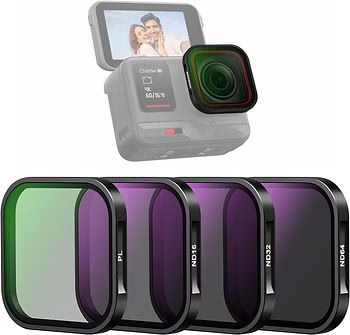
Specifically designed for the Insta360 Ace Pro , this set includes one CPL filter and three ND filters (ND16, ND32, ND64), offering a complete solution for light management and reflection reduction. The multi-coated optical glass ensures pristine image quality, with water-repellent, scratch-resistant, and oil-resistant coatings. The lightweight aluminum frame design guarantees the filters won’t add weight to the camera or affect its balance. Priced at €56.49, this NEEWER kit is an excellent option for those looking to invest in high-quality filters for their Ace Pro.
Official Insta360 Ace Pro ND Filter
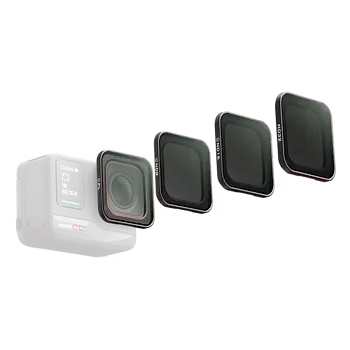
Introducing the ND Filter Set for the Insta360 Ace Pro , a range of neutral density filters designed specifically to enhance and diversify your shots with the Ace Pro. Rated 4.8 out of 5 by users, this set is a complete package for videographers and photographers looking to master exposure and create stunning visual effects.
Main Features
- Various Levels of Light Reduction : The set includes ND8, ND16, and ND32 filters, offering maximum flexibility to adjust exposure according to different lighting conditions. Each filter reduces the amount of light reaching the sensor, allowing for more precise control of aperture, shutter speed, and ISO sensitivity.
- Cinematic Effects and Motion Blur : These ND filters allow you to easily create cinematic atmospheres by adding attractive motion blur to moving objects, such as waterfalls, clouds, or crowds. They are also ideal for achieving long-exposure shots in bright daylight without the risk of overexposure.
- Long Exposure Shooting and Star Trails : Experiment with long exposures to capture unique effects, such as star trails or nighttime city lights, using ND filters to precisely control exposure.
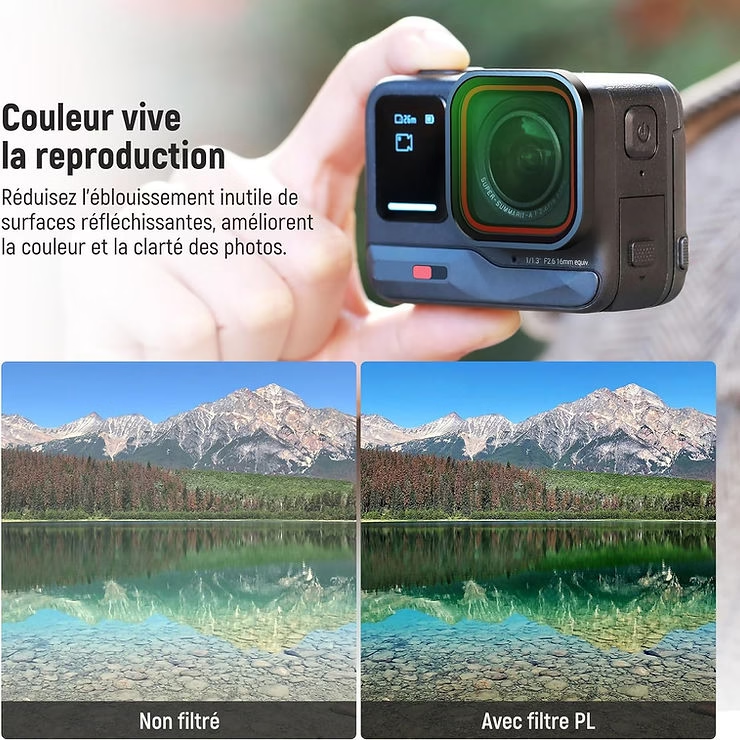
- Polarizing (PL) Filter : The included PL filter is essential for reducing reflections and polarized light that can negatively affect your images. It is especially useful for landscape photography, making skies appear bluer and natural colors more vibrant, while also increasing contrast and clarity.
This set of ND filters for the Insta360 Ace Pro is a wise investment for any videographer or photographer looking to elevate the quality of their productions. By offering the ability to explore various creative techniques, these filters open the door to limitless artistic expression. Whether you want to capture the majesty of a natural landscape or the dynamism of an urban scene, these ND and PL filters will give you the tools you need to realize your vision.
Buy the Official ND Filter Pack
Features to Look For
When purchasing ND filters for your Insta360 Ace Pro, consider the following points to ensure an optimal shooting experience:
- Compatibility and Easy Installation : Ensure that the filters are specifically designed for the Insta360 Ace Pro for hassle-free installation.
- Optical Glass Quality : Opt for filters made with high-quality optical glass for maximum image clarity.
- Protective Coatings : Look for filters with water-repellent, scratch-resistant, and anti-reflective coatings for increased durability and improved image quality.
- Diversity of Filtration Options : A set offering a variety of ND densities will allow you to adapt your configuration to different lighting conditions.
Whether you’re a seasoned videographer or a passionate amateur, choosing the right set of ND filters for your Insta360 Ace Pro can transform your footage into professional-quality works of art. The options presented here offer a great starting point for improving the quality of your videos and photos.
Practical Usage Tips
Using ND filters with your Insta360 Ace Pro can significantly improve the quality of your videos and photos. Here are some best practices for achieving optimal results:
- Choose the Right ND Filter : Start with an ND8 filter for slightly sunny days and switch to ND16 or ND32 for bright conditions. Use ND64 for very bright situations or for specific creative effects.
- Experiment with Different Densities : Don’t hesitate to experiment with different levels of ND filters to see how each affects image capture. This will help you understand which filter to use in various lighting conditions.
- Beware of Vignetting : Ensure the ND filter is properly attached to the camera lens to avoid vignetting or reduced image quality in the corners.
- Use the CPL Filter to Enhance Colors : The CPL (Circular Polarizer) filter is excellent for reducing reflections and improving color saturation. It is particularly useful for filming landscapes, water, and skies.
ND Filter Maintenance
- Regular Cleaning : Use a microfiber cleaning cloth to gently remove dust and fingerprints from the filter surface. Avoid using harsh chemicals.
- Proper Storage : Keep your ND filters in a dedicated case to protect them from scratches and dust when not in use.
- Handle with Care : Avoid touching the filter surface directly with your fingers. Handle filters by the edges to minimize the risk of dirt and damage.
Conclusion
ND filters are essential accessories for maximizing the capabilities of your Insta360 Ace Pro , allowing you to precisely control exposure and fully exploit the camera’s creative potential. Choosing the right ND filter, along with proper use and care, opens up a world of possibilities for improving the quality of your videos and photos. We encourage all Insta360 Ace Pro users to experiment with different ND filters to discover their impact on video quality and find their unique style.







Leave a Reply