
DJI in 2026: the lineup is clearer if you think by profile
The easiest way to get lost with DJI in 2026 is to compare everything against everything. The better way is to start with your use case. DJI’s current consumer lineup shown on its official camera-drone pages still makes a fairly logical split between mini travel drones, mid-range dual-camera drones, FPV options, and higher-end Mavic models.
That means the question is not “which DJI drone is best?” It is which DJI drone is best for the way you actually shoot. A person filming light travel videos does not need the same machine as someone chasing FPV thrills or serious commercial image quality.
- Beginner or travel: Mini 4 Pro, Mini 3, Mini 4K.
- More serious all-rounder: Air 3S or Air 3.
- Immersive FPV: Avata 2.
- Higher-end image priority: Mavic 3 Pro or Mavic 3 Classic.
Welcome to our comprehensive buying guide for DJI drones in 2024. The goal of this article is to help you choose the DJI drone that best suits your specific needs, whether you’re a beginner, an advanced hobbyist, or a professional. With the rapid evolution of drone technology, DJI continues to dominate the market by offering a wide range of models suited to various uses and budgets.
DJI drones are renowned for their exceptional quality, reliability, and advanced features. Whether you want to capture breathtaking landscapes, create professional-quality videos, or simply explore the joy of flying a drone, DJI offers options for all experience levels. Dive into our guide to discover the best DJI drones available in 2024 and find the one that’s right for you.

Factors to Consider Before Buying
When buying a DJI drone, several factors must be considered to ensure you make the right choice. Here are the main elements to consider:
Intended Use
- Photography and Videography: If your main goal is to capture high-quality images and videos, opt for a drone with an excellent camera, good stabilization, and advanced capture features. Drones like the DJI Air 3 and the DJI Mavic 3 Classic are particularly well-suited to these needs.
- Leisure and Travel: For recreational use or travel, opt for a compact and lightweight drone that’s easy to carry and operate. The DJI Mini 4 Pro is an excellent choice for travelers and leisure enthusiasts.
- Professional Use (Mapping, Inspections, Filmmaking): If you need a drone for professional applications such as mapping, inspections, or film production, look for models offering high-quality sensors, long battery life, and advanced features. The DJI Mavic 3 Pro is designed to meet these requirements.
Experience Level
- Beginner: Beginners should choose an easy-to-fly drone with built-in safety features such as obstacle avoidance and assisted flight modes. The DJI Mini SE is perfect for those new to drone piloting.
- Advanced Amateur: Users with some experience can opt for drones offering more features and better image quality, such as the DJI Air 2S .
- Professional: Professionals need drones that offer cutting-edge performance and features. Models like the DJI Mavic 3 Classic and the DJI Mavic 3 Pro are ideal for demanding professional applications.
Budget
- Different Price Ranges:
- Entry-level: Drones like the DJI Mini SE offer excellent value for money for beginners, with sufficient basic features for recreational use.
- Mid-range: Models like the DJI Air 2S offer more features and better image quality, suitable for advanced amateurs and semi-professionals.
- High-end: Drones like the DJI Mavic 3 Classic and DJI Mavic 3 Pro are designed for professionals, offering exceptional performance and advanced features for specific and demanding applications.
By taking these factors into account, you will be able to choose the DJI drone that best suits your needs and budget.
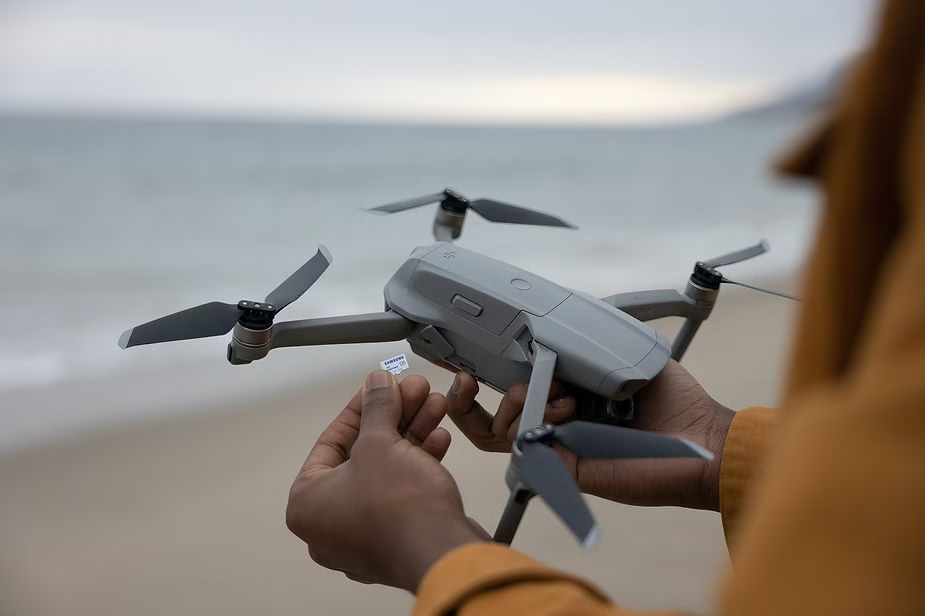
Introducing DJI Models
DJI Mini 4 Pro
- General description and main features: The DJI Mini 4 Pro is an ultra-portable drone designed for amateurs and travelers. Weighing less than 250 grams, it does not require a special permit and is easy to carry. It is equipped with a 1/1.3 inch CMOS sensor offering 4K video resolution at 60 fps and 48 megapixel photo resolution. 3-axis stabilization and smart features like ActiveTrack and QuickShots make it an excellent choice for beginners.
- Ideal use: Beginners, travelers, occasional users
- Strengths and limitations:
- Highlights :
- Ultra-portable and lightweight
- Easy to use with smart features
- Excellent image quality for its size
- Limitations:
- Sensitive to strong winds
- Limited range compared to larger models
- Purchase link: DJI Mini 4 Pro
DJI Air 3
- General description and main features: The DJI Air 3 is a versatile drone designed for advanced amateur and semi-professional videographers. It is equipped with two 1/1.3 inch CMOS sensors offering video resolution up to 5.4K at 30 fps and a photo resolution of 48 megapixels. It features intelligent flight modes like FocusTrack and Hyperlapse, and offers a flight time of 46 minutes.
- Ideal use: Advanced amateur and semi-professional videographers
- Strengths and limitations:
- Highlights :
- Dual sensor for increased versatility
- Excellent image and video quality
- Long flight range
- Limitations:
- Larger than its predecessor
- High price for beginners
- Purchase link: DJI Air 3
DJI Mavic 3 Classic
- General description and main features: The DJI Mavic 3 Classic is a high-end drone designed for professionals and large-scale projects. It is equipped with a 4/3 Hasselblad CMOS sensor offering video resolution up to 5.1K at 50 fps and a photo resolution of 20 megapixels. It has a flight time of 46 minutes and advanced features such as omnidirectional obstacle avoidance and intelligent return.
- Ideal use: Professionals, large-scale projects
- Strengths and limitations:
- Highlights :
- Exceptional image quality
- Long flight range
- Advanced security and flight features
- Limitations:
- High prices
- Larger size and weight
- Purchase link: DJI Mavic 3 Classic
DJI Mavic 3 Pro
- General description and main features: The DJI Mavic 3 Pro is a state-of-the-art drone designed for film production and industrial use. It features a 4/3 Hasselblad CMOS sensor and a second telephoto sensor, delivering exceptional image and video quality. It can capture 5.1K video at 50 fps and 20-megapixel photos. With a flight time of 46 minutes and advanced features like intelligent return and 360-degree obstacle avoidance, it is perfect for demanding professional projects.
- Ideal use: Film production, industrial use
- Strengths and limitations:
- Highlights :
- Exceptional image and video quality
- Long flight range
- Advanced features for professionals
- Limitations:
- Very expensive
- Complex to master for beginners
- Purchase link: DJI Mavic 3 Pro
DJI Mini SE
- General description and main features: The DJI Mini SE is an entry-level drone designed for beginners and budget users. It weighs less than 250 grams and does not require any special permits. It is equipped with a 1/2.3 inch CMOS sensor offering 2.7K video resolution at 30 fps and 12 megapixel photo resolution. It has basic but effective features for recreational use.
- Ideal use: Beginners, budget-conscious users
- Strengths and limitations:
- Highlights :
- Very affordable
- Easy to use
- Compact and lightweight
- Limitations:
- Limited features
- Image quality inferior to more expensive models
- Purchase link: DJI Mini SE
DJI Air 2S
- General description and main features: The DJI Air 2S is a versatile drone designed for amateur and semi-professional videographers. It is equipped with a 1-inch CMOS sensor offering 5.4K video resolution at 30 fps and 20-megapixel photo resolution. It has advanced features such as FocusTrack, MasterShots, and a flight time of 31 minutes.
- Ideal use: Amateur and semi-professional videographers
- Strengths and limitations:
- Highlights :
- Excellent image and video quality
- Advanced features for creative capture
- Compact and easy to carry
- Limitations:
- Flight range slightly shorter than other models
- Lack of side obstacle sensors
- Purchase link: DJI Air 2S
Depending on your specific needs, each DJI drone model offers unique advantages. Whether you’re a beginner, an advanced hobbyist, or a professional, there’s a DJI drone suited to your needs. To learn more and make an informed purchase, consult the links associated with each model.
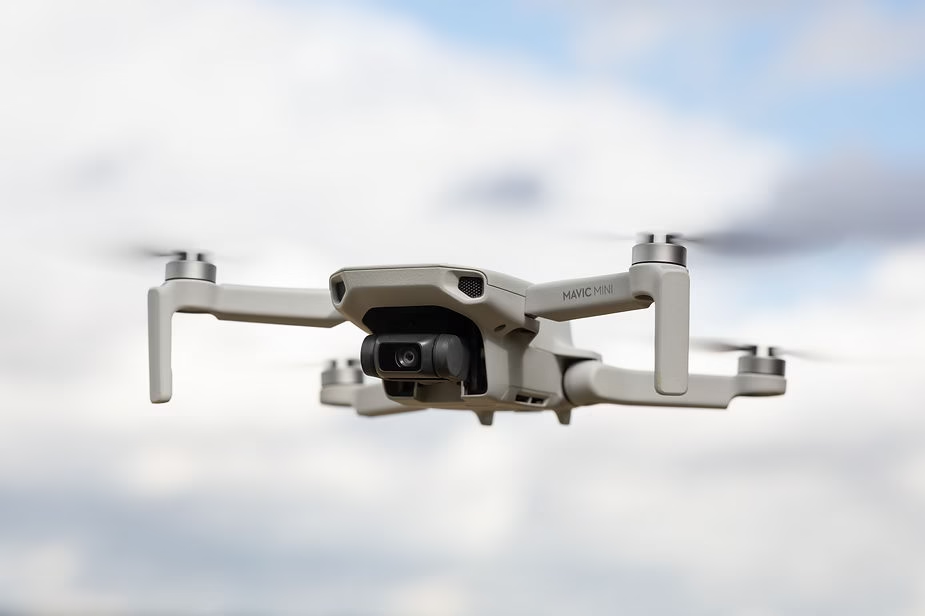
Comparison of Models
Summary table of key characteristics
| Characteristics | DJI Mini 4 Pro | DJI Air 3 | DJI Mavic 3 Classic | DJI Mavic 3 Pro | DJI Mini SE | DJI Air 2S |
| Maximum video resolution. | 4K 60 fps | 4K 100 fps | 5.1K 50 fps | 5.1K 50 fps | 2.7K 30 fps | 5.4K 30 fps |
| Photo resolution | 48 MP | 48 MP | 20 MP | 20 MP | 12 MP | 20 MP |
| Flight autonomy | 34 minutes | 46 minutes | 46 minutes | 46 minutes | 30 minutes | 31 minutes |
| Transmission range | 10 km (CE) | 20 km (CE) | 15 km (CE) | 15 km (CE) | 4 km (CE) | 12 km (CE) |
| Weight | < 250 g | 720 g | 895 g | 899 g | 249 g | 595 g |
| Sensor | 1/1.3 inch CMOS | 2 x 1/1.3 inch CMOS | 4/3 inch CMOS Hasselblad | 4/3 inch CMOS Hasselblad | 1/2.3 inch CMOS | 1-inch CMOS |
| Obstacle avoidance | Omnidirectional | Omnidirectional | Omnidirectional | Omnidirectional | No | Directional (forward, reverse) |
| Stabilization | 3 axes | 3 axes | 3 axes | 3 axes | 3 axes | 3 axes |
| Price | Starting from €799 | Starting from €1,099 | Starting from €1,499 | Starting from €2,100 | Starting from €299 | Starting from €909 |
Discussion of major differences and specific advantages
- DJI Mini 4 Pro :
- Key differences: Ultra-portable, lightweight, and requiring no special permit, it is ideal for travel and recreational use.
- Specific advantages: Its ease of use and smart features such as ActiveTrack and QuickShots make it an excellent choice for beginners and travel enthusiasts.
- DJI Air 3 :
- Major differences: Equipped with two 1/1.3 inch CMOS sensors, it offers increased versatility with high video and photo resolutions.
- Specific advantages: Ideal for advanced amateur and semi-professional videographers thanks to its advanced features like FocusTrack and Hyperlapse.
- DJI Mavic 3 Classic :
- Key differences: Equipped with a 4/3 inch Hasselblad CMOS sensor, it offers exceptional image quality.
- Specific advantages: Designed for professionals, it excels in large-scale projects thanks to its long battery life and advanced safety and flight features.
- DJI Mavic 3 Pro :
- Key differences: This high-end drone features two sensors for versatile shooting and professional image quality.
- Specific advantages: Perfect for film production and industrial use, it offers cutting-edge performance and exceptional reliability under demanding conditions.
- DJI Mini SE :
- Key differences: Very affordable and lightweight, it is ideal for beginners and those on a budget.
- Specific advantages: Easy to transport and use, it offers an excellent entry-level option for discovering drone piloting.
- DJI Air 2S :
- Key differences: Equipped with a 1-inch CMOS sensor, it provides superior image quality and is compact.
- Specific advantages: Suitable for amateur and semi-professional videographers, it offers advanced features and impressive video quality while remaining portable.
These comparisons help you better understand the strengths and weaknesses of each DJI drone model, making it easier to make a decision based on each user’s specific needs. For more details and to make an informed purchase, consult the links associated with each model.
The best DJI drones: Tips for making the best choice
How to assess your needs and priorities
- Define the primary use case:
- Photography and videography: If your main goal is to capture high-quality images and videos, opt for a drone with a good sensor, advanced stabilization, and sophisticated capture features.
- Leisure and travel: For recreational use or while traveling, choose a compact, lightweight and easy-to-carry drone.
- Professional use: For professional applications such as mapping, inspections or film production, look for models offering high-quality sensors, long battery life and advanced features.
- Assess your experience level:
- Beginner: Choose an easy-to-fly drone with built-in safety features, such as obstacle avoidance and assisted flight modes.
- Advanced amateur: Opt for drones offering more features and better image quality for more creative projects.
- Professional: Select drones offering cutting-edge performance and features suited to demanding professional projects.
- Set a budget:
- Entry-level: Look for affordable models offering the basic features needed for recreational use.
- Mid-range: Find drones offering a good balance between features and price for more experienced users.
- High-end: Invest in high-end models offering exceptional performance and advanced features for professional uses.
The importance of reading user reviews and experiences
- Verify performance under real-world conditions:
- User reviews offer valuable insights into the drone’s performance under different conditions, such as flight stability, image quality, and battery life.
- Identify common problems:
- User feedback can highlight recurring problems, such as software bugs, connection difficulties or fragile parts, thus helping you avoid unpleasant surprises.
- Compare the features:
- User comparisons between different models help you understand the specific advantages and limitations of each drone, making your choice easier.
Tips to optimize the use and lifespan of your drone
- Regular maintenance:
- Regularly clean the propellers, camera sensor and motors to prevent the accumulation of dust and debris that could affect the drone’s performance.
- Software updates:
- Keep your drone’s firmware up to date to benefit from the latest improvements and bug fixes, ensuring optimal performance.
- Battery usage:
- Charge and discharge batteries correctly to prolong their lifespan. Avoid leaving them completely discharged or overcharging them.
- Safe flight:
- Respect local regulations regarding drone flight, avoid flying in prohibited areas, and always maintain a direct line of sight to your drone.
- Appropriate storage:
- Store your drone in a cool, dry place, away from moisture and extreme temperatures. Use a carrying case to protect it when traveling.
By following these tips, you’ll be able to make an informed choice, optimize your drone’s use, and extend its lifespan. For more information and to make an informed purchase, consult the links associated with the DJI drone models.

Conclusion
We’ve explored in detail the various DJI drone models available in 2024, highlighting their key features, ideal uses, and strengths and limitations. Whether you’re a beginner, an advanced hobbyist, or a professional, there’s a DJI drone suited to your specific needs.
- DJI Mini 4 Pro : Ideal for beginners, travelers and casual users thanks to its portability and ease of use.
- DJI Air 3 : Designed for advanced amateur and semi-professional videographers with its advanced features and superior image quality.
- DJI Mavic 3 Classic : Perfect for professionals and large-scale projects thanks to its exceptional image quality and advanced features.
- DJI Mavic 3 Pro : Designed for film production and industrial use, offering cutting-edge performance and exceptional reliability.
- DJI Mini SE : Ideal for beginners and those on a budget, offering an excellent entry-level option for discovering drone piloting.
- DJI Air 2S : Suitable for amateur and semi-professional videographers with its advanced features and impressive video quality.
Encouragement to choose the model that best meets individual needs
Each DJI drone model is designed to meet specific needs. Depending on your intended use, experience level, and budget, you can find the drone that best suits you. Consider the features and advantages of each model to make an informed choice.
We invite you to consult the links for more information and to make an informed purchase.
For more information and to make an informed purchase, visit the following links:
Call to Action
We encourage you to leave comments with your questions or share your personal experiences with DJI drones. Your feedback is valuable and will help other users make the best choice.
Don’t forget to subscribe to our blog to receive more comparisons, guides, and tips on drones and other technologies. Stay tuned so you don’t miss any of our upcoming publications!
My quick buying advice for 2026
If you want the safest recommendation for most people, the Mini 4 Pro remains one of the easiest DJI drones to recommend because it stays light, travel-friendly and feature-rich. If you want a cheaper entry point, the Mini 4K makes far more sense than overthinking your first purchase.
If you are already more demanding about image quality and flexibility, the Air 3S or Air 3 is where DJI starts to feel like a stronger long-term buy. And if you know you want that immersive FPV style, the Avata 2 belongs in a different category entirely. Comparing it directly with a Mini or Air usually creates more confusion than clarity.
The Mavic 3 Pro and Mavic 3 Classic still sit higher for people who care more about premium aerial image work than about keeping the kit tiny. They are not the obvious choice for everyone, but they make more sense the moment your expectations stop being casual.
The simplest version
- First drone, limited budget: Mini 4K.
- Travel and everyday creation: Mini 4 Pro.
- More serious dual-camera flexibility: Air 3S.
- FPV fun: Avata 2.
- Premium aerial image work: Mavic 3 Pro.
FAQ
What is the best DJI drone for most people in 2026?
For a lot of users, the Mini 4 Pro is still the most balanced answer because it stays compact while offering strong overall features.
What is the best DJI drone for beginners in 2026?
If you want to control budget and complexity, the Mini 4K is one of the easiest places to start.
Should I choose the Air 3S over a Mini?
Choose the Air 3S if you want a more serious all-rounder and are comfortable with a bigger, less “throw it in a small bag” type of drone.
Is the Avata 2 a good substitute for a classic DJI drone?
Not really. It is a better choice for FPV-style immersion, not a universal replacement for a Mini or Air.




Leave a Reply