

Résumé de l’article
- The Rode Procaster is a dynamic XLR microphone suitable for sound professionals, ideal for podcasting and streaming.
- Its cardioid directivity isolates the voice by reducing ambient noise, ensuring clear and stable sound quality.
- It requires a powerful preamp due to its low sensitivity, which allows for a stable signal.
- The Procaster stands out for its robust construction and integrated pop filter, justifying its price of €259.99.
- This investment is recommended for those seeking a professional audio solution, although adjustments in usage may be necessary.
Choosing the right microphone for your podcast or YouTube channel can be a real headache, right? Between sound quality, robust design, and staying within your budget, it’s hard to know where to start without an informed opinion on the Rode Procaster . We’ll break down its strengths for you, both in the studio and outdoors, its often-underestimated weaknesses, and why its cardioid polar pattern could be a game-changer for your voice recordings.

Summary
- The Rode Procaster: a complete overview of the microphone
- Sound performance and recommended uses
- Comparison with other Rode microphones and competitors
- Installation and optimal usage tips
The Rode Procaster: a complete overview of the microphone
The Rode Procaster is a dynamic XLR microphone designed for audio professionals. It’s often used in podcasting, streaming, and radio. Its robust design and integrated pop filter make it a reliable tool. Even though it costs around €259.99, its quality justifies the investment .
Technical specifications and design of the Rode Procaster
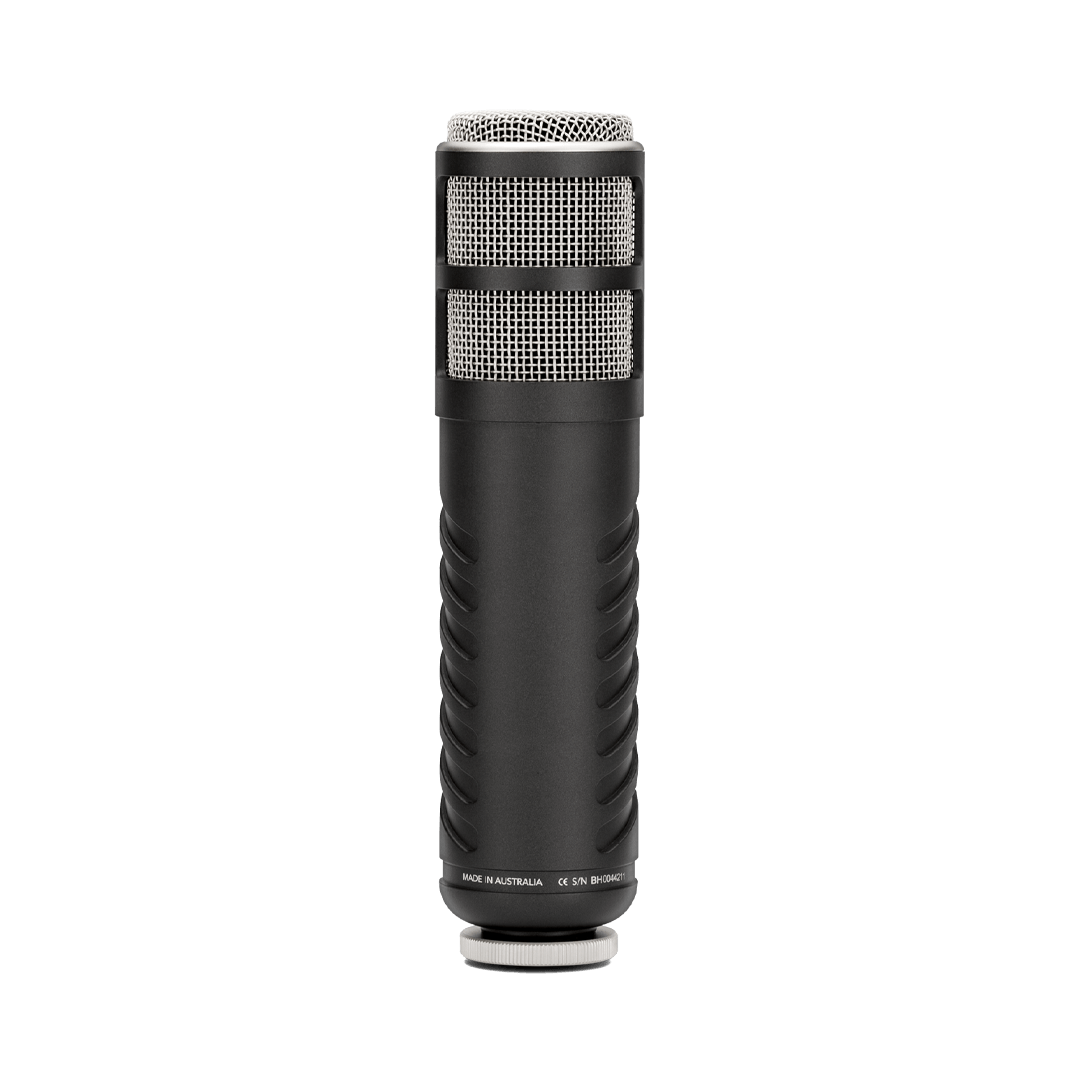
The Rode Procaster is a cardioid XLR dynamic microphone, ideal for vocals. It features a pop filter and internal shock mount. Its metal construction ensures exceptional durability. A classic among podcasters , like the Rode Podcaster.
The Procaster’s cardioid polar pattern isolates the voice by rejecting off-axis noise . Its frequency response (75Hz-18kHz) is optimized for vocal harmonics. A 320-ohm impedance and -56dB sensitivity ensure a stable signal. All this in an all-metal housing.
Build quality and included accessories
The Rode Procaster boasts an all-metal construction. Its weight (695g) reflects its impressive sturdiness. The capsule is mounted on a suspension system to reduce vibrations. A 10-year warranty reinforces confidence in this professional product .
| Characteristic | Specification | Details / Explanation |
|---|---|---|
| Acoustic principle | Dynamic | Uses a diaphragm and a moving coil for robust recording |
| Directivity | Cardioid | Isolates the voice by rejecting side and rear noises |
| Frequency range | 75 Hz – 18 kHz | Optimized for the human voice without excessive bass or treble. |
| Output impedance | 320 Ohms | Enables stable signal transmission over long XLR cables |
| Sensitivity | -56 dB ± 2 dB at 1 kHz | Low-output microphone requiring a powerful preamp |
| Output connection | 3-pin XLR | Professional symmetrical connectors reducing interference |
| Net weight | 695 g | Metal construction ensuring stability and durability |
| Size | 214 mm (L) × 53 mm (Ø) | Compact yet ergonomic for precise positioning |
| Maximum sound pressure level (SPL) | 115 dB | Supports powerful voices without distortion |
| Signal-to-noise ratio | > 78 dB | Clean recordings with minimal background noise |
| Construction | All metallic | Robust design suitable for demanding environments |
| Built-in features | Internal pop filter + suspension | Reduces plosives and mechanical vibrations |
| Design | Australia | Rode’s renowned quality and expertise |
| Guarantee | 10 years | Subject to online registration |
The Rode Procaster includes an RM2 stand, a 3/8-inch adapter, and a ZP1 pouch. For optimal use, choose the PSA1+ boom arm or PSM1 shock mount. An external WS2 pop filter can complement the integrated system. Buy a Rode microphone on Amazon at the best price to complete your setup.
Sound performance and recommended uses
The Rode Procaster delivers clear, professional sound quality . Its cardioid polar pattern effectively isolates the voice by rejecting ambient noise. Perfect for noisy environments, it captures vocal nuances without distortion, even at high volumes.
Ideal use cases for the Rode Procaster
- Podcasting : Optimized for clear and stable voice reproduction, ideal for regular podcast recordings with a crisp, noise-free voice
- Radio production : designed to meet the technical requirements of professional broadcasting environments, with cardioid directivity to minimize interference.
- Voice-over : suitable for narrations, advertisements or dubbing thanks to its frequency response targeted at vocal harmonics.
- Streaming: guarantees superior voice quality for creators live on platforms like Twitch or YouTube
Strengths and weaknesses in different environments
The Procaster excels in podcasting and radio thanks to its ambient noise rejection. Its cardioid polar pattern minimizes lateral interference. In the studio, it requires a powerful preamp to compensate for its low sensitivity (-56dB). In untreated environments, its frequency response (75Hz-18kHz) avoids unwanted resonances. Less suitable for bands, it remains a must-have for solo vocals .
Comparison with other Rode microphones and competitors
The Rode Procaster is positioned between the PodMic (around €130) and the Podcaster (around €230). Unlike the PodMic, it features an all-metal construction and better ambient noise rejection. Compared to the Podcaster, it offers more consistent vocal performance , but its price remains higher. Purchasing a Rode microphone from the Official Store remains a worthwhile option for professionals.
Comparative table of microphones
| Model | Type | Directivity | Price (€) | Benefits |
|---|---|---|---|---|
| Rode Procaster | XLR Dynamics | Cardioid | €259.99 | Sturdy construction, built-in pop filter |
| Rode PodMic | XLR Dynamics | Cardioid | €129.99 | Affordable, clear voice quality |
| Shure SM7B | XLR Dynamics | Cardioid | 399 € | Exceptional noise rejection, versatile |
The Rode Procaster justifies its €259.99 price tag with professional sound quality and exceptional durability. While less expensive than the Shure SM7B (€399), it remains more costly than the PodMic (€129.99). Its value for money appeals to demanding podcasters , although a powerful preamp is necessary to fully exploit its potential. Their Wireless GO 3 range offers an interesting wireless alternative for mobile users.
Installation and optimal usage tips
Microphone setup and connection
To use the Rode Procaster, you need an XLR audio interface. A powerful preamp is essential, as its -56dB sensitivity requires high gain. The Rode AI-1 or a Rode DeCaster Pro II are suitable options. No phantom power is required. All Rode microphones on sale are available here .
Connect the Procaster to your interface or console using an XLR cable. Gradually adjust the gain to avoid background noise. On a RØDECaster, use the combo inputs and disable phantom power (P48). For professional results , consider using an external preamp such as the FMR RNP (66dB gain). Experiment with different interfaces to find the ideal combination.
Positioning and recording techniques
Position the Procaster 5-10 cm from your mouth, slightly angled to reduce plosives. An articulated arm like the PSA1+ ensures stable positioning. Avoid nearby reverberant surfaces. A WS14 windscreen or an external pop filter can complement the built-in system for crystal-clear recordings . For more mobile needs, the RØDE Go II offers a compact wireless solution for smartphones.
- High-pass filter : Apply a filter to reduce unwanted low-frequency noise (air conditioners, traffic) and improve voice clarity
- Noise Gate : Use a noise compressor to eliminate background noise in unacoustically treated environments.
- Compressor : Balance vocal dynamics by attenuating peaks and boosting quieter passages for increased intelligibility
- APHEX Aural Exciter : Add detail and clarity to recordings with specialized processors for broadcast-ready sound
To compensate for the Procaster’s low sensitivity, increase the gain without introducing noise. Use a noise gate to eliminate unwanted noise. A high-pass filter at 80-100Hz will clean up unwanted low frequencies . In the studio, opt for simple acoustic treatments (thick blankets, foam panels) to reduce echo.
Solutions to common problems
Common problems include a weak signal (lack of gain) and residual plosives. Background noise can also occur if the interface or preamp is of average quality. Poor sound isolation exacerbates these issues.
For a stronger signal, use an external preamp such as the FMR RNP or an interface with 60dB+ of gain (Presonus AudioBox 22VSL). To reduce plosives, adjust the pickup angle or add a WS14 pop filter. To eliminate reverberation, place blankets or acoustic panels around the microphone.
Choose the PSA1+ articulating arm for maximum stability. An FMR RNP preamp or a FetHead reduces the need for excessive gain. The WS14 windscreen attenuates residual plosives. For noisy environments, combine a noise gate and a high-pass filter for a clean, professional sound .
With its robust construction, effective cardioid polar pattern, and integrated pop filter, the Rode Procaster stands out as a reliable ally for demanding professionals. If you’re aiming for impeccable sound quality for your podcast or studio recordings, this €259.99 investment is fully justified . Don’t let ambient noise ruin your recordings: your voice deserves a microphone that can rise to the challenge.



Leave a Reply