
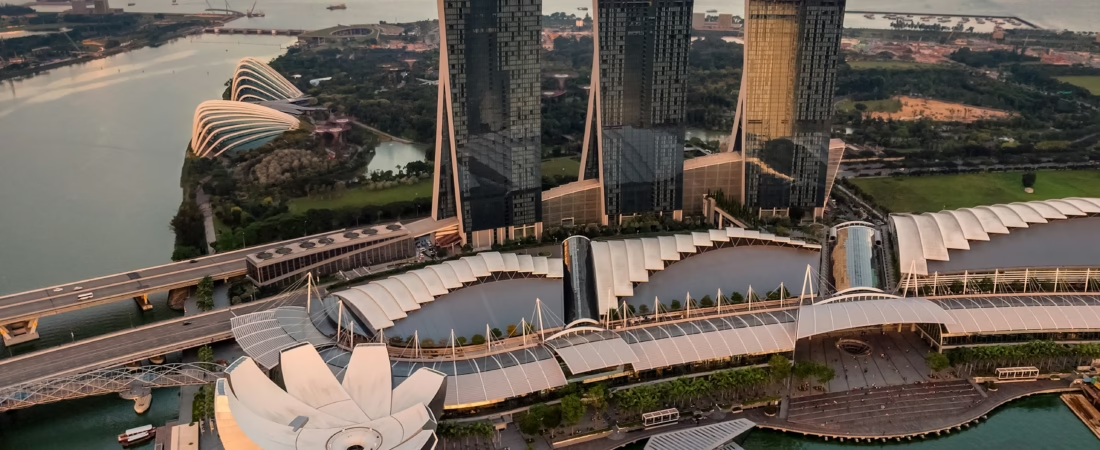
Singapore, as a global technology hub and financial center, has highly controlled airspace. The use of drones (or Unmanned Aircraft (UA)) is therefore strictly regulated by the Civil Aviation Authority of Singapore ( CAAS ). Whether you are a tourist wanting to capture aerial views or a professional, it is crucial to understand and comply with these rules to avoid heavy penalties.
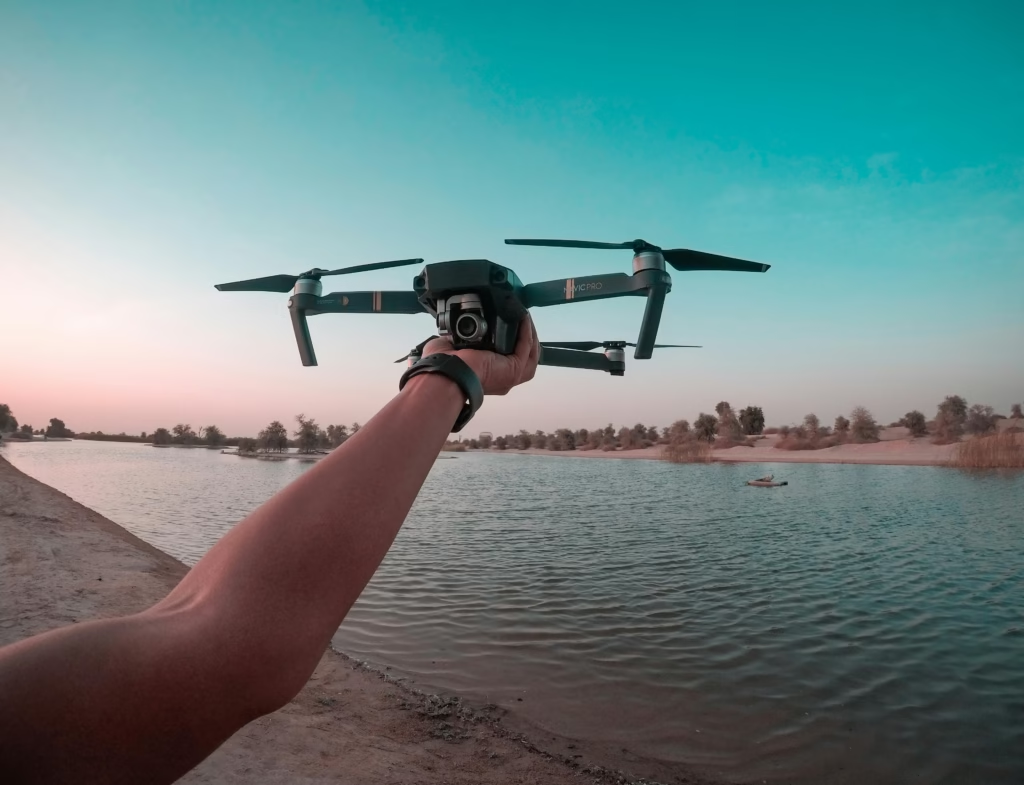
Classification of drones by weight
Singaporean legislation classifies drones according to their total take-off weight, which determines the level of regulatory requirement:
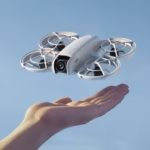
- Less than 250 grams: These drones are considered the least risky. They are exempt from mandatory registration but must still comply with general flight rules.
- Between 250 grams and 7 kilograms: This is the most common category for hobbyists and many professionals. These drones must be registered with the CAAS.
- Over 7 kilograms: These heavy drones are subject to much stricter regulations and require specific permits for each flight.
General rules for all drivers
Regardless of the size of your drone, you must comply with the following conditions for recreational or private flight:
- Flight Height: Do not exceed an altitude of 200 feet above ground level (approximately 60 meters).
- Visibility: Always keep the drone within your direct field of vision ( VLOS – Visual Line of Sight ) without the aid of binoculars or screens.
- Safety Distance: Do not fly the drone over people, crowds or moving vehicles.
- Weather Conditions: Fly only in good weather conditions and during daylight hours.
- Respect for privacy: Do not take photos or videos of people without their consent, nor fly over private property.
Registration and Permits: When Are They Required?
Beyond the basic rules, certain administrative obligations apply depending on the weight and use of the drone.
Registration
Any drone weighing more than 250 grams must be registered online on the CAAS portal before its first flight. A registration sticker must be visibly affixed to the drone.
Activity Permit
An activity permit is required in the following situations:
- For any non-recreational or non-educational use (e.g., commercial, professional use, photographs for a business).
- If the flight takes place in a restricted area, danger zone or no-fly zone (see below).
- If the drone weighs more than 7 kg.
- If the flight exceeds an altitude of 200 feet (60 meters).
No-Fly Zones
Singapore has designated several areas where drone flying is strictly prohibited or restricted for safety reasons. It is essential to check the maps before each flight. The main prohibited areas include:
- Airports: It is prohibited to fly a drone within 5 km of any airport or air base (Changi, Seletar, Paya Lebar, etc.).
- Protected areas: This includes government installations, military bases, prisons and other sensitive sites.
- Parks and nature reserves: Many parks managed by the NParks (National Parks Board) prohibit drone flights to protect wildlife and the tranquility of the area.
To check if your flight location is authorized, it is strongly recommended to use official tools such as the OneMap portal, which has a dedicated information layer for drone flight areas.
Penalties for non-compliance
Singaporean authorities take aviation safety very seriously. Failure to comply with the law can result in severe consequences, including heavy fines of up to tens of thousands of Singapore dollars and even imprisonment for the most serious offenses.
In conclusion, flying a drone in Singapore is entirely possible, but it requires careful preparation and strict adherence to the rules. Before taking off, make sure your drone is registered (if necessary), check the permitted flight zones, and always follow the rules of good conduct. For up-to-date information, always consult the official CAAS website.


Leave a Reply