
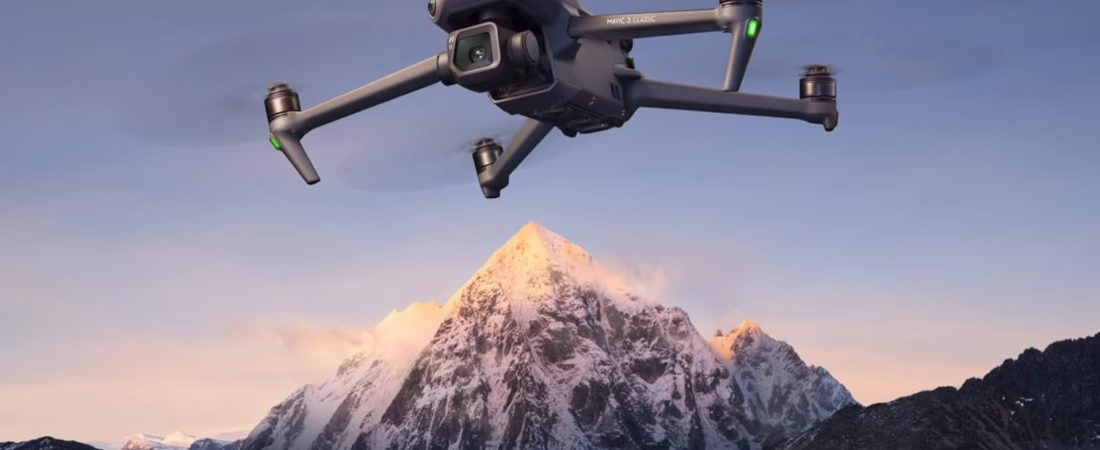
The use of drones in Tunisia, whether for recreational or professional purposes, is subject to very strict regulations . Unlike many countries where the use of recreational drones is relatively unrestricted under certain conditions, Tunisia has established a rigorous legal framework primarily aimed at guaranteeing national security, protecting privacy, and ensuring air safety.
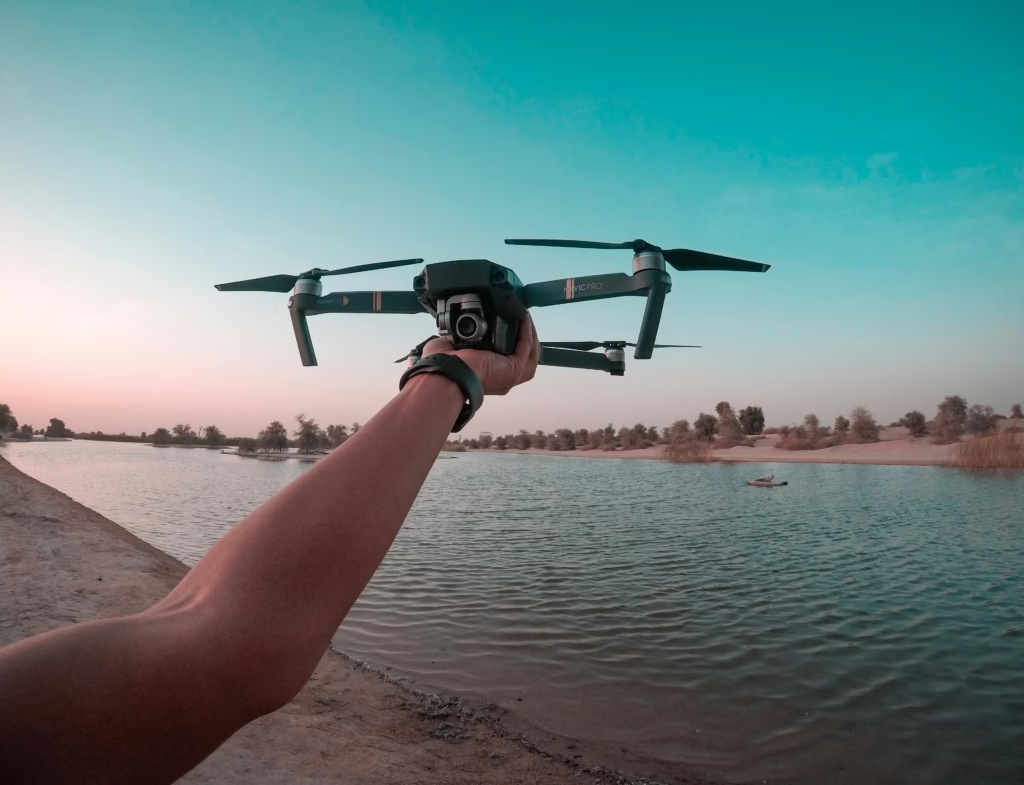
Prior Authorization: An Essential Step
The fundamental principle of Tunisian law is simple: no drone may fly without prior authorization from the competent authorities. This rule applies to all types of drones, regardless of weight or intended use. Attempting to fly a drone without this authorization is illegal and exposes the pilot to severe penalties.
Authorizations are granted on a case-by-case basis after review of a complete file. Several government entities are involved in the validation process, which makes it complex and often lengthy.
- The Ministry of Transport (via the Directorate General of Civil Aviation – DGAC).
- The Ministry of the Interior .
- The Ministry of National Defence .
Authorization Application Procedure
To obtain flight authorization, the applicant must submit a detailed application. While the procedure may vary, the following are generally required:
- Formal request: A letter explaining in detail the reason for using the drone (e.g., for a film project, a technical inspection, agricultural research, etc.).
- Pilot information: Full identification of the person or entity that will operate the drone.
- Technical specifications of the drone: Brand, model, serial number, weight, autonomy and capabilities (camera, sensors).
- Precise flight plan: The applicant must specify the exact dates, times, altitudes, and geographical coordinates of the planned overflight area.
- Justification of necessity: It is crucial to prove that the use of the drone is essential for the project in question. Applications for purely recreational use have very little chance of success.
General Flight Rules (once authorization has been obtained)
Even after obtaining the coveted authorization, the pilot must adhere to strict flight rules to ensure safety:
- Visual line of sight flight: The drone must always remain within the field of vision of its pilot (principle of VLOS flight – Visual Line of Sight).
- No-fly zones: Flying over sensitive areas is strictly prohibited. These include, but are not limited to: airports, military sites, government buildings, embassies, power plants, and gatherings of people.
- Respect for privacy: It is forbidden to film or photograph people without their explicit consent, or to fly over private property.
- Altitude and distance: The authorization usually specifies a maximum flight altitude that must never be exceeded.
- Weather conditions: The flight must only take place in favorable weather conditions.
Drone Imports and Sanctions
Importing a drone into Tunisia is strictly regulated . Attempting to enter the country with a drone in your luggage without prior import authorization almost always results in the confiscation of the device by customs officials. It is very difficult, if not impossible, to recover it afterward.
The penalties for non-compliance with the legislation are severe and may include:
- The permanent confiscation of the equipment.
- Heavy financial penalties.
- Prison sentences, especially if the theft is considered a threat to state security.
Conclusion: Caution and Anticipation
In short, flying a drone in Tunisia is not something to be undertaken lightly. The legislation is among the most restrictive in the world. It is imperative for anyone planning to use a drone in Tunisia to contact the relevant authorities well in advance, particularly the Tunisian Civil Aviation Authority (DGAC), to learn about the exact procedures and begin the authorization process. Patience and preparation are key to successfully completing any drone project in Tunisia.
“`



Leave a Reply