
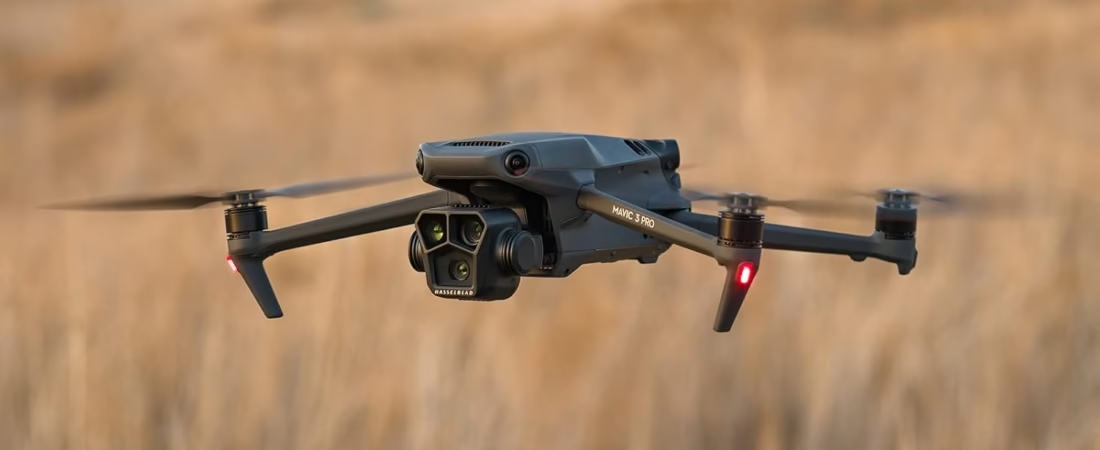
South Korea, a nation at the forefront of technology, has a well-defined regulatory framework for the use of drones (called “무인비행장치” in Korean). Whether you’re a tourist looking to capture breathtaking landscapes or a professional, understanding and adhering to these rules is crucial to avoid hefty fines and legal complications. This article details the key aspects of South Korean drone legislation.
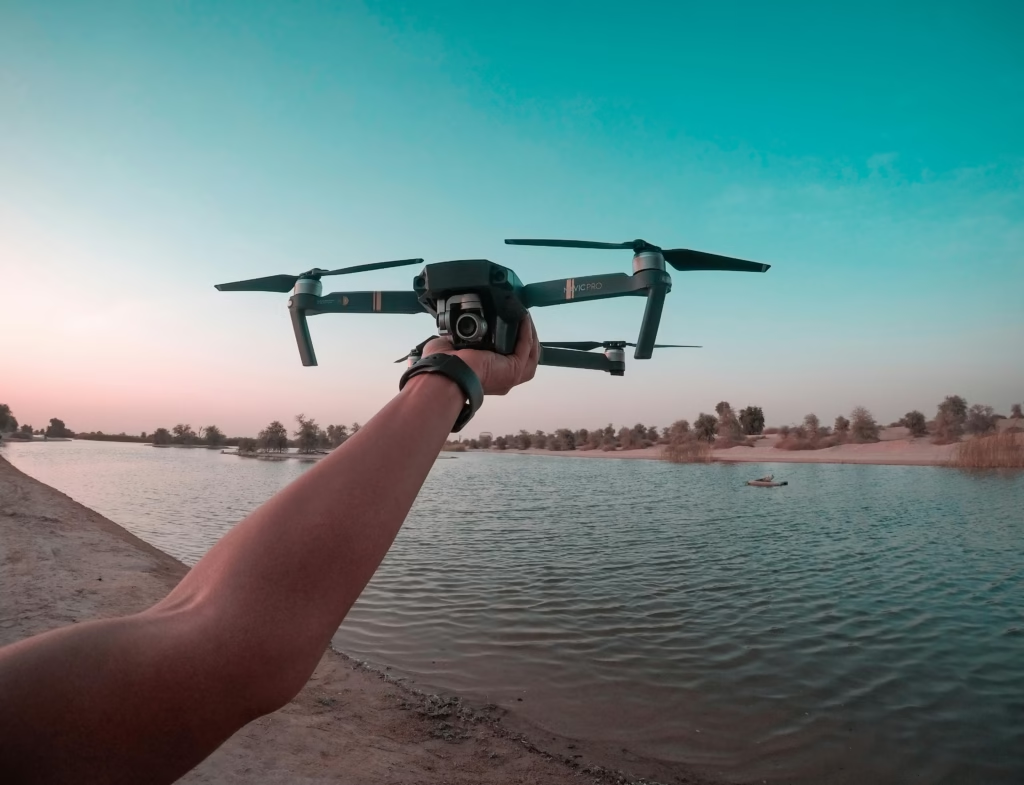
Drone Classification by Weight
South Korean regulations classify drones according to their maximum take-off weight (MTOW). This classification determines registration, licensing, and insurance requirements.
- Type 1: Drones weighing more than 25 kg and up to 150 kg.
- Type 2: Drones weighing more than 7 kg and up to 25 kg.
- Type 3: Drones weighing more than 2 kg and up to 7 kg.
- Type 4: Drones weighing more than 250 g and up to 2 kg.
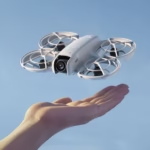
- “Toy Drones”: Drones weighing 250g or less, which are subject to much more flexible rules but must still respect exclusion zones.
Registration and License Requirements
Registration and licensing are mandatory steps for most pilots, with the exception of users of very light drones for purely recreational purposes.
- Device registration: All drones weighing more than 2 kg must be registered with the Ministry of Territory, Infrastructure and Transport (MOLIT).
- Pilot license: A license is required depending on the weight of the drone and its intended use.
- For commercial use , a license or certification is generally required even for Type 4 category drones (over 250g).
- For Type 1, 2 and 3 drones, a proper pilot’s license, involving a theoretical and practical exam, is mandatory, whether the use is recreational or commercial.
- Insurance: Civil liability insurance is mandatory for any drone used for commercial purposes or for any device weighing more than 25 kg.
General Flight Rules to be Observed
Regardless of the type of drone, fundamental rules apply to all flights to ensure the safety of the airspace and people on the ground.
- Keep the drone in direct line of sight (VLOS – Visual Line of Sight) at all times.
- Do not exceed a maximum altitude of 150 meters above the ground.
- Flights are only permitted during daylight hours, from sunrise to sunset. Night flights require special authorization.
- It is forbidden to fly a drone over crowds or gatherings of people.
- Never fly under the influence of alcohol or drugs.
- Don’t drop anything from the drone.
No-Fly Zones
South Korea has numerous areas where drone flights are strictly prohibited for reasons of national and public safety. It is imperative to check maps before each flight.
- Zones P-73 and P-518: These are critical security zones, including central Seoul (around the presidential office) and the border zone with North Korea (DMZ). Flights are completely prohibited in these areas.
- Airports: It is forbidden to fly within a 9.3 km radius around all airports.
- Military and government installations: These areas are also no-fly zones.
- Densely populated areas: Overflights of city centers and residential areas are severely restricted.
It is strongly recommended to use the “Ready to Fly” app (available on smartphones), the official tool provided by the Korean authorities, to check in real time whether an area is open to flying.
Photography, Video and Privacy
A crucial aspect of the legislation concerns the protection of privacy. Filming or photographing people without their explicit consent is illegal and can lead to severe legal consequences. Similarly, filming military or government installations is strictly prohibited.
Conclusion
Flying a drone in South Korea offers incredible opportunities, but it also comes with significant responsibilities. The key is preparation : register your device if required, obtain the correct license, adhere to flight regulations, and, most importantly, always check authorized areas before takeoff. By acting responsibly, you’ll ensure your safety and the safety of others, while fully enjoying your flying experience.


Leave a Reply