
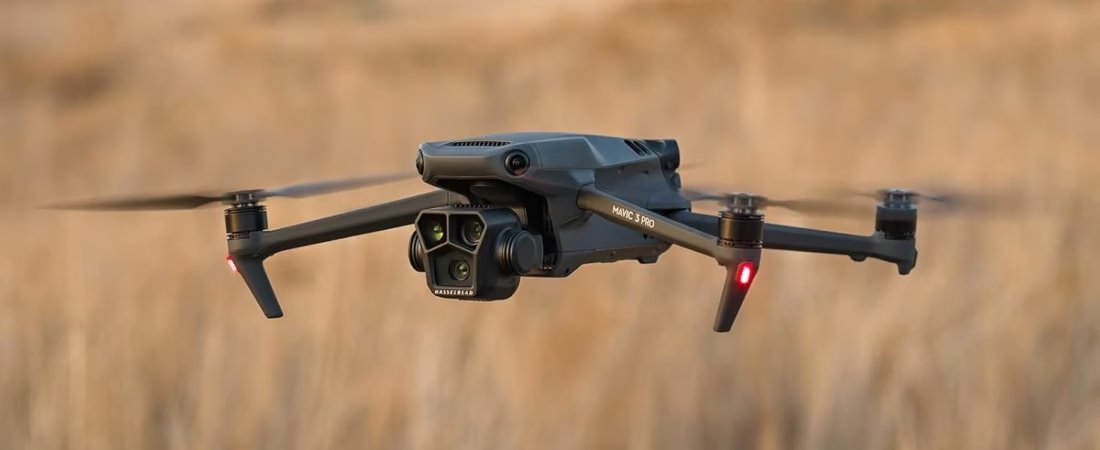
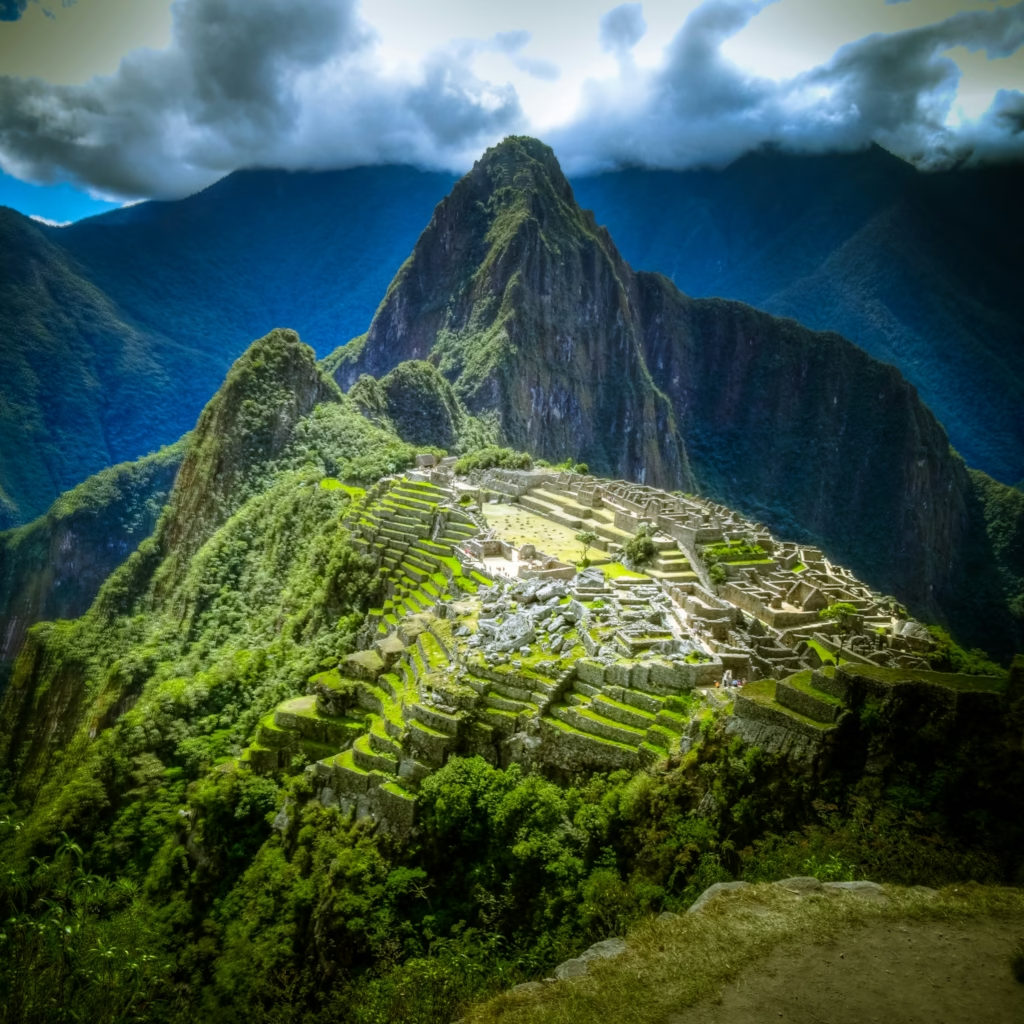
Peru, with its spectacular landscapes ranging from the Andes to Machu Picchu and the desert coast, is a dream destination for drone pilots. However, before taking off, it’s crucial to understand the current regulations, managed by the Directorate General of Civil Aeronautics (DGCA) of Peru. Peruvian legislation is precise and clearly distinguishes between recreational and commercial use.
Basic principles of regulation
The main standard governing the use of drones (called RPAS – Remotely Piloted Aircraft Systems) in Peru is Norma Técnica Complementaria (NTC) 001-2015 . Here are the key points to remember:
- Competent authority: All regulations are under the supervision of the DGAC.
- Key distinction: The law makes a major distinction between recreational use (leisure) and professional or commercial use (specialized activities).
- Registration: Most operations, especially commercial ones, require registration of the drone and pilot.
Rules for recreational use
If you’re using your drone solely for recreational purposes, the rules are more relaxed, but strict restrictions still apply. The main objective is to ensure the safety of people and property on the ground.
- Weight: The simplest rules generally apply to drones under 2 kg.
- Visual Loss (VLOS): You must always keep your drone in direct visual contact.
- Flight conditions: Flight is permitted only during daylight hours and in good weather conditions.
- Altitude and Distance: Do not exceed an altitude of 122 meters (400 feet) and maintain a safe distance from people, vehicles and buildings.
- Respect for privacy: It is prohibited to fly over private property without the owner’s permission.
- Prohibited areas: Flying over dense urban areas, crowds, archaeological sites and protected areas is strictly prohibited.
Rules for commercial or professional use
For any commercial use (photography, videography, mapping, agriculture, etc.), the regulations are much stricter and require several administrative procedures. Failure to comply with these rules can result in severe penalties and confiscation of equipment.
- Drone registration: Your device must be registered with the DGAC to obtain a Tarjeta de Registro .
- Pilot license: The pilot must obtain a Licencia de Piloto de RPAS . This involves completing theoretical and practical training at an approved center and passing an exam.
- Liability insurance: An insurance policy covering potential damage to third parties is mandatory.
- Flight authorization: For each specific operation, it may be necessary to request flight authorization from the DGAC, detailing the location, date, time and purpose of the operation.
Special case: Foreign tourists
This is the most complex point. Officially, a tourist wishing to use a drone, even for personal use, must comply with the regulations. For commercial use, obtaining a Peruvian license as a foreigner is a long and difficult process.
- Strictly recreational use: As a tourist, the easiest thing to do is to limit yourself to purely recreational use in isolated areas, far from any sensitive sites.
- Customs Declaration: It is recommended to declare your drone upon arrival in Peru to avoid any problems.
- Archaeological sites: Flying over Machu Picchu , the Nazca lines, and any other archaeological site is strictly prohibited without special authorization from the Ministry of Culture, which is extremely difficult to obtain.
- Professional Solution: If your goal is to take professional shots, the best solution is to hire a certified and licensed Peruvian drone operator.
No-Fly Zones
Be extremely vigilant about areas where flying is prohibited. Failure to comply with these prohibitions will be severely punished.
- Less than 4 km from airfields and airports.
- Above military areas, police stations and government buildings.
- Above archaeological sites and cultural heritage.
- Above national parks and protected natural areas without specific authorization.
- Above gatherings of people.
Conclusion
Flying a drone in Peru is an enriching experience, but it requires careful preparation and strict adherence to the rules. For simple recreational use, caution and common sense are required. For any professional project, the procedures are mandatory and complex. It is strongly recommended that you consult the official website of the DGAC del Perú before your trip to obtain the most up-to-date information and ensure you are flying legally.


Leave a Reply