
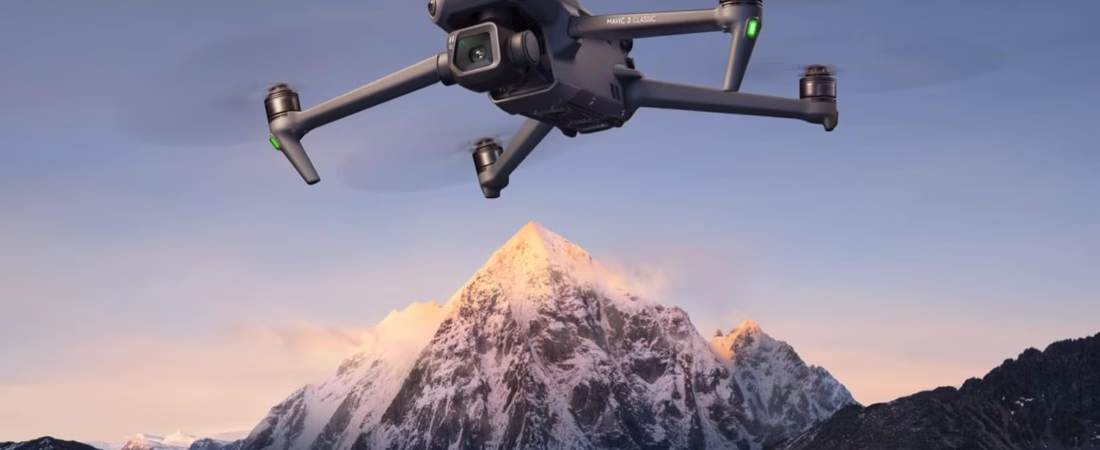
Japan, with its futuristic cityscapes and breathtaking natural panoramas, is a dream destination for drone pilots. However, the country enforces very strict regulations governing their use. Whether you’re a tourist looking to capture memories or a professional, it’s crucial to know and respect the law to avoid hefty fines and legal trouble. Here’s a comprehensive guide to drone legislation in Japan.
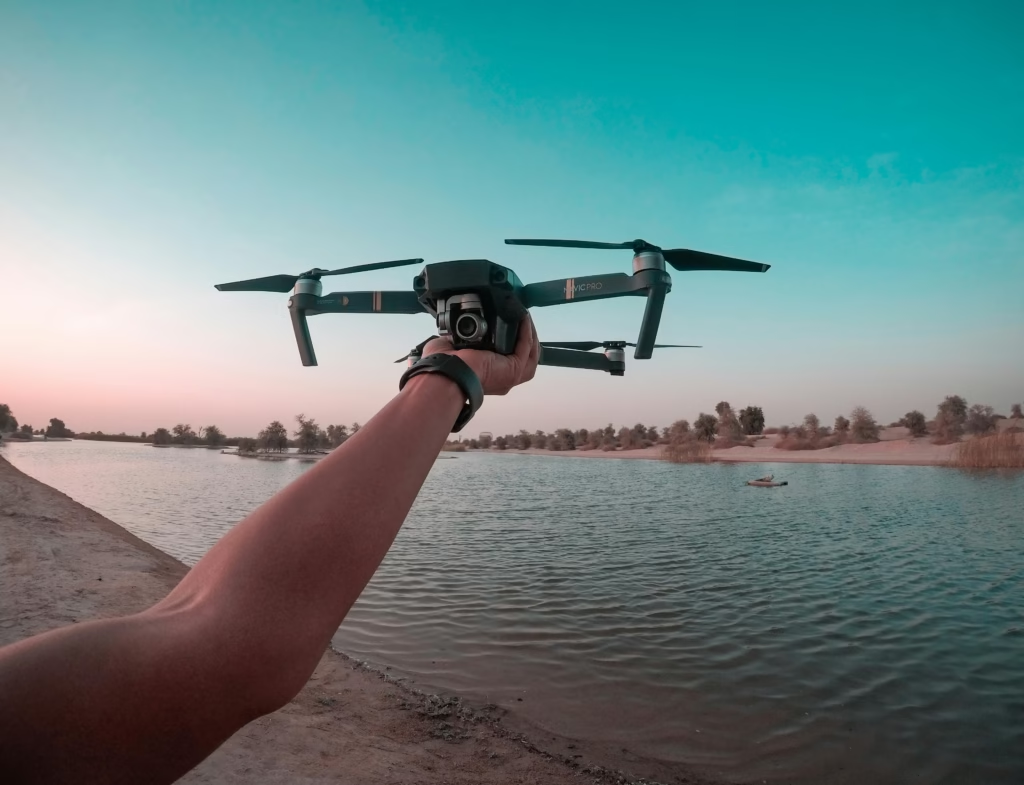
Mandatory Drone Registration
Since June 2022, one step has become essential before even thinking about flying your drone: registration. This rule applies to all drones (including unmanned aerial vehicles or UAVs) weighing 100 grams or more .
- Who needs to register? All owners of drones weighing 100g and above, including foreign residents and tourists.
- How ? Registration is done online via the DIPS (Drone/UAS Information Platform System) portal of the Ministry of Land, Infrastructure, Transport and Tourism (MLIT).
- Remote ID: Once registered, you will be assigned a unique identification number. This number must be issued by the drone via a “Remote ID” function. Older drones not equipped with this technology may require an external device.
Flying an unregistered drone weighing more than 100g is illegal and subject to severe penalties.
No- Fly Zones
Japan has designated areas where drone flights are strictly prohibited without special authorization from the MLIT. It is imperative to check the maps before each flight.
- Airport areas: Flights are prohibited in air corridors and around airports.
- Altitude: It is forbidden to fly at an altitude of 150 meters or more above the ground.
- Densely populated areas (DIDs): It is forbidden to fly over “Densely Inhabited Districts,” which are defined by the government and cover most cities and urban areas. Official maps allow you to visualize these areas.
- Sensitive installations: Flying over the Imperial Palace, government buildings, nuclear power plants and other critical infrastructure is strictly prohibited.
General Flight Rules to be observed everywhere else
Even if you fly outside a restricted area, you must adhere to a strict set of conduct rules unless you have obtained a specific exemption.
- Flights are permitted during daylight hours only: Night flights are prohibited without authorization.
- Maintaining visual line of sight (VLOS): The pilot must always keep their drone in direct visual line of sight, without the aid of binoculars or a screen.
- Keep a safe distance: A distance of at least 30 meters must be maintained with people, buildings and vehicles that are not part of the operation.
- Do not fly over crowds: It is forbidden to fly a drone over a gathering of people, such as at events, festivals or concerts.
- No transport of dangerous goods: The transport of explosive, flammable or other dangerous goods is prohibited.
- Do not drop anything from the drone: It is forbidden to drop objects from the device in flight.
Pilot Certification and New Flight Levels
In December 2022, Japan introduced a pilot certification system to authorize more complex operations. While no certification is required for simple recreational flights that comply with all the above rules, it becomes mandatory for more advanced flights.
- Level 3: Flight beyond the pilot’s visual line of sight (BVLOS) in uninhabited areas. Requires a second-class license.
- Level 4: This is the highest level, authorizing flight beyond the pilot’s visual line of sight over populated areas (cities). It requires a first-class pilot certification and specific aircraft certification.
Advice for Foreign Travelers
The language barrier and the complexity of the procedures can be challenging. It is strongly recommended that you register your drone well in advance of your departure for Japan. Obtaining special permits to fly in restricted areas is a lengthy and complex process, usually conducted in Japanese. For professional projects, it is often advisable to use a local operator. Failure to comply with these laws can result in confiscation of equipment, fines of up to 500,000 yen (approximately €3,000), and even imprisonment. Caution and preparation are therefore your best allies for a successful flying experience in the Land of the Rising Sun.




Leave a Reply