

Israel, a nation at the forefront of technology and particularly active in the unmanned aircraft sector, has implemented rigorous legislation to regulate the use of drones within its territory. The Civil Aviation Authority of Israel (CAAI) manages these regulations, which aim to ensure airspace safety and national security, while also allowing for the development of recreational and commercial activities.
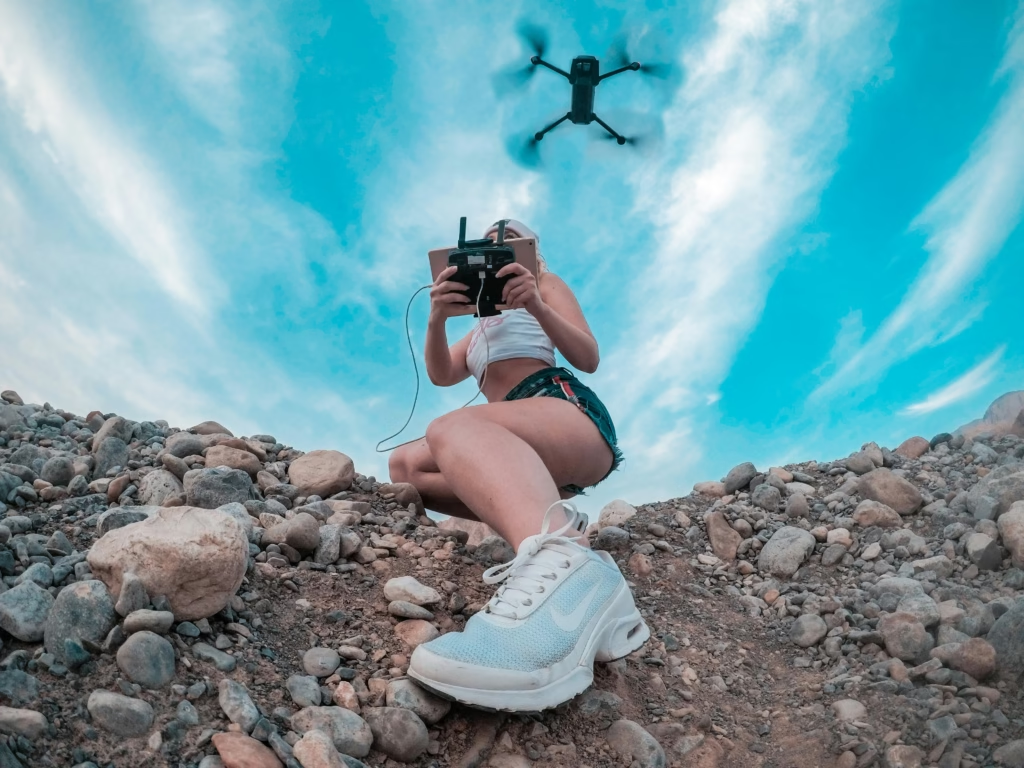
The Regulatory Authority and the General Principles
The CAAI establishes all the rules concerning unmanned aircraft systems (UAS). It primarily distinguishes between two categories of use: recreational flight and commercial use . The requirements differ considerably between these two frameworks, with commercial use being subject to much stricter conditions.
Rules for Leisure Activities
For amateur or tourist drone pilots, several fundamental rules must be followed to ensure a safe flight. The CAAI imposes the following conditions:
- Visual line-of-sight (VLOS) flight: The pilot must always maintain direct visual contact with his drone, without the aid of binoculars or other devices.
- Maximum altitude: You must not exceed an altitude of 50 meters above the ground.
- Safety distances: It is imperative to maintain a distance of at least 250 meters from any residential area, building or person not involved in the theft.
- No night flights: The CAAI prohibits recreational drone flights between sunset and sunrise.
- No registration required: In general, recreational drones under 25 kg do not require registration with the CAAI, but the pilot remains fully responsible for their device.
Requirements for Commercial Use
Any drone operation that generates revenue or serves a commercial interest is subject to a strict authorization regime. Commercial operators must meet several requirements:
- Pilot license: The pilot must hold a valid drone pilot license, issued by the CAAI after passing theoretical and practical exams.
- Aircraft registration: The operator must register each drone used for commercial purposes with the CAAI.
- Insurance: Commercial operators must take out liability insurance to cover any damage caused to third parties.
- Operating Manual: A company using drones must write and submit an operating manual detailing its safety and flight procedures for approval.
- Flight authorizations: For certain operations, such as flying over specific areas or outside standard rules, the operator must obtain special authorization from the CAAI before the flight.
No-Fly Zones
Due to national security considerations, Israel enforces a very strict no-fly zone policy. It is strictly forbidden to fly a drone near the following locations:
- Airports and airfields (a safety distance of several kilometers is required).
- Military bases and strategic installations.
- International borders.
- Sensitive government websites.
- Large gatherings of people.
The pilot must check aeronautical charts and dedicated applications before each flight to ensure they do not enter restricted airspace.
Conclusion: A Strict but Clear Framework
Israeli drone legislation reflects the country’s dual challenge: fostering innovation in a key technological sector while maintaining the highest level of safety. For both amateurs and professionals, strict adherence to the rules established by the CAAI is not only a legal obligation but also essential for everyone’s safety. Before flying a drone in Israel, always consult the latest information published on the CAAI ‘s official website to ensure full compliance.




Leave a Reply