
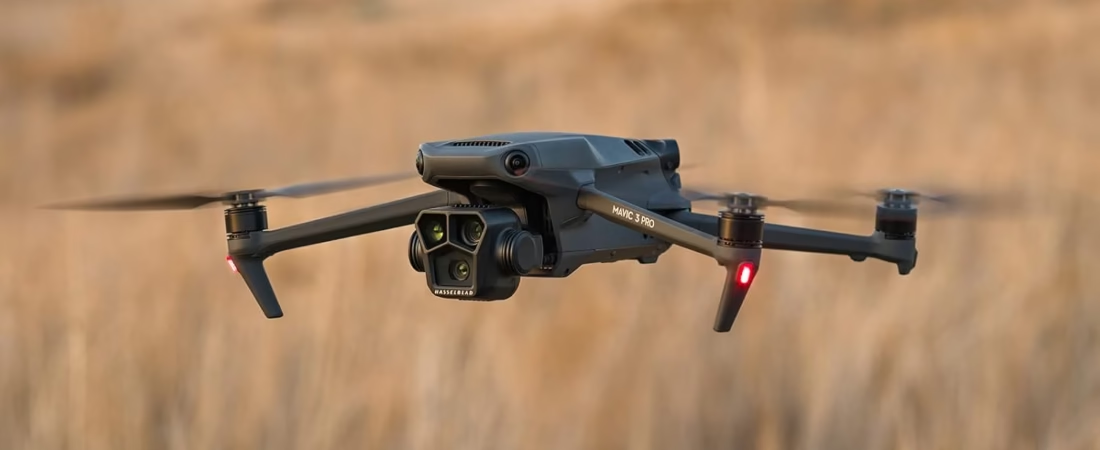
India, recognizing the immense potential of unmanned aircraft systems (UAS), has radically transformed its regulations in recent years. Moving from a highly restrictive approach to a liberalized regulatory framework, the country aims to become a global hub for drones by 2030. The cornerstone of this new era is the publication of the “Drone Rules, 2021,” which significantly simplify procedures for pilots and manufacturers.
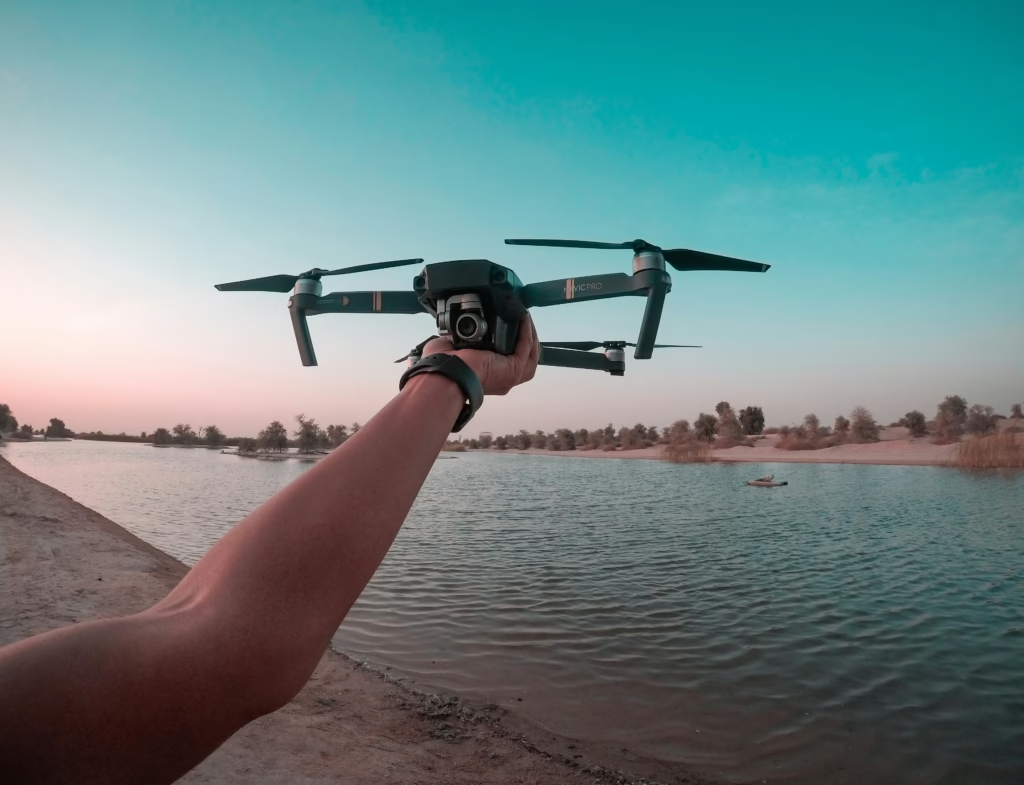
Drone classification
Indian legislation classifies drones according to their total takeoff weight. This classification determines the type of license, registration, and flight authorizations required.
- Nano: Less than or equal to 250 grams.
- Micro: Over 250 grams and up to 2 kilograms.
- Small: Over 2 kg and up to 25 kg.
- Medium: Over 25 kg and up to 150 kg.
- Large: Over 150 kg.
The pillars of Indian regulation
The new policy is based on a few fundamental concepts designed to ensure security while fostering innovation. The entire ecosystem is managed through a single, user-friendly platform.
- The DigitalSky platform: This is the heart of the Indian regulatory system. This online platform serves as a one-stop shop for all drone-related activities, from pilot and aircraft registration to flight authorization applications. It displays an interactive map of Indian airspace, divided into flight zones.
- Unique Identification Number (UIN): Every drone, except for the Nano category, must be registered on the DigitalSky platform to obtain a Unique Identification Number (UIN), which acts as a digital license plate.
- Drone Pilot Certificate: A pilot certificate is mandatory to operate drones in the Micro category and above. This certificate is issued by flight schools authorized by the French Civil Aviation Authority (DGCA) . Nano category drones and Micro drones used for non-commercial purposes do not require a pilot certificate.
Flight zones: Green, Yellow and Red
To simplify operations, the airspace is divided into three zones, clearly visible on the DigitalSky platform map. Each zone has its own rules.
- Green Zone: This is the airspace up to 400 feet (120 meters) that is not designated as a yellow or red zone. In this zone, no flight authorization is required for drones weighing up to 500 kg.
- Yellow Zone: This is the controlled airspace above 400 feet within a green zone, or any specified zone around airports. Operations in this zone require prior authorization from the relevant air traffic control authority.
- Red Zone: This is a “no-fly zone” where drones can only operate with explicit permission from the central government. This includes areas around airports, international borders, and strategic or critical infrastructure.
Key simplifications in the “Drone Rules, 2021”
The new regulations have brought significant changes to facilitate the use of drones:
- The number of forms to fill out has been reduced from 25 to 5.
- The types of fees have been reduced from 72 to just 4, with significantly reduced amounts.
- Many approvals that were previously required have been eliminated, such as the certificate of conformity, the maintenance certificate, operator permits, etc.
- No pilot is required for Nano drones and Micro drones operated for non-commercial purposes.
- The cargo coverage by drones has been increased from 300 kg to 500 kg, paving the way for drone taxis.
In conclusion, India has established a progressive and trust-based regulatory framework. By embracing digitalization with the DigitalSky platform and drastically simplifying regulations, the country is positioning itself as a major and attractive player on the global drone stage, ready to harness their potential in sectors as diverse as agriculture, logistics, surveillance, and mapping.




Leave a Reply