

Drone legislation in Europe has undergone major changes in recent years, notably with the establishment of common regulations by the European Union Aviation Safety Agency (EASA) . These regulations aim to harmonize rules and ensure the safety of drone flights throughout European airspace. This article provides an overview of these regulations and their implications.
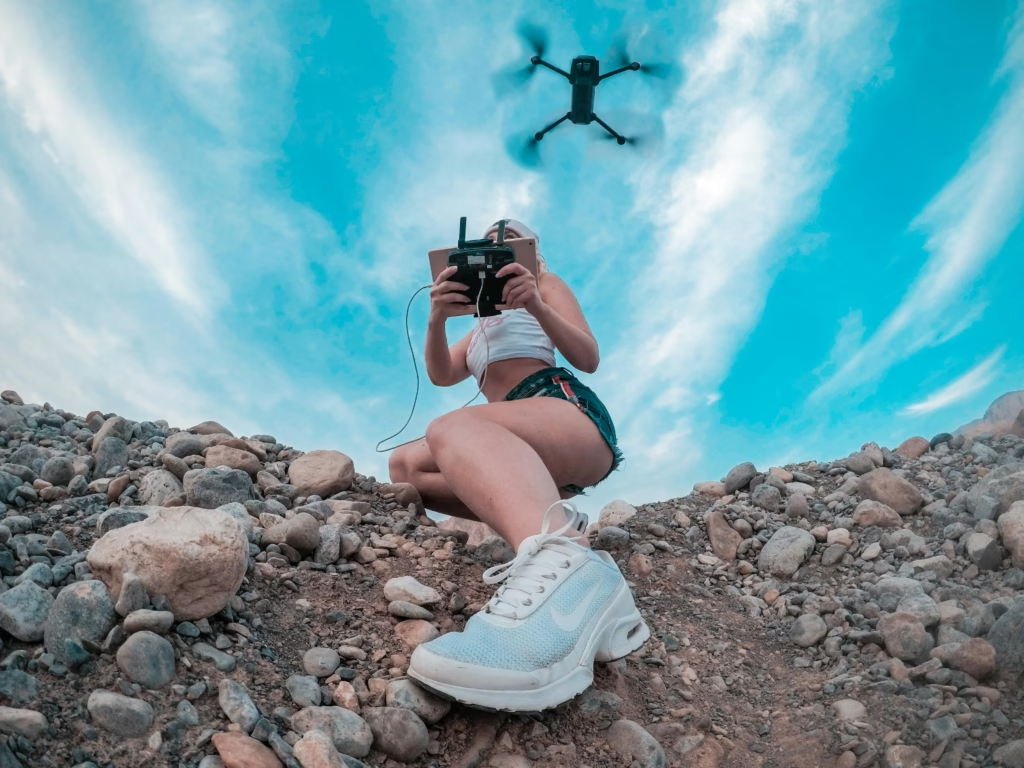
Understanding EASA and its role
EASA is the European Union Aviation Safety Agency. It sets the rules for civil aviation, including drones. Its main objective is to ensure a high level of air safety and to protect people on the ground. EASA has published a European regulation on drones, which entered into force gradually from 2021 and applies to all EU member states.
Drone categories and their regulations
EASA regulations classify drones into three main categories, each with its own rules:
- “Open” category: Intended for flights presenting the least risk. Operations are subject to specific limitations in terms of weight, distance, and altitude. The rules are more flexible, but pilots must train and register.
- “Specific” category: Designed for operations with a moderate level of risk. It requires a risk assessment and, depending on the level, specific authorization or a declaration. Standard scenarios are defined to facilitate obtaining authorizations.
- “Certified” category: Applies to operations presenting a high level of risk, similar to conventional aviation. This category requires certification of the aircraft, the operator, and the pilot.
Drone pilot training and registration
European regulations mandate the training and registration of drone pilots, particularly for operations in the “Open” category.
- Online training: Online training is mandatory for operations in the “Open” category. This training covers the theoretical aspects of safety, regulations, drone performance, and meteorology.
- Registration: All drone pilots, or operators as the case may be, must register with the competent authorities in their country.
- Examinations: Examinations may be required for certain operations, particularly those involving flights in the “Specific” category.
Responsibilities and obligations of drone operators
Drone operators have several responsibilities and obligations, including:
- Respect flight limits: Rules relating to altitude, distance, prohibited areas and flight times must be strictly observed.
- Avoid sensitive areas: It is forbidden to fly near airports, hospitals, nuclear power plants and other sensitive areas.
- Ensuring safety: The pilot must always be able to control the drone and react in case of emergency.
- Taking out insurance: Civil liability insurance is mandatory to cover potential damage caused by the drone.
The future of drone regulation in Europe
Drone regulations are constantly evolving. EASA regularly updates rules and guidelines based on technological advancements and lessons learned. The goal is to strike a balance between promoting innovation and ensuring aviation safety. Staying informed about the latest regulations is crucial for operating legally.



Leave a Reply