

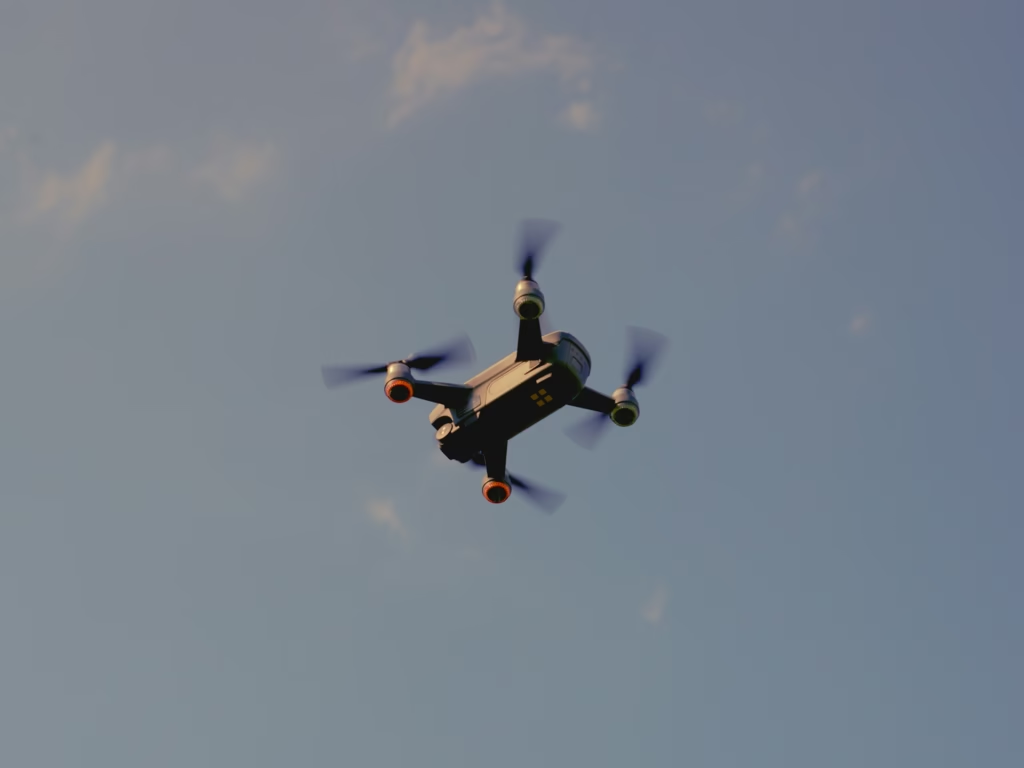
The use of drones, or VANT (Vehículos Aéreos no Tripulados), in Argentina is regulated by the Administración Nacional de Aviación Civil (ANAC) . These regulations aim to ensure the safety of the airspace, people, and property on the ground. Whether you are an amateur or professional pilot, it is crucial to know and respect these rules to avoid penalties.
The competent authority and the regulatory framework
The main entity responsible for drone regulation in Argentina is the ANAC (National Civil Aviation Authority). The legal framework is primarily defined by ANAC Resolution 527/2015 , which establishes the “Regulations for Non-Tripled Aerial Vehicles (NTVs) and Non-Tripled Aerial Vehicle Systems (NTVS).” These regulations have been updated several times, so it is always recommended to consult the official ANAC website for the most recent information.
Registration required: The SIVANT system
One of the first obligations for any drone owner (except for the smallest models used solely for recreational purposes) is to register it. Registration is done via an online platform called SIVANT (Sistema Integrado de Vehículos Aéreos no Tripulados).
- Who needs to register? Any drone weighing more than 250 grams, or any drone, regardless of its weight, used for commercial, professional or scientific purposes.
- Procedure: The process involves providing information about the pilot and the technical characteristics of the drone (make, model, serial number).
- Proof: Once the registration is validated, the owner receives a registration certificate.
Classification and requirements according to use
Argentine regulations clearly distinguish between recreational use and commercial or professional use, with different requirements for each.
Recreational Use
Drones used solely for recreational purposes are subject to more flexible rules, but must still comply with strict flight conditions to ensure safety.
- Class A (Small): Up to 500g. No specific age or registration requirements, but general flight rules apply.
- Class B (Medium): Between 500g and 5kg. The pilot must be of legal age (over 18) or supervised by an adult. Registration is required.
- Class C (Large): Over 5 kg. Special authorizations from ANAC are required.
Commercial and Professional Use
The use of a drone for activities such as photography, videography, agriculture, surveillance or research is subject to much stricter requirements.
- Drone registration: Mandatory, regardless of weight.
- Pilot license: The pilot must obtain a “Certificado de Idoneidad de Miembro de la Tripulación Remota”, which is obtained after passing a theoretical and practical exam.
- Minimum age: The pilot must be at least 18 years old.
- Civil liability insurance: Insurance is mandatory to cover potential damages to third parties.
- Operations manual: The operator must have a manual describing flight and safety procedures.
General flight rules that must be strictly observed
Whether for recreational or professional use, all drone pilots must comply with the following flight rules:
- Maximum altitude: Never exceed 120 meters (400 feet) above the ground.
- Visual line-of-sight (VLOS) flight: The drone must always remain within the pilot’s direct field of vision, without the aid of binoculars or other devices.
- Weather conditions: Flight is only permitted during the day and in clear visibility conditions (VMC – Visual Meteorological Conditions).
- Safety distances:
- Keep a distance of at least 5 kilometers from airports and airfields.
- Do not fly over densely populated areas, cities or gatherings of people without special permission.
- Maintain a safe horizontal distance from people and property not involved in the operation.
- Restricted areas: It is forbidden to fly over sensitive areas such as military installations, government buildings or critical infrastructure.
- Respect for privacy: It is forbidden to film or photograph people or private property without their consent.
Foreign tourists and pilots
Tourists wishing to use a drone in Argentina are subject to the same regulations as residents. It is strongly advised to contact the ANAC (National Civil Aviation Agency) before traveling, register the drone if necessary, and familiarize yourself with all local rules to avoid any problems with the authorities.


Leave a Reply