
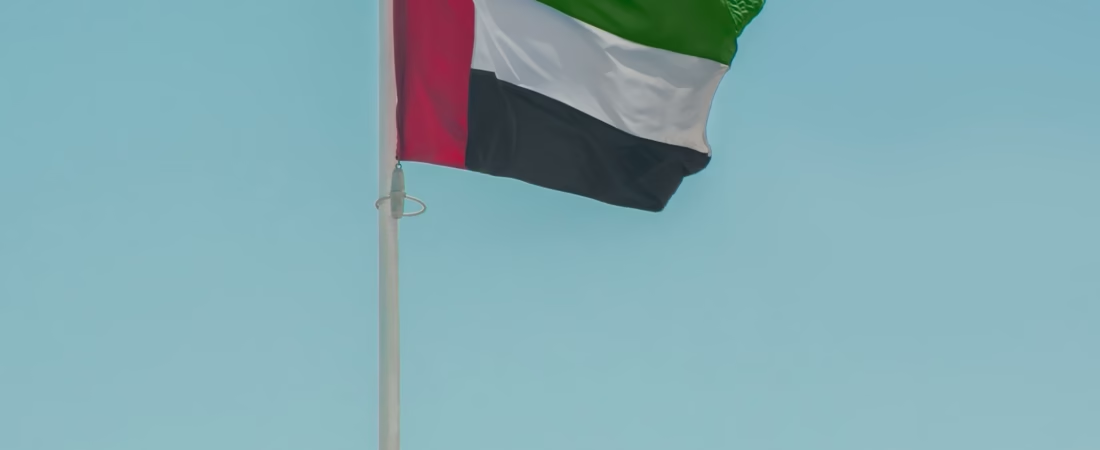
The United Arab Emirates (UAE) has some of the strictest and most well-defined drone regulations in the world. Whether you’re a tourist looking to capture aerial views of the desert or a professional using drones for commercial operations, it’s imperative to understand and comply with the law. The main authority governing airspace and drones is the General Civil Aviation Authority (GCAA) .
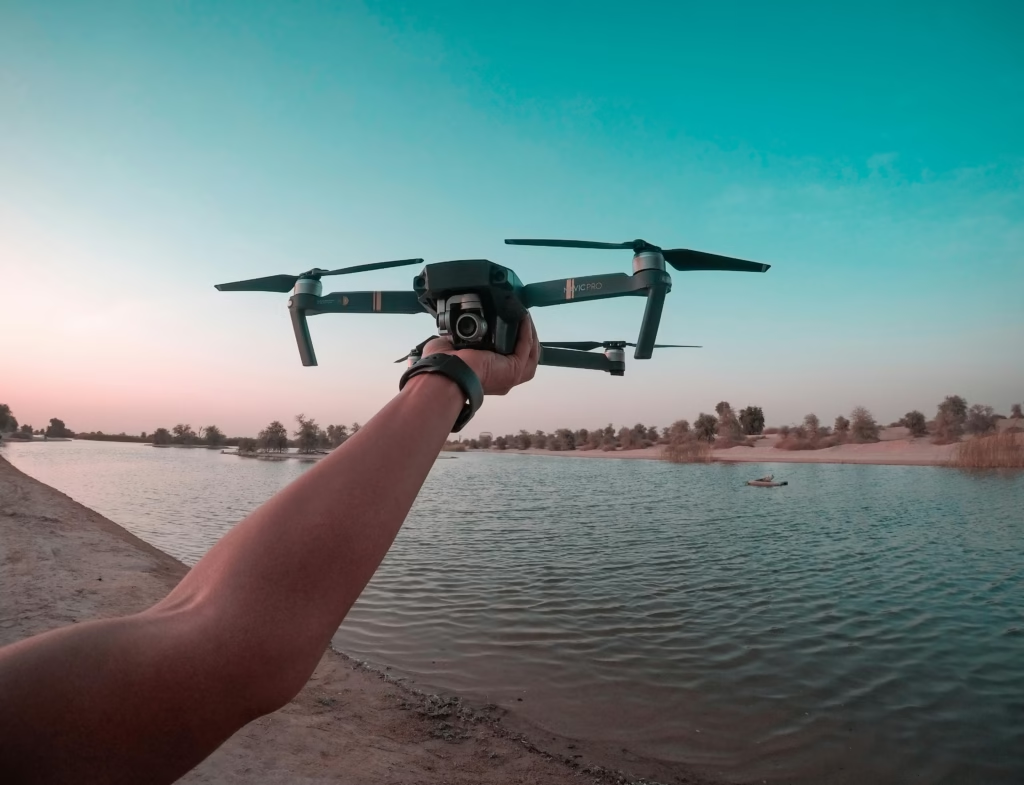
General regulatory framework
Emirati law clearly distinguishes between two categories of users: amateurs (or recreational) and professionals (or commercial). Requirements, permits, and restrictions vary considerably between these two groups.
For recreational users (Hobbyists and Tourists)
Even for personal use, the rules are very strict. If you plan to fly a drone for leisure, you must follow these guidelines:
- Mandatory Registration: All drones, even those used for recreational purposes, must be registered with the GCAA before use.
- Drone Owner: The owner and operator of the drone must be at least 16 years old.
- Drone Specifications: The drone should generally not weigh more than 5 kg for recreational use. It must be equipped with geofencing technology and must not be modified to carry objects.
- Identification: Once registered, the drone receives a registration number which must be visibly affixed to the device.
For commercial operators
Using drones for commercial purposes is a much more complex process that requires specific permits. Companies must not only register their devices but also obtain an operator license from the GCAA.
- Business License: The company must be registered in the UAE.
- Operator Certification (UAS Operator Certificate): The organization must demonstrate that it has the manuals, procedures and qualified personnel to conduct safe operations.
- Pilot Training: Commercial drone pilots must complete GCAA-approved training and obtain a drone pilot license.
- Flight Permit: Each commercial operation requires a specific flight permit (UAS Flight Permit) which details the date, time, location and nature of the mission.
Essential flight rules to follow
Whether the use is recreational or commercial, strict flight rules apply to all to ensure safety and privacy:
- No-Fly Zones: It is strictly forbidden to fly a drone near airports (generally within a 5 km radius), heliports, royal palaces, military installations, government buildings and dense residential areas.
- Altitude and Distance: The flight must be conducted at a maximum altitude of 400 feet (approximately 122 meters) above the ground and always within direct line of sight (VLOS) of the operator.
- Flight conditions: Flight is only permitted during the day and in good weather. Night flight is strictly prohibited without special permission.
- Privacy: It is illegal to film or photograph people or private property without their express consent. Privacy is a very sensitive issue in the UAE.
- Specific prohibitions: It is prohibited to fly a drone over people, crowds, vehicles, or private property. It is also prohibited to drop objects from a drone.
Penalties for non-compliance
Emirati authorities take aviation safety very seriously. Failure to comply with drone regulations can result in severe consequences, including heavy fines of up to tens of thousands of dirhams and even imprisonment for the most serious offenses, such as endangering public safety or violating privacy.
Conclusion: Caution is advised
Flying a drone in the UAE is possible, but it requires careful preparation and strict adherence to the rules. Before flying, it’s crucial to consult the official GCAA website for the latest regulatory updates, maps of authorized areas, and to register your device. The key is to act responsibly to enjoy this technology without breaking the law.



Leave a Reply