

The use of drones, or Unmanned Aircraft Systems (UAS/RPAS), has grown exponentially in Colombia, whether for recreation, photography, or commercial applications. To regulate this practice and ensure airspace safety, the Colombian civil aviation authority, Aeronáutica Civil de Colombia (often referred to as Aerocivil), has implemented strict regulations. This article details the key points of the current legislation, mainly defined in the Aeronautical Regulations of Colombia (RAC), particularly in Part RAC 91, Appendix 13 .
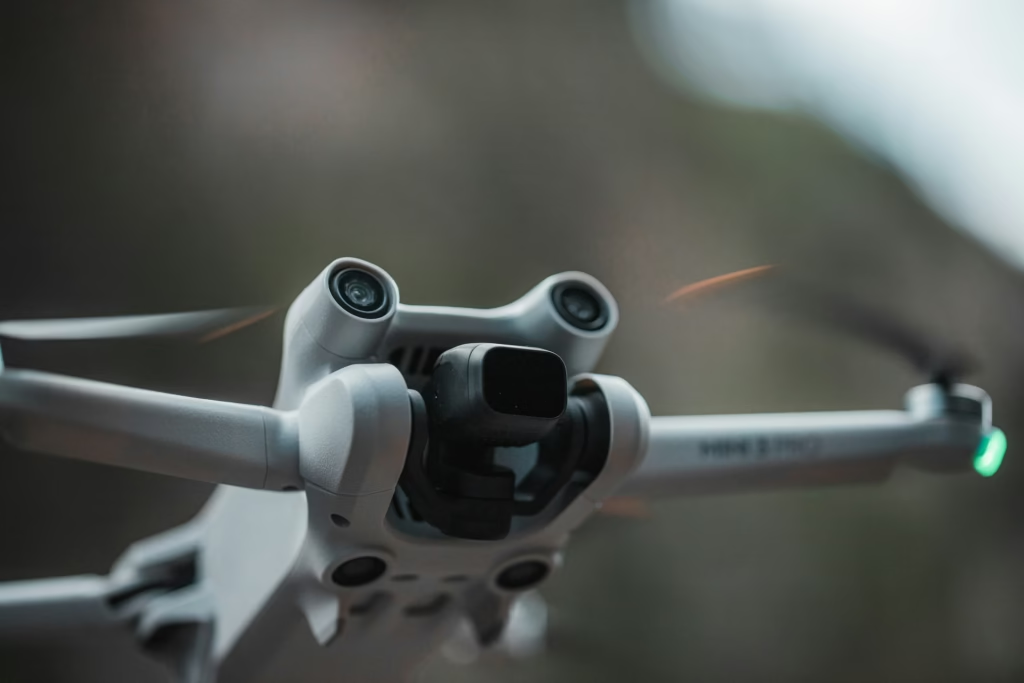
Classification of Drones and Operations
Colombian regulations classify drone operations into three main categories, based on the level of risk they pose. This classification determines the requirements that must be met.
- Class A (Open Category): These are low-risk operations. This category covers most recreational flights and some simple commercial activities. The requirements are more relaxed, but strict rules apply.
- Class B (Specific Category): For moderate-risk operations that cannot be carried out in Class A. This includes, for example, flights beyond the pilot’s direct line of sight (BVLOS), flights near people or in controlled areas. Specific authorization from Aerocivil is required after a detailed safety analysis.
- Class C (Certified Category): Covers high-risk operations, equivalent to those of traditional aviation, such as the transport of heavy goods or, in the future, passengers. These operations require full certification of the aircraft, operator, and pilot.
General Rules for Class A (Leisure and Low Risk) Operations
For most users, especially amateurs and tourists, the Class A rules are the most relevant. Here are the basic points to follow:
- Registration: Any drone weighing more than 250 grams must be registered with Aerocivil. The operator receives a registration certificate, which must be available during flights. Drones weighing less than 250 grams are exempt from this requirement, but must still comply with other flight regulations.
- Line of Sight (VLOS) Flight: The pilot must always keep their drone within direct line of sight , without the aid of binoculars or other devices.
- Altitude and Distance: The maximum flight height is 122 meters (400 feet) above ground level. It is imperative to maintain a safe distance from people and private property.
- Flight hours: Flights are permitted only during the day, between sunrise and sunset. Night flights require special authorization (Class B).
- No-fly zones: It is strictly forbidden to fly a drone near airports (generally within a radius of 5 to 9 km, depending on the airport), military bases, government buildings, prisons, or over crowds of people (concerts, sporting events, etc.).
- Minimum Age: The pilot must be at least 18 years old. Minors may pilot under the direct supervision of a responsible adult.
Requirements for Business Operations
If you plan to use a drone for commercial purposes (photography, surveying, agriculture, etc.), the requirements are more stringent, even for operations that might seem simple.
- Certified Operator and Pilot: The company or individual conducting the commercial activity must be registered as a UAS operator with Aerocivil. The pilot is often required to hold a license or certification proving their skills.
- Liability insurance: Liability insurance is mandatory to cover any damage caused to third parties.
- Operations Manuals: For Class B operations, an Operations and Maintenance Manual, along with a Detailed Risk Analysis (SORA), are required to obtain flight authorization.
Tips for Foreign Tourists and Pilots
Tourists wishing to fly their drones in Colombia must comply with the same regulations as residents. It is crucial to register any drone weighing more than 250 grams before flying it. The process can be done online on the Aerocivil website, but it is recommended to do so in advance. Ignoring this rule can result in confiscation of equipment and fines. It is strictly forbidden to conduct any commercial activity without the appropriate Colombian permits, even if you are certified in your home country.
Conclusion: Fly Responsibly
Colombia offers spectacular landscapes perfect for drone photography. However, safety and compliance with regulations are paramount. Before taking off, make sure you know the rules, register your equipment if necessary, and always use common sense. For the most up-to-date information, it is strongly recommended to consult the Aeronáutica Civil de Colombia website directly.



Leave a Reply