
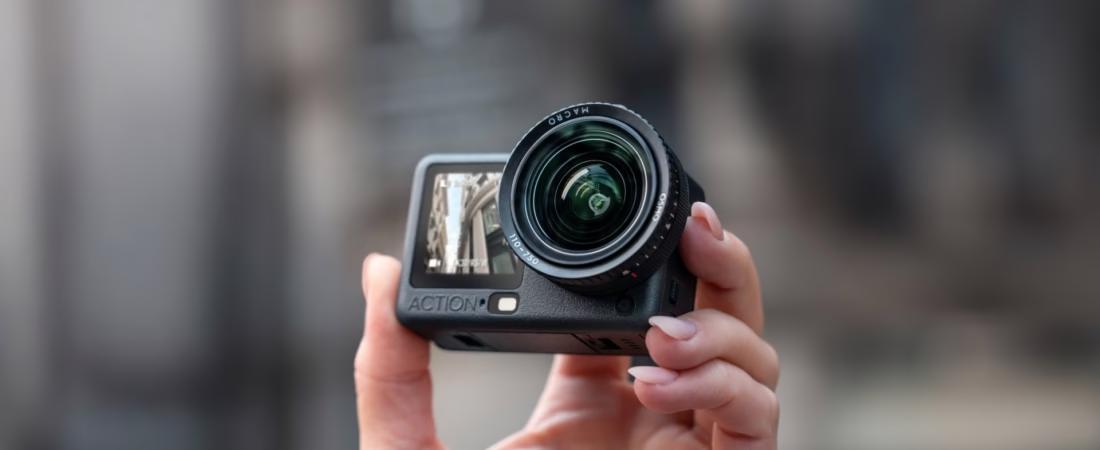
Still unsure whether to prioritize the rugged simplicity of an action camera or the power of a professional sensor for your outdoor shoots? This comprehensive comparison of the DJI Osmo Action vs. Sony RX0 II pits the two approaches against each other to help you make a definitive decision based on your actual needs in the field. Discover now which camera offers the best stabilization for sports and which delivers professional, cinematic results despite its ultra-compact size.
- Two philosophies, one compact format: the clash of concepts
- Image quality: the sensor vs. video processing match
- Ergonomics and handling: what’s it like in practice?
- Battery life and connectivity: the key factors in content creation
- Special features and use cases: who are they really for?
- The verdict: price, relevance in 2025, and alternatives to consider
Two philosophies, one compact format: the clash of concepts
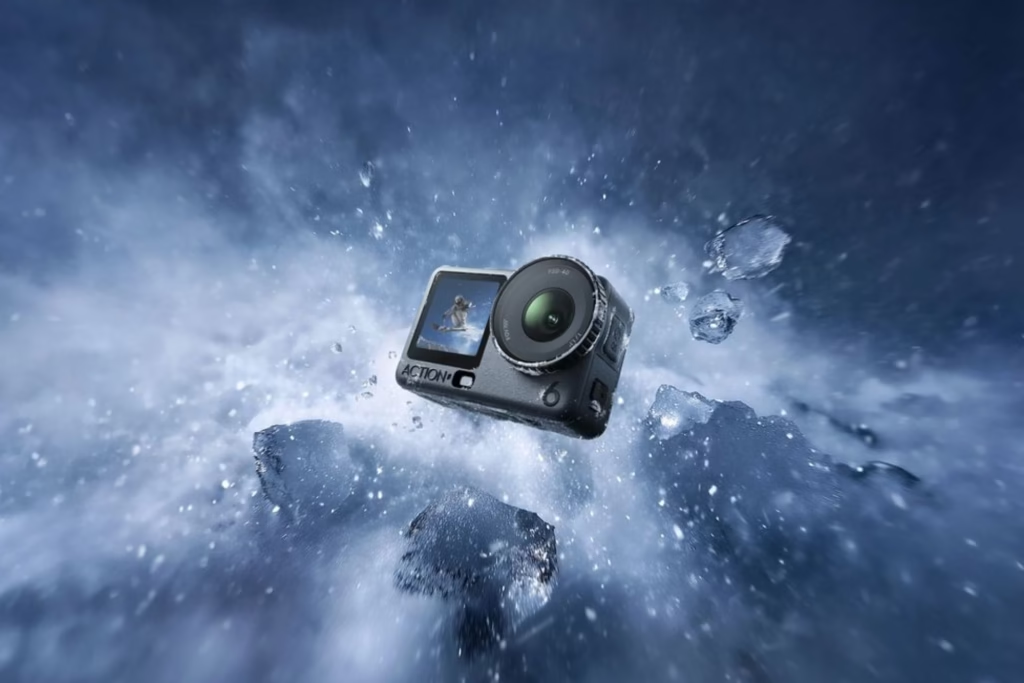
The Osmo Action 6, designed for movement
If you’re looking for pure adventure, this camera is your ally. The DJI Osmo Action 6 doesn’t hold back; it captures chaos. It’s built tough, ready to take a beating without flinching.
Everything here is optimized for sudden movements. RockSteady stabilization smooths out even the most violent shakes for flawless footage. You press a button and it starts shooting, without complicated menus. It’s the holy grail for vlogging in the heat of the action.
We’re not aiming for artistic photography, but for the certainty of getting the image. It guarantees success, regardless of the weather conditions. Reliability is paramount.
The RX0 II, the sensor above all
Forget the classic concept of an action camera with the Sony. This is a true expert camera that has been miniaturized. We’re talking surgical precision in a tiny body.
Its absolute priority remains raw image quality. Its 1.0-type sensor and precise settings deliver stunning cinematic rendering. But be warned, it requires technical skill to get the best out of it. It’s not automatic at all.
It sacrifices ease of use for a far superior image potential. The visual result takes precedence over ease of use.
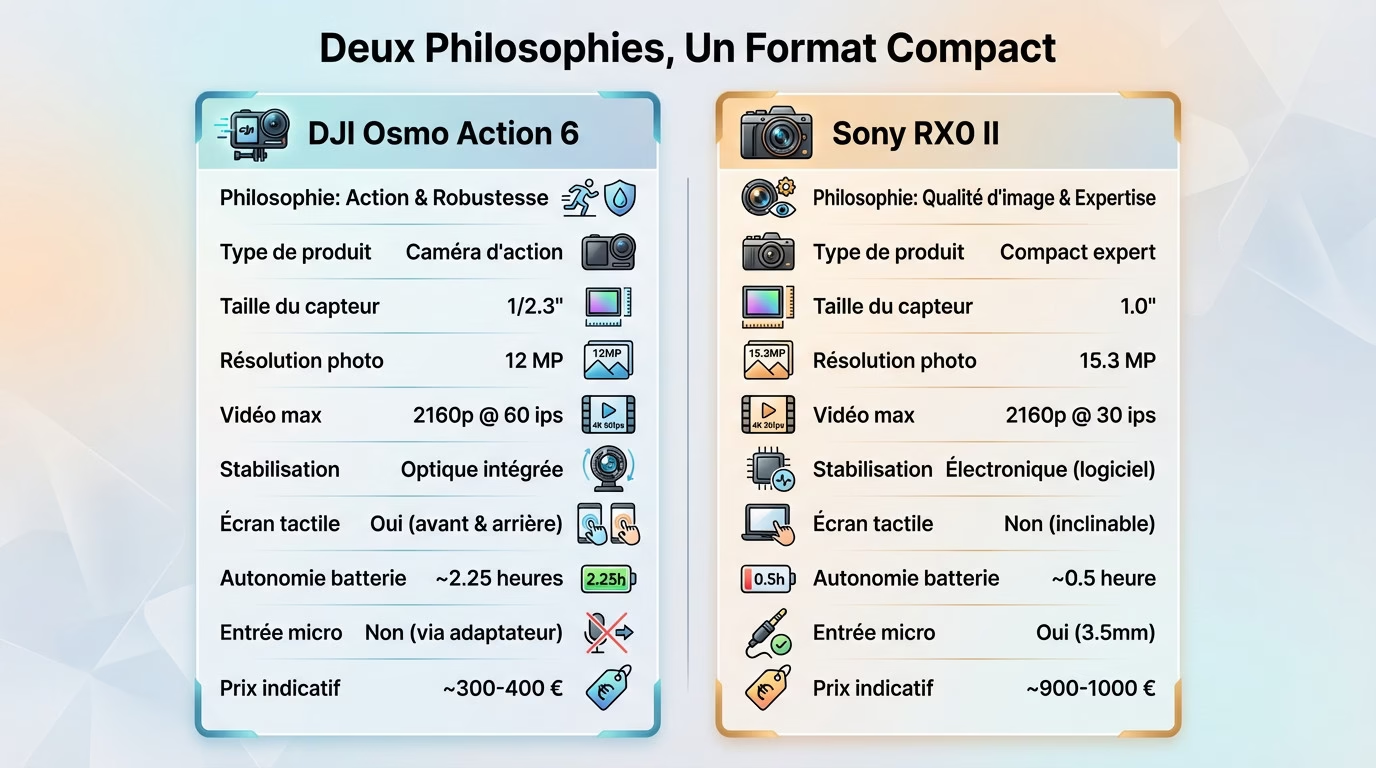
Comparative table of key specifications
Take a look at these figures to settle the DJI Osmo Action vs. Sony RX0 II debate. This table reveals the striking technical differences. You’ll quickly know which device best suits your needs.
| Characteristic | DJI Osmo Action 6 | Sony RX0 II |
|---|---|---|
| Product type | Action camera | Compact expert |
| Sensor size | 1/1.1″ (CMOS) | 1.0″ (13.2 x 8.8 mm) |
| Photo resolution | 40 MP | 15.3 MP |
| Max Video | 2160p @ 60 fps (up to 120 fps possible) | 2160p @ 30 fps |
| Stabilization | Integrated optics (RockSteady) | Electronics (via software) |
| Touch screen | Yes (front and rear) | No (tiltable screen) |
| Battery life | ~4 hours (240 min) | ~0.5 to 1 hour |
| Microphone input | No (via USB-C adapter) | Yes (3.5mm direct) |
| Indicative price | ~€300-400 | ~900-1000 € |
Image quality: the sensor vs. video processing match
The large sensor of the Sony RX0 II: an advantage in photography and low light
You know what makes all the difference in this DJI Osmo Action vs. Sony RX0 II comparison? The sensor size. The Sony’s sensor literally soaks up light. The result: you get much cleaner images, especially at sunset. It’s night and day compared to a standard action camera.
In terms of photography, it’s phenomenal. With its 15.3 MP sensor and meticulous image processing, the RX0 II produces incredibly detailed photos. It truly feels like having a professional compact camera in your pocket.
Look at the ISO: it goes up to 25600 compared to 3200 for its rival. In practice, this saves you in low light without adding noise to the image.
The electrifying video of the DJI Osmo Action 6
For video, let’s switch gears. Here, DJI takes the lead. Being able to shoot in 4K at 60 frames per second is simply fantastic for dynamism. Your action sequences remain fluid and the slow-motion footage is impeccably clean.
The real magic trick is RockSteady stabilization. It’s DJI’s signature. It eliminates even the most violent shakes without you having to lift a finger.
Another killer feature for vlogging: continuous autofocus. The camera never leaves your side. The focus remains sharp on your face, not on the background.
Aperture and shutter speed: details that matter
Let’s talk aperture. The Osmo Action 6 has a very respectable f/2.8. It’s great for capturing maximum light and even offers a rather nice, subtle background blur.
The Sony, on the other hand, remains at f/4.0, less bright. But it retaliates with an insane shutter speed. 1/32000s is enormous. It’s the ultimate weapon for freezing ultra-fast action in blazing sunlight without overexposing the image.
Ultimately, the choice still depends on your intended use: light for DJI, or extreme speed for Sony.
Ergonomics and handling: what’s it like in practice?
The decisive advantage of the Osmo Action 6 screens
Good news for creators: the Osmo Action 6 prioritizes accessibility with its dual screens. The rear touchscreen is incredibly responsive, making navigating settings smooth and fast. It’s a real pleasure to use every day, even for a beginner.
But the real advantage is the front screen. You can finally see yourself while filming, which changes everything for vlogging. No more haphazard framing where you accidentally cut off your own head: you control the image in real time. The Sony RX0 II, without this direct visual feedback, can’t compete in this area.
While the Sony’s screen does tilt, which is convenient, it’s not a touchscreen. Navigating complex menus using tiny physical buttons quickly becomes a test of patience.
Robustness and waterproofing: ready for adventure?
No need to be overly cautious: these two cameras are built to withstand rough handling. They can be submerged underwater without an additional housing, which is immediately reassuring. They’re an excellent starting point for filming action without any worries.
The Osmo Action 6 embraces its rugged nature with a replaceable lens cover. Meanwhile, the RX0 II is a veritable little metal tank, capable of withstanding violent impacts and even crushing. It’s equipment built to last.
If we’re talking about pure robustness, the ultra-dense one-piece design of the Sony may give it a slight structural advantage in the long term.
Compactness and weight are criteria not to be overlooked.
Looking for absolute discretion? The Sony RX0 II wins hands down thanks to its compact size. It’s a tiny cube that slips easily into a jeans pocket, perfect for traveling light.
However, size isn’t everything. Let’s take a closer look at the figures to understand what this means once you have the device in your hands:
- DJI Osmo Action 6: It has a weight of approximately 149 g and classic dimensions of 72.8 x 47.2 x 33.1 mm.
- Sony RX0 II: Lighter at 132g, it measures only 59 x 40.5 x 35 mm, forming a very compact block.
- However, be aware that this cubic format of the Sony, although small, slips more easily from the fingers than the rectangular and grippy body of the DJI.
Battery life and connectivity: the key factors in content creation
Let’s be frank: the RX0 II’s battery life is its real Achilles’ heel. Barely lasting 30 minutes of continuous recording is short, very short. Do you see the problem? It’s a major issue in the field.
In contrast, the DJI Osmo Action 6 is in a different league. With over two hours of recording time, you can set off with complete peace of mind. For the Sony, buying several spare batteries isn’t just an option; it’s essential if you don’t want to miss the crucial moment.
For many nomadic creators, this abysmal gap alone is enough to settle the dji osmo action vs sony rx0 ii debate.
Connectivity: USB-C, HDMI and microphone input
In terms of connections, each camera has its own philosophy and priorities. One aims for modernity, the other for professional studio integration. The devil is often in the details, especially the small technical ones that can change your workflow.
Let’s see what these devices actually have inside to connect your essential accessories:
- DJI Osmo Action 6: It relies on a modern USB Type-C port for fast charging and transfer, but be aware, there is no HDMI output and the microphone input requires a specific adapter.
- Sony RX0 II: It retains an old micro-USB port, but offers a REAL 3.5mm microphone input (a huge plus for sound) and a micro-HDMI output for connecting an external monitor.
The software ecosystem: DJI Mimo in the lead
Now let’s talk about the mobile app, your true control center in the field. Here, DJI takes a serious lead with Mimo. The interface is fluid, ultra-intuitive, and packed with practical features for quickly and easily editing your footage.
A major advantage for social media creators: live streaming support is native to the Osmo. It’s easy to set up to broadcast on YouTube or Facebook in just a few clicks, where others struggle.
Conversely, Sony’s app remains more austere, even technical. It gets the job done for settings, but the user experience is far less enjoyable and fun on a daily basis.
Special features and use cases: who are they really for?
Okay, we’ve seen the technology, but practically speaking, in real life, who should buy what? To help you decide between the DJI Osmo Action and Sony RX0 II, let’s look at typical user profiles.
The typical profile for the Osmo Action 6: the adventurous vlogger
Looking for a camera that works right out of the box without any fuss? The Osmo Action 6 is for you. Just take it out of your pocket, press the record button, and it starts filming instantly. Simplicity is truly the key here, ensuring you never miss a thing.
It’s the perfect tool for travelers, athletes, or even parents who want to film their children in action. You get a stable, high-quality image without having to complicate things with technical settings.
To learn more about its capabilities, you can read our full review of the DJI Osmo Action 6 .
The typical user profile for the RX0 II: the expert videographer and multicam enthusiast
With the Sony, the philosophy shifts radically to target a very different profile. It’s the choice of the videographer looking for a B or C camera, capable of accessing unlikely locations. It’s ideal for static shots of surgical precision.
Also consider multi-camera setups for your shoots. The RX0 II’s tiny size and impressive image quality make it a perfect choice for this. It literally blends into the background.
Therefore, this is not a main camera for the average person, but rather a specialized tool for experts.
Timelapse and other creative modes
Both cameras offer timelapse modes, which has become a standard feature these days. They both allow you to easily create time-lapse videos to add dynamism to your edits.
However, DJI often stays ahead of the curve when it comes to the simplicity of its creative modes. Hyperlapse, this stabilized motion timelapse, is the best example. It’s much more accessible and intuitive on the Osmo Action, delivering immediate results.
Sony offers more manual control over its slow motion, but this requires more work in post-production.
The verdict: price, relevance in 2025, and alternatives to consider
So, which one do we choose in the end? Before we pull out our credit cards, let’s talk money, and see if these models still make sense today.
The price/quality ratio: a colossal difference
Let’s talk about the bottom line. Price is often the deciding factor, and here, the gap is huge. The Sony RX0 II costs about three times more than its rival, a difference that immediately dampens any enthusiasm.
For a fraction of the price, the Osmo Action 6 offers a comprehensive package, with its f/2.0 aperture and 4 hours of battery life. The Sony, on the other hand, charges a premium for its unique sensor and industrial-grade durability. It’s the elitist cost of technical expertise.
In short, for 99% of people, the price/performance ratio leans heavily towards the DJI for everyday use.
Are they still a good choice today?
That’s the real question to ask in 2025. The camera market is evolving at breakneck speed, and what was top-of-the-line yesterday can quickly become obsolete. The RX0 II is starting to seriously show its age compared to current standards.
However, the Osmo Action 6 remains highly relevant, especially after its surprise December 2025 update that unlocked 8K. It still brilliantly delivers the essentials for creators.
Sony maintains its niche for professionals seeking an ultra-compact 1-inch sensor. Curious to see how DJI stacks up against the latest releases? Check out our DJI Osmo Action 6 vs. GoPro Hero 13 Black comparison.
Beyond the duel: other options to consider
The DJI Osmo Action vs. Sony RX0 II comparison shouldn’t blind you. The world of small cameras isn’t limited to these two giants. The competition is sharpening its weapons and offering attractive alternatives.
To avoid regretting your purchase, it is best to know the other major players who dominate the current market.
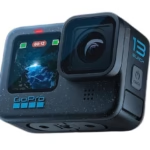
- GoPro: The historical leader, with its HERO models which are the direct reference for the Osmo Action.
- Insta360: A very serious competitor, especially with its 360 cameras and models like the Ace Pro which directly compete with DJI.
- DJI Osmo Pocket: An interesting alternative that combines a small camera with a mechanical stabilizer (gimbal) for unparalleled smoothness.
In short, it all depends on your needs. If you’re looking for simplicity and pure action, go for the DJI Osmo Action 6: it’s unbeatable for vlogging. On the other hand, if image quality is your top priority and you have the budget, the Sony RX0 II remains a fascinating tool for professionals.


Leave a Reply