
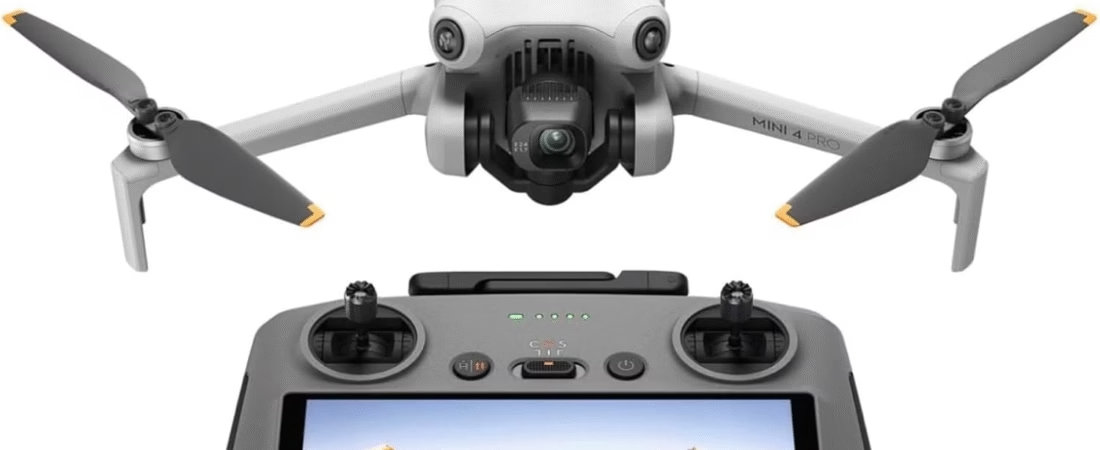
Are you hesitating between the DJI Mini 4 Pro and the DJI Osmo Pocket 3 for your vlogging projects? The choice may seem obvious at first glance — a drone for aerial shots and a pocket camera for everyday filming — but in reality, the decision is often more complex. Both devices cater to content creators, travelers, vloggers, and image enthusiasts, each offering unique benefits that can transform the way you shoot.
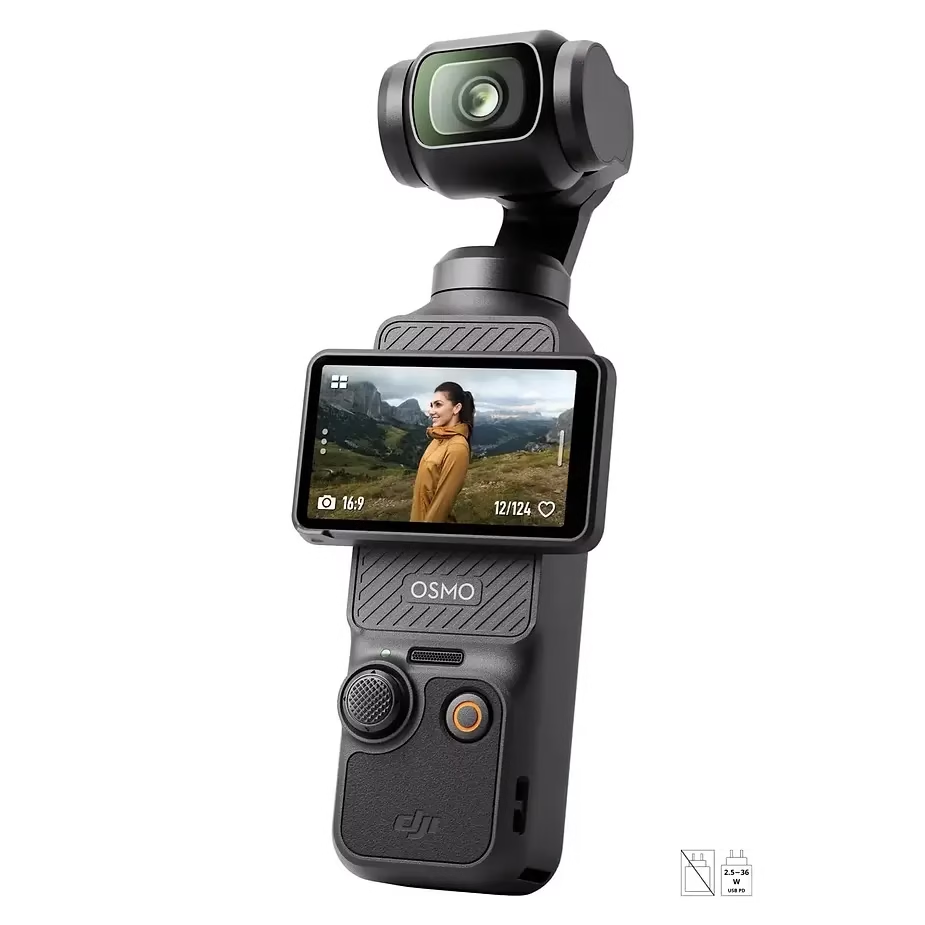
The DJI Mini 4 Pro is a compact, powerful, and lightweight drone that’s ideal for capturing spectacular aerial shots, narrating your travels from a new perspective, and impressing your audience with cinematic images. Meanwhile, the DJI Osmo Pocket 3 is all about simplicity, portability, and versatility, with a built-in gimbal that ensures smooth stabilization in all your ground-based shots.
So, is it better to invest in a drone to enrich your videos with grandiose landscapes, or favor a pocket camera that follows you everywhere to capture the present moment? In this article, we’ll compare these two products in detail to help you choose the tool that best suits your needs, budget, and creative style.

DJI Mini 4 Pro vs DJI Osmo Pocket 3: Device Overview
The DJI Mini 4 Pro is a compact and powerful drone that’s ideal for capturing stunning aerial shots. The Osmo Pocket 3 is a stabilized pocket camera that’s perfect for vlogging and moving videos.
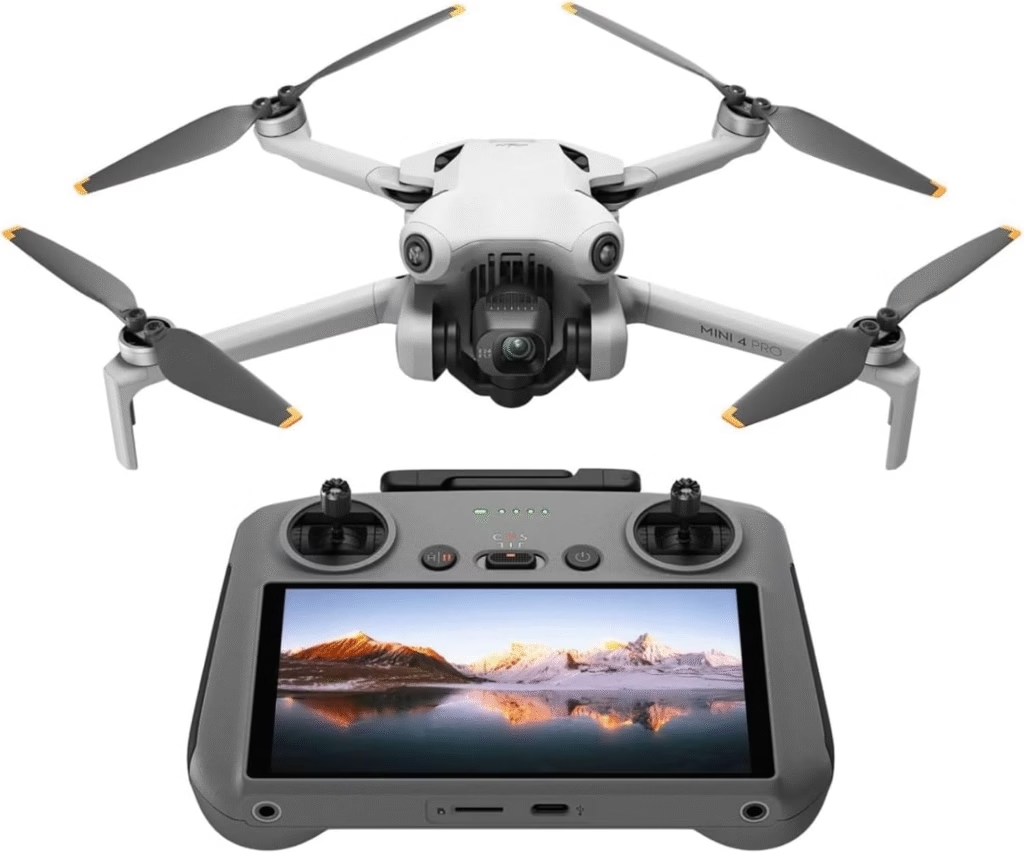
DJI Mini 4 Pro
The Mini 4 Pro is a drone that offers impressive image quality thanks to its 1/1.3-inch sensor capable of filming in 4K at 60 frames per second. In addition, it offers long-distance video transmission and smart features such as subject tracking and return to the starting point. The Mini 4 Pro shoots in 4K.
DJI Osmo Pocket 3
The Osmo Pocket 3 is a compact camera with 3-axis stabilization that ensures smooth and stable videos, even during movement. It has a 1-inch sensor and is capable of filming in 4K. The camera also films in 4K. The Osmo Pocket 3 is ideal for content creators who value portability and simplicity.
Comparison: Pros and Cons
DJI Mini 4 Pro vs DJI Osmo Pocket 3 Comparison
| Criteria | DJI Mini 4 Pro | DJI Osmo Pocket 3 |
|---|---|---|
| Device Type | Compact Drone (< 250 g) | Pocket camera with 3-axis gimbal |
| Sensor & Resolution | 1/1.3″ CMOS, 48 MP, 4K video up to 100 fps | 1″ CMOS, 20 MP, 4K video up to 120 fps |
| Stabilization | Electronic stabilization + 3-axis gimbal | 3-axis mechanical gimbal |
| Shooting angles | Aerial views, panoramas, auto-tracking | Floor shots, selfies, vlogs, interviews |
| Autonomy | ~34 min (45 min with Battery Plus) | ~130 min per charge |
| Ease of use | Requires a minimum of outdoor space, requires permits depending on the country | Ultra portable, ready to shoot in seconds |
| Smart features | ActiveTrack 360°, Spotlight, POI, QuickShots | Subject tracking, beauty mode, live streaming, touchscreen control |
| Transportability | Very compact for a drone, but requires a dedicated bag | Ultra lightweight, fits in a pocket or small bag |
| Best for | Landscapes, travels, cinematic aerial shots | Daily vlog, lifestyle content, interviews, behind the scenes |
| Indicative price | Approx. €750–800 | Approx. €530–600 |
👉 Quick Verdict :
- DJI Mini 4 Pro is made for those who want spectacular and cinematic aerial shots.
- DJI Osmo Pocket 3 is perfect for everyday vloggers who value portability and simplicity.
Each device has its strengths and weaknesses. Here’s a comparative overview:
- DJI Mini 4 Pro
- Benefits:
- Unique aerial shots.
- Great range and battery life.
- Intelligent flight features.
- Disadvantages:
- Subject to drone legislation.
- More preparation before use.
- Requires training to fly.
- Benefits:
- DJI Osmo Pocket 3
- Benefits:
- Easy to use and portable.
- Excellent stabilization.
- Great for vlogs and moving videos.
- Disadvantages:
- Limited perspective.
- Fewer shooting possibilities.
- Benefits:
DJI Mini 4 Pro vs DJI Osmo Pocket 3: Who is it for?
You are rather…
| Usage / Profile | DJI Mini 4 Pro | DJI Osmo Pocket 3 |
|---|---|---|
| Cinematic Content Creation | Ideal for immersive storytelling with grandiose aerial shots and a very stable image. | Perfect for capturing intimate vlogs, interviews, or everyday scenes with fluidity. |
| Travel & Adventures | Lightweight flight companion (< 250 g), perfect for filming landscapes from the sky and following the rules without too much trouble. | Very practical on the wrist or in the pocket, it captures the moment in a few seconds. |
| Socket safety and automation | Omnidirectional sensors, 360° ActiveTrack, and intelligent automatic features make it easy to capture without stress. | Ultra-reliable 3-axis gimbal, Portrait mode, Subject Tracking — all accessible with one hand. |
| Use on the go, on a daily basis | Open space only — requires flight space and sometimes permissions depending on location. | Immediate grip, lightweight, always ready to shoot — perfect for on-the-go creators. |
| Low-light conditions or moving landscapes | 4K 100 fps slow-motion, enhanced low-light performance — amplified visual sensations. | Large 1″ sensor optimized for dark or moving scenes with good color dynamics. |
| Budget & Full Video Equipment | More premium, more expensive option, but with a unique cinematic perspective. | More affordable, great value for money for everyday and social media. |
In a nutshell:
- Choose the DJI Mini 4 Pro if you want cinematic aerial shots, more safety (obstacle detection), and advanced automated features for your movies.
- Opt for the DJI Osmo Pocket 3 if you’re looking for a tool for daily vlogging, spontaneity, and excellent stabilization in an ultra-portable format.
The choice depends on your creative goals.
- Choose the DJI Mini 4 Pro if:
- You want impressive aerial shots.
- You need a lot of autonomy.
- You’re ready to learn how to fly a drone.
- Choose the DJI Osmo Pocket 3 if:
- You want a camera that’s easy to use and carry around.
- You prefer stabilization and simplicity.
- You mainly do vlogs and videos in motion.
Conclusion
In summary, the DJI Mini 4 Pro and DJI Osmo Pocket 3 are both great tools for content creators. Your decision will depend on your specific needs and creative style. Think about what type of content you want to produce, and choose the device that will allow you to do it most effectively.


Leave a Reply