

Running out of ideas for original shots with your drone? The DJI Mavic 3 Pro review will enlighten you: this technological gem features a revolutionary triple camera system, ideal for demanding creators. Between professional image quality, 3x and 7x optical zooms, and a few limitations to be aware of, we dissect its strengths and weaknesses to judge if it’s worth your investment . Need to capture landscapes in 4/3 CMOS, aerial portraits, or details from a distance? The Mavic 3 Pro promises flexibility. Beware of the price, C2 regulations, and drawbacks like the slowness of the RC remote control or reduced battery life.
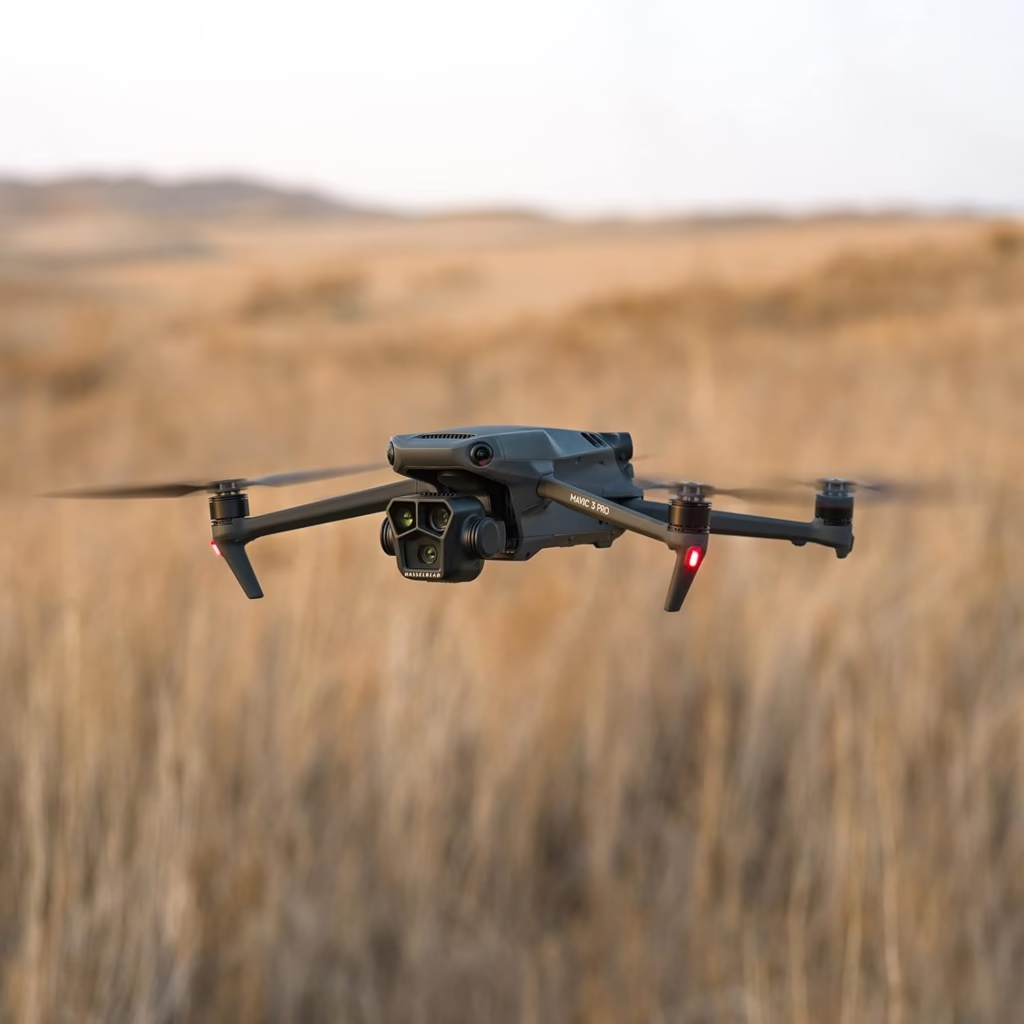
The DJI Mavic 3 Pro: the triple sensor revolution put to the test in the field
Want to boost your aerial video? The DJI Mavic 3 Pro, with its Hasselblad triple camera system, offers unparalleled versatility . Go from 24mm to 166mm without losing quality. Ideal for demanding creators.
The main camera (4/3 CMOS sensor) films in 5.1K/50fps and 4K/120fps. The 3x and 7x telephoto lenses offer an unprecedented play of depth. Compatible with Apple ProRes, it is designed for professionals . Battery life of up to 43 minutes. Guaranteed stability even in strong winds.
Its drawbacks? Gimbal stability issues, DJI RC remote latency, and a weight of 958g (C2 license in Europe). At €600 more than the Mavic 3 Classic, its price is high. But for professionals, its creative freedom makes up for these flaws. A bold choice, but a justified one.
The triple camera system: unparalleled versatility?
One basket, three views of the world
Want to capture scenes from every angle? The Mavic 3 Pro achieves this with its three sensors . The Hasselblad camera (24mm) offers a 4/3 CMOS sensor. The first telephoto lens (70mm, 3x zoom) allows for tight framing. The second (166mm, 7x zoom) captures details invisible to the naked eye. A technical feat that changes the game.
Image quality: Hasselblad know-how and its limits
The Hasselblad camera delivers natural colors thanks to the HNCS profile. In post-production, the D-Log and HLG profiles offer great flexibility. ProRes recording ensures professional quality on all three sensors . The 3x telephoto lens shines with its sharpness, while the 7x remains powerful despite its slightly lower quality. Note: color harmonization between lenses requires work in post. A detail for purists.
Practical use: when and how to use each lens?
- 24mm: Ideal for landscapes or architecture , with a wide aperture f/2.8 to f/11.
- 70mm: Perfect for perspective compression , aerial portraits or isolating a subject.
- 166mm: Useful for observing wildlife from a distance or capturing fine details.
Tip: Use 7x for creative parallax effects . It’s up to you to choose depending on the context!
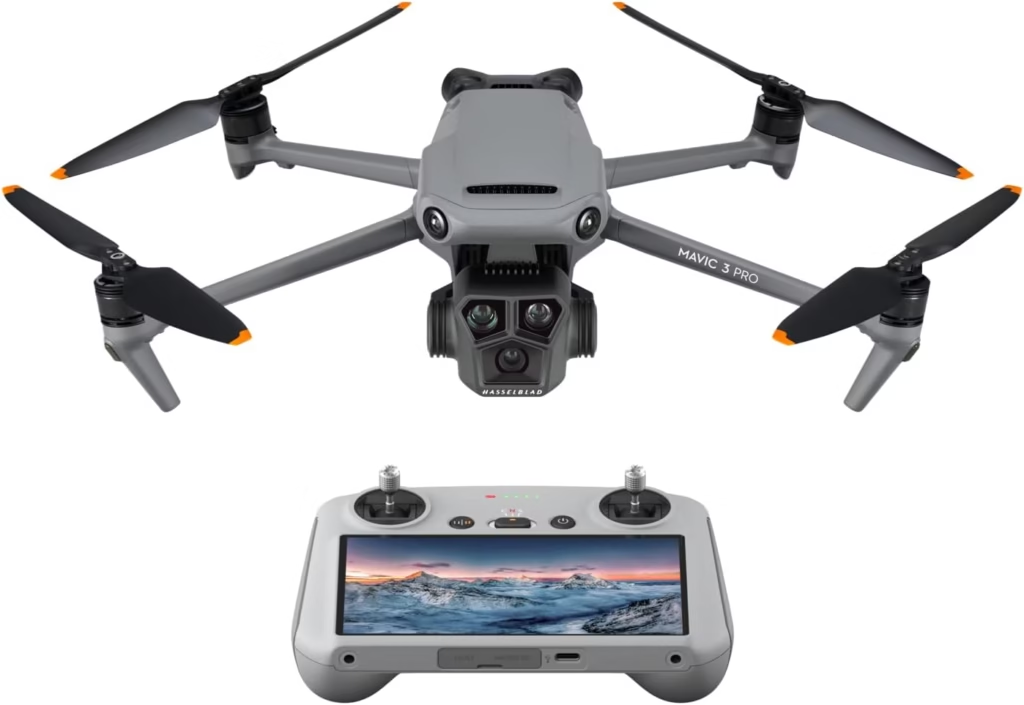
Flight performance and safety: can we fly with peace of mind?
The DJI Mavic 3 Pro guarantees stable and safe flights, even in difficult conditions. Want to focus on your creativity without being disturbed? This drone frees your ideas .
Autonomy and wind resistance
Advertised battery life: 43 minutes, but in practice 30 to 35 minutes. The heavier camera module than the Mavic 3 Classic explains this decrease. On the other hand, its wind resistance of up to 7 m/s is crucial : it remains stable even in gusts.
Safety first: obstacle detection and advanced RTH
APAS 5.0 detection avoids obstacles omnidirectionally, perfect for complex environments. Advanced RTH finds a safe path in case of low battery or signal loss, bypassing obstacles. A system that prevents losses .
Intelligent flight modes to boost your creativity
- FocusTrack: Automated tracking (ActiveTrack 5.0, Spotlight 2.0).
- MasterShots : Dynamic shots and intelligent editing.
- Waypoints: Programmable routes in the blink of an eye.
- Cruise Control : Effortless constant speed.
These tools make maneuvers easier, for professional shots without the hassle .
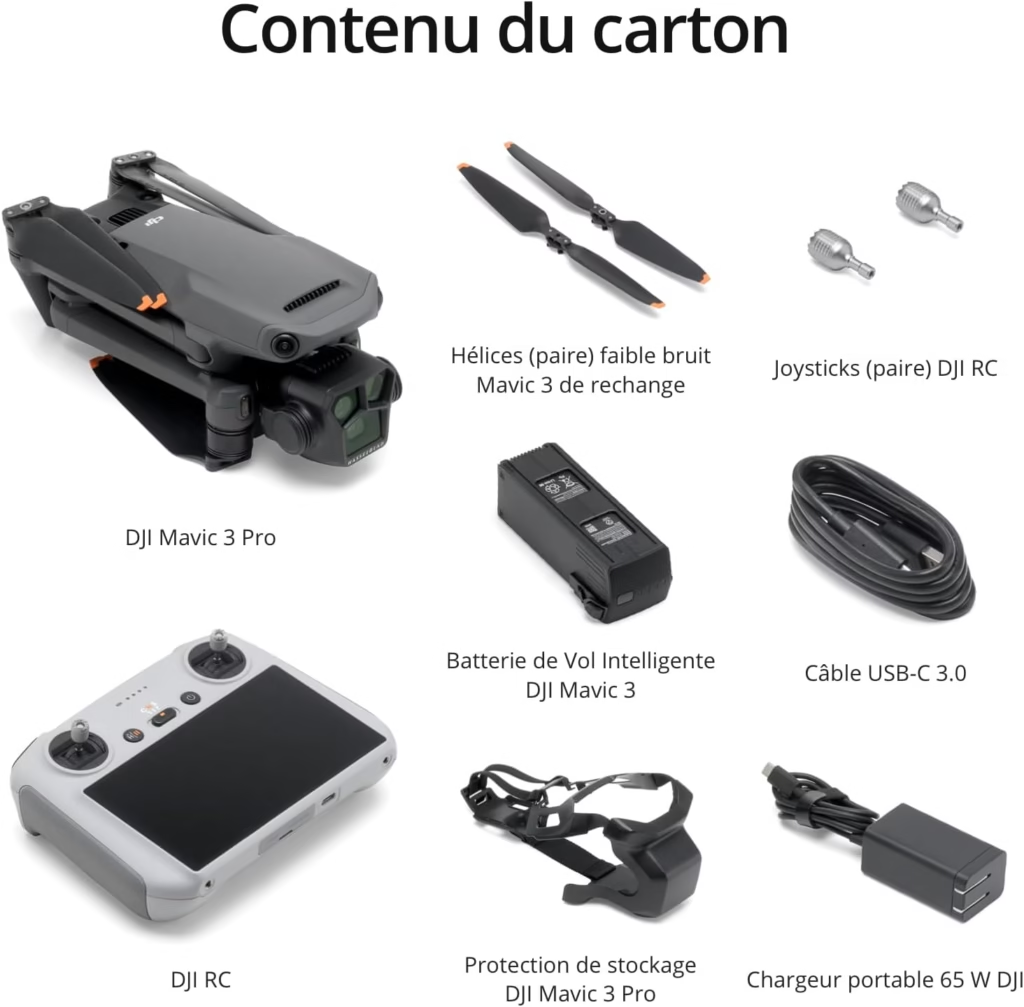
Mavic 3 Pro Weaknesses: What You Need to Know Before Buying
The DJI Mavic 3 Pro impresses with its image quality, but its flaws are worth knowing about . Here are the points to watch out for.
Minor technical and ergonomic flaws
The camera module puts a strain on the gimbal motors, sometimes causing a horizon shift. The basic DJI RC remote controller is slow to switch cameras. The RC Pro is recommended. The Ocusync 3+ system remains reliable, but is older.
Price and regulation: two major obstacles
An investment starting at €2,000, reserved for professionals or enthusiasts. Its weight (900g+) ranks it C2 in Europe: free training, theoretical exam and minimum distance of 30m from pedestrians required. Battery life slightly lower than the Mavic 3 Classic (30 min in real use). Points to watch out for:
- C2: Training, exam, strict rules.
- High price: Reserved for demanding users.
- Technical weaknesses: Unstable gimbal, slow basic remote control.
These defects remain minor, but influence the purchase choice .
Comparison and buying guide: is the Mavic 3 Pro right for you?
Mavic 3 Pro vs Mavic 3 Classic: Spot the Difference
The choice depends on your telephoto lens needs. Here are the key differences .
| Characteristic | DJI Mavic 3 Classic | DJI Mavic 3 Pro |
|---|---|---|
| Main camera | Hasselblad 4/3 CMOS | Hasselblad 4/3 CMOS |
| Telephoto lens(es) | None | Telephoto lens 70 mm (3x) + 166 mm (7x) |
| Weight | 895 g | 958 g |
| EU classification | C1 | C2 |
| Ideal for… | Image quality at the best price | Maximum creative versatility |
| Indicative budget | €€ | €€€ |
👉 To sum up:
- The Mavic 3 Classic is the economical choice to take advantage of the Hasselblad sensor.
- The Mavic 3 Pro is for those who want more creative freedom with its two telephoto lenses.
The Mavic 3 Pro is ideal for distant subjects. The Classic is suitable if telephoto lenses are not essential or for a tight budget .
For which user profile?
- Image pro : flexibility for cinema or real estate
- Unlimited budget : justified by high-resolution telephoto lenses
- Unique shots via optical zooms : tracking moving subjects
- Knowledge of C2 rules : handling in regulated areas
Pour les débutants ou voyageurs, privilégie une alternative compacte comme l’Insta360 GO Ultra. Un comparatif caméra d’action t’aide à cibler tes priorités.
The different packs (Standard, Fly More, Cine)
The Fly More Combo includes 3 batteries, 100W charger, ND filters and accessories. Essential to avoid recharging times .
Cine Premium is for professionals: Apple ProRes + built-in 1TB SSD. High-end solution for a smooth workflow in post-processing .
Our final opinion on the DJI Mavic 3 Pro
The DJI Mavic 3 Pro stands out with its triple-camera system (Hasselblad, 3x and 7x) , offering unique versatility to capture landscapes in 4K or zoom up to 28x. Ideal for professionals and enthusiasts, it combines wind resistance, 43 minutes of battery life and obstacle detection.
However, its high price (€600 more than the Classic) and its C2 classification (strict regulations) put off novices . The basic remote control can lack responsiveness, and its power consumption is slightly higher.
But for creators ready to take advantage of its strengths, the investment is worth it . The Cine version, with 1TB storage, is suitable for professional workflows. For others, the Mavic 3 Classic remains a viable alternative.
And there you have it! Now you have the keys to choose . Ready for takeoff?
The DJI Mavic 3 Pro is a powerhouse of technology and creativity , thanks to its triple camera system. Despite its high price and C2 regulations, its exceptional image quality and versatility make it an ideal choice for professionals . Once mastered, its minor flaws fade into the background . Ready to explore new perspectives ?


Leave a Reply