
The immersive drone market is evolving rapidly, and two models are currently attracting the attention of creators: the DJI Avata 360 and the Antigravity A1 . On paper, they share several strong promises: 360° video, immersive flight, goggles, experience-oriented piloting, and a heavy dose of creativity. But in reality, they don’t target exactly the same audience.
The DJI Avata 360 leverages the power of the DJI ecosystem, boasts impressive specifications, and focuses on high-performance drones. Meanwhile, the Antigravity A1 takes immersion, simplicity, and creative freedom much further, offering a true “fly first, frame later” approach, highly intuitive FreeMotion controls, and an interface designed to make 360-degree flight more accessible.
In this article, I will compare in detail the DJI Avata 360 and the Antigravity A1 , to help you choose the 360 drone that really matches your use, your level and your way of creating content.
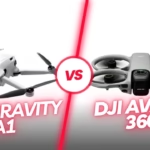
DJI Avata 360 vs Antigravity A1
Two visions of the immersive drone: the power of DJI versus the intuitive 360 experience of Antigravity.
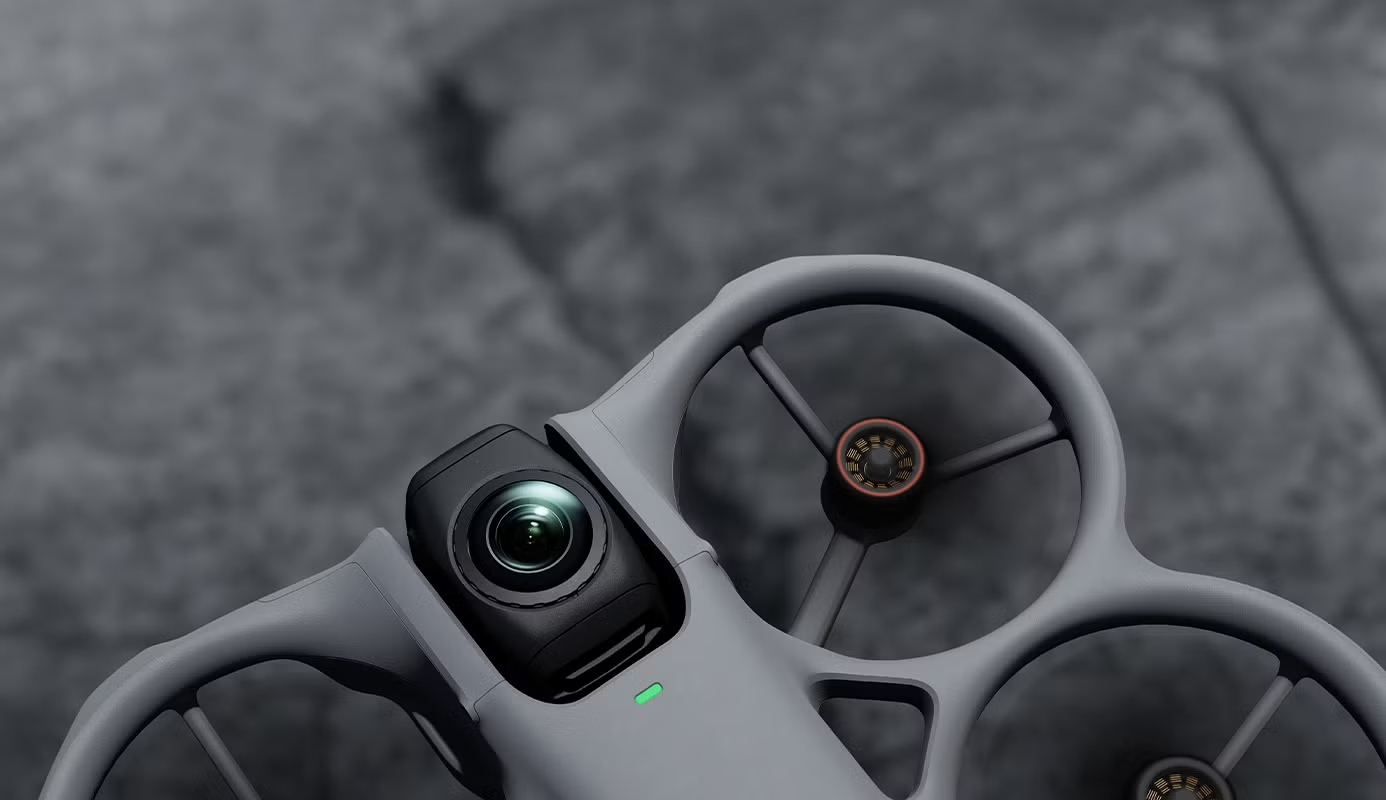
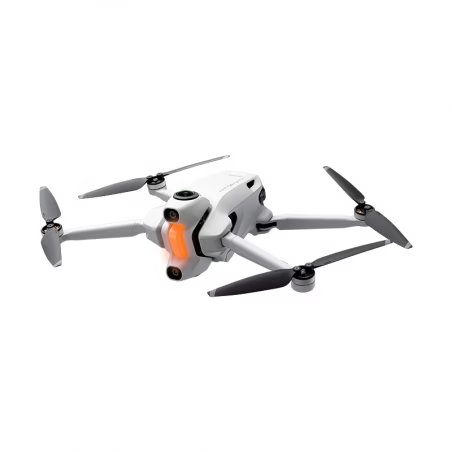
Comparison chart: DJI Avata 360 vs Antigravity A1
| Criterion | DJI Avata 360 | Antigravity A1 |
|---|---|---|
| Weight | Approximately 455 g | 249 g with standard battery / 291 g with high-capacity battery |
| EU Class | C1 | C0 with standard battery / C1 with high-capacity battery |
| 360 Video | 8K up to 60 fps | 8K up to 30 fps |
| Sensors | Two 1/1.1″ square CMOS sensors | 1/1.28″ sensor |
| Internal storage | 42 GB | 20 GB |
| Maximum flight time | Approximately 23 minutes | 24 min standard / 39 min high capacity |
| Maximum flight distance | 13.5 km | 13 km standard / 23 km high capacity |
| Obstacle detection | Omnidirectional + Front LiDAR | Omnidirectional with the latest firmware version |
| Transmission | O4+ | OmniLink 360 |
| Live view | 1080p up to 100 fps depending on the mode | 2K at 30 fps |
| Philosophy | High-performance and versatile 360 drone | An immersive, intuitive drone designed for the creative experience |
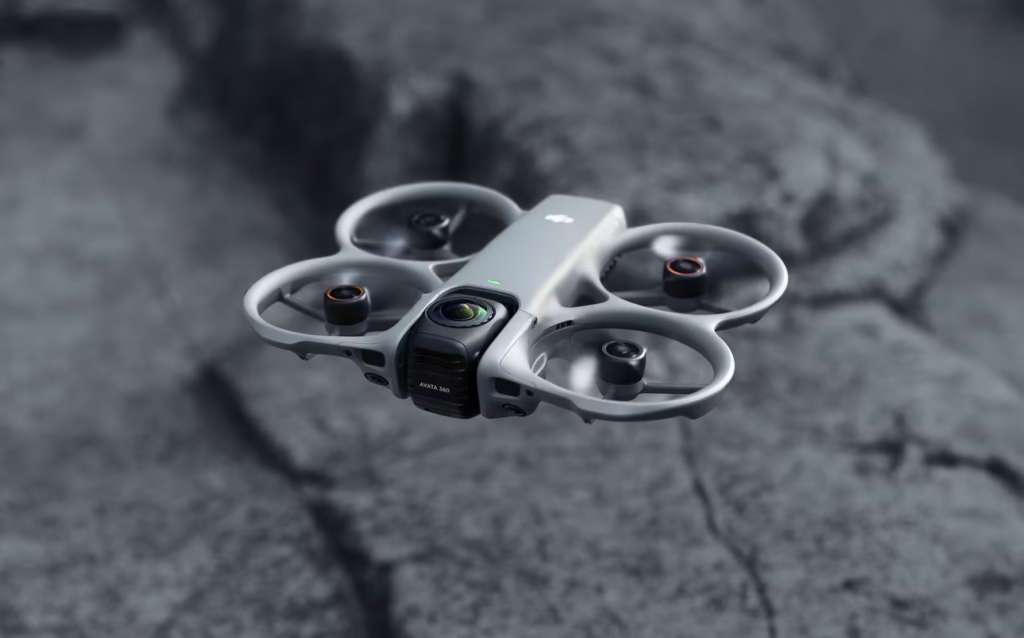
Design and philosophy: two very different visions of the 360 drone
This is probably where the choice between the DJI Avata 360 and the Antigravity A1 really begins.
The DJI Avata 360 is more substantial and heavier, and it’s immediately noticeable. Weighing in at 455g, this drone exudes solidity and performance. It feels more like a “flying machine” than a “lightweight creative companion.” This is reassuring for some users, especially those who appreciate robust equipment and a sense of control.
The Antigravity A1 , however, takes a very different approach. Weighing 249g with a standard battery, it clearly prioritizes lightness, agility, and regulatory simplicity. Above all, its entire design seems geared towards a specific goal: making immersive flight more natural, intuitive, and accessible, even to someone who has never really flown a drone before. The user guide puts it perfectly: the idea isn’t just to build “another drone,” but to offer a new way to experience the sky.
In short, the DJI Avata 360 speaks more to the pilot. The Antigravity A1 speaks more to the creator and the person who wants to experience something.
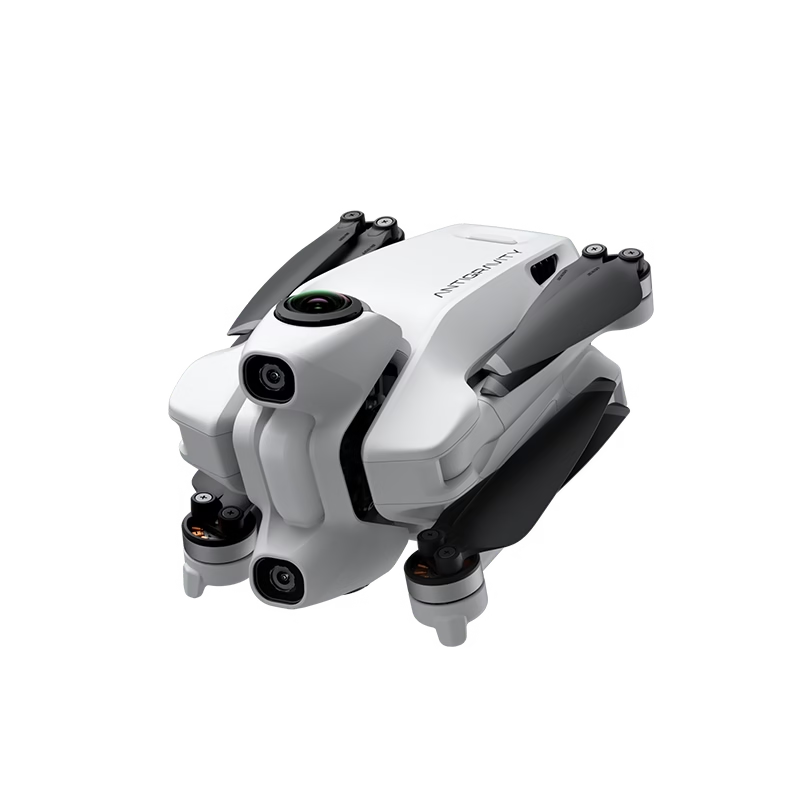
Flight experience: clear advantage to the Antigravity A1 for immersion
If your goal is to have a truly immersive drone experience, the Antigravity A1 seems to offer a much stronger proposition.
The DJI Avata 360 obviously offers a very modern experience: 360° video, O4+ transmission, compatible goggles, excellent video feedback quality, and advanced controls. It’s very serious. Very polished. Very DJI. But it remains within the framework where the machine must primarily be high-performing and versatile.
The Antigravity A1 takes the experience even further. The brand emphasizes an immersive 360° flight where the direction of your gaze and the direction of the drone can be separated. You can look left while flying right, or look down while the drone continues on its trajectory. It is precisely this separation between vision and movement that completely changes the way you fly.
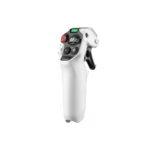
In addition to this, there’s FreeMotion mode, which is undoubtedly one of the Antigravity A1 ‘s most compelling features. Instead of learning a more traditional piloting technique, you simply point the controller in a direction and press the button. The approach is designed to be intuitive, almost instinctive. For someone who wants to enjoy the scenery, easily film, or introduce the drone to friends and family, it makes a real difference in how they use it.
That’s also why, in the “immersive drone” category, the Antigravity A1 seems more unique to me.
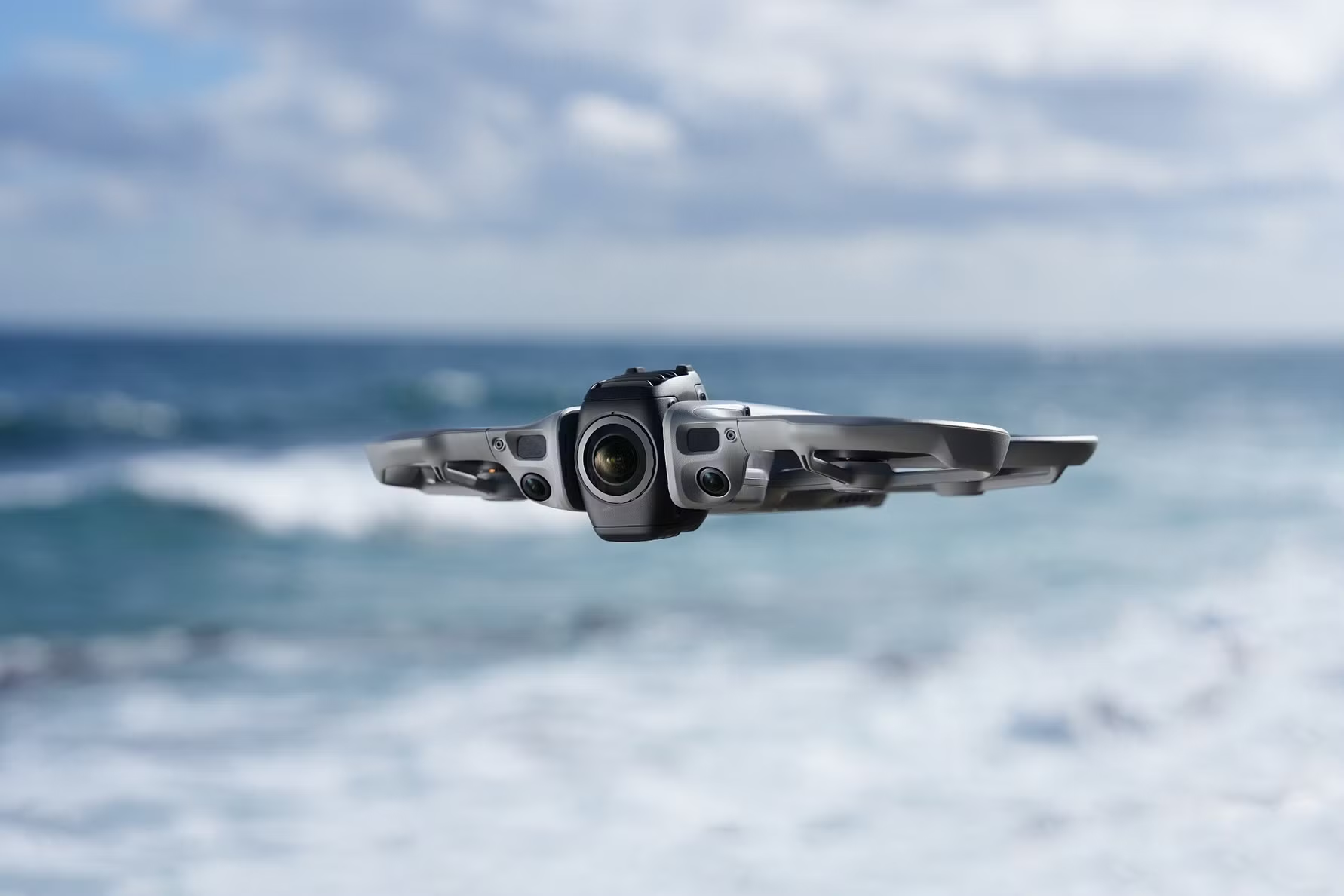
Video quality: the DJI Avata 360 excels in certain technical aspects, but the Antigravity A1 remains a formidable contender for creators.
In terms of pure specifications, the DJI Avata 360 makes a strong impression. It shoots 8K 360 video at up to 60 fps, also offers 6K 360, features two 1/1.1-inch square CMOS sensors with 64 MP each, allows for 360 photos up to 120 MP, and boasts a maximum video bitrate of 180 Mbps. Clearly, DJI aimed to deliver a high-end product in terms of image quality.
The Antigravity A1 , on the other hand, offers 8K 360 at up to 30 fps, 5.2K at up to 60 fps, and 4K at up to 100 fps, with a 1/1.28-inch sensor and a maximum bitrate of 170 Mbps. On paper, it’s slightly less impressive than the DJI Avata 360 in terms of raw 360 video, particularly regarding the maximum frame rate in 8K.
But in practice, you also have to look at the product as a whole. The Antigravity A1 was designed around the idea of “shoot once, frame later.” The brand emphasizes this creative freedom: a single take allows you to then extract multiple angles, aspect ratios, and narratives in post-production. For a content creator, that changes everything. We’re not just talking about image quality, but creative efficiency.
So yes, if you’re looking for maximum technical power in 360 capture, the DJI Avata 360 has a slight edge. But if you’re thinking about real-world use for Instagram, YouTube Shorts, Reels, travel videos, or storytelling, the Antigravity A1 remains extremely relevant.
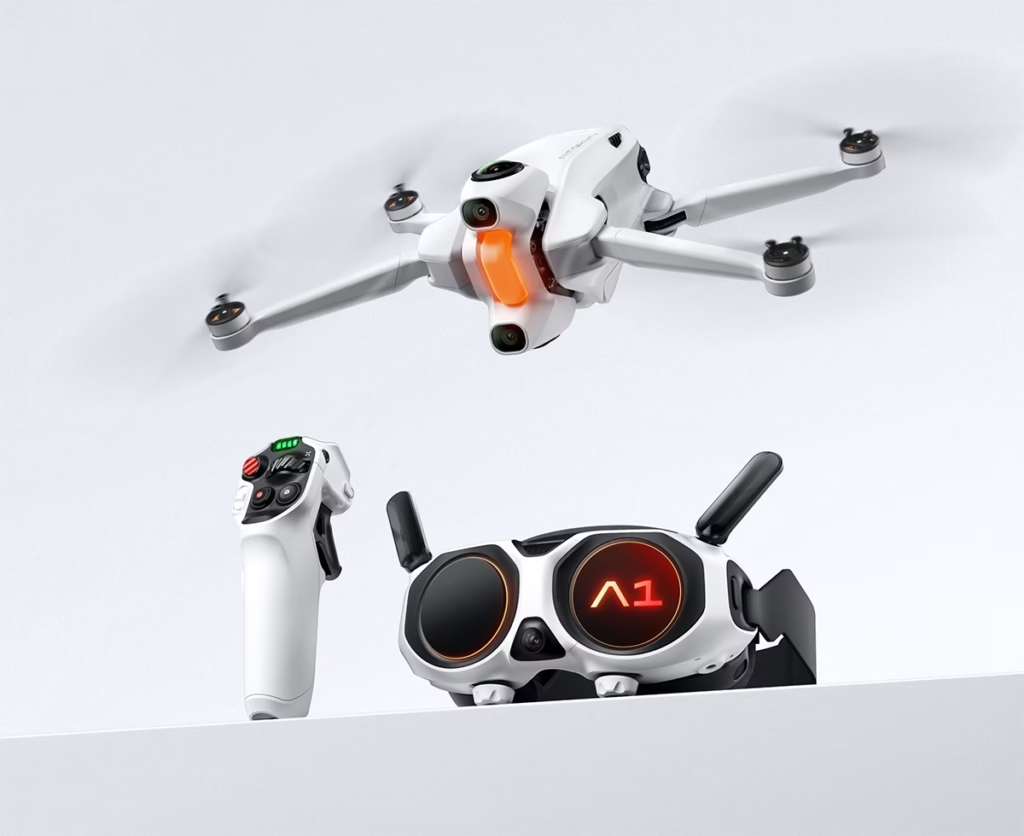
Editing and post-production: the Antigravity A1 has a real advantage.
This is an often underestimated point, yet it can completely change the user experience.
The DJI Avata 360 offers excellent possibilities for cropping, 360° virtual gimbal, and post-production creation. In this respect, DJI offers a very solid and highly refined package.
But the Antigravity A1 focuses more on immediate simplicity. Antigravity offers an AI-powered editing feature: the app can automatically identify highlights, add camera movements, and sync music to produce a share-ready video with significantly less effort. For a beginner, or even a creator looking to save time, this is a real advantage.
And that’s precisely where the Antigravity A1 stands out. The DJI Avata 360 gives you power. The Antigravity A1 also gives you a shortcut to the result.
For me, if you produce a lot of short content and you want to move quickly, it’s far from insignificant.
| Features | DJI Avata 360 | Antigravity A1 🔥 |
|---|---|---|
| Drone type | High-performance 360 FPV drone | Intuitive 360 immersive drone |
| Weight | 455 g | 249 g / 291 g |
| 360 Video | 8K up to 60 fps | 8K up to 30 fps |
| Sensor | 2 x 1/1.1″ – 64 MP | 1/1.28” – 55 MP |
| Autonomy | ≈ 23 min | 24 min / 39 min |
| Flight distance | 13.5 km | 13 km / 23 km |
| Obstacle detection | Omnidirectional + LiDAR | Omnidirectional with latest firmware |
| Ease of use | Intermediate | Ultra easy (FreeMotion) |
| Video editing | Manual | automatic AI |
| Internal storage | 42 GB | 20 GB |
| Experience | Precise piloting | 360° total immersion |
| See DJI Avata 360 | See Antigravity A1 (Code AGRRLOV) |
Battery life: the Antigravity A1 takes the lead with its high-capacity battery
The DJI Avata 360 advertises a maximum flight time of approximately 23 minutes, which is consistent with its category and weight.
The Antigravity A1 performs roughly on par with its standard battery, offering around 24 minutes of flight time. But where it really shines is with the high-capacity battery, which extends to 39 minutes. That’s huge for this type of drone. And as its user guide points out, one of the advantages of a 360 drone is the ability to minimize retakes: a single flight can be enough to capture multiple angles.
Result: in real-world use, the Antigravity A1 can become more cost-effective in terms of time, battery life and shooting comfort.
Safety and obstacle detection: the DJI Avata 360 currently has a technical advantage, but the Antigravity A1 is making rapid progress.
In terms of pure safety, the DJI Avata 360 has a very reassuring spec sheet. It features an omnidirectional optical system, a forward-facing LiDAR, and a downward-facing infrared sensor. In short, it was clearly designed to offer very comprehensive detection in all directions.
The Antigravity A1 , in its basic manual, primarily emphasizes forward and downward detection. This is still a serious feature, but less comprehensive on paper.
That said, some nuance is needed. The spring update shows that Antigravity is actively pushing significant improvements, with the addition of omnidirectional obstacle avoidance and a bypass mode. So today, the Antigravity A1 is becoming more ambitious in this area, even if the DJI ecosystem remains, for now, the most reassuring factor in terms of technical maturity.
If you want the most “safe” choice based on the raw specifications, I would therefore give the advantage to the DJI Avata 360. If you want a drone that evolves quickly and offers original features, the Antigravity A1 remains very appealing.
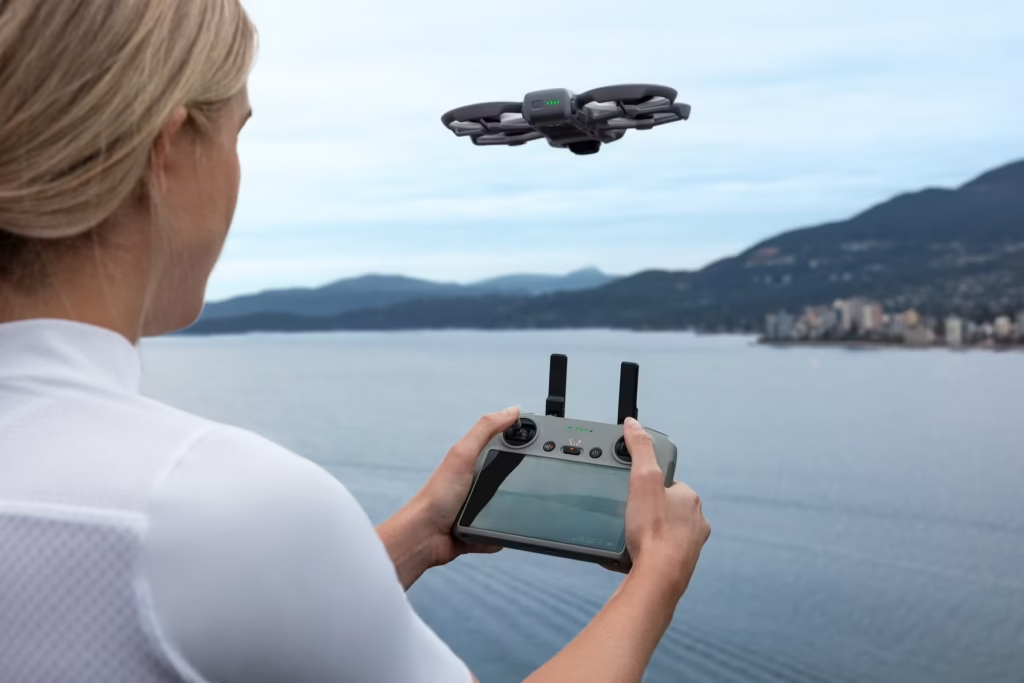
Ease of use: the Antigravity A1 clearly wins.
This is probably the biggest strength of the Antigravity A1 .
The DJI Avata 360 remains an advanced product. Even though DJI greatly simplifies the experience, it’s clear that the drone is also aimed at users who enjoy understanding the settings, exploring the different modes, and piloting with precision.
The Antigravity A1 , on the other hand, was designed from the outset to reduce the barrier to entry. FreeMotion, intuitive piloting, 360 immersion, AI editing, features like Sky Path, Sky Genie, Deep Track, and even a voice assistant in the latest versions: everything contributes to a smoother and less intimidating experience.
Frankly, if you’re a beginner or if you want a drone that you can easily take out on trips without feeling obliged to be “a drone pilot”, the Antigravity A1 seems much more suitable.
See the offer with the code AGRRLOV
Content creation: which is the most interesting?
For a technical videographer, a spec enthusiast, and someone who wants a very robust product in terms of image quality, the DJI Avata 360 has a lot going for it.
But for a content creator in the broadest sense, I find the Antigravity A1 has a fresher feel. Its DNA is truly geared towards experience, spontaneity, social content, and the joy of creation. It’s not just for those who want to fly a drone. It also speaks to those who want to tell the story of a place, an adventure, a feeling.
The ability to film once and then crop for 16:9, 9:16, or other formats is also a major advantage for modern use. And with your code AGRRLOV, the offer becomes even more attractive, especially if you want to emphasize an “experience + bonus” purchase rather than a purely technical one. According to the product information, the bonus highlighted with this code is the free lens replacement kit and takeoff mat , which adds real, tangible value for someone who wants to fly with greater peace of mind.
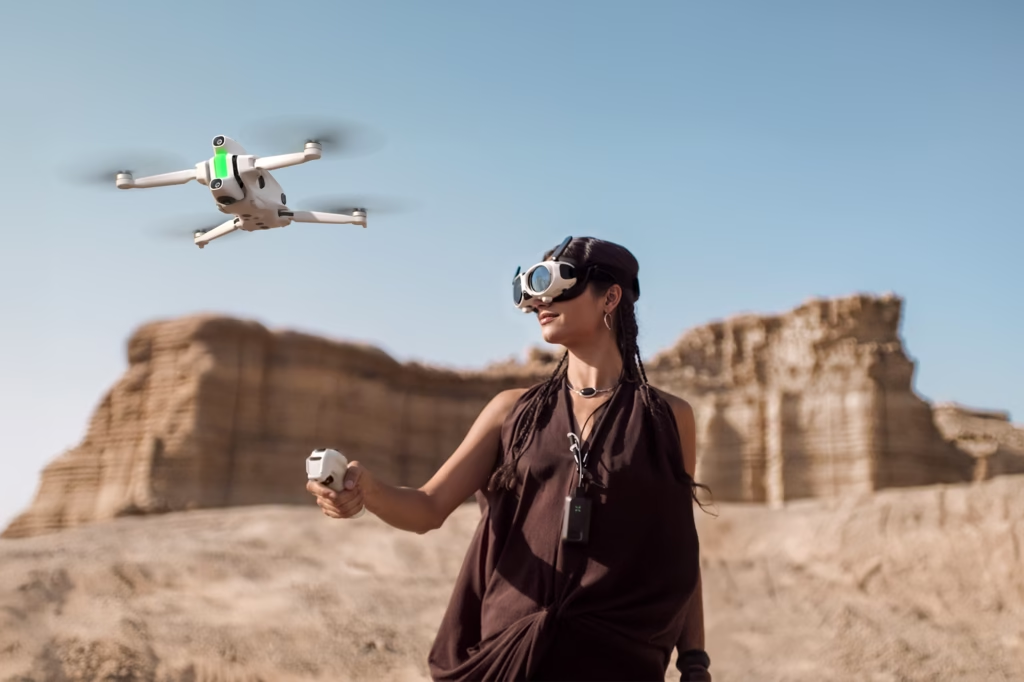
Value for money: it all depends on what you value.
The DJI Avata 360 is more impressive in several technical aspects: sensors, 8K 60fps, internal storage, a more advanced detection system, O4+ transmission, etc. If your reasoning is purely based on the product specifications, it might seem more aggressive.
But the Antigravity A1 shouldn’t be judged solely on a list of specs. Its true value lies in the experience it offers: a more intuitive flight, a genuine sense of freedom, a creative approach to 360s, ease of use rarely seen in this category, and a product that seems designed to inspire people to fly, not just to display impressive figures.
So, in terms of value for money, the DJI Avata 360 might seem more sensible for some users. The Antigravity A1 might seem more emotionally engaging, but also more distinctive.
My opinion: DJI Avata 360 or Antigravity A1 ?
To put it simply:
Choose the DJI Avata 360 if you want:
- the most powerful technical specifications
- a very ambitious 360 capture
- a very comprehensive detection system
- a drone that immediately inspires confidence from a technological standpoint
Choose the Antigravity A1 if you want:
- a truly different flying experience
- a more intuitive immersive drone
- simpler content creation
- a “film first, frame later” approach
- a 360 drone that’s more fun, more accessible and more inspiring
My feeling is that the DJI Avata 360 is a drone to compare. The Antigravity A1 is a drone to experience.
And that’s precisely why, if your goal is to create immersive content with a more instinctive and less technical approach, I tend to find the Antigravity A1 more exciting today. With the code AGRRLOV , and the bonus lens replacement kit + launch pad included , it’s also a sensible offer for someone who really wants to enter this world with a solid foundation.
Conclusion
The DJI Avata 360 vs Antigravity A1 duel is exciting because it actually pits two visions of the 360 drone against each other.
The DJI Avata 360 represents the power, technological maturity and confidence of a major player.
The Antigravity A1 represents something newer: a more intuitive, more immersive and more creative way to fly.
If you want the most reassuring 360 drone in terms of technical specifications, take a look at the DJI Avata 360 .
If you want the immersive drone that makes you want to create and enjoy the experience the most, the Antigravity A1 clearly deserves your full attention.
Discover the Antigravity A1
See the offer with the code AGRRLOV


Leave a Reply