
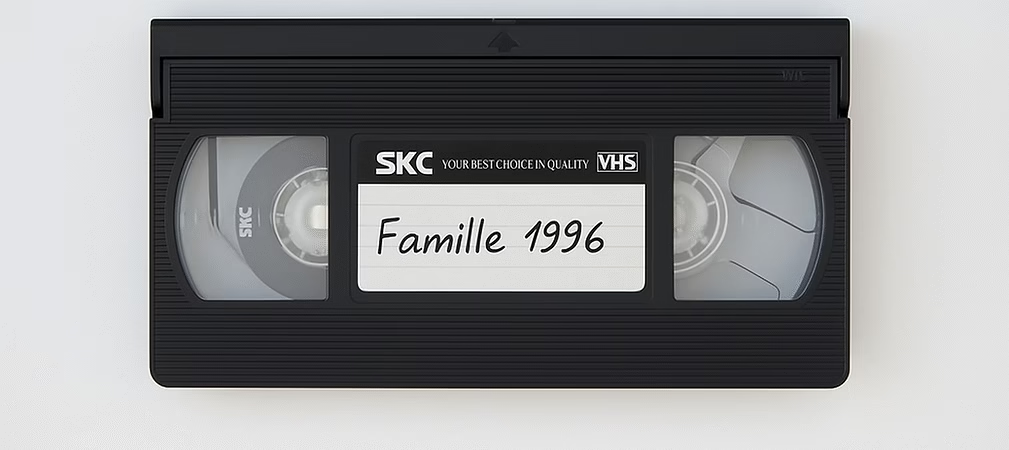
Far from being mere dusty relics, video cassettes hold the essence of irreplaceable life moments. Yet, preserving these analog treasures without taking action risks their permanent loss. Between natural deterioration and the increasing inaccessibility of playback equipment, digitizing VHS, Video8, or Mini-DV cassettes is now an essential step.
The silent erosion of old video formats
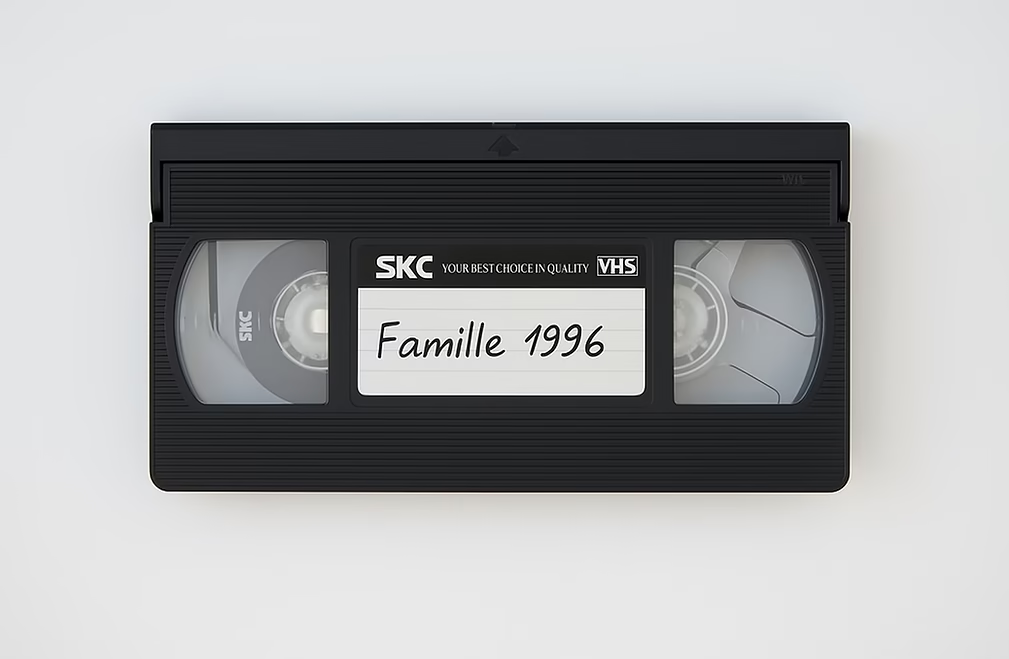
Magnetic tapes were never designed to withstand the test of time. They deteriorate slowly, silently, until they become unusable. The first signs often go unnoticed: a loss of contrast, washed-out colors, slightly distorted sound. Then come unstable images, audio dropouts, or even the tape refusing to play.
The degradation of these materials can be accelerated by:
- Inappropriate storage conditions (temperature variations, humidity)
- Involuntary attraction to everyday objects
- The aging of the adhesives inside the cassettes
- Oxidation of magnetic particles
A simple move can be enough to render several tapes unreadable. These alterations are irreversible once initiated, making preventative intervention essential.
Understanding the real benefits of digitization
Digitization involves capturing the entire analog signal from the tape and converting it into a digital video file. This file can then be stored, copied, shared, edited, or restored as needed. This process offers advantages that go far beyond simple backup.
Why digitize? A multi-point answer
Before it’s too late, here’s what digital transfer actually allows:
- Stabilizing the content : once digitized, the file is no longer subject to wear and tear or environmental hazards.
- Facilitating transmission : files accessible on all devices, compatible with Windows, macOS, Android.
- Organize the archives : classify by date, event, person filmed.
- Gain peace of mind : no more endless searches for a working VCR.
And above all, digitizing means no longer depending on obsolete formats or discontinued connections. It means giving your videos a second life adapted to today’s uses.
Restoring to better relive: tools at the service of emotion
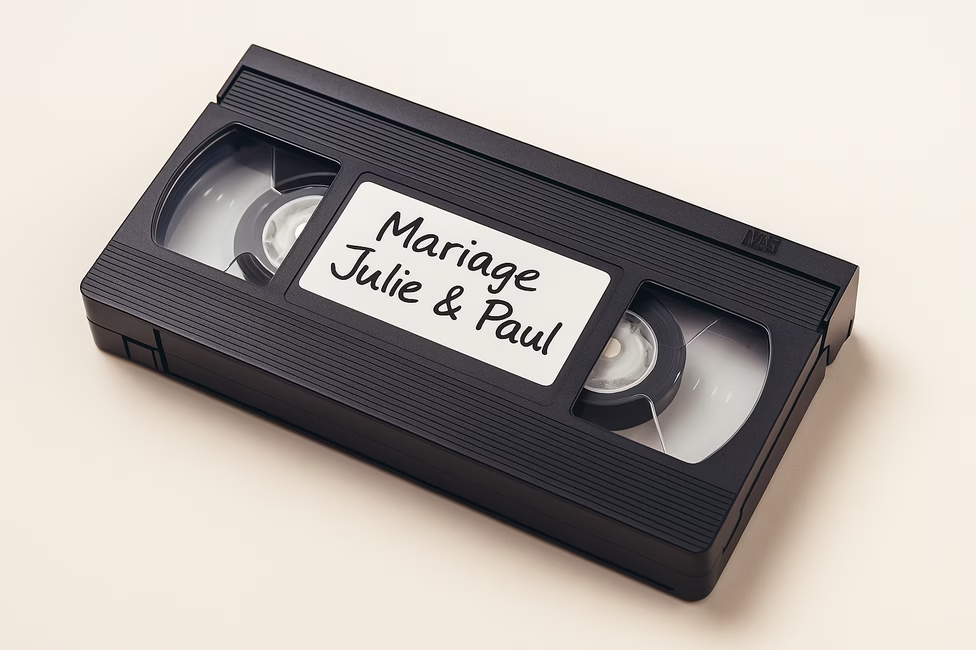
Converting a video is one thing. Restoring its clarity and stability is another. Thanks to advanced software, video restoration goes beyond simple capture. It allows you to adjust key parameters that directly impact visual and audio quality.
Improving quality without betraying authenticity
The goal isn’t to transform a family video into a Hollywood clip, but to preserve its readability without altering its original quality. Some tools, like VideoCleaner or Neat Video , are capable of:
- Removing visual noise, especially in low-light Hi8 videos
- Correct flickering or stray lines caused by a worn read/write head
- Smooth out sound transitions and balance audio levels
- Realign the colors to restore natural hues
These processes sometimes require technical expertise, because if used incorrectly, they can generate an artificial image. Hence the advantage of entrusting this work to video archiving professionals.
Opening oneself up to new creative possibilities
Once you have your files, nothing prevents you from transforming them. Not to modernize them at all costs, but to better integrate them into a dynamic of living memory. It’s no longer simply about storage, but about staging, telling stories, and transmitting.
Software like Shotcut , or even integrated solutions like Filmora , allow you to create emotional sequences from your restored videos. Like what:
- Create a visual timeline of your children’s childhood
- Putting together a best-of video of a wedding or retirement party
- Incorporate audio interviews with family members to contextualize filmed scenes
The image is no longer a simple recording, but becomes a narrative vehicle.
Choosing a reliable scanning service: a criterion too often overlooked
Many people think that all you need is a cable and free software to do the job. In reality, the quality of the digitization depends on many parameters: the mechanical integrity of the VCRs, the accuracy of the capture, the compression rate, the codecs used, and post-processing.
Using a specialized company not only guarantees a smooth transfer process but also provides access to advice tailored to the nature and condition of your media. Certain rare formats, such as Betacam SP or MicroMV, require specific equipment.
With this in mind, KeepMovie offers comprehensive support for digitizing your VHS tapes and other formats, from initial assessment to delivery of digital files, including any necessary restoration. Their approach is meticulous yet rigorous, with a genuine focus on faithfully preserving your memories.
Digitizing means anticipating in order to transmit
Waiting until the tape is beyond repair is letting time erase what makes up your story. Digitizing your old videos means choosing an active, mobile, and preserved memory. It’s not simply a copy; it’s an act of safeguarding the past, designed for the future.
Whether it’s to pass things on to your children, share them remotely with a loved one, or simply relive a forgotten moment with emotion, digitization has become an essential step today. A simple gesture, but one full of meaning.





Leave a Reply