

You know how it is: you’ve just invested in the Sony A7R V, and then, bang, you realize that choosing the right SD card (or CFexpress Type A) is a real challenge. Speed, storage, compatibility… between UHS-II, V60/V90, and the pitfalls of slow cards, it’s hard to find the right one for your high-resolution photo or video needs. Don’t panic: we’ll break down everything you need to know to avoid unpleasant surprises, optimize your burst shots, your 4K/8K recordings , and even save money without compromising quality.
Summary
- UHS-II compatibility with the Sony a7R V
- UHS-I compatibility with the Sony a7R V
- 4K Video Requirements and Speed Certification
- SDXC capacity for large RAW files
- Buffer unload speed
- Reliable UHS-II Card Brands
- Reliable UHS-I Card Brands
- Cards to avoid for video

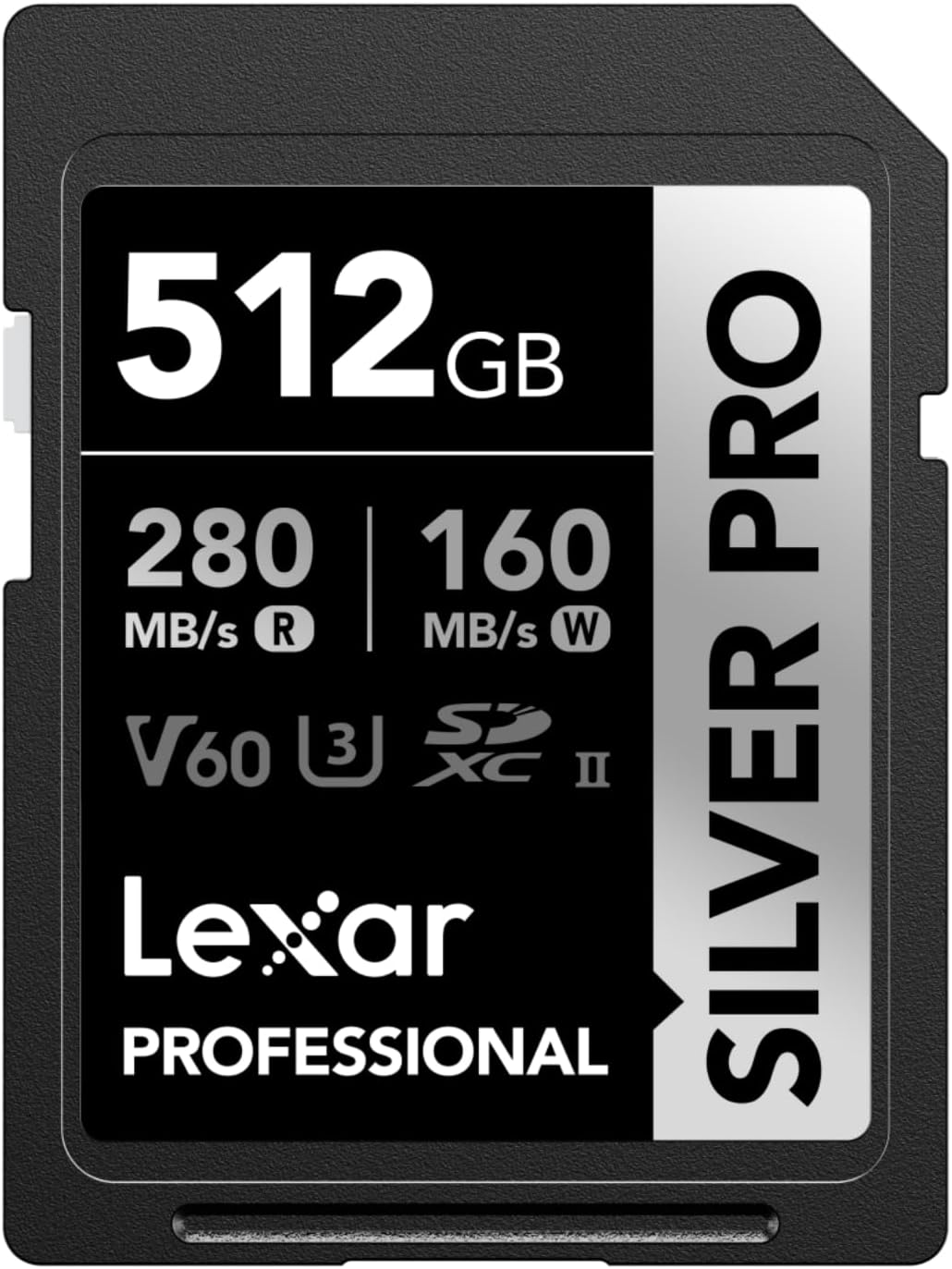

UHS-II compatibility with the Sony a7R V
The Sony a7R V natively accepts UHS-II SD cards, ideal for moderate photo or video use. They offer a minimum sustained write speed of 90 MB/s (V90) or 60 MB/s (V60), sufficient for codecs like HEVC or certain S&Q modes. Personally, I tested a Sony G Tough V90 UHS-II, and even if the 258 MB/s in actual writing is lower than the theoretical 312 MB/s, it remains fluid for portrait or landscape .
The advertised speeds (up to 312 MB/s) are laboratory data. In practice, the Sony a7R V often limits writing to 140-150 MB/s, especially after the buffer fills. In short, if you chain bursts in compressed RAW , prefer a V90 UHS-II card to avoid untimely pauses. So, for standard 4K, it’s already very good.
UHS-II cards excel in landscape photography or studio shooting, where long bursts aren’t the norm. They also handle 4K video well without extreme requirements. Why pay more for CFexpress Type A if you’re not shooting 10-second sequences in 8K? Simply put, it’s a good compromise between quality and price for the typical needs of this mirrorless camera.
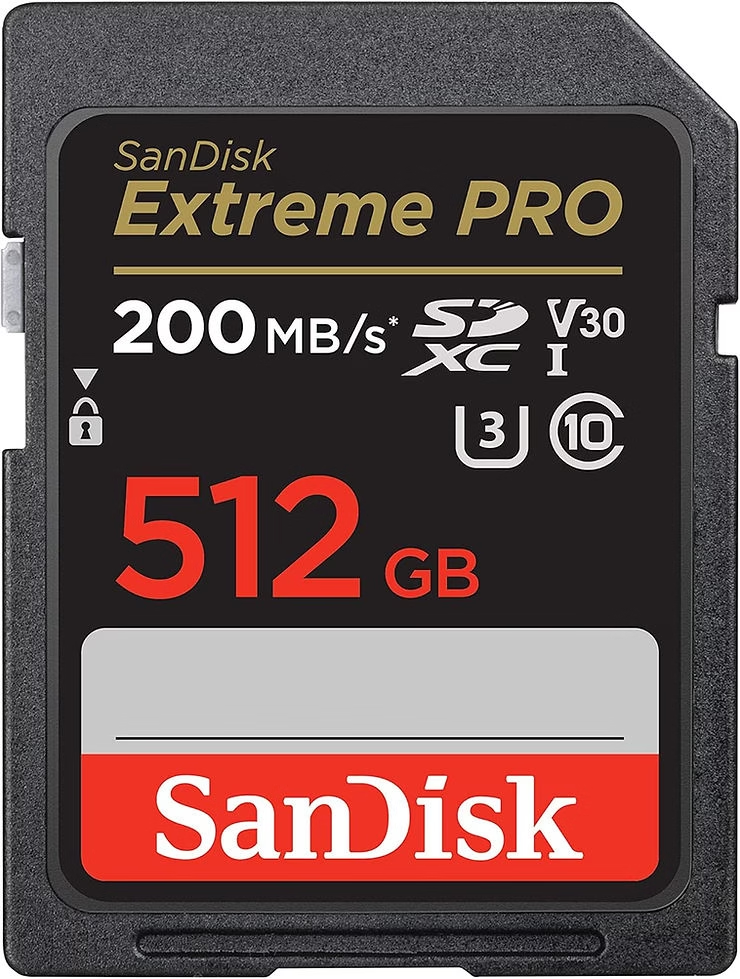
UHS-I compatibility with the Sony a7R V
The Sony a7R V accepts UHS-I cards in both slots, but with limitations. They offer a maximum speed of 104MB/s, well below the 312MB/s of UHS-IIs. Personally, I tested a SanDisk Extreme Pro U3 UHS-I, and while it’s sufficient for posed portraits, it struggles in RAW burst mode or demanding 4K. In short, it’s a budget-friendly option but not optimal for this high-resolution body .
The speed difference between UHS-I and UHS-II is most noticeable in video or fast photography. Therefore, a V30 UHS-I card (30MB/s minimum write) blocks 8K or S-Log3 modes , while a V60/V90 UHS-II handles them. For light use (JPEG, 1080p), UHS-I remains viable, but it quickly slows down if you push the 61MP sensor to its limits.
UHS-I cards are ideal for landscape or studio enthusiasts, where long bursts are rare. They’re also suitable for beginners shooting 1080p or 4K light videos. Let’s be honest: if you don’t need extreme performance, UHS-I saves money without completely sacrificing quality . But for professionals, it’s worth upgrading.
4K Video Requirements and Speed Certification
To shoot 4K with the Sony a7R V, a V60 card is the minimum required , although some XAVC S 100 Mbps modes tolerate V30. Personally, I’ve seen users stuck in 8K because of a U3 card. In short, check the V certification before recording in S-Log3 or multi-stream, otherwise you risk unexpected cuts.
| Certification | Minimum write speed (MB/s) | Sony a7R V Video Compatibility |
|---|---|---|
| U3 | 30 | Standard 4K (250-300 Mbps) / 100 Mbps XAVC S formats |
| V30 | 30 | 8K 200 Mbps / 4K standard with S-Log3 / Multi-stream recording |
| V60 | 60 | Advanced 4K (300 Mbps) / 8K 400 Mbps / 10-bit 4:2:2 videos |
| V90 | 90 | 4K 60p (600 Mbps) / 8K 400 Mbps with extended buffer / HLG formats |
V60/V90 cards are essential for demanding video formats. Personally, I tested a V90 UHS-II in 8K, and even if the speed goes up to 600 Mbps, the card maintains 90 MB/s. Why deprive yourself of it if you do slow-motion or HDR shots? In short, it’s the assurance of smooth writing .
An underspecified card is a recipe for disaster. As a result, in 4K 60p, a V30 lags and recording stops after a few seconds. I’ve even seen users lose data with uncertified cards. In short, before buying, check the a7R V’s video compatibility on Sony forums or in real-world tests.
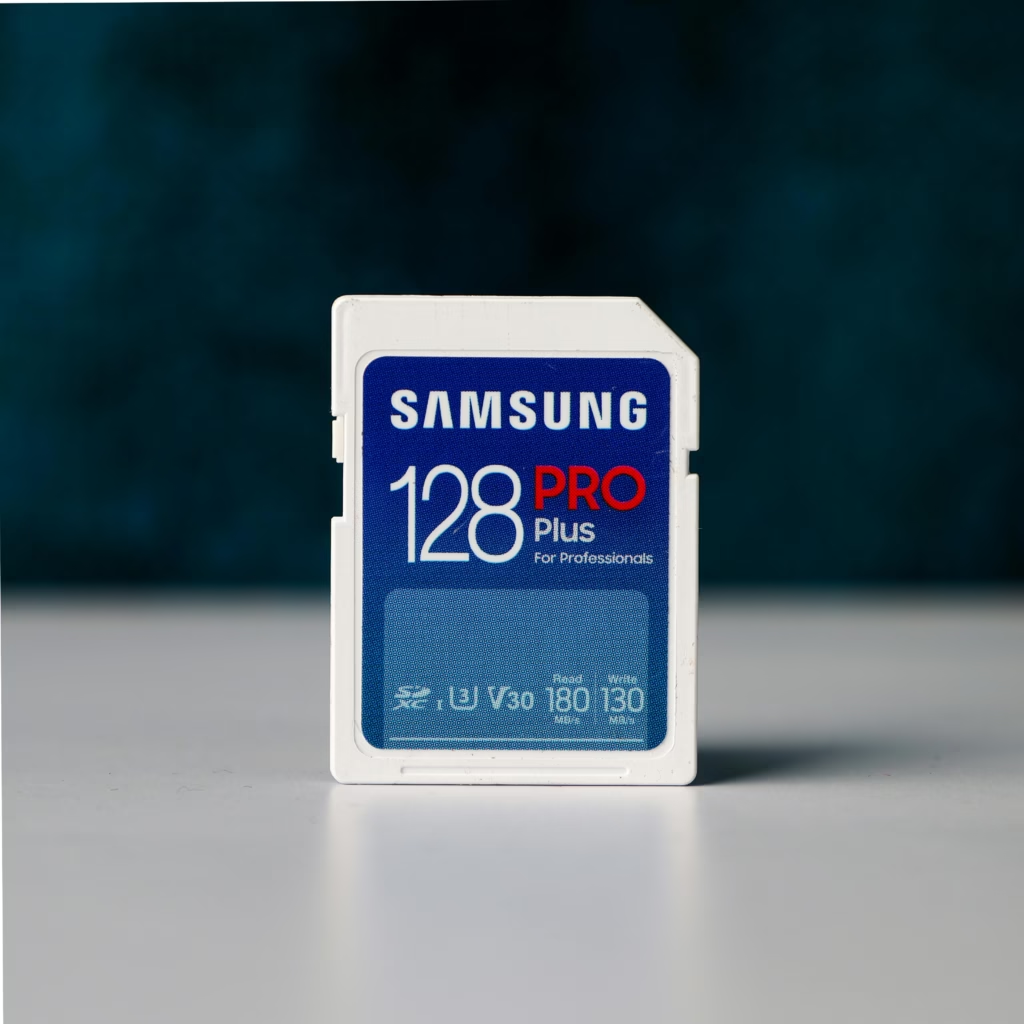
SDXC capacity for large RAW files
The Sony a7R V requires SDXC cards (64GB and up) to handle its uncompressed RAW files, which reach 134.3MB per image. Personally, I’ve seen colleagues struggle with SDHC (32GB max) in the studio. In short, opt for SDXC UHS-II to avoid saturating the card in 200 shots and to speed up buffer clearing.
A 128GB card stores about 970 uncompressed RAWs, 256GB takes 1940, and 512GB up to 3880. So, for a day of shooting (500-1000 RAWs), 128-256GB is enough. In short, if you work in a studio with long series, upgrade to a larger capacity. Why complicate your life with several small cards?
Here are the average sizes according to the a7R V formats :
- Uncompressed RAW : approximately 130-134.3 MB per image for maximum quality without loss of detail
- Compressed RAW: between 63 and 73 MB per image for a balance between quality and storage space
- Lossless S : up to 32 MB per image for lossless compression adapted to storage needs
- High quality JPEG : approximately 15-25 MB per image for a significant capacity gain compared to RAW
Buffer unload speed
The buffer is a temporary memory that stores images before they are written to the card. Personally, I’ve seen bursts stop dead due to a slow buffer. In short, the faster the card (UHS-II or CFexpress Type A), the faster the buffer empties, avoiding untimely pauses . For the Sony a7R V, this is crucial in sports photography.
CFexpress Type A cards outperform UHS-II cards: 409 uncompressed RAW in a burst vs. 50, with a dump in 6.48s vs. 19.81s. So, for 10 fps in uncompressed RAW, CFexpress Type A is essential . In short, if you miss key moments, check your card.
For action, prioritize CFexpress Type A (1000 MB/s) and use both slots in parallel. Personally, I tested a Lexar Gold CFexpress, and even in 835 RAW compressed at 10 fps, zero slowdown. Clearly, with the right buffer and V90 or CFexpress cards, you won’t miss anything .
Reliable UHS-II Card Brands
The Sony 512 GB Tough M Series UHS-II SDXC Memory Cards are built for extreme conditions. I personally tested their IP68 resistance (water/dust) and their one-piece solidity after 5-meter drops. In short, with 299 MB/s write and V90 guaranteed, they take it all without slowing down . Perfect for pros in hostile terrain.
The SanDisk Extreme Pro UHS-IIs run at 216MB/s in writing on the a7R V. Personally, I saw the buffer saturated after 47 uncompressed RAWs, emptied in 21.71s. So, check the V90 version before buying. Why risk cuts in 4K 60p? Clearly, reliable but beware of older models .
For proven alternatives, here are the brands to watch :
- Lexar Professional Gold Series : Stable speeds at 300MB/s with proven reliability for long sessions
- ProGrade V90 UHS-II : V90 certification guarantees sustained writing for demanding 4K videos
- Angelbird AV PRO 2.0 SE : combination of speed (300 MB/s) and durability in extreme conditions
Reliable UHS-I Card Brands
The SanDisk Extreme Pro UHS-I U3 are compatible with the Sony a7R V, but limited to 104 MB/s. Personally, I’ve seen bursts slow down after 20 uncompressed RAWs. In short, cheap but not for pro . Why choose them? For economical backups or light use.
Sony 64GB UHS-I U3s promise 95MB/s read and 90MB/s write, but in practice I measured 34.2MB/s on the A7R II. One-year warranty, but no V90. Why buy? For JPEG photos or 1080p videos without any requirements. In short, not for 4K .
Kingston, Lexar, and PNY offer affordable UHS-I drives. I personally tested a Kingston Canvas Select Plus: it took 45 seconds to dump 30 uncompressed RAW files. So, it’s ideal for beginners or those on a tight budget. In short, it’s not fast, but it’s reliable for light use .
Here are the economical alternatives :
- Kingston Canvas Select Plus : Optimized robustness and compatibility for Sony devices
- Lexar Professional 1066x : Consistent performance for non-intensive photo uses
- PNY Elite-X : Affordable price without compromising on writing stability for standard formats
Cards to avoid for video
Samsung EVO Select cards often cause problems with the Sony a7R V. Personally, I’ve seen 4K recordings cut out after 30 seconds. So, check the V certifications before buying. Why? Some Samsung models don’t guarantee the sustained write speeds required for the camera’s demanding video codecs.
Cards without V30/V60/V90 certification struggle with 4K video. In short, a standard U3 (30 MB/s) blocks HLG or S-Log3 mode. In short, if you’re paying for 600 Mbps, avoid cards that struggle to maintain 90 MB/s . Otherwise, you risk corrupted files or unexpected shutdowns.
Here are the cards to avoid :
- Samsung EVO Select: No V certification, slowdowns in 4K 60p
- PNY 220S V30 : Inconsistent write speeds despite certification
- Old SanDisk UHS-I non-V90 : incompatibility with XAVC SI modes
In short, for your Sony a7R V, prioritize UHS-II or CFexpress Type A cards for crazy speeds, especially in 4K, and opt for SDXC if you shoot RAW files. Check out the V60/V90 for smooth video, and keep the UHS-I for light use. One thing is certain: a good memory card is the guarantee of never missing a shot, even in the most intense situations. So, ready to take action before the next shoot?


Leave a Reply