When we want to improve our videos, we often think about the camera, stabilization, or color grading. However, in real life, what often makes the difference between an amateur video and one that’s enjoyable to watch is the sound.
Poor sound quality quickly becomes tiresome. A voice that’s too quiet, wind noise, distortion, or background noise can ruin a video, even if the image is superb. That’s why wireless microphones have become almost indispensable for content creators.
Today, two models are clearly positioned in the premium segment: the Insta360 Mic Pro and the DJI Mic 3. Both are aimed at demanding creators, but they do not have exactly the same philosophy.
Insta360 Mic Pro vs DJI Mic 3 : Two visions of the premium wireless microphone
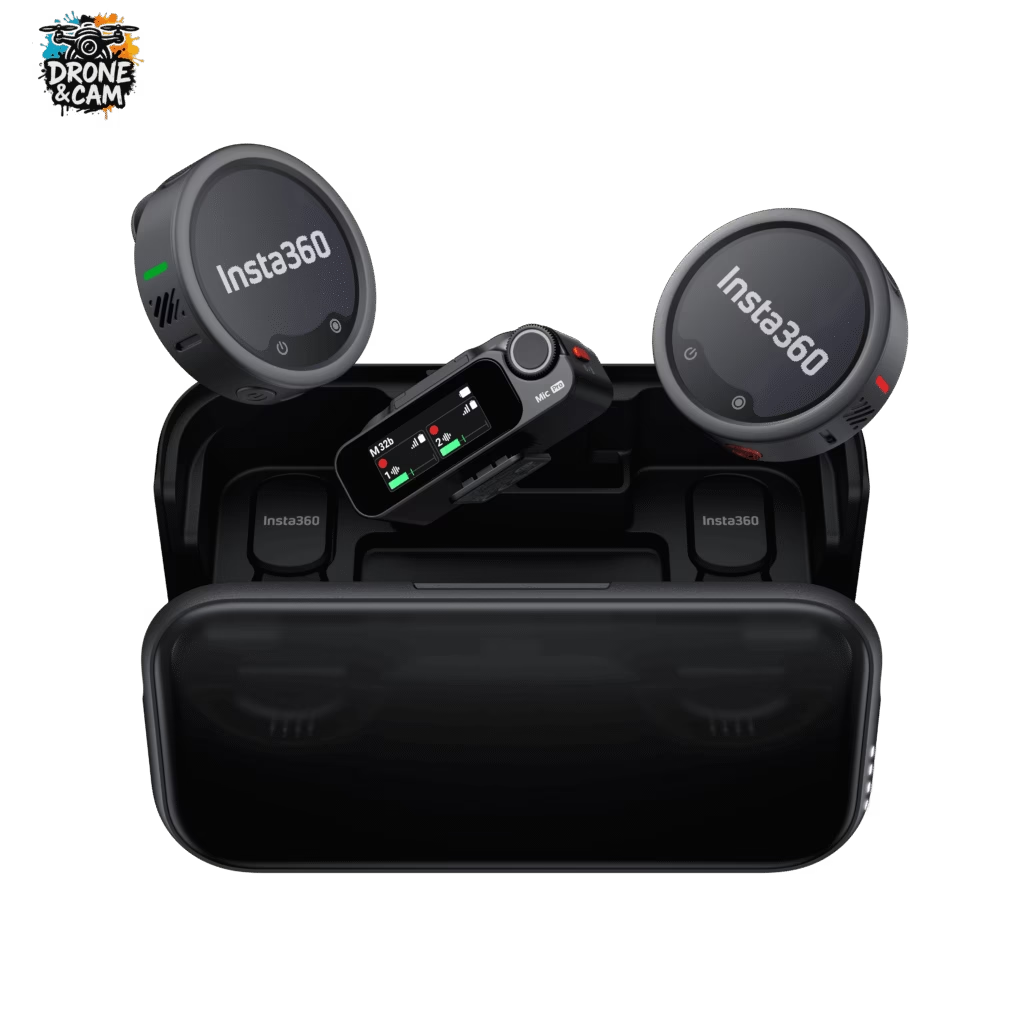
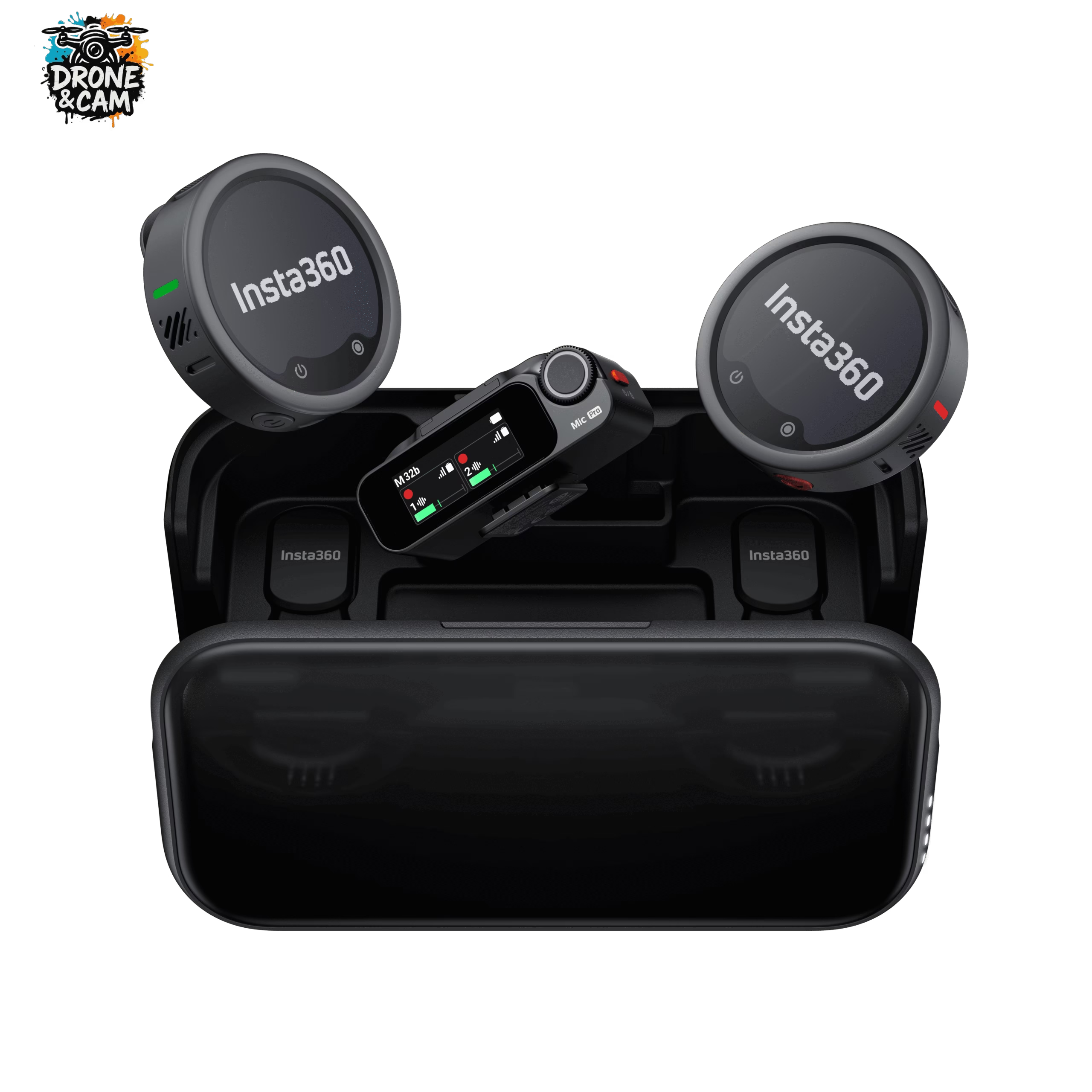
The Insta360 Mic Pro focuses on versatility, customization, and audio security. It stands out with its customizable E-Ink display, three-microphone array per transmitter, selectable polar patterns, internal 32-bit float recording, and direct connection to select Insta360 cameras.
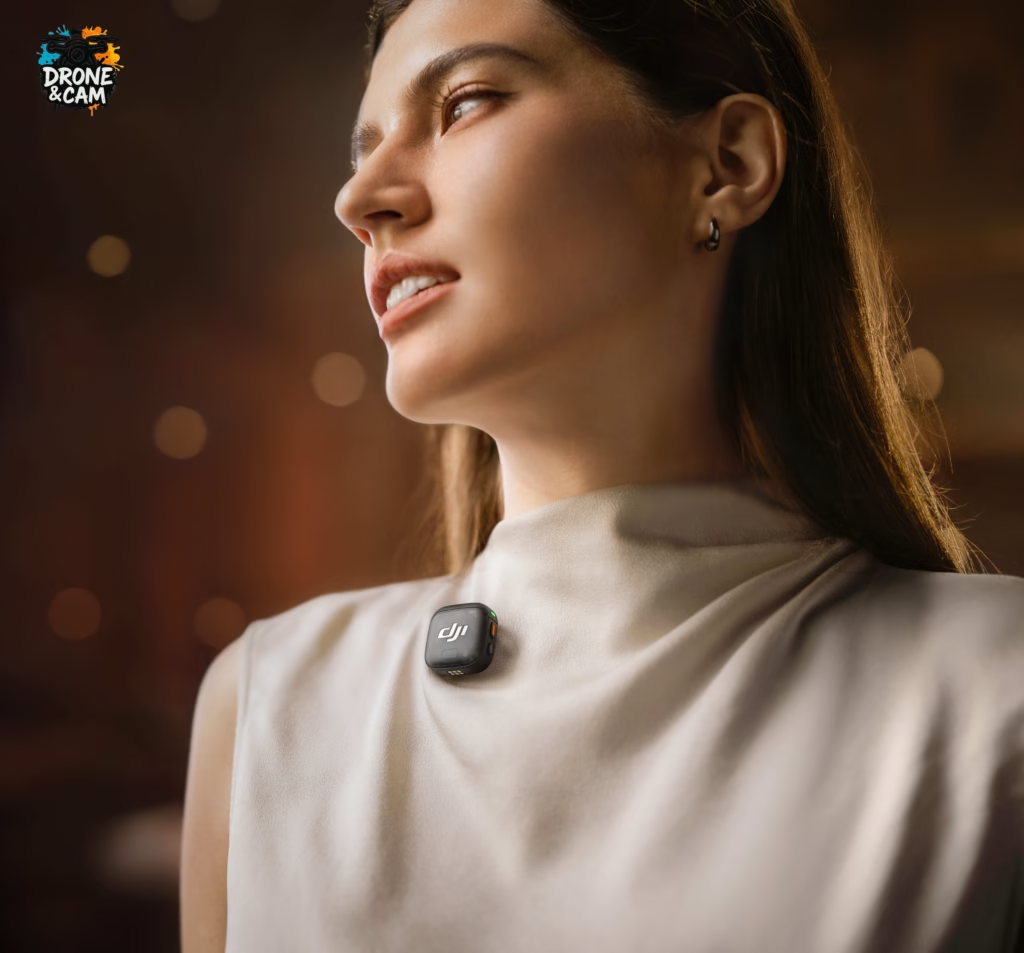
The DJI Mic 3 , on the other hand, focuses more on compactness, discretion, and the DJI OsmoAudio ecosystem. DJI presents it as an ultralight, compact, and discreet microphone, with a transmitter weighing only 16g. It supports up to four transmitters and eight receivers, making it ideal for multi-camera shoots or group interviews. It also adds adaptive gain, three voice pitch presets, two levels of active noise reduction, and 32-bit float internal recording in dual files with 32GB of storage.
In summary: the Insta360 Mic Pro plays the card of a highly identifiable and versatile creative microphone, while the DJI Mic 3 plays the card of a discreet, lightweight microphone that is very integrated into the DJI ecosystem.
Quick comparison table
| Criterion | Insta360 Mic Pro | DJI Mic 3 |
|---|---|---|
| Positioning | Premium wireless microphone for creators | Ultra-light and discreet wireless microphone |
| Emitter weight | 19.7 g without clip | 16 g |
| 32-bit float | Yes | Yes, with a double file |
| Internal storage | 32 GB per transmitter | 32 GB |
| Multi-emitters | Up to 4 transmitters to 1 receiver | Up to 4 transmitters and 8 receivers |
| Noise reduction | AI with NPU chip | Two levels of active reduction |
| Automatic Gain | Yes | Two adaptive gain modes |
| Guidelines | Omni, cardioid, figure-8 | More traditional recording |
| Customization | Customizable E-Ink screen | Bonnet available in several colors |
| Ecosystem | Insta360 cameras | DJI OsmoAudio |
Design and handling
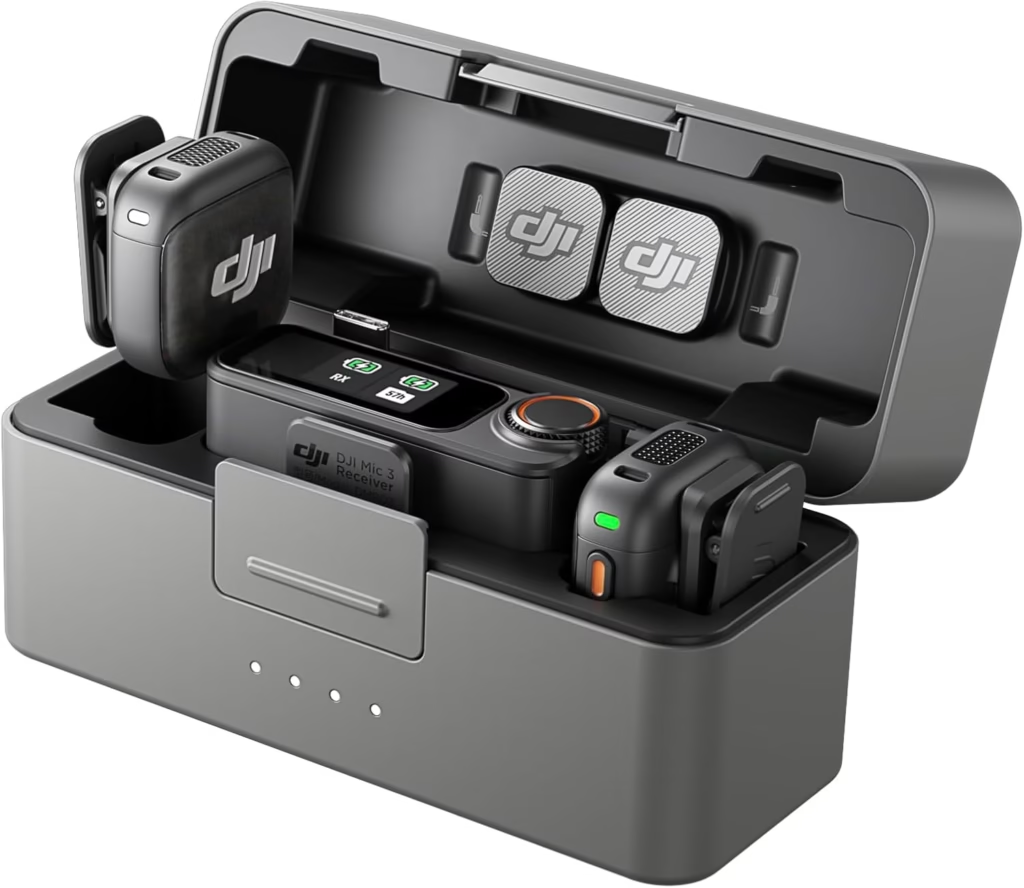
The DJI Mic 3 has a real advantage in terms of discretion. With its 16g transmitter, it’s very light and easy to carry. It can be attached with a magnet or a clip, and its rotating clip allows you to adjust the microphone angle for better voice capture depending on how it’s attached.
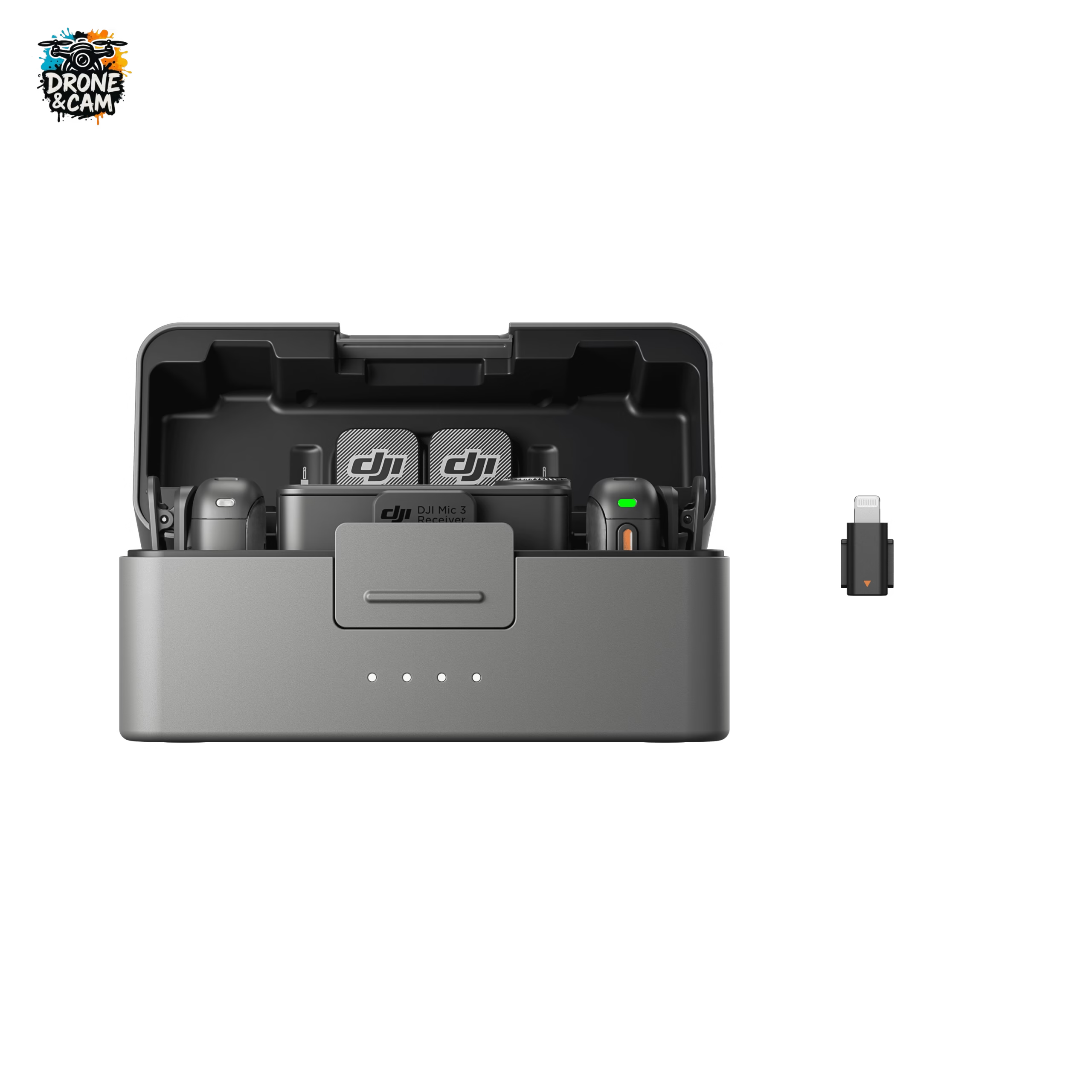
Its charging case is also well-designed: it can store two transmitters and one receiver without needing to remove the windscreens or magnetic clips. This is convenient when you’re filming frequently and want to save time.
The Insta360 Mic Pro , on the other hand, stands out primarily visually. Its customizable E-Ink screen allows you to display a logo, name, visual identity, or the role of a participant. This is very useful on a shoot with several people. And if the microphone is visible on screen, it adds a real branding touch.
For a creator who likes to have a clean and identifiable setup, this is a major advantage.
Audio quality and secure connections
The two microphones are designed to prevent missed takes.
The Insta360 Mic Pro offers internal 32-bit float recording, a very reassuring feature when filming alone or in unpredictable situations. If someone speaks softly and then bursts out laughing, or if the sound level suddenly increases, there’s more leeway to recover the audio during editing.
The DJI Mic 3 also goes very far in this area with its internal 32-bit float recording and dual-file system. It records both the original track and an algorithmically enhanced version. This is very useful for maintaining flexibility in post-production.
The DJI Mic 3 also adds two adaptive gain modes. Automatic mode is used to avoid volume spikes in dynamic environments, such as sports or events. Dynamic mode adjusts the gain to maintain a more consistent volume, particularly useful indoors or in a studio.
Directionality: the advantage of the Insta360 Mic Pro
This is probably one of the biggest advantages of the Insta360 Mic Pro .
Each transmitter incorporates three microphones and allows you to choose from several polar patterns. The omnidirectional mode is ideal for capturing natural ambient sound. The cardioid mode is perfect for on-camera voiceovers, vlogging, or voice-over recording. The figure-eight pattern is very useful for two-person interviews, with the microphone positioned between the two people.
This versatility is really interesting if you make several types of content: vlog, podcast, interview, ASMR, live or video facing camera.
The DJI Mic 3 , on the other hand, offers more audio processing tools such as Regular, Rich, and Bright voice presets. These profiles allow you to adapt the voice output to different people: more natural, richer, or clearer.
Noise reduction: two different approaches
The Insta360 Mic Pro uses AI-powered noise reduction with a dedicated NPU chip. The goal is to reduce wind, crowd noise, and background sounds while maintaining a natural voice quality.
The DJI Mic 3 offers two levels of active noise cancellation. This is useful for reducing background noise such as air conditioning, indoor sounds, or certain outdoor environments. With the windscreen, it can also further reduce wind noise.
In both cases, it’s a real plus for creators who film outdoors, while travelling or in noisy places.
Multi-camera and multi-person filming
The DJI Mic 3 scores big points for complex setups. It can handle up to four transmitters and eight receivers. For group interviews, multi-camera shoots, trade shows, conferences, or sporting events, it’s incredibly powerful.
It also offers a quadraphonic mode with certain compatible Sony devices or software, allowing independent output of four audio tracks.
The Insta360 Mic Pro also remains very robust with its 4-to-1 mode, which allows you to connect up to four transmitters to a single receiver, with separate tracks. This is perfect for a video podcast or a multi-person interview.
Ecosystem: Insta360 or DJI?
This is surely the simplest criterion for choosing.
If you already film with an Insta360 X5 , an Insta360 X4 Air , an Insta360 Ace Pro 2 , or a compatible Insta360 camera, the Insta360 Mic Pro makes perfect sense. It integrates directly into the Insta360 ecosystem and simplifies your workflow.
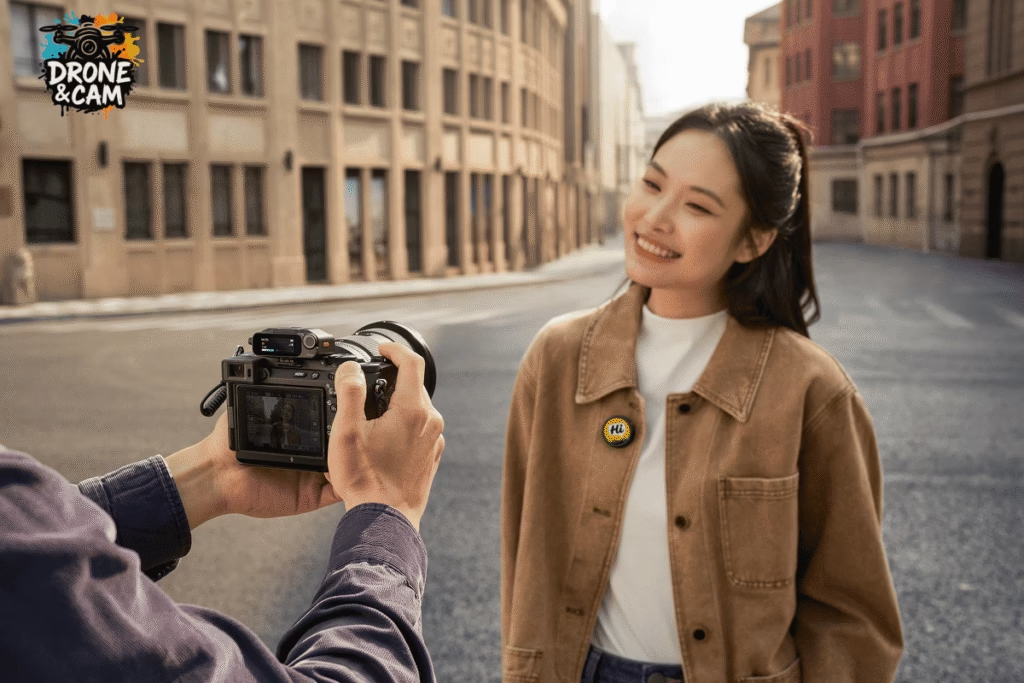
If you’re already familiar with DJI gear, the DJI Mic 3 naturally becomes very appealing. It can connect directly to the DJI OsmoAudio ecosystem, including the Osmo 360, Osmo Action 5 Pro, Osmo Action 4, and Osmo Pocket 3, without a receiver.

Autonomy and field use
The DJI Mic 3 offers up to 8 hours of battery life per transmitter and up to 10 hours for the receiver. With the charging case, DJI advertises up to 28 hours of use. Fast charging is a significant advantage: 5 minutes of charging provides up to 2 hours of use.
The Insta360 Mic Pro offers up to 10 hours of battery life per transmitter and up to 30 hours with the charging case. Its fast charging also allows for quick battery replenishment between charges.
Both are therefore suitable for a real day of filming.
Price: slight advantage to the DJI Mic 3
In terms of price, the DJI Mic 3 starts at €199 for the 1 transmitter + 1 receiver version. For the most attractive kit for creators, with 2 transmitters + 1 receiver + charging case , the price is €309 .
On the other hand, the Insta360 Mic Pro is offered from €329 in a 2 TX + 1 RX kit.
On paper, the DJI Mic 3 still has a slight price advantage. But the difference is quite small. The choice shouldn’t be based solely on the €20 price difference, but rather on your filming style.
If you’re looking for a very compact, discreet microphone that’s perfectly integrated into the DJI ecosystem, the DJI Mic 3 is a great choice. However, if you want a more distinctive microphone with an E-Ink screen, advanced polar patterns, and a strong brand identity, the Insta360 Mic Pro remains a very attractive option.
Who should choose the Insta360 Mic Pro for?
I would choose the Insta360 Mic Pro if you are an Insta360 creator, podcaster, interviewer or videographer who likes to have a visible and customizable microphone.
It is particularly interesting if you want to:
- a customizable E-Ink screen;
- several directives;
- a microphone suitable for two-person interviews;
- good integration with Insta360 cameras;
- a premium and identifiable audio setup.
👉 Discover the Insta360 Mic Pro
Who should choose the DJI Mic 3 for?
I would choose the DJI Mic 3 if you want a very compact, discreet microphone that is perfectly suited to the DJI ecosystem.
It is very interesting if you are looking for:
- an ultralight transmitter weighing 16g;
- a good price/features ratio;
- a direct connection with Osmo Action, Osmo Pocket or Osmo 360;
- a very efficient fast recharge;
- easy-to-use voice presets.
👉 See the DJI Mic 3
So, Insta360 Mic Pro or DJI Mic 3 : which one is right for you?
If you are already in the DJI universe and want a lightweight, discreet, complete microphone that is well integrated with OsmoAudio, the DJI Mic 3 is an excellent choice.
If you are in the Insta360 ecosystem, whether you do interviews, video podcasts, vlogs or want a more customizable microphone, the Insta360 Mic Pro seems more distinctive to me.
Ultimately, both are very good microphones. The DJI Mic 3 wins in terms of discretion, weight, and price. The Insta360 Mic Pro wins in terms of customization, directionality, and integration with Insta360 cameras.
For a creator who wants a visible, versatile microphone designed as a true branding tool, my choice would be the Insta360 Mic Pro .
For a DJI creator who wants to work quickly with a compact setup, the DJI Mic 3 is probably the most natural choice.