
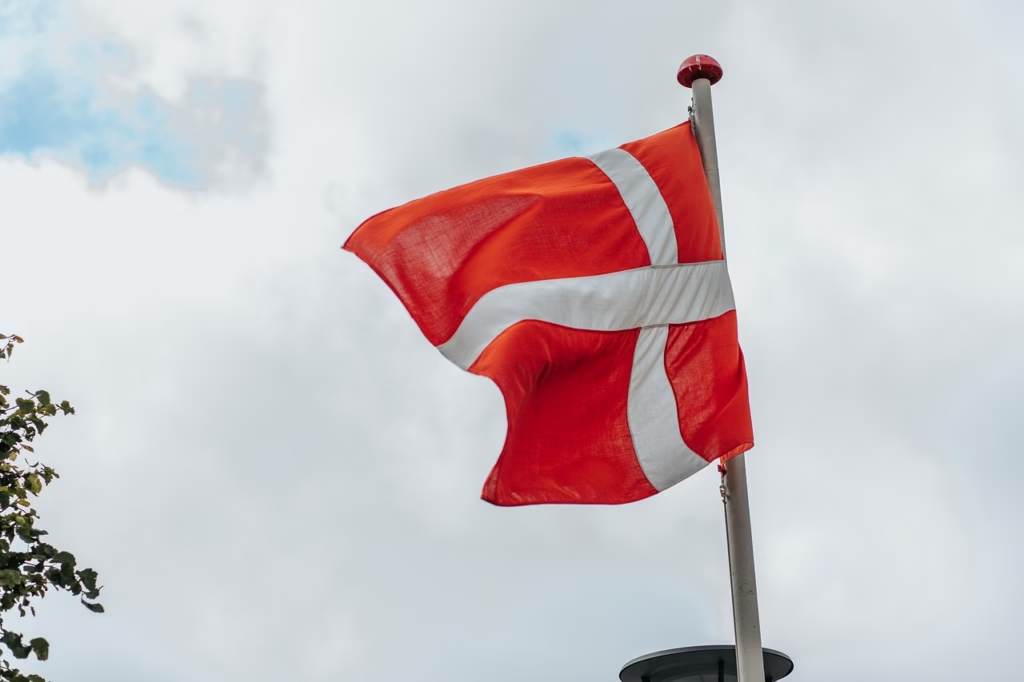
Denmark, as a member of the European Union, has adopted the common European drone regulation , established by the European Union Aviation Safety Agency (EASA). This legislation, in force since December 31, 2020, aims to harmonize flight rules among member states and is based on a risk-based approach to operations.
The European Framework: The Basis of Danish Regulation
European regulations classify drone operations into three main categories based on the level of risk. The vast majority of amateur and professional pilots operate in the “Open” category.
- Open Category: For low-risk flights. It does not require prior authorization from the civil aviation authority, but imposes compliance with strict rules.
- Specific Category: For flights with moderate risk (e.g., flights beyond the pilot’s visual line of sight). It requires a risk assessment and authorization from the competent authority.
- Certified Category: For high-risk flights, comparable to manned aviation (e.g., the transport of passengers or dangerous goods).
The Open Category: What You Need to Know
For most users, the Open category is the most relevant. To fly legally in this category in Denmark, several conditions must be met.
1. Operator registration
If your drone weighs more than 250 grams or is equipped with a camera (even if it weighs less than 250g), you must register as a drone operator. Registration takes place in your country of residence within the EU. You will receive a unique operator number that you must display clearly on all your drones.
2. Online training and exam
The pilot must pass an online exam to obtain a certificate of competence. Basic training and testing (subcategories A1/A3) are usually free and are conducted on the platform of your country’s civil aviation authority.
- A1/A3 Certificate: Allows you to fly with light drones (A1) or far from people (A3).
- A2 Certificate: A supplementary exam that authorizes flying closer to people with C2 class drones.
3. General Flight Rules
Once registered and certified, you must adhere to strict flight rules during each operation:
- The maximum flight altitude is 120 meters above the ground.
- The drone must always remain within the pilot’s direct line of sight ( VLOS principle – Visual Line of Sight ).
- Respect for people’s privacy is paramount. It is forbidden to film or photograph people without their consent in private places.
- It is forbidden to fly over gatherings of people.
- Respect the safety distances from non-involved persons, which vary according to the flight subcategory (A1, A2, A3).
Danish Specifics and Flight Zones
Although the framework is European, Denmark has defined its own geographical zones where drone flights are restricted or prohibited. It is essential to consult the official map before each flight.
The reference tool in Denmark is the website Dronezoner.dk . This interactive map provided by the Danish Transport Authority (Trafikstyrelsen) indicates all the restricted zones.
Typical restrictions include:
- Airports: Extensive exclusion zones (generally 5 km for large airports and 2 km for smaller airfields) are in place.
- Military areas: Flying over military installations and exercise areas is strictly prohibited.
- Urban and built-up areas: Specific rules apply. Danish regulations prior to 2021 were very strict regarding urban areas (“byområder”). Although European legislation is more flexible, it is crucial to check local restrictions on Dronezoner.dk.
- Nature protection zones: Many national parks and nature reserves are no-fly zones to protect wildlife.
- Critical infrastructure: Power plants, prisons, railways, main roads, etc.
Insurance
Third-party liability insurance is mandatory for operating a drone weighing more than 250 grams in Denmark. It must cover potential damage caused to third parties. If you are a visitor, it is strongly recommended that you check your insurance coverage is valid throughout the EU.
Conclusion: Fly Safely
Flying a drone in Denmark is a fantastic experience for capturing its stunning landscapes. However, safety and compliance are essential. In short, make sure you are registered, have passed the European exam, adhere to the flight rules for the Open category, and, most importantly, always check the map on Dronezoner.dk before taking off. Proper preparation ensures safe and legal flights.







Leave a Reply