
You’re probably wondering if your current drone is outdated compared to the enticing promises of the latest model. This DJI Mini 5 Pro vs. Mini 4 Pro comparison analyzes whether the new 1-inch sensor truly justifies the upgrade. Find out right now if the low-light performance improvements and expanded storage are worth it, or if you can save your money.
- The image sensor: the real leap forward?
- Beyond the image: new creative possibilities
- In flight: safety, autonomy and transmission
- Ease of use: the improvements we often overlook
- FPV review and verdict: who is the Mini 5 Pro for?
The image sensor: the real leap forward?
The switch to a 1-inch sensor: what it really changes
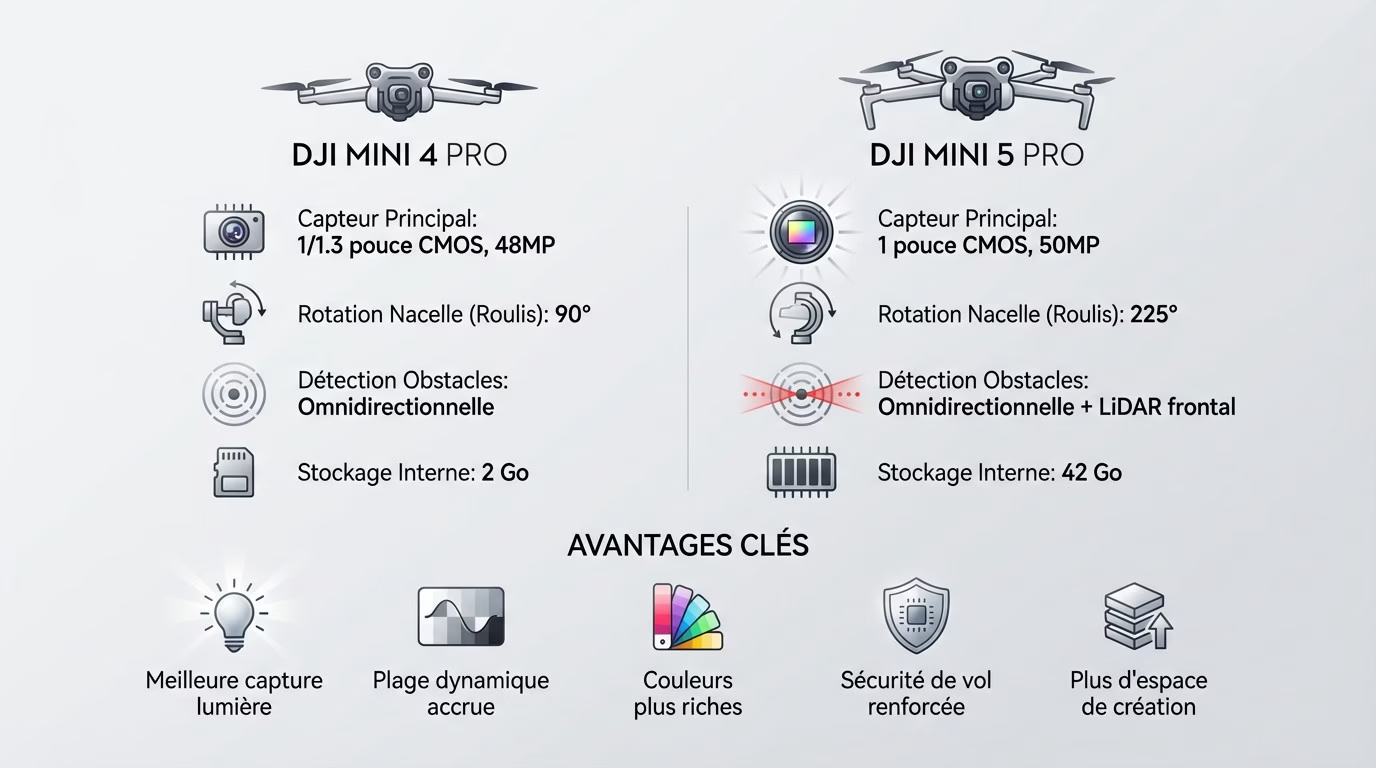
The switch to a 1-inch sensor on the Mini 5 Pro marks a real turning point compared to the 1/1.3-inch sensor of the Mini 4 Pro. On paper, it’s huge. In practice, it captures more light. The result: a much better dynamic range and richer colors, even in challenging conditions. For image purists, this improvement alone justifies the upgrade.
The battle of pixels: 50MP versus 48MP
The resolution jumps from 48MP to 50MP. Let’s be honest, this difference is imperceptible for most uses. The real gain doesn’t come from these extra pixels, but from the size of the sensor that houses them. Remember that image processing and RAW file quality matter far more.
Technical comparison: key figures
Here are the key technical differences for the DJI Mini 5 Pro vs Mini 4 Pro match.
| Characteristic | DJI Mini 4 Pro | DJI Mini 5 Pro |
|---|---|---|
| Main sensor | 1/1.3 inch CMOS, 48MP | 1-inch CMOS, 50MP |
| Max Video Resolution | 4K/100fps | 4K/120fps |
| Color profiles | D-Log M, HLG | D-Log M, HLG |
| Gondola rotation (Roll) | 90° | 225° |
| Obstacle detection | Omnidirectional | Omnidirectional + front-facing LiDAR |
| Flight autonomy | 34 minutes | 34 minutes |
| Internal storage | 2 GB | 42 GB |
| Transmission | OcuSync 4 | OcuSync 4 |
| FPV compatibility | Yes (Goggles 3 / RC Motion 3) | Not announced |
| Weight | < 249g | < 249g |
Take a close look at the sensor, the unique gimbal rotation, and the internal storage: these are the three major improvements. Our initial comparison of the Mini 5 Pro with the Mini 4 Pro already highlighted these specific points.
Beyond the image: new creative possibilities
Now that the raw specs are laid out, let’s see what these improvements actually mean for content creators.
Gondola rotation: plans that were previously impossible.
The Mini 5 Pro inherits a major feature often reserved for larger drones: extended gimbal rotation. On the roll axis, it now reaches 225°, a true technical feat.
Imagine the direct impact on your creativity. You can create dynamic roll shots or smooth inverted shots without attempting complex flight maneuvers. This is an undeniable advantage for achieving a truly cinematic result.
For videographers, this single technical function can be a compelling argument.
4K video: the devil is in the details (and the frame rate)
The Mini 5 Pro upgrades from 4K/100fps on the Mini 4 Pro to 4K/120fps on the Mini 5 Pro. This technical improvement allows for even smoother slow-motion footage during editing.
However, let’s be honest for a moment. For many of us, 100fps is already more than enough for quality slow motion.
The most significant improvement in video quality actually comes from the 1-inch sensor’s better low-light performance. It delivers cleaner images with considerably less digital noise.
Low-light performance: the mini 5 pro takes the lead
Analysis of the RAW files confirms it unequivocally: the Mini 5 Pro handles digital noise much better at high ISO sensitivities. Take, for example, a comparison at ISO 6400; the difference is clear.
Here’s why the DJI Mini 5 Pro vs Mini 4 Pro duel favors the new sensor:
- Improved management of visible noise in shadows.
- More accurate colours in low light conditions.
- More flexibility in post-production to recover dark areas.
In flight: safety, autonomy and transmission
A beautiful image is great, but the drone also needs to be pleasant and safe to fly. Let’s see if the Mini 5 Pro changes the game in this regard.
Obstacle detection: ever safer?
The Mini 4 Pro had already made a name for itself with its omnidirectional obstacle detection. It was the key selling point for worry-free flying. No more fear of silly crashes during flights.
Here, the DJI Mini 5 Pro vs. Mini 4 Pro comparison hinges on one detail: the addition of a front-facing LiDAR scanner. This sensor improves tracking accuracy, especially at high speeds. It performs better even in complex environments.
Let’s be honest, it’s not a radical change. But it’s a welcome additional layer of security.
Battery life: a few minutes that count
On paper, the battery life remains identical, with 34 minutes advertised for both models. This is good news considering the power increase. There’s no downside in that respect.
In reality, expect a slightly shorter actual flight time. That’s the usual variation with manufacturer data.
Clearly, the upgrade isn’t justified on this criterion alone. Battery life doesn’t change the situation.
Ocusync 4 transmission: a noticeable difference?
Both drones rely on the OcuSync 4 transmission system, or O4 for short. It’s an ultra-high-performance system that offers an enormous range. You also benefit from stable 1080p/60fps video transmission. It’s top-notch.
Honestly, there’s no major difference to note in that regard. If you’re coming from the previous model, you won’t see any changes. The Mini 4 Pro was already a big step forward compared to the Mini 3 in this specific respect.
Ease of use: the improvements we often overlook
Sometimes, the best improvements aren’t on the spec sheet, but in the small details that simplify life. That’s where the DJI Mini 5 Pro vs. Mini 4 Pro comparison reveals its hidden strengths in everyday use.
Internal storage: the end of full card anxiety?
The Mini 4 Pro was limited to 2GB of internal storage, which was insufficient. The Mini 5 Pro corrects this with 42GB of available space. The difference is enormous.
Forgetting your SD card is no longer a disaster. With 42GB of storage, you can easily record several sessions. It’s the perfect backup if your card is full or malfunctions.
This detail truly transforms the flying experience. It’s an immediate comfort that you appreciate on every flight.
Quicktransfer: Transfers that no longer drag on
The wireless protocol has been revised. The Mini 5 Pro finally adopts Wi-Fi 6, which is much more efficient and stable. The connection with the smartphone is now much smoother.
The speed has been increased from 30 Mbps on the previous model to 100 Mbps. In practical terms, your files arrive on your phone three times faster. You’ll no longer waste time waiting.
For those who edit directly on mobile, this is a valuable time saver.
Ergonomics and design: small adjustments, big comfort
The design remains familiar to keep the weight under 249g. However, the propeller attachment system has been redesigned for easier handling. You can feel that every gram has been optimized.
Here are the direct benefits of these adjustments for your sessions:
- A significant time saving during unpacking and repacking.
- Less risk of losing critical parts.
- A general improvement in the workflow in the field.
DJI Mini 5 Pro
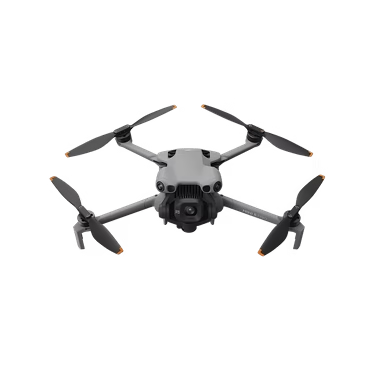
DJI’s new high-end compact drone: exceptional video quality, 3-axis gimbal, intelligent tracking and latest generation sensors.
See the DJI Mini 5 ProFPV review and verdict: who is the Mini 5 Pro for?
FPV compatibility: the unexpected advantage of the Mini 4 Pro
Think you’ve seen it all? Not so fast, immersion changes everything. The Mini 4 Pro shines with its compatibility with the DJI Goggles 3 and the RC Motion 3. It’s direct access to unprecedented flying sensations.
Oddly enough, the newcomer is lagging behind. No official compatibility information is announced at launch for the Mini 5 Pro. This is a frustrating omission for a machine of this caliber that aims to be ultra-comprehensive.
For those who want to fly with a helmet on right now, the choice is easy. The Mini 4 Pro remains the undisputed leader in this regard.
So, should we upgrade or not? The ideal profile for each drone
Let’s talk frankly about the DJI Mini 5 Pro vs. Mini 4 Pro comparison. The 5 Pro dominates in terms of raw image quality thanks to its new 1-inch sensor. The RAW files are much cleaner, especially in low light. It’s the choice for those with high visual standards.
The Mini 4 Pro, on the other hand, remains versatile and more affordable. If FPV interests you or you’re on a tight budget, hold onto it. It still does the job very well.
Do you already have version 4? The upgrade isn’t essential if the current quality is sufficient for you. The differences are sometimes subtle without zooming in heavily on the image.
However, if you’re coming from a Mini 3 or earlier, the leap is huge. The Mini 5 Pro is the new king. You can see the DJI Mini 5 Pro on Amazon or buy it on the official website .
The Mini 5 Pro sets a new standard thanks to its 1-inch sensor and creative options. If you’re looking for absolute video performance, this is the model for you. For more everyday use, the Mini 4 Pro remains a very solid choice. Weigh the pros and cons carefully before making your decision.





Leave a Reply