
Are you tired of noisy microphones that cost an arm and a leg, or that ultimately don’t live up to their promises? Me too, we all know: choosing a good microphone for your podcast, Twitch channel, or voiceovers is a real challenge. So when Rode releases its white PodMic for €109.99, naturally, we ask ourselves: could this be THE microphone that combines broadcast quality , stylish design, and ease of use? In this review, we dissect everything – from the integrated pop filter to the XLR connector, including the warm and professional voice reproduction – to tell you if this PodMic is truly worth the price, or if it’s just a nice gadget for busy influencers.

Introducing the Rode White PodMic: Broadcast-quality microphone
Main technical characteristics of the microphone
The Rode White PodMic is a dynamic microphone designed for podcasting and streaming . It features a pop filter and shock mount. Its 3-pin XLR connector requires an audio interface. With a frequency response of 50Hz to 15kHz, it captures voice accurately. Its cardioid polar pattern reduces ambient noise.
Cardioid directivity and sound characteristics
The PodMic’s cardioid polar pattern focuses on the voice, rejecting background noise. Its frequency response (50Hz-15kHz) is perfectly suited for both low and high-pitched voices. Optimized for podcasting, it delivers rich, detailed sound . On Amazon, it boasts a 4.7/5 star rating based on 7,098 reviews, a testament to its reliability.
Design and ergonomics of the white Rode PodMic
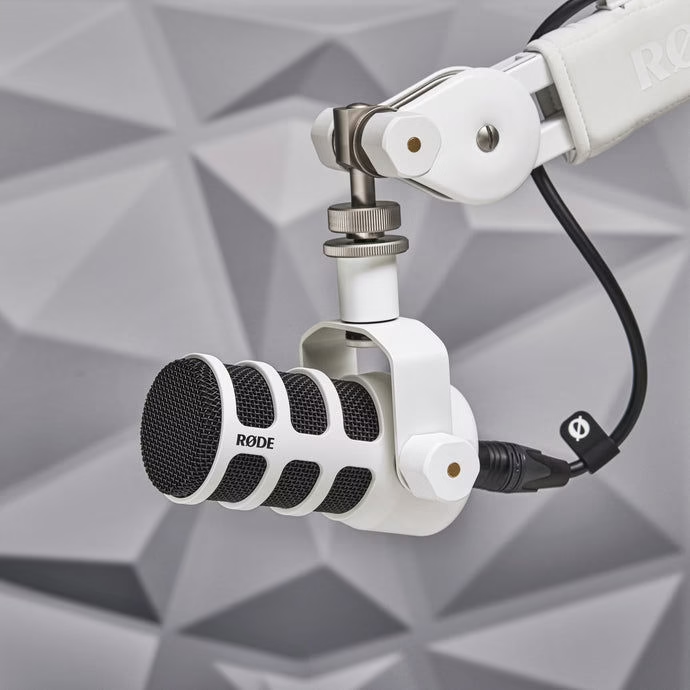
The white PodMic boasts a minimalist aesthetic with a matte finish. Measuring 17.2 cm x 10.9 cm and weighing 937 grams, it integrates discreetly into any setup . Its metal construction ensures durability. In the studio, its clean look complements boom arms like the PSA1+.
@keyframes pulse { 0% { box-shadow: 0 0 0 0 rgba(0, 0, 0, 0.6); } 70% { box-shadow: 0 0 0 12px rgba(0, 0, 0, 0); } 100% { box-shadow: 0 0 0 0 rgba(0, 0, 0, 0); } }
Swivel stand and sturdy construction
The integrated swivel mount allows for flexible positioning, with 5/8″ and 3/8″ threads. The all-metal construction and stainless steel grille ensure long-lasting durability . Despite its weight, it remains stable on an articulated arm. Clamping tabs prevent unwanted movement during recording.
Target audience and recommended uses
Podcasters, streamers, and voice-over artists will find this microphone a professional solution. Whether amateur or pro, it’s suitable for those seeking clear, noise-free sound . Ideal for indoor recordings, it excels in controlled environments.
Legend: Rode PodMic’s suitability level for different use cases
| Use Cases | Level of suitability | Comments |
| Podcasting | Excellent | Cardioid directivity ideal for interviews and studio recordings |
| Streaming | Very good | Requires a compatible XLR interface and a powerful preamp for broadcast quality |
| Gaming | Very good | Robust construction and optimal ambient noise rejection for long sessions |
| Professional voice-over | Very good | Warm signature sound and built-in pop filter for HD recordings |
| Noisy environment | Excellent | Cardioid directivity minimizes external sound interference |
| Music recording | Inappropriate | Non-linear dynamic microphone for acoustic instruments or detailed high frequencies |
| Mobile use | Average | Weighing 937g and requiring XLR accessories, which limits portability |
Specific applications of the white Rode PodMic
The PodMic excels at podcasting, Twitch streaming , and voiceovers. Its cardioid polar pattern allows it to perform well even in poorly soundproofed spaces. In the studio, it delivers a warm and detailed sound. For gamers, its robustness and ambient noise rejection are a plus. However, its weight and XLR connector limit its portability.
Sound quality and performance of the White PodMic
Clarity and richness of the vocal recording
The Rode White PodMic delivers clear, warm, and precise sound. Optimized for voice, it reduces background noise while capturing detail. Its frequency response (50Hz-15kHz) is perfectly suited for podcasting and streaming. Testing this microphone, I found the sound to be professional, ideal for voice-overs .
The PodMic’s slightly warm sound signature balances bass and treble. It captures vocal nuances with finesse, whether the voice is deep or high. On Amazon, reviews highlight its ability to avoid distortion, even at low volumes. Compared to other microphones, it rivals benchmarks like the Shure SM7B , according to podcasters.
Pop filter and unwanted noise management
The PodMic’s built-in pop filter reduces plosives (“p”, “b”) without any additional accessories . When testing phrases like “dad” or “build”, I noticed a significant reduction in breath sounds. However, for ultra-clean sound, an external filter is still useful. Its effectiveness depends on the speaking distance.
The Rode PodMic’s cardioid polar pattern rejects ambient noise, even in a moderately soundproofed room. Its internal suspension dampens vibrations from the surface. However, it remains susceptible to electromagnetic interference (e.g., nearby USB cables). In a controlled environment, it delivers a clear recording, but be aware of background noise outdoors .
Distance and positioning for optimal results
For optimal sound, speak 5-15 cm from the PodMic . This proximity activates the proximity effect, enhancing the bass. A distance of less than 5 cm can saturate the signal, especially with a loud voice. Experiment with different positions to find the right balance between warmth and clarity.
Here are some tips to optimize the use of the white Rode PodMic :
- Speak 5-15 cm from the microphone to activate the proximity effect and a richer sound
- Tilt your head slightly to reduce plosives , even with the built-in filter
- Avoid noise sources (keyboard, fan) near the microphone
- Use a robust articulated arm for stable and flexible positioning.
- Choose a high-quality XLR cable for interference-free audio transmission .
Adjust the microphone placement according to your voice: lower voices benefit from a shorter distance (5-10 cm), while higher voices gain clarity at 15 cm. In noisy environments, angle the microphone to avoid sources of interference. With a little adjustment, the PodMic delivers professional sound , whether in the studio or live.
Connectivity and compatibility of the Rode White PodMic
XLR connection and compatible audio interfaces
The Rode PodMic uses a 3-pin XLR connector, typical of professional microphones. To use it, you need an audio interface or a mixing console. Phantom power must remain disabled. In short, it’s not a plug-and-play USB microphone: you’ll need to budget for an interface.
To fully utilize the PodMic, opt for interfaces with powerful preamps . The Rodecaster Pro II, Elgato Wave XLR, or Focusrite Vocaster Two are excellent choices. The Rodecaster Pro II provides 76dB of gain, ideal for this power-hungry microphone. With a Behringer Xenyx QX1002, some users push the gain to the maximum for sufficient vocal level.
Cables and accessories needed for installation
The PodMic does not come with an XLR cable or stand, so you’ll need to budget extra for these items. A high-quality XLR cable, such as the Rode XLR-3 or Canare Star Quad, is essential to avoid interference. A sturdy boom arm (e.g., PSA1+) or a tabletop stand (e.g., DS1) is also necessary to support its 937 grams.
For a premium setup, the Rode PSA1+ tonearm is a best-seller, often sold in bundles. The WS14 pop filter (available in white) can complete the setup. Premium XLR cables, such as the Canare Star Quad with four copper conductors, offer better noise rejection. These accessories improve stability and sound quality , especially in noisy environments. To equip yourself, you can also
Buy a Rode microphone from the Official Store .
Gain and nutrition requirements
The PodMic is gain-intensive, requiring powerful preamps . Its -57dBV sensitivity means that the gain on the interface often needs to be pushed to the maximum. Using a Behringer Xenyx QX1002, one user had to speak very close to the microphone to compensate. Phantom power, while not necessary, should be disabled to avoid interference.
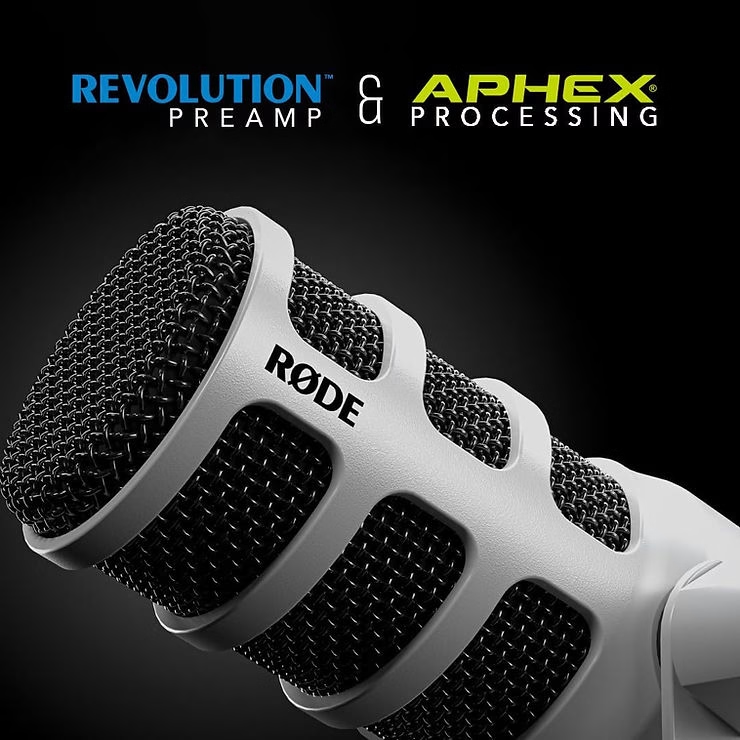
Interfaces like the Rode AI-1 or Rodecaster Pro II are optimized for this microphone. The Rodecaster Pro II, with its Revolution preamps, provides sufficient gain without excessive boosting. For those on a tight budget, the Rodecaster Duo remains a viable alternative. On the other hand, basic interfaces (e.g., the Focusrite Scarlett Solo) may struggle to provide adequate vocal levels without background noise.
The Rode White PodMic stands out with its professional sound quality, robust metal alloy construction, and integrated pop filter that simplifies recording. Ideal for demanding podcasters and streamers, it requires an XLR audio interface to unlock its full potential. If you’re looking for a broadcast-quality dynamic microphone, don’t delay: its affordable price and Rode warranty make it a great deal to boost your studio .







Leave a Reply