
The use of drones, whether for leisure or commercial purposes, is becoming increasingly popular in the UK. However, to ensure the safety of airspace and the public, strict regulations are in place, managed by the Civil Aviation Authority (CAA) . Understanding these rules is essential for any drone pilot. This article will guide you through the key aspects of UK drone legislation.
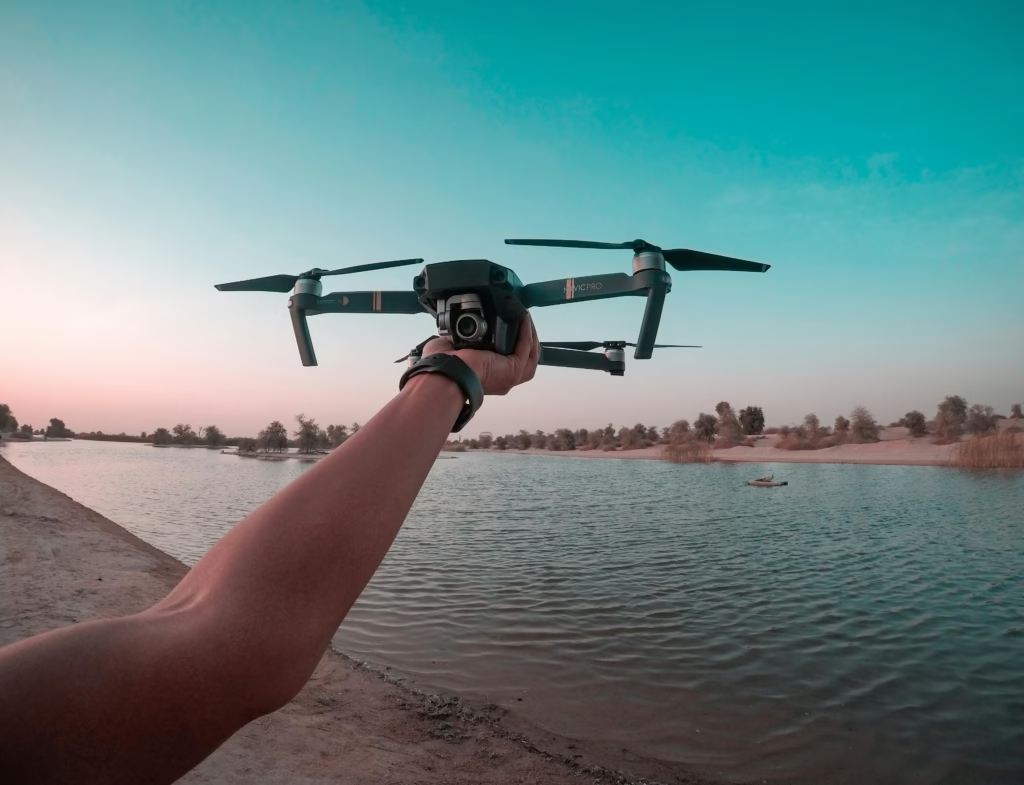
Registration: A Mandatory Step
Before flying most drones, you must register with the CAA. This requirement applies to anyone who owns a drone weighing 250g or more, or a drone weighing less than 250g equipped with a camera. Registration consists of two separate parts:
- Operator ID : Anyone responsible for a drone must register. You must be over 18 years old. The ID obtained must be visibly displayed on all your drones.
- The Flyer ID (Pilot ID) : Anyone wishing to fly a drone must pass a free online theory test to demonstrate their knowledge of safety rules. Upon successful completion, you will receive a Flyer ID. Children under 13 can take the test but must be supervised by an adult holding an Operator ID.
The Fundamental Rules: The Drone and Model Aircraft Code
The CAA has summarized the most important rules in a simple guide called “The Drone and Model Aircraft Code”. The basic principles, which apply to most pilots, are as follows:
- Never endanger people or property with your drone.
- The drone must always remain within your direct line of sight (VLOS – Visual Line of Sight).
- Do not fly higher than 120 meters (400 feet) above the ground.
- Stay away from aircraft, airports and airfields.
- Respect the privacy of others, especially with regard to the use of cameras.
- Do not fly over crowds, large gatherings, or crowded stadiums.
Flight Categories
British regulations classify drone operations into three risk categories: Open, Specific and Certified.
The Open Category applies to the majority of recreational pilots and many professionals. It is considered low-risk and does not require prior CAA authorization, provided strict rules are followed. It is subdivided into subcategories based on drone weight and proximity to people:
- A1 : Allows flying over uninvolved people (but not crowds) with very light drones (less than 250g).
- A2 : Allows flying near people (but at a minimum safety distance) with drones weighing up to 2kg, but requires an additional qualification (the A2 CofC certificate).
- A3 : Requires flying away from people and residential, commercial, industrial, and recreational areas. This category applies to heavier drones or pilots without an A2 CofC qualification.
The Specific and Certified categories relate to higher risk operations (e.g., flying beyond visual line of sight, transporting cargo) and require operational authorization from the CAA.
No-Fly Zones
It is illegal to fly a drone in certain areas for reasons of public safety and national security. These restrictions are crucial to understand before each flight.
- Airports and airfields : Flight Restricted Zones (FRZs) are in place around airports. Entering these zones without authorization is a serious offense.
- Sensitive sites : This includes prisons, nuclear power plants, military bases, and certain government buildings.
- Temporary events : Restrictions may be temporarily put in place during large public events, festivals, or major incidents.
It is the pilot’s responsibility to check aeronautical charts and use dedicated applications (such as DroneSafe or NATS Drone Assist) before each flight to ensure that they do not enter a prohibited area.
Conclusion: Fly Responsibly
Drone legislation in the UK may seem complex, but it’s based on a simple principle: safety. By registering, understanding the Drone Code, and being aware of your surroundings, you can enjoy your drone legally and safely. The key is responsibility : the safety of the airspace and people on the ground depends on every pilot.





Leave a Reply