
Australia, with its vast and spectacular landscapes, is an ideal playground for drone pilots. However, to ensure the safety of the airspace and people on the ground, strict regulations are in place. The Civil Aviation Safety Authority (CASA) is the government body that regulates the use of drones, or remotely piloted aircraft (RPAs). Australian legislation primarily distinguishes between two types of use: recreational flight and commercial flight.
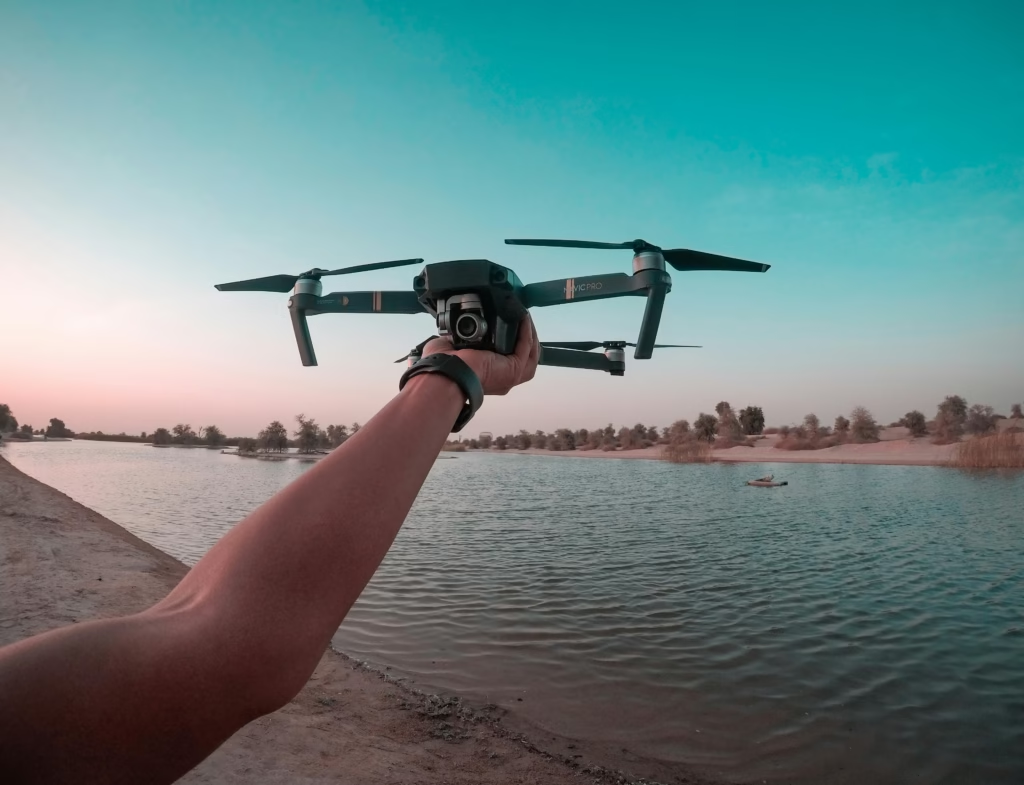
The basic rules for recreational flying
If you use your drone for fun or as a hobby, you must follow the standard flight rules, also known as “Drone Safety Rules”. These rules are designed to be simple and easy to remember.
- Never fly higher than 120 meters (400 feet) above the ground.
- Always keep your drone within direct line of sight (DLOS) , meaning you should be able to see it with your own eyes without assistance (excluding eyeglasses).
- Never fly your drone at night, or through clouds or fog.
- Stay at least 30 meters away from other people.
- Do not fly your drone over populated areas such as beaches, crowded parks, or sporting events.
- Respect the privacy of others: do not film people or their property without their consent.
- If your drone weighs more than 250 grams, you must keep it at least 5.5 kilometers away from controlled airports.
- Only fly one drone at a time.
- Never create danger to another aircraft, person or property.
It is also crucial to check CASA-validated safety applications (such as “OpenSky”) before each flight to be aware of local airspace restrictions.
Stealing for commercial or professional purposes
As soon as you use a drone for work or business purposes, the rules change. This includes selling photos or videos, inspecting sites, conducting research, or any other income-generating activity.
Drones weighing less than 2 kg (Excluded category)
For commercial operations with a drone weighing less than 2 kg, you can fly without obtaining a pilot’s license (RePL), provided you meet certain conditions:
- You must obtain an Airman Reference Number (ARN) from CASA.
- You must register your drone with CASA.
- You must comply with the standard operating conditions , which are very similar to the safety rules for recreational flying (do not fly at night, above 120m, etc.).
This category allows many professionals (photographers, real estate agents) to start their activities more easily, while maintaining a secure framework.
Licenses and certifications for advanced operations
If you wish to fly a drone weighing more than 2 kg for commercial purposes, or if you want to operate outside of standard conditions (e.g., flying at night, near people, or beyond direct line of sight), you will need more advanced certifications.
- Drone pilot license (RePL – Remote Pilot Licence) : This is your personal qualification as a pilot. It is required for more complex operations and to work for a certified company.
- Drone Operator’s Certificate (ReOC – RPA Operator’s Certificate) : This is a certification for the company or organization that conducts the flights. It details the types of operations authorized, safety procedures, and risk management.
Mandatory drone registration
Since 2021, drone registration has become a key step in Australian regulation.
- For commercial use: All drones, regardless of weight, must be registered before being used for professional purposes.
- For recreational use: Only drones weighing more than 250 grams need to be registered.
Registration is done online via the myCASA portal and is generally free for recreational pilots. It must be renewed annually.
Conclusion: Fly safely and responsibly
Australian drone legislation aims to strike a balance between innovation and safety. Whether you’re an amateur capturing sunsets or a professional inspecting infrastructure, the golden rule is to know and abide by the regulations. Before taking off, make sure you understand which category you fall into, register your drone if required, and always prioritize safety. For the most up-to-date and detailed information, the official CASA website remains the most reliable source.





Leave a Reply