
Battery life is one of the first criteria people look at before buying a drone. And with a 360° drone, which captures absolutely everything happening around it, this question becomes even more important.
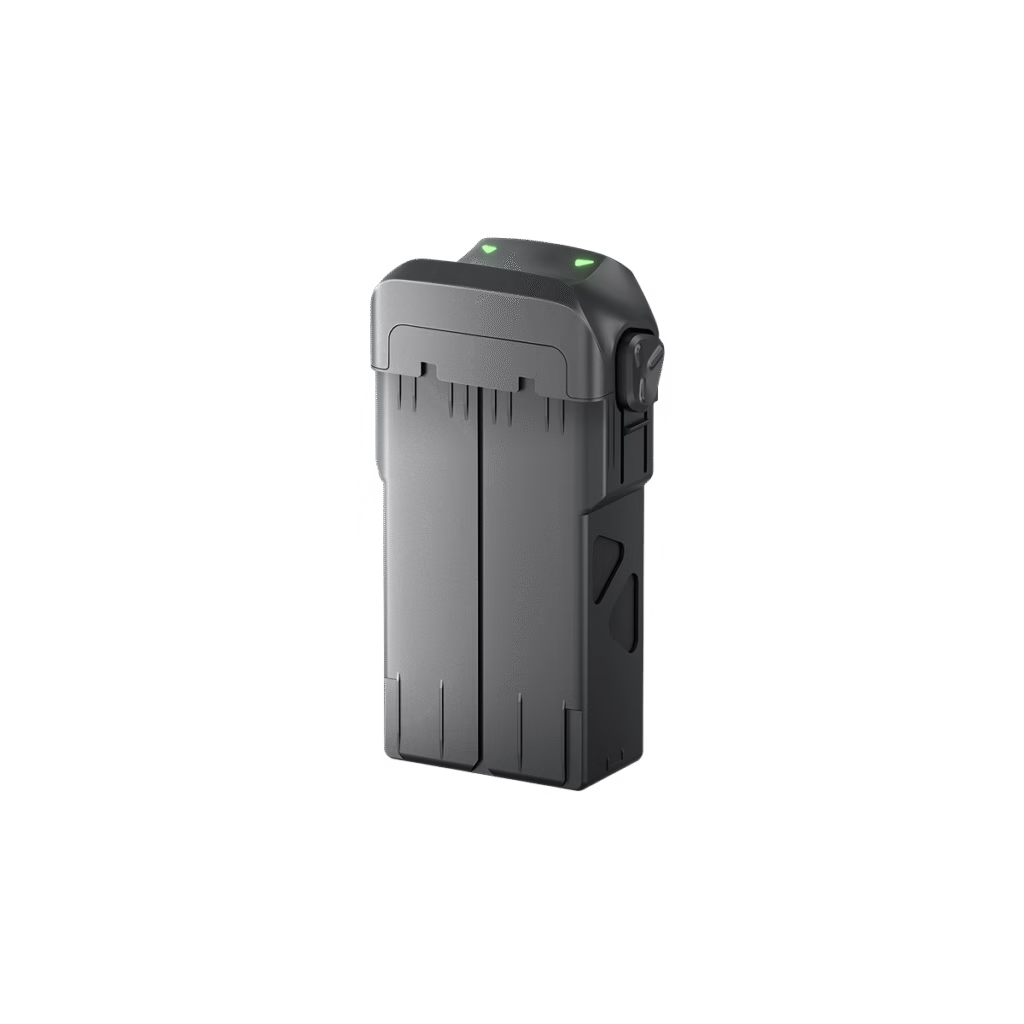
The Antigravity A1 comes with two types of batteries: a standard version advertised at 24 minutes , and a high-capacity version offering up to 39 minutes . But how do these figures actually hold up in real-world use?
This article analyzes actual battery life, differences between batteries, intelligent hub management, and how to maximize your flight time.

🔋 Two battery options: 24 min or 39 min
The Antigravity A1 offers two battery versions to suit all uses.
Standard battery — 24 minutes
- Ideal for quick flights
- Sufficient for spontaneous intake
- Very lightweight and perfectly integrated
- Perfect for occasional users
Long battery life — 39 minutes
- Designed for regular creators
- Useful for longer journeys (hiking, exploration)
- Allows you to film multiple scenes without reloading.
- Essential for travel
Real difference on the ground
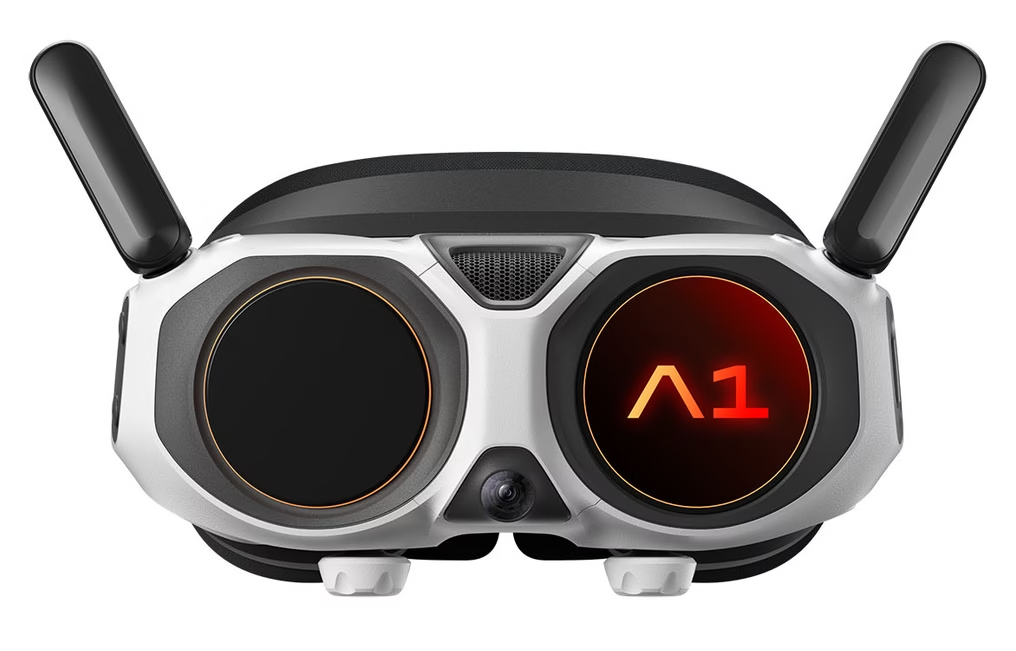
Battery life varies depending on wind, altitude, acceleration and the use of Vision glasses.
➡️ In real-world conditions , we are generally around:
- 20–22 minutes with the standard battery
- 33–37 minutes with the long-lasting battery
These are excellent results for a 360° immersive drone.
🕒 Real-world battery life: what to expect
Calm flight / ideal environment
The A1 is performing very well in line with the announced figures.
In smooth flight, the range remains very close to the technical specifications.
In dynamic flight (lots of movement)
A slight decrease is observable, which is normal:
- accelerations
- changes of direction
- stabilization corrections
In a demanding environment
Wind, cold, and altitude can reduce battery life, as with all drones.
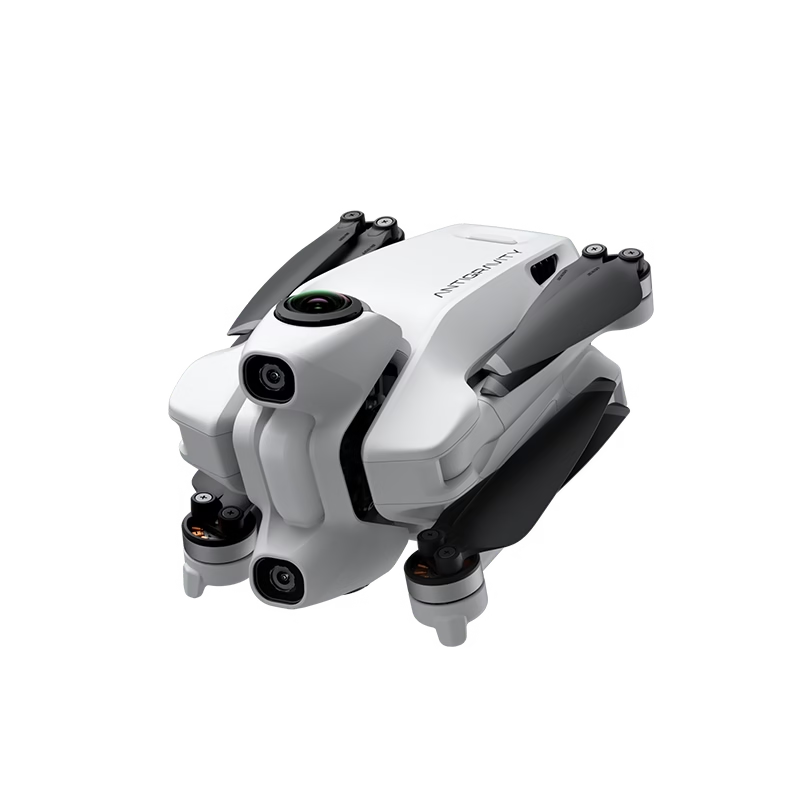
However, the Antigravity A1 remains particularly stable, notably thanks to its lightweight design and aerodynamic design.
⚡ Power Pooling: The innovation that changes everything
This is one of the smartest features of the Antigravity ecosystem.
How does it work?
The charging hub automatically redistributes energy between the batteries so that each one is optimized as much as possible :
- automatic balancing
- optimization of load cycles
- better efficiency across multiple batteries
Benefits
- No need to monitor each battery
- Faster charging overall
- Ideal for continuous flying sessions
- Huge boost for creators who shoot several hours a day
Power pooling offers a real productivity gain .
⚖️ Battery life comparison: Antigravity A1 vs other drones
Facing FPV drones
- Classic FPV: 3 to 8 minutes
- Antigravity A1: up to 39 minutes
➡️ The A1 literally buries FPV in terms of flight time.
Compared to mini-drones (e.g., DJI Mini 4/5)
The autonomy levels are similar, but the uses differ:
- DJI Mini: Precise directional flight
- A1: One single flight = dozens of shots thanks to 360° capture
➡️ The A1’s autonomy is more cost-effective in terms of the variety of plans per flight .
🧠 How to optimize the battery life of the Antigravity A1
1. Adopt a smooth flight
Avoid sudden climbs, maintain smooth trajectories.
2. Preserve the batteries
- keep them warm before the flight
- Avoid storing them full or empty.
- Do not peel off below 15%
3. Monitor the weather
Wind consumes more energy.
Cold temperatures reduce the chemical performance of batteries.
4. Use Power Pooling Intelligently
Always put the batteries back in the hub between flights to save a few extra minutes.
🧳 Should I choose the 24-minute or 39-minute battery?
Choose the standard battery (24 min) if:
- you do short flights
- you want to reduce your budget
- You film quick scenes (vlogs, quick clips)
Choose the long-life battery (39 min) if:
- Do you travel often?
- You film landscapes, hikes, waterfalls
- You want to reduce the number of takeoffs
- you are a regular content creator
➡️ For the majority of users, the 39-minute battery is the best choice.
🏁 Verdict: Is the battery life of the Antigravity A1 satisfactory?
Yes.
The Antigravity A1 offers battery life that is above average for a drone weighing less than 250g, with a strategic advantage:
👉 A single flight generates more usable shots than a conventional drone , thanks to 360° capture and post-production cropping.
With the 39-minute battery + Power Pooling, the A1 becomes a particularly high-performing drone for creators, vloggers, travelers and lovers of immersive shots.





Leave a Reply