
If you want the short answer: RockSteady 3.0 is often the simplest and most reassuring option for filming sports, cycling, motorcycling, or walking without spending time in post-production. FlowState , on the other hand, becomes more interesting if you want to reframe the footage afterward , lock the horizon, and maintain more flexibility in your editing, especially in the Insta360 world.
In other words: DJI often wins in terms of immediate simplicity , while Insta360 takes the lead as soon as you want more creative freedom . Here’s a clear comparison to help you choose based on your actual needs.
Quick verdict
- You mainly film sports and you want a clean result without complicating your life: RockSteady 3.0.
- You like to reframe, lock the horizon and exploit Insta360 tools: FlowState.
- If you’re hesitating between two specific cameras: also check out our comparison of the Insta360 Ace Pro 2 vs DJI Osmo Action 6 .
Why this comparison really matters
On paper, both technologies promise smooth video. In practice, they don’t excel in the same areas. RockSteady 3.0 focuses on very convincing stabilization directly from the camera. FlowState goes further when you start using reframing, horizon locking, and post-production editing .

RockSteady 3.0: What it does better
RockSteady 3.0 remains a reliable choice if your goal is simple: to film while running, cycling, hiking, motorcycling, or traveling with smooth results without needing to use additional software. This is what people often appreciate about DJI: you activate it, you film, and the result is already clean.
- Quick setup : very little friction to start filming.
- Excellent performance for sports : shocks are well absorbed during classic movements.
- Simple workflow : little or no post-processing required.
- DJI cameras are often very reassuring in the field for pure action use.
If your goal is to quickly produce a clean video, DJI maintains a practical advantage . This is even more true if you prioritize a camera designed for action and immediate fluidity.
FlowState: what it does better
FlowState becomes very powerful if you’re looking for more than just stabilization. The Insta360 ecosystem often allows for more advanced cropping , horizon locking , and creative control . For a creator who likes to adjust their shot after filming, this is a real advantage.
- Horizon lock is very convincing for keeping an image straight more easily.
- Flexibility in post-production thanks to the tools of the Insta360 application.
- A very good choice for creators who like to reframe or refine their shots.
- A more creative approach than a purely “activate and forget” one.
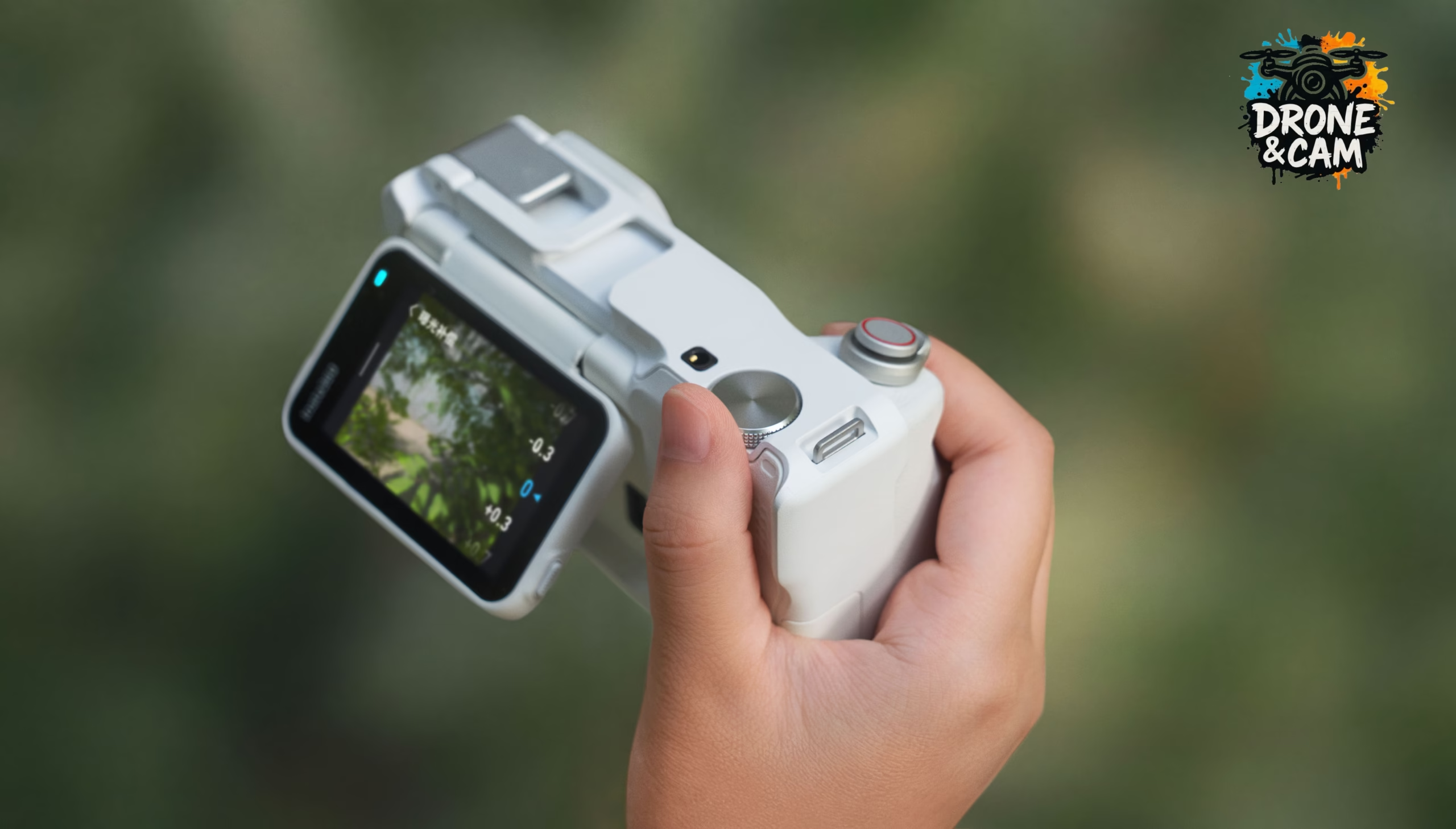
If you’re filming vlogs, immersive shots, or content that you like to refine afterward, the Ace Pro 2 is often more enjoyable to use thanks to FlowState, reframing, and the Insta360 ecosystem.
RockSteady 3.0 vs FlowState depending on your use
| Use | The most logical | For what |
|---|---|---|
| Running, cycling, hiking, motorcycling | RockSteady 3.0 | Simpler, very effective right away, little touch-up needed afterwards. |
| Vlog and creative plans | FlowState | More freedom to reframe and optimize the final result after filming. |
| 360 video and horizon lock | FlowState | Insta360 maintains a real advantage in this world. |
| Use pure and fast action | RockSteady 3.0 | Direct workflow, very reassuring for filming without thinking. |
| A creator who enjoys post-production | FlowState | More flexibility if you want to fine-tune your framing and rendering. |
The real verdict
If you ask me which is more efficient for everyday use , I’d say this: RockSteady 3.0 is simpler to use , while FlowState is more flexible . So, which is “best” depends less on the specs than on how you film.
- You want to film quickly, often, and get a clean video immediately: DJI / RockSteady.
- You want more creative freedom, reframing and better post-processing comfort: Insta360 / FlowState.
To go further, you can also read our full comparison between the Insta360 Ace Pro 2 and the DJI Osmo Action 6 , our article on the DJI Osmo Nano for sports , or the dossier on the Insta360 Ace Pro 2 Xplorer Series .
Two concrete options depending on your usage
If you want a simple and effective action cam for sports: the DJI Osmo Action 6 remains a very consistent choice to enjoy RockSteady 3.0 without any hassle.
If you want more creative flexibility and a very strong ecosystem for reframing: the Insta360 Ace Pro 2 is definitely worth a look.
Quick FAQs
Is FlowState better than RockSteady 3.0?
Not in all cases. FlowState is often better for cropping, horizon lock, and the Insta360 ecosystem. RockSteady 3.0 remains formidable if you primarily want to film quickly with an immediately clean result.
Which stabilization system should I choose for running or cycling?
For simple, on-the-ground use, the RockSteady 3.0 is often the most obvious choice. It inspires confidence with its ease of use and excellent performance during typical movements.
Which stabilization should I choose for vlogging or creative content?
If you like to reframe, retouch or optimize your shot after filming, FlowState maintains an advantage thanks to the Insta360 ecosystem and its post-processing tools.





Leave a Reply