
In recent years, action cameras have been miniaturizing at an incredible rate. Gone are the days when you had to carry a bulky GoPro in a large case: now, a camera that fits in your pocket can film in 4K, be waterproof, and capture your best memories.
That’s precisely the promise of the DJI Osmo Nano , DJI’s micro camera that weighs only 52g and attaches anywhere thanks to its magnetic system. Waterproof up to 10m, it presents itself as an ideal companion for water sports, snorkeling, or simply a day at the pool. But how does it really perform underwater? We wanted to test it in real-world conditions.

Design and promise of waterproofing
The DJI Osmo Nano was designed for use without a housing, down to a depth of 10 meters. This is already a major advantage compared to other cameras that require additional accessories. With its tiny size (57 × 29 × 28 mm) and feather-light weight (52 g), it’s barely noticeable once attached to a headband or diving mask strap.
DJI specifies, however, that prolonged underwater use is not recommended, and that the multifunction module (with OLED screen and additional battery) is only IPX4 certified, meaning it is splash-proof but not waterproof. Therefore, you should only use the camera on its own for your underwater sessions.
Compared to a GoPro Hero 13 Black (10m without housing) or an Insta360 X4 (also 10m), the DJI Osmo Nano is in the same category, but with one advantage: it is much more compact.
DJI Osmo Nano
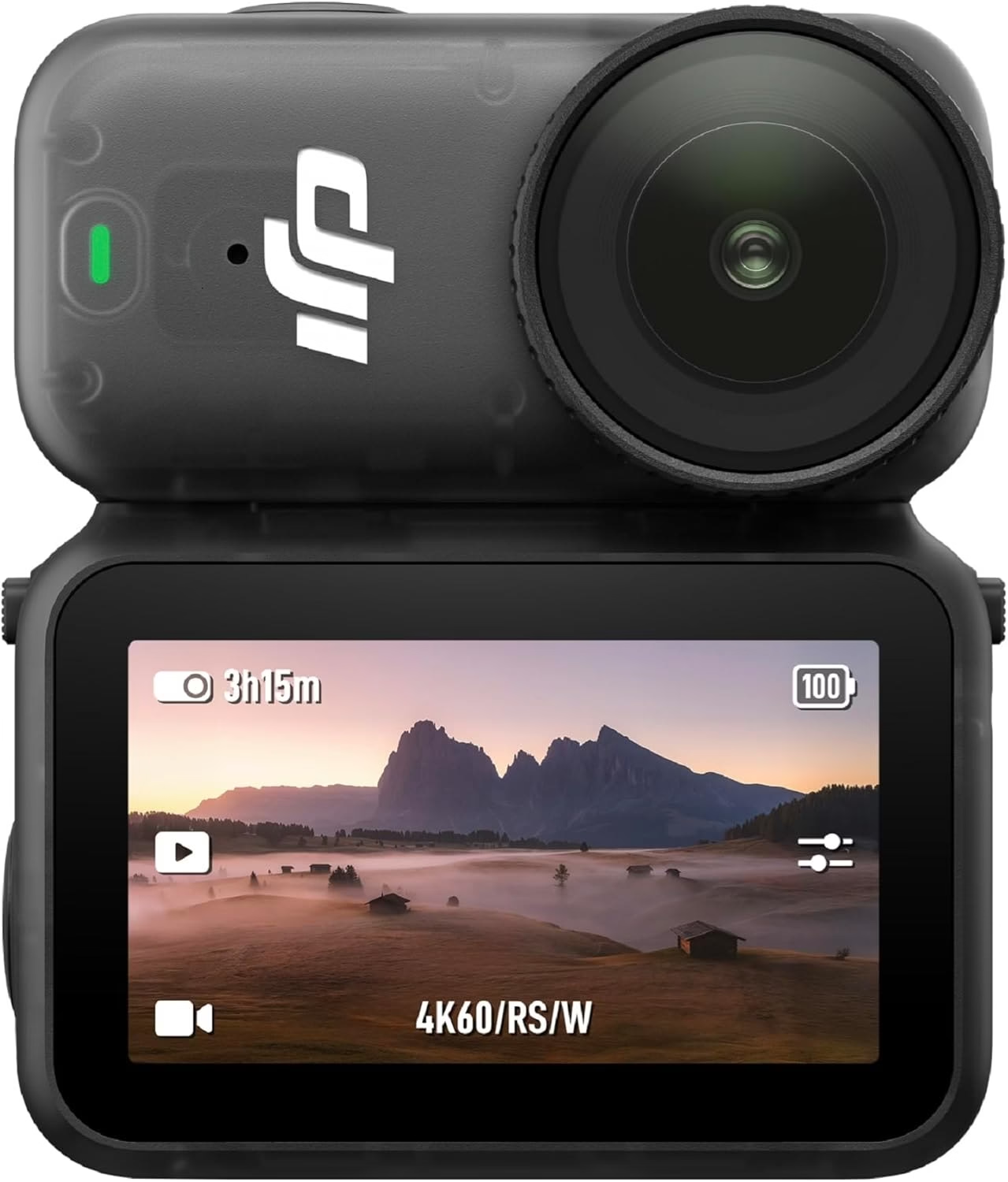
Ultra-compact micro camera with 1/1.3″ sensor, 4K/60fps video, 4K/120fps slow motion and convenient magnetic mount!
Pool test
First step: off to the pool to check if the DJI Osmo Nano lives up to its promises.
Installation is a breeze. Thanks to its magnetic system, it can be quickly attached to a clip or headband without fear of it slipping. Once underwater, the camera loses none of its responsiveness. Triggering is instantaneous, and the RockSteady 3.0 stabilization works even underwater.
In terms of image quality, the 4K/60fps videos are smooth and detailed. Surface reflections are well managed, and the ultra-wide angle (143°) captures the entire scene. However, like all action cameras, the colors can sometimes have a slightly blue tint, especially in shallow depth of field without a filter. Nothing dramatic: a quick correction in DJI Mimo fixes it.
Tip: Always rinse the DJI Osmo Nano with clean water after immersion to avoid chlorine or salt deposits.
Sea test: snorkeling and light diving
The real test for the DJI Osmo Nano is salt water. We tested it during a snorkeling session a few meters deep.
The waterproofing is perfect. Even after several minutes underwater, there’s no sign of condensation inside. RockSteady 3.0 stabilization and HorizonBalancing (±30°) ensure stable footage, even while swimming.
In terms of image quality, the camera takes full advantage of its 1/1.3″ sensor to handle contrasts well. Fish and coral stand out with beautiful colors, especially in 4K/60. At greater depths (6 to 8 m), the image naturally loses brightness, but the SuperNight mode manages to limit digital noise and salvage the shot.
However, be aware that the DJI Osmo Nano is not designed for scuba diving. For depths of 10 meters or more, it’s best to use a dedicated camera with a reinforced waterproof housing.
Underwater image quality
In bright sunlight, the videos captured by the DJI Osmo Nano are stunning for such a compact camera. The 10-bit D-Log M profile is a real asset for those who want to correct colors in post-production.
In 4K/120 fps, slow motion delivers a spectacular result, especially in aquatic scenes such as falling into a pool or diving. In Full HD 240 fps, you can even achieve very smooth slow-motion effects.
Compared to a GoPro Hero or an Insta360 GO Ultra , the DJI Osmo Nano stands out for its raw image quality thanks to its 1/1.3″ sensor and its 10-bit D-Log M profile. While the Insta360 focuses on its creative tools and ecosystem of accessories (AI modes, automated editing, POV accessories), DJI prioritizes simplicity and direct performance.
👉 To sum up:
The Insta360 GO Ultra appeals to those who want to multiply angles, add creative effects and enjoy easy editing via the app.
The DJI Osmo Nano impresses with its high-end performance and reliable waterproofing.
DJI Osmo Nano
Ultra-compact micro camera with 1/1.3″ sensor, 4K/60fps video, 4K/120fps slow motion and convenient magnetic mount!
Autonomy and extended underwater use
The DJI Osmo Nano alone lasts approximately 90 minutes in Full HD and 50 to 60 minutes in 4K. For longer sessions, it will be necessary to remove it from the water to recharge it using its multi-function module.
On the plus side, the module recharges the camera to 80% in just 20 minutes, allowing you to quickly record multiple shots. However, remember that this module is not waterproof and must be kept dry.
One other point to note: cold water can affect battery life. But overall, the DJI Osmo Nano performs well for its size.
Useful accessories underwater
To get the most out of the DJI Osmo Nano in aquatic environments, a few accessories are recommended:
- Glass lens protector to prevent scratches.
- Magnetic headband or mask attachment for snorkeling.
- ND filters or color correctors (red/orange) to rebalance the white balance underwater.
Even though DJI does not offer a specific case for the Nano, it remains compatible with several mounts in the Osmo range and third-party accessories.
Limitations to be aware of
- The waterproofing is reliable but limited to a maximum depth of 10m . This is not sufficient for scuba diving.
- The internal storage (64 or 128 GB) can fill up quickly with 4K videos. Remember to regularly offload files to the module via microSD.
- Like any miniature camera, the DJI Osmo Nano remains sensitive to difficult lighting conditions.
Verdict: a reliable mini camera for water, but not for deep-sea use.
The DJI Osmo Nano is a great success for water sports enthusiasts. Compact, lightweight, and easy to use, it films in 4K with amazing quality and handles swimming pools, the sea, and snorkeling without any problems.
For content creators, travelers and athletes, it’s an ideal ally for capturing fun moments underwater without carrying heavy equipment.
On the other hand, if your goal is to dive to 20 or 30m, it’s better to opt for a camera with a specialized housing.
👉 So, ready to take the DJI Osmo Nano underwater to film your best aquatic adventures?






Leave a Reply