
Thailand, with its breathtaking landscapes, idyllic beaches, and majestic temples, is a dream destination for photographers and videographers. The desire to capture these wonders from the sky is strong, but be warned: drone regulations are particularly strict and complex . Flying without authorization can result in heavy penalties. Here’s everything you need to know to use your drone legally in Thailand.
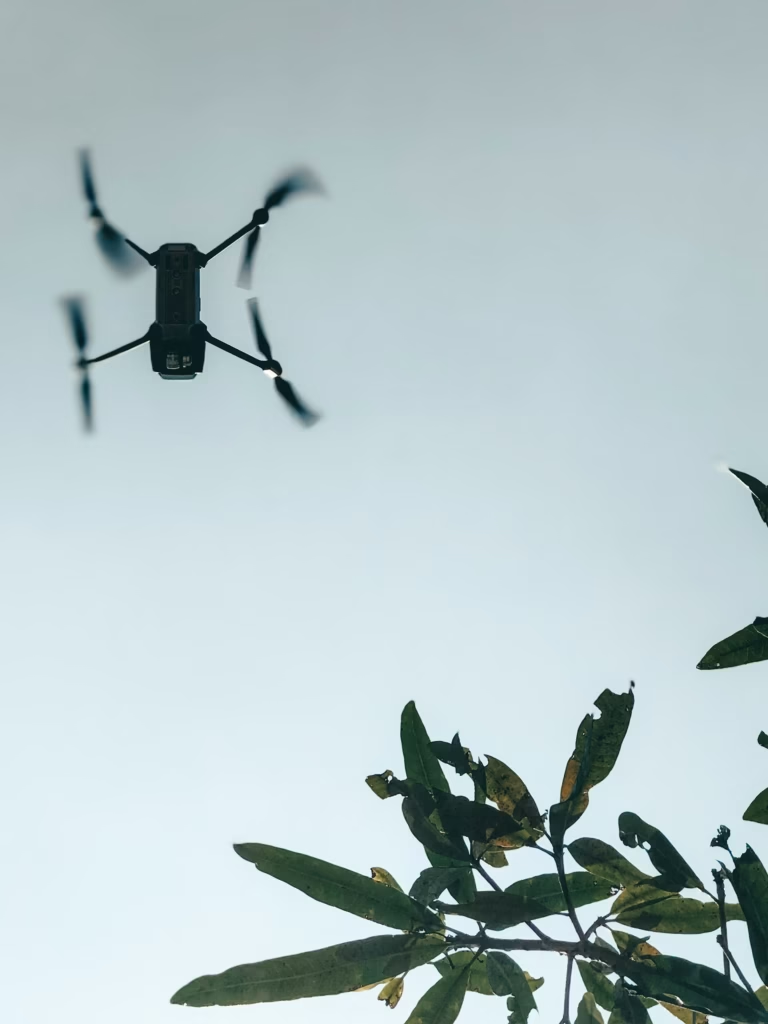
Key Points to Remember Before Departure
If you’re in a hurry, here’s the essential information. For almost all drones (including those under 250g equipped with a camera), the following steps are mandatory:
- Dual registration: You must register your drone with two separate authorities: the CAAT and the NBTC.
- Mandatory insurance: Civil liability insurance with minimum coverage is required.
- Preparation: The entire process must be initiated well before your arrival in Thailand.
Mandatory Registration: A Two-Step Process
This is the most important and confusing point for visitors. Registering your drone involves two steps with two different government agencies. It is imperative to complete both steps.
Enregistrement auprès de la CAAT (Civil Aviation Authority of Thailand)
This registration is for aviation security purposes. It must be completed before your arrival in Thailand, as the process can take several weeks. The application is made online on the CAAT website. You will need to provide:
- Une copie de votre passeport.
- Une photo de vous tenant votre passeport.
- Des photos claires de votre drone et de son numéro de série.
- La preuve de propriété (facture d’achat).
- Une copie de votre police d’assurance.
Without this authorization from the CAAT , you will not be able to proceed to the second step.
Enregistrement auprès de la NBTC (National Broadcasting and Telecommunications Commission)
This registration concerns the use of radio frequencies emitted by your drone. Unlike the CAAT, this process must be completed once you are in Thailand . You must physically visit an NBTC office (located in Bangkok, Chiang Mai, Phuket, etc.). The required documents are similar to those for the CAAT, plus the CAAT registration form that you will have already obtained.
Civil Liability Insurance: Essential Protection
Third-party liability insurance is strictly mandatory for registering and flying a drone in Thailand. It must cover potential damage caused to third parties.
- Minimum coverage: The policy must guarantee coverage of at least 1 million Thai baht (THB) .
- Validity: Ensure that your policy is written in English and is recognized internationally or specifically in Thailand.
General Flight Rules to be Observed
Once your drone is registered, you must comply with strict flight rules to ensure everyone’s safety and privacy.
- Visual line of sight (VLOS): You must always keep your drone within your direct line of sight.
- Maximum altitude: Never exceed 90 meters (approximately 300 feet) above the ground.
- Flight times: Night flights (after sunset and before sunrise) are prohibited.
- Safety distances: Maintain a distance of at least 30 meters from people, vehicles and buildings not involved in your flight.
- No flying over crowds: It is strictly forbidden to fly over gatherings of people.
- Respect for privacy: Do not film people or private property without their explicit consent.
Prohibited and Restricted Areas
Some areas are completely off-limits to drone flights. Failure to comply with these restrictions is severely punished.
- Airports and airfields : a 9 km exclusion zone is in effect.
- Government sites, military sites and royal palaces .
- Hospitals, schools and places of worship without authorization.
- National parks : flying over them is generally prohibited, unless you obtain special and often paid permission from the park administration.
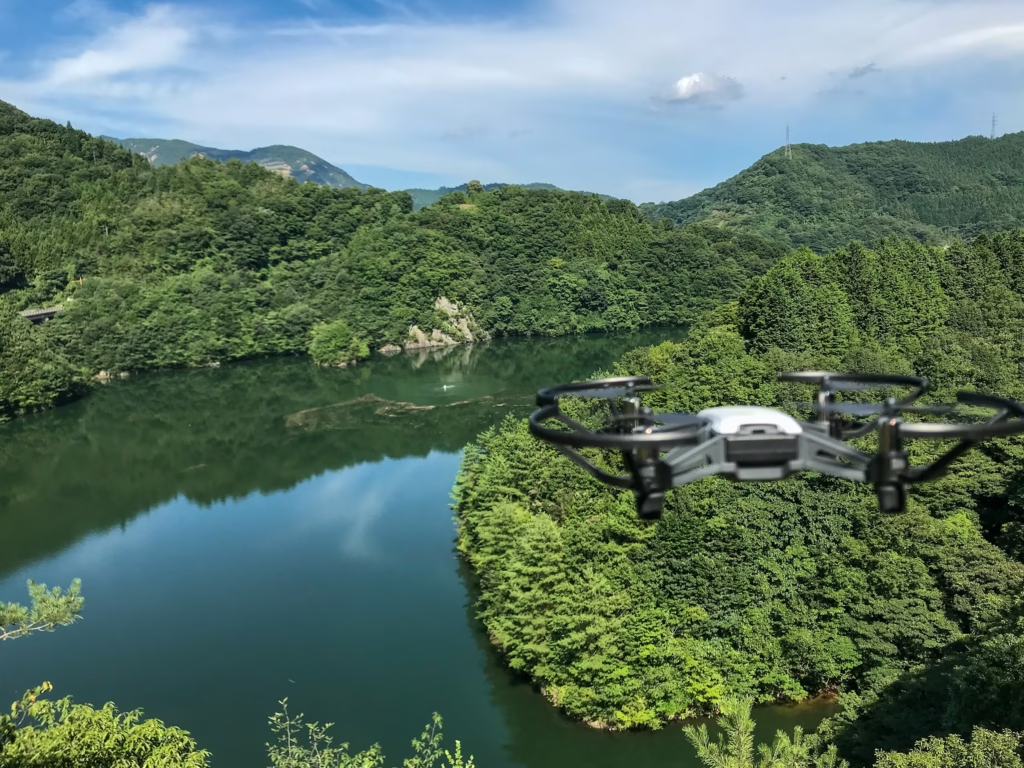
Penalties for Non-Compliance
Thai authorities take drone legislation very seriously. Flying without registration or breaking the rules can result in hefty fines (up to 100,000 THB) and even prison sentences (up to 5 years).
Are there any exceptions?
The legislation is complex, but there is one small exception: drones weighing less than 250 grams WITHOUT a camera are considered toys and do not require registration. However, almost all recreational drones (such as those in the DJI Mini series) are equipped with a camera, making them subject to mandatory registration regardless of their weight. Drones weighing more than 2 kg are subject to even stricter regulations.
In conclusion, flying a drone in Thailand is an enriching experience, but one that requires careful preparation. Start the registration process several weeks, or even months, before your trip, purchase adequate insurance, and once there, fly responsibly. This is the only way to guarantee a positive experience and bring back unforgettable memories without any problems.




Leave a Reply