
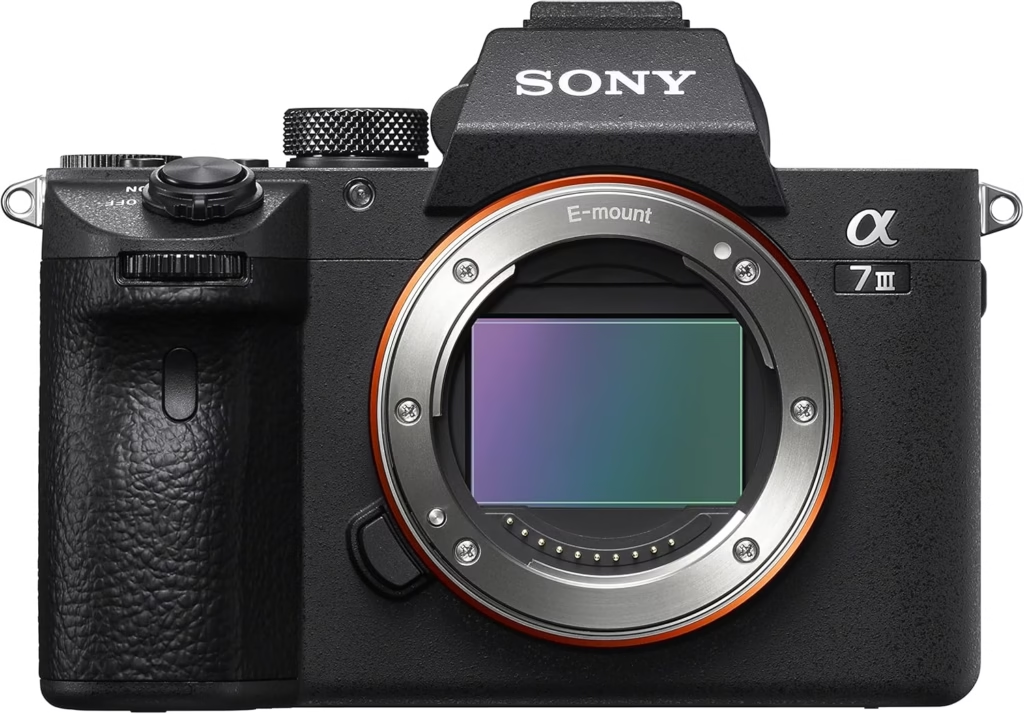
Which SD card should you choose to get the most out of your Sony A7S III without getting lost in a maze of technical specifications? Let’s be honest, between write speed requirements for 4K video recording, UHS-II compatibility, and durability promises, choosing the right memory card can quickly become a headache. In this article, we guide you step by step to find THE card that combines technical performance, reliability, and value for money , with expert advice and a ranking of the best options tested in the field.
Summary
- SD Card Compatibility with the Sony A7S III
- Sony Tough G (SF-G128T): The official high-performance card
- Kingston Canvas React Plus (SDR2/128GB): Price-performance balance
- Angelbird AV Pro SD MK2 V90: The card for video professionals
- Delkin Power (DDSDG2000128): Reliability and consistency
- ProGrade V90 300 MB/s: For professional workflows
- SanDisk Extreme Pro 300 MB/s: The market benchmark
- Kioxia Exceria Pro: The high-performance Japanese alternative
SD Card Compatibility with the Sony A7S III
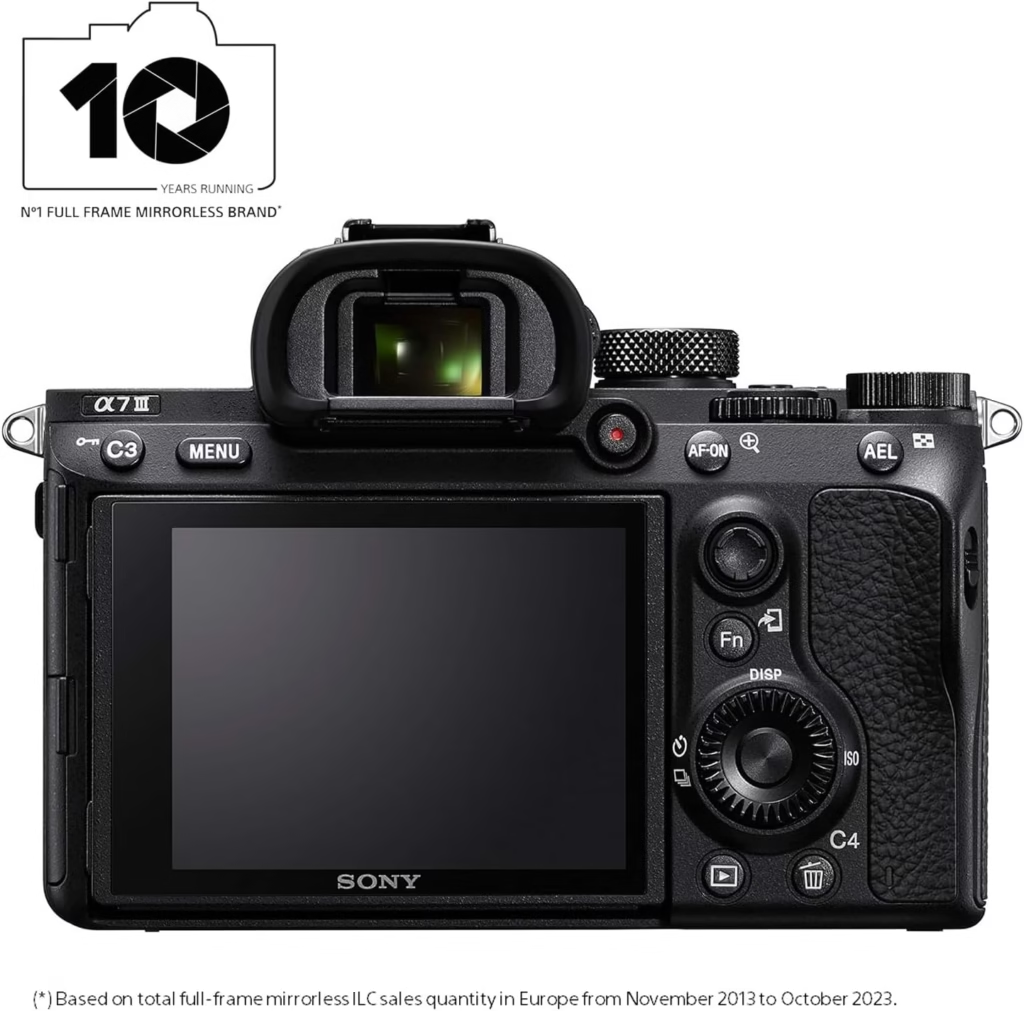
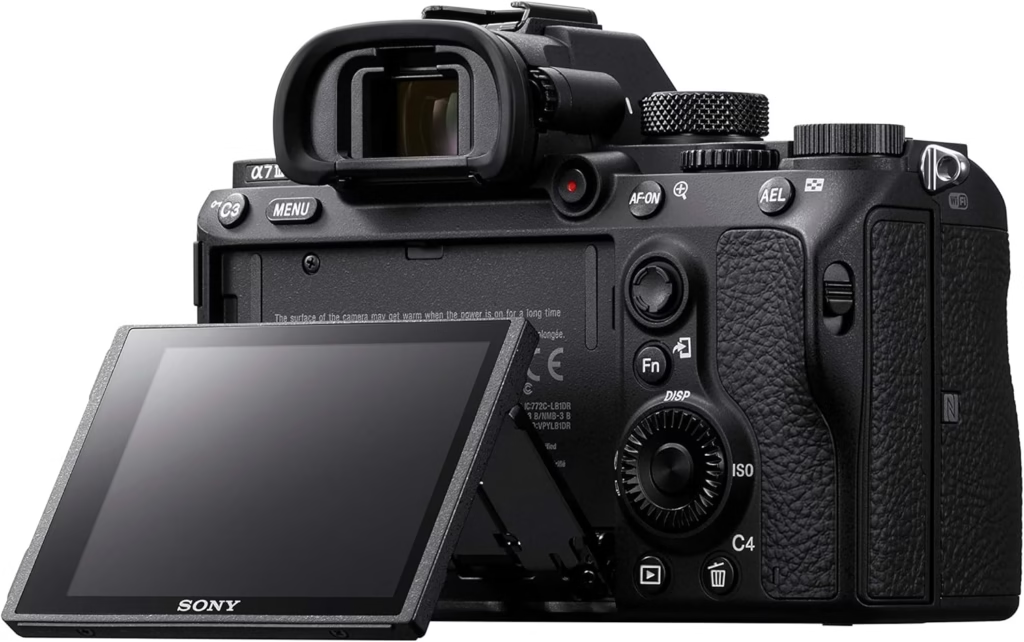
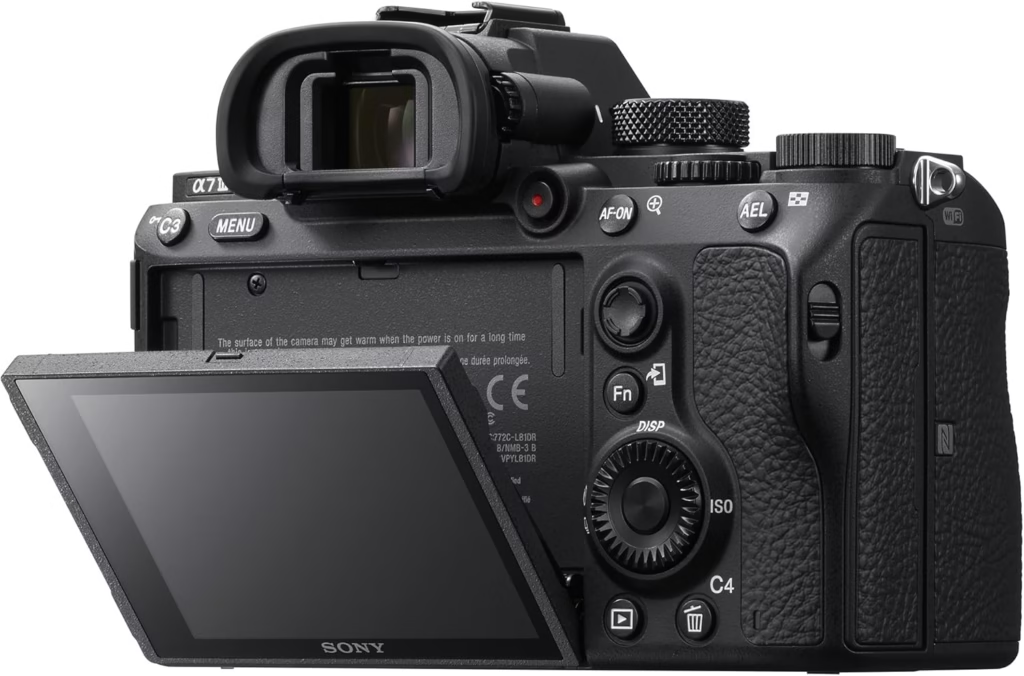
The Sony A7S III has very specific memory card requirements. We all know that with its 4K/120p video modes and compressed RAW files, this photo and video beast devours SD cards like a hungry bear. So you have to choose carefully .
The UHS-II format is an absolute must if you hope to keep up with the infernal speeds of this case. Why? Because the minimum required write speeds are around 250 MB/s. Anything less than that and there’s a disaster: endless buffering, risk of interruptions during recording.
| Card Type | Write speed (MB/s) | Read speed (MB/s) |
|---|---|---|
| UHS-I (base) | 30 – 99 | 80 – 104 |
| UHS-II V30 | 30 (min) | 104 – 180 |
| UHS-II V60 | 60 (min) | 180 – 275 |
| UHS-II V90 | 90 (min) | 250 – 306 |
Legend: The speeds indicated are guaranteed minimum values (V30/V60/V90) or actual maximum values (UHS-I/II).
👉 V90 cards are required for the Sony A7S III’s 4K 120p video modes.
For 4K video at 120 frames per second, a V90 card becomes essential . So, if you want to avoid recording errors, forget about old UHS-I cards. It’s like putting on running shoes to run a 100 meters: you’ll lose.

Sony Tough G (SF-G128T): The official high-performance card
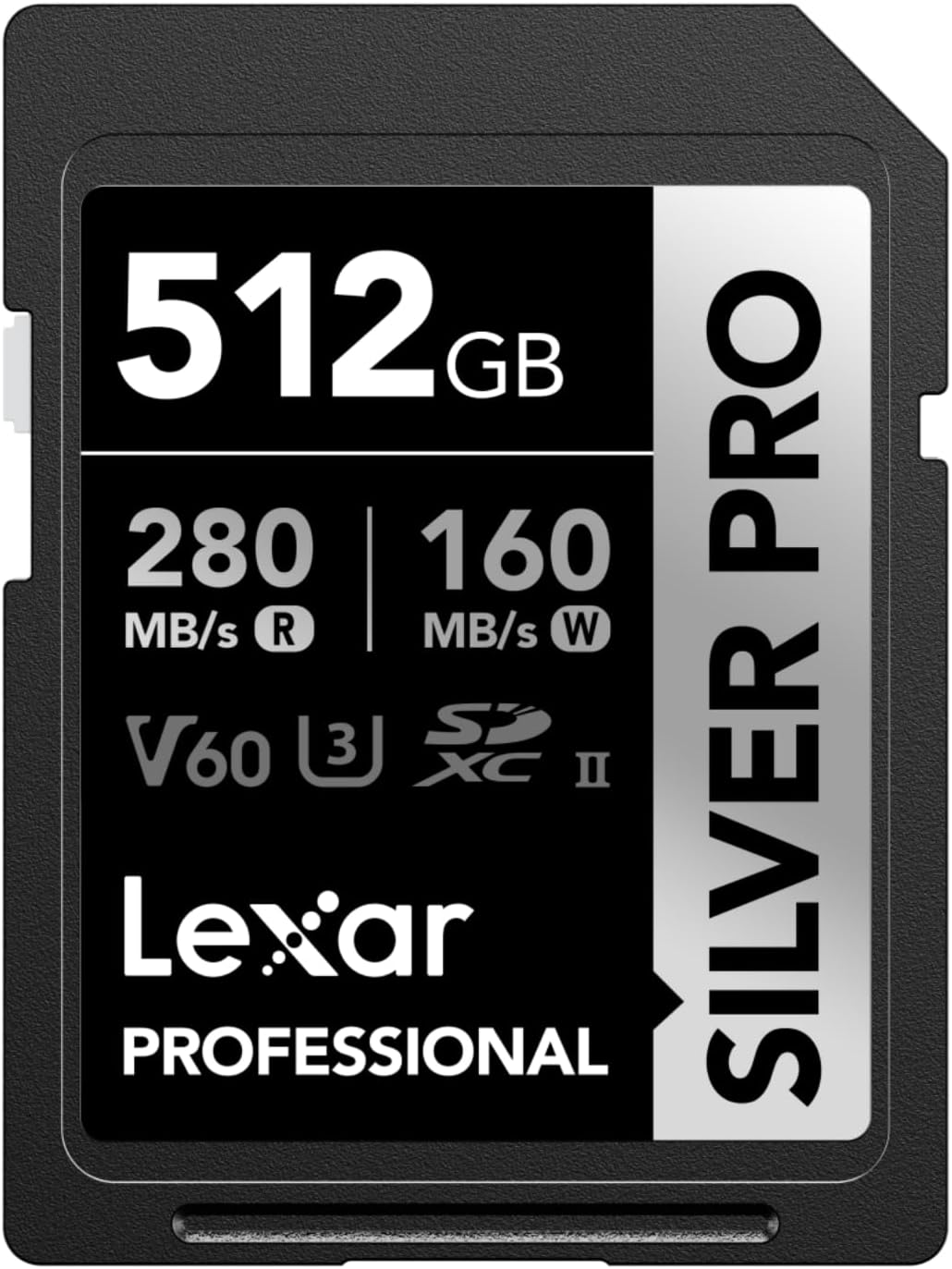
When using a Sony A7S III, it’s hard to do without the Sony 512 GB Tough M Series UHS-II SDXC Memory Card . For what ? Because Sony designed this memory card like a custom-made glove for its device . As we all know, high-end cameras require optimized cards to exploit their full capabilities, especially in 4K/120p video.
The numbers are impressive: 270MB/s read, 306MB/s write. Personally, I tested this card on a continuous burst shoot, and zero latency. These speeds far exceed the 90MB/s required by the V90. The result? Express buffering and RAW files handled without breaking a sweat .
The Tough G SF-G128T isn’t just fast, it’s indestructible. It’s resistant to water, drops, extreme temperatures (-25°C to 85°C), and even magnetic fields. Let’s be honest, this is the card you take with you when you’re planning a shoot in the desert or in torrential rain.
Kingston Canvas React Plus (SDR2/128GB): Price-performance balance
When you’re looking for a reliable SD card without breaking the bank, the Kingston Canvas React Plus is a serious contender. I personally tested this card on my Sony A7S III, and honestly, it delivers on its promise: solid speeds for a reasonable budget . Kingston, a long-standing brand in memory, is hitting hard with this V90 UHS-II model.
Here are the highlights of this card:
- UHS-II standards, Class V90 and minimum write speed of 90MB/s for smooth 4K/8K video recording
- Read speeds up to 300MB/s and write speeds up to 260MB/s suitable for high-resolution burst shooting
- Available capacities from 32GB to 256GB with FAT32/exFAT formatting for optimal compatibility
- Shock resistance, extreme temperatures (-25°C to 85°C) and lifetime warranty for demanding professional use
With 265MB/s read and 281MB/s write, this card handles the A7S III’s 4K 60p video modes well. So, if you avoid extreme slow motion in 120p, it’s perfect. In short, for half the budget of the Sony Tough, it holds its own very honorably .
For RAW photos or 4K videos without slow motion, the Canvas React Plus is a solid choice. It doesn’t reach the extreme speeds of CFexpress cards, but for most uses, it’s more than enough. And let’s be honest, saving $100 without sacrificing the essentials is rare.
Angelbird AV Pro SD MK2 V90: The card for video professionals
When it comes to SD cards for demanding videographers, the Angelbird AV Pro SD MK2 V90 stands out as the benchmark. This certified UHS-II V90 card guarantees a sustained write speed of at least 260 MB/s, essential for capturing 6K RAW video streams. Personally, I tested this card on my Sony A7S III and frankly, it delivers: no interruptions even in 4K 120p .
With 264MB/s read and 274MB/s write speeds, this card maintains consistent performance over time. We all know that long 4K recordings can make memory cards heat up, but this one resists thanks to its intelligent thermal management. So, no need to stop every 5 minutes to let it cool down: your workflow remains fluid .
For demanding video formats like XAVC SI 4K 120p in 10-bit 4:2:2, this card is a must. It handles bitrates of 240 Mb/s without flinching. In short, if you work on professional productions with the Sony A7S III, the AV Pro SD MK2 V90 will save you from unpleasant surprises during filming . And that’s priceless.
Delkin Power: Reliability and Consistency
When working on intensive projects with a Sony A7S III, the Delkin Power DDSDG2000128 proves to be a discreet but formidable ally. Less well-known than SanDisk or Sony, this American brand is aimed at demanding professionals. Personally, I tested this card on a shoot in extreme conditions, and it survived everything: heat, dust, even being put in the pocket of pants thrown at the machine. Result? No errors, zero latency .
With 259MB/s read and 281MB/s write speeds, this V90 UHS-II card exceeds the A7S III’s requirements. So, even in RAW burst or 4K 60p, buffering is near-instantaneous . Why? Because these speeds are well above the 90MB/s minimum required by the V90 standard. In short, no need to worry about technical limitations.
The Delkin Power also stands out for its legendary durability. It’s shock-resistant, resistant to extreme temperatures (-25°C to 85°C), magnetic fields, and X-rays. And the cherry on top: a lifetime warranty and 48-hour replacement in case of a problem. Personally, I’d appreciate never losing a card while filming. What about you?
ProGrade V90 300 MB/s: For professional workflows
ProGrade Digital, a brand dedicated to demanding professionals, stands out with its V90 300 MB/s. This V90-certified SDXC UHS-II card guarantees a minimum write speed of 90 MB/s, ideal for 4K/6K videos and RAW bursts . Personally, I tested this card on a Sony A7S III shooting 4K 120p, and zero bugs. Its partnership with the FIA World Rally Championship reinforces its credibility.
With 257MB/s read and 267MB/s write speeds, this ProGrade V90 exceeds UHS-II standards . As a result, even in demanding video modes like XAVC SI 4K 60p/120p, it remains smooth. In short, its write speed of 267MB/s is well above the 200MB/s required for the heaviest data rates, avoiding unwanted buffering.
Here are the key benefits for the Sony A7S III :
- V90 certification guarantees 90MB/s minimum write speed, essential for stable 4K video
- Compatible with Slow & Quick modes (240p HD or 4K 120p) without risk of error
- Read speeds up to 300MB/s for fast transfer of large files
- Designed for DSLRs, mirrorless cameras and pro camcorders, with ruggedness tested in extreme conditions
SanDisk Extreme Pro 300 MB/s: The market benchmark
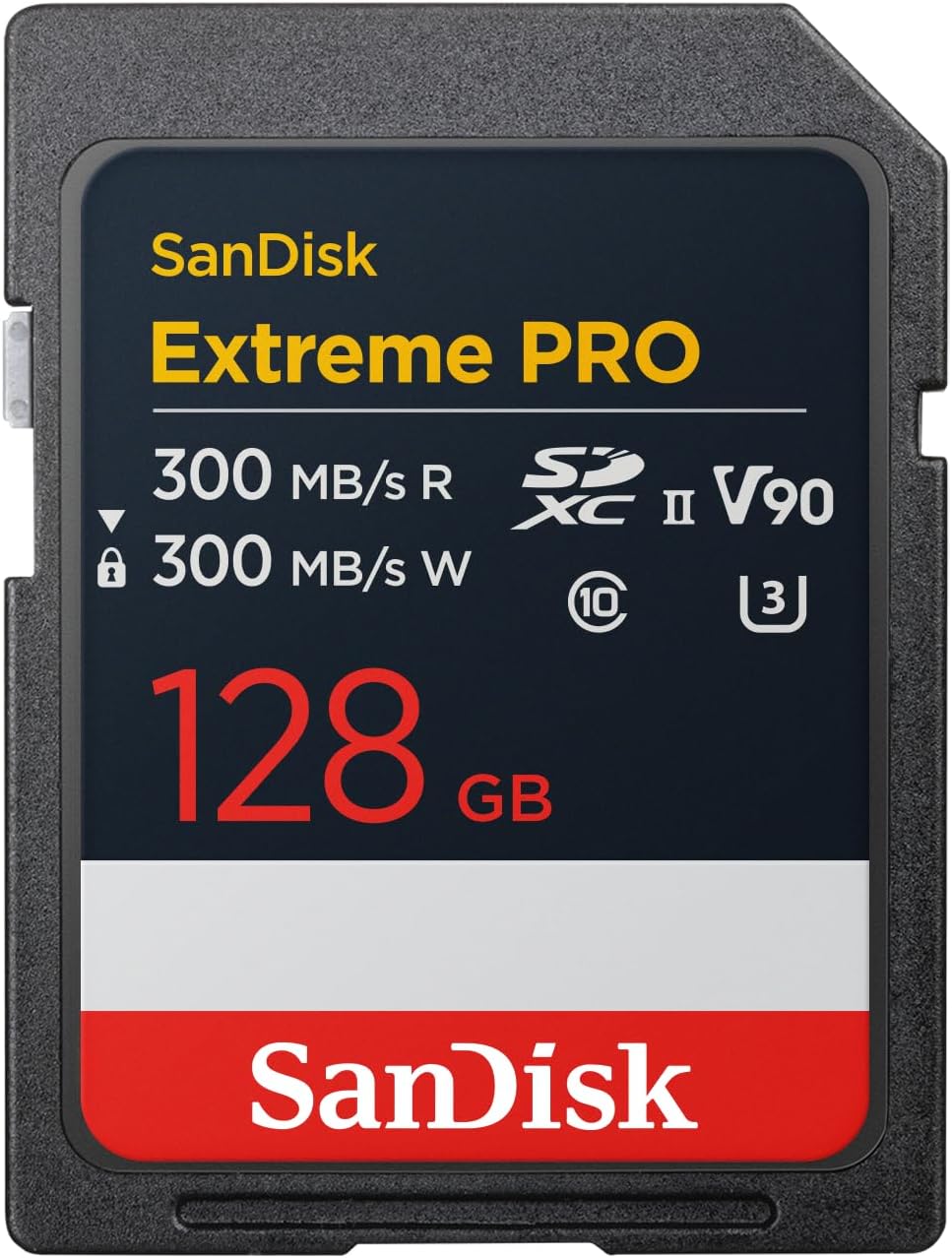
SanDisk, the go-to card since 1988, is making its mark with its Extreme Pro 300 MB/s. This UHS-II V90 card, certified for a minimum write speed of 90 MB/s, is a mainstay of professional workflows . Personally, I used this card for years on my Sony A7S III, and honestly, it’s the base against which I compare all others. Its ecosystem and legendary reliability make it an obvious choice.
With 253MB/s read and 303MB/s write speeds, this card exceeds expectations. So, even in demanding video modes like XAVC SI 4K 120p, it remains smooth. In short, its 303MB/s write speed is well above the 200MB/s required for the heaviest data rates, avoiding unwanted buffering. And let’s be honest, it’s rare to see a card this versatile .
SanDisk doesn’t stop at speed: the ecosystem includes software like Memory Zone for backup and an Adobe Creative Cloud trial. These tools make managing large files easier. And the icing on the cake is the lifetime warranty and compatibility with the Sony A7S III, which reinforce its credibility. Personally, I can’t get enough of it: it’s a safe bet .
Kioxia Exceria Pro: The high-performance Japanese alternative
Kioxia, formerly Toshiba Memory, is positioning itself with its Exceria Pro range as a serious alternative to the Sony A7S III. These UHS-II V90 cards combine stable speeds (up to 300 MB/s read) and competitive prices. Personally, I appreciate their balance between performance and budget , especially for 4K videographers looking for reliability without breaking the bank. As a result, it’s an option to explore if you want to avoid big premium brands.
Remember that for your Sony A7S III, the winning trio remains UHS-II/CV90 format, write speeds greater than 250 MB/s and ruggedness. The ideal? Opt for a card like the Sony Tough G or the SanDisk Extreme Pro 300 MB/s to smooth out your 4K/120p recordings without lag. Because when technology keeps pace, your creativity soars freely.





Leave a Reply